Course Overview
Attendance
* Price for Foundation year only
Course summary
Our degree courses with Foundation year offer the opportunity to prepare you for advanced study before you progress onto a full honours degree at the University of Westminster.
Whether you do not feel ready for degree-level study, don’t have the right qualifications, want to change your subject specialism or return to study after an absence from education, we aim to encourage a broad range of students to undertake our Foundation year in order to progress onto their full honours degree with us.
The Foundation year is designed to give you the opportunity to explore new ideas, opening up new perspectives on the key debates within your chosen field. Core modules accelerate your academic and professional development and you will also take modules from areas closely related to your chosen field, giving you the chance to develop a cross-disciplinary perspective on your course.
On successful completion of the Foundation year, you will be able to move on to study for the Politics and International Relations BA Honours degree.
Our Politics and International Relations BA is designed for students who see politics as a multilayered, interconnected system, who want to interrogate its fractures, and imagine its futures. Politics doesn’t stop at borders, and neither does this degree: you will explore everything from elections and political theory to global governance, international law, and the ethics of world politics. This degree will take you from Westminster to the world.
The programme will expand your knowledge of political ideas, practices, and institutions, while exploring the challenges facing states and citizens under conditions of global uncertainty. You will learn to interrogate politics across different scales and systems, from the local to the global, while acquiring the critical and analytical skills with which to understand major political events and emerging trends.
We are in the centre of one of the world’s greatest cities, and we use this vibrant, multicultural setting to ensure that our students discover innovative solutions to the problems facing our world. We make the most of our location by taking you out of the classroom on visits to the Houses of Parliament, government departments, NGOs, and museums.
With excellent links to employers, you will apply your learning to professional settings from the very start of your degree, developing transferable skills needed for long-term personal and professional growth. In this course, you can take advantage of exceptional pathways to boost your employability. You will have the opportunity to spend one optional year working full-time in organisations such as NGOs, the private sector, or even the United Nations. You can also take an optional year abroad, to complete a placement or study at one of our partner universities, or a combination of the two. In addition, students are offered opportunities to complete shorter-term placements, gaining deeper insights into the subject while developing professional skills and networks.
As a School, we host the world-renowned Centre for the Study of Democracy, which undertakes cutting-edge research on the critical challenges facing politics and international relations today. Our research in Politics and International Relations was ranked 4th nationally for impact in the latest REF, and this excellence directly informs our teaching. Our students benefit from being part of a vibrant research community that is shaping debates on democracy, governance, development and global change. This environment underpins our commitment to innovative, research-led teaching that brings contemporary scholarship into the classroom.
Top reasons to study with us
- An enhanced learning experience – our central London location means our teaching goes beyond the classroom and takes you to places such as the Houses of Parliament, government departments, international organisations, NGOs, exhibitions and museums.
- A global outlook – We have a vibrant international community, bringing together students from 170 nationalities at Westminster.
- A supportive community – we provide a supportive, inclusive, and dynamic environment with high student satisfaction. There are plenty of opportunities for community engagement, not least through our-award winning and student-led Democratic Education Network.
- A focus on careers and employability – we have a range of opportunities embedded in the curriculum and partnerships with international organisations, including the United Nations. Our university is ranked No.1 in the UK for Work-Based Learning (Source: Forage UK University and Educator Awards, 2023).
Course Overview Video
Learn more about this course from a member of the course team.
Modules
Teaching and learning include small group work, problem-based tutorials, workshops, symposia, debates, lectures, Q&A sessions, document analysis sessions, and structured role-plays.
Assessment methods are wide-ranging in this course and emphasise authentic, experiential, and active learning. These include simulations, essays, policy reports, project work, individual and group presentations, blogs, posters, and debates.
Students in this course have the opportunity to take an optional Professional Experience Year or spend an optional year or a semester studying abroad.
Types of module
Our undergraduate courses comprise three types of module:
- Core modules: compulsory modules that you must take each year
- Option modules: modules that you can choose from to tailor your course to your interests, normally related to your subject area
- Elective modules (also called 'Electives'): wider, interdisciplinary modules that you may be able to choose from to broaden your academic experience and skills – covering everything from learning a new language to building enterprise skills
Module availability
We aim to offer a wide range of option modules and electives, but we cannot always guarantee your preferred choices as availability can be affected by timetabling constraints, staff availability or student demand.
Elective modules may be subject to change, but you can look through an indicative list on our University-wide electives page.
For more information
Full details on course structure, modules, teaching and assessment can be found in the programme specification below.
There are no optional or elective modules offered at Level 3, as the focus is on the development of key academic skills through a broad understanding of social sciences and humanities.
Core modules
Critical thinking is fundamental to our ability to progress in an increasingly complex and changing world. It is an essential skill across a range of academic and practice-based disciplines.
This module helps you understand the importance and function of critical thinking both at university and beyond. By working in partnership with academic staff and peers, you will explore how critical thinking aligns with disciplinary practices, shapes scholarly knowledge, and addresses inequalities. Through problem-posing education and anti-racist practices, you will engage with real-world problems, fostering the ability to create a more just and sustainable world.
This module introduces you to the concepts of history and memory. Using topical case studies, the module invites you to consider how the past is related to the present and how history and memory are constituted, challenged and constantly evolving. Through the module, history is made relevant to you by asking to whom history and historical objects belong and what they mean to individuals and society.
This module introduces contemporary political questions in the global context. Current political issues such as statelessness, politics of underdevelopment, power and inequality, and climate change will be discussed and analysed. The idea of nations and nationhood features prominently in the module, as do the issues related to faith, religion and ideological belief. The module is designed to introduce concepts and themes such as democracy, power and politics, inequality, global society, human rights and states, territories and statelessness.
This module provides a foundation in the theory and practice of intercultural communication, to help you better understand the complexities of communicating with people from other cultures. You'll explore what is meant by culture and the relationship between cultures and identities and examine how culture influences you and others. You will reflect on how the language and non-verbal communication you use can impact understandings and what strategies you can develop to manage misunderstandings both socially and in more formal contexts. Throughout the module, you are given the opportunity to practice your communication skills through a range of activities.
This module introduces you to the key academic, professional, and personal skills essential for success at university. It encourages good practices in writing, presentation, and time management, while also fostering reflection to help you build confidence as you transition to higher education. Open to all students enrolled in courses delivered through Westminster Foundation Pathways, the module provides a creative and supportive environment where you can reflect on and develop your academic and professional journey. You'll work with specialist facilitators who play a crucial role in guiding your academic and professional development.
With a focus on managing academic choices in a higher education setting, the module emphasises the importance of the United Nations Sustainable Development Goals (SDGs), using methodologies that prioritise equality, diversity, and inclusion. Through these lenses, you'll explore topics that prepare you to address real-world challenges as highlighted in the SDGs in a socially conscious, inclusive, and responsible manner.
This module explores law as a question of power – asking what law, power and authority are, where you are located, how you operate, and how you change. The questions are raised through a particular focus on law and politics, the sociology of law and the history of legal ideas. The module’s assessments serve to build the research and writing skills needed to succeed in higher education and beyond, and encourage you to develop and express your own diverse viewpoints on key issues relating to social justice, (in)equality and sustainability.
Our teaching programme is structured to support your transition to higher education. In your first year, you will be introduced to the foundations of Politics and International Relations, while diving straight into the debates and challenges shaping political life today. You will also have the opportunity to move from analysis to action, applying your knowledge to real-world issues such as climate change, political inequality, and the crisis of democracy.
Core modules
This module gives students the opportunity to understand the dilemmas and challenges of ‘doing politics’ in contemporary political life, encouraging active learning to enable and enact political change. The module foregrounds a series of political challenges facing contemporary political systems across the world – such as inequality, right-wing populism, authoritarianism, militarism, anti-migrant politics, political alienation, democratic crisis, the future of work, and the climate crisis. It focuses on political activism, participation, and campaigning as a way of ‘doing politics’. The module also draws on insights and engagement with local and national organisations to encourage thinking about ways to address these challenges.
The module will support students to develop their professional profile as ‘change-makers’ by enabling students to achieve the bronze level of the Westminster Award by embedding relevant activities within the programme and accredited skilled based assessment.
This module provides an in-depth introduction to the multi-disciplinary field of development studies. It introduces you to key debates in development theory and to the history of development policy and practice. The course encourages you to think critically about what development is, about how it is carried out and what it can achieve. You'll explore the ‘grand’ development theories and approaches such as modernisation, dependency, neo-liberalism and alternatives.
The module gives you the opportunity to consider the role of these approaches in assisting or hindering progress in a globalised world, whether in terms of distribution of wealth, political change or human rights; and further to assess the relevance of various development policies to the everyday lives of people living in the global south. Finally, the module covers a range of topics relating to various aspects of sustainable development: it explores and questions development concepts and policies, highlighting the shortcomings that have resulted in a rethinking and an evolution towards sustainable development; it focuses on the difference between growth and development; it covers topics including poverty, inequality, peace, justice and strong institutions.
This module introduces you to both the issues and phenomena covered by International Relations and the concepts, tools and skills needed to study contemporary global politics. The module examines core concepts of international relations (International Society, Sovereignty, Anarchy, Power, the State, and Legitimacy) as well as addressing enduring problems in global politics (war, co-operation, capitalism, hierarchies of power and privilege, justice and human rights). The module also considers the post-Cold War context and evaluates narratives of the rise and fall of a liberal world order.
The module presents you with an immersive introduction to the dynamic fields of international relations and law, elucidating how legal principles and international relations theories collectively shape today's global order. It delves deeply into the foundational principles, methodologies, and practical applications inherent in both disciplines, empowering you to understand the intricate ties between domestic legal systems and the global arena. By adopting an interdisciplinary approach, you'll investigate foundational theories of justice and their alignment with international relations concepts. The module further delves into the historical evolution of the international system, emphasising the important role played by legal regimes and international treaties.
In politics, the most used concepts (such as freedom, equality, power, democracy) are the most contested. Hence, the very meaning of political concepts is the subject of political dispute. What, for example does it mean to be equal? What does it mean to be free? What role, if any, does the state have in judging these ideals or in helping us to achieve them? In Political Ideas in Action, you explore a range of possible answers to these questions as given by political thinkers and actors today and in the past. In doing so, the module facilitates the development of your critical thinking skills and judgement. The module demonstrates and teaches methods of constructing political and academic arguments through an examination of the historical foundations of liberal democracy, the competing ideologies that operate within and sometimes against it, and the ways in which political power is allocated, won and lost.
Option modules
This module introduces students to the inter-related dynamics of state, politics and development in Asia and Africa and its significance towards addressing global challenges- from peace and sustainability; to migration, gender and digitalisation. Students will engage with the concepts of democracy and development, and how together they define the past, present and future socio-political trajectories of Asia and Africa in a globalised world order. The module will be taught by a team of scholars who have the expertise in both the academic and practise aspects of development and state-building in Asia and Africa. The teaching will take the form of weekly workshops, which includes lecture, seminars and group activities. Where possible, students will also visit the British Museum to explore how Asia and Africa are curated in colonial and postcolonial geopolitics. At the end of this module, students will be aware of the contested nature of the concepts of democracy and development and will be able to illustrate these by drawing on case studies from Asia and Africa.
The module introduces students to feminist political thought. It explores key concepts, theories, and debates within this field and examines the contributions of feminist thinkers and activists. Further, the module seeks to interrogate representations of women and femininity across diverse intellectual and cultural domains. Students will develop skills in evaluating the political significance of cultural artifacts, and conduct independent research on selected figures or issues within the field.
This module introduces students to institutions and governance at the local and global level. It begins with a focus on the nation-state as the foundational unit of political organisation. Students will explore and compare political systems and institutional arrangements across different states, including unitary and federal systems, and examine the evolving role of local and regional governance. Building on this foundation, the module then expands to consider governance across scales, from national to supranational and global levels. It introduces key global governance organisations and frameworks, prompting critical reflection on how power is distributed and exercised in the international system. Students will analyse how the global power structure - shaped by institutions, rules, norms, and regimes - affects the capacity of states to defend their sovereignty and pursue their interests. The module employs the comparative method to examine how different states navigate these constraints and opportunities, and assesses the implications for global order and governance in the 21st century.
The political importance of migration has increased sharply in recent decades. The module – which focuses on Europe but has a strong comparative global element – studies the entire migration process and the many factors shaping it: domestic pressures (social, economic, political) in sending states; globalization processes; the policies of host states and regions; the active role of migrants themselves. The module also evaluates the main theories used in migration scholarship.
In the second year, you will deepen and expand your understanding of key approaches to the discipline. You will study the complex dynamics of political inclusion and exclusion and the ways they have shaped contemporary politics. You will engage with questions arising from postcolonial politics and develop a good understanding of the nature and distribution of power within and between different political systems, the contexts within which these operate, and the relationships between them. You will be introduced to research methods for academic and professional purposes and will develop your employability profile by undertaking 35 hours of work-based learning.
Core modules
The module will offer students an in-depth engagement with postcolonial perspectives to the study of changes in global politics at local, national, regional, and international levels. How have various thinkers and leaders from different parts of the world sought to question the eurocentrism of the dominant theories and concepts in Politics and in International Relations? What are the various ways in which we can understand the pluralist, asymmetrical and inconsistent experiences of different cultures, societies, and polities in contemporary post-colonial times? What does postcolonial politics actually imply? Key concepts and issues of politics and IR will be examined from different critical perspectives while highlighting the structuring role of ideas and practices of imperialism, colonialism, orientalism and decolonial resistance. The module begins with a conceptual overview of colonialism and coloniality before turning to a critical survey of regions within the ‘post-colonial’ world, highlighting how politics reflects continuities and discontinuities of colonialism. The module offers a critical appraisal of global multipolarity and the centrality of colonial legacies in shaping a changing world.
This module provides an introduction to political research and practice within the social sciences and work-based learning. The module covers how to identify a suitable research topic and question, completing a literature search and identifying primary and critical sources. It introduces you to different approaches and methods of research, developing attributes of curiosity, creativity and resilience vital to successful careers in and beyond academia. The module prepares you for the academic dissertation and, through the application of different practices of research and work-based learning, equips you for further academic study and employment in highly skilled professional management positions.
Practices of inclusion and exclusion are increasingly put at the centre of politics, affecting the way we approach sovereignty, participation, democracy, and liberalism. The module unpacks the methodological issues that such practices ingrain, engaging with broader debates about borders, antagonisms and affected communities. It draws on a range of contemporary cases (from the rise of the far right to sexual politics in the Trumpocene, race, and the criminalisation of citizenship) to identify and map the forms, conditions and legal contexts that determine whose voice will be heard and whose will not. Throughout the module, special attention is given to discourse analysis and strategies for socio-political reform.
Through the study of a selection of classical texts and exploration of contemporary approaches to the study of politics and international relations, this module offers you the chance to enrich your disciplinary knowledge and understanding. By exploring the points of contact and departure between political thought and theories of international relations you'll gain an understanding of the diversity of theory and its role as a key source of innovation.
Option modules
This module explores the key institutions, actors, and processes shaping contemporary British politics. Focusing on current issues – from inequality to constitutional reform, devolution, populism, Brexit, and the crisis of the Westminster model – it prepares students to critically analyse the evolving political landscape of the UK. Where possible, the module may include organised visits to important political sites – such as Parliament, party headquarters, or media organisations like the BBC – supporting authentic assessments like podcasts and research grant proposals to foster active engagement with the challenges facing British democracy today.
In this module students examine political, societal, cultural and economic beliefs and practices at both the domestic and international levels through the lenses of gender, sexuality, and intersectionality, and through feminist critique. The module brings into sharp focus the problems of discrimination, marginalisation and exclusion based on gender and sexuality. Knowledge of gender relations is used to deepen student understanding of wider political, cultural, economic and social processes, practices, and power relations at national and international levels.
International Political Economy (IPE) is the study of political and economic interaction, involving a multiplicity of actors, across borders in world affairs. It looks at global political economy through a set of concepts, issues and examples. The module offers a critical overview of major perspectives in political economy and employs them to evaluate policies, institutions (nationally and internationally) and the realities around us. The module addresses inequalities between nations and among people and calls into question the sustainability of contemporary patterns of economic development.
This module introduces the study of concepts and practices of global security. It will encourage you to think beyond the traditional divide between international and domestic politics by considering global security as it plays out along a continuum of global and local spaces. Far from being exclusive to sovereign states, security concerns and aspirations have become global just as the practices of humanitarian intervention they inspire. At the same time, today more than ever, these are sustained by local practices and reflected in the very fabric of our everyday experience. The module will thus look at contemporary security at the level of the international, the global and the local.
This module offers a thematic introduction to governance practices in European countries and the European Union (EU). It covers constitutional and institutional resources of governance in a multi-level Europe and explores the executive, legislative and judiciary powers; elections and electoral behaviour; interest representation, and new governance challenges. The module is placed in a contemporary context and developments of topical relevance are explored, including EU enlargement, the rise of populism, economic governance; and relations between Europe and the wider world.
“Humanitarian intervention” is an issue of unique importance which continues to be one of the dominant controversies of our time. Key events in the post-Cold War era, from the 1994 genocide in Rwanda to the 2011 intervention in Libya, have generated often highly divisive debate regarding the right and responsibility of the international community to “save strangers”. This module will examine the history of humanitarian intervention, its moral and philosophical basis and the primary sources of contestation such as its legal status, the question of legitimate authority, and the balance between order and justice.
This module focuses on the thinking, concepts and methodologies that influence development practice in the 21st century, and particularly following the global financial crisis in 2008. In doing so, you will examine the ideologies and global institutions that shape political economies in the global south and elsewhere, including the politics of growth and aid. You'll analyse the ways in which countries and regions are incorporated into the world economy, how this has affected their economies, politics and society, and how they respond to these influences. You'll also assess past and current prospects of industrialisation, manufacturing and agriculture, with a particular focus on political ecology and the politics of food, labour and natural resources.
Students in this course have the option to spend one year abroad or one year gaining professional experience.
If you go abroad, you may complete a work or volunteering placement, both of which provide valuable opportunities to boost your employability and ground your studies in an experiential setting. You may also undertake a study placement at one of our university partners. You can also undertake a combination of both study and work.
If you choose the professional experience option, you will be able to develop your understanding of the skills needed in high-quality employment and gain a critical awareness of the career pathways for which the degree prepares you.
Find out more about the costs involved in taking a study abroad or placement year.
In the final year, you will draw on the knowledge, analytical capacities, and research skills you have developed to pursue a dissertation project on a topic of your choosing. You will engage in depth with urgent ethical and moral questions concerning global justice and inequality. At the same time, you will study practical questions concerning policy development and implementation.
Core modules
The dissertation module provides you with an opportunity to apply the empirical and theoretical knowledge, understanding and study skills you have acquired in your studies to a topic of your choosing in the fields of Politics, International Relations, or Development studies. You'll conduct research independently over two semesters, under the guidance of an academic supervisor, and write one literature review, followed by a 10,000-word dissertation.
This module considers the international dimensions of ethics and how these can be understood through contemporary developments in global politics. It examines how ethical judgements are critical to our understanding of international politics and considers the ways in which ethical frameworks involve important questions of political judgement at the local, national and global level. The emphasis is on the practical dimensions of ethical judgement in international relations, including questions of political violence, terrorism, climate change and international environmental politics, war and peace, LGBT politics, gender violence, globalisation and global inequality. You'll work both individually and collaboratively in examining the tensions between ‘order’ and ‘justice’ within the global space(s) of world politics.
The module offers an overview of policy processes from agenda setting, through implementation to evaluation. Informed by a wide range of theoretical and conceptual approaches to governance and policymaking (eg positivist versus post-positivist perspectives, new institutionalism, public choice theory, elitism, pluralism, Marxism etc.), the module focuses on the challenges of policymaking in a real-world setting, largely in the UK and European Union. The module draws on a range of policy areas including social, environmental, security and development policy. (The selection may vary from year to year according to contemporary relevance and the availability of study material. Together, you'll illustrate the parameters of and tensions involved in every stage of the policy process.) You will specialise and complete the module assessments in one of these areas. The module incorporates professional skills training in policy research, which will be particularly useful for students interested in policy-related work in governmental, non-governmental and private sector organisations.
Option modules
The following modules are examples of study options on this course.
For the full list of option modules, see the programme specification.
This module seeks to explain the formulation and implementation of US foreign policy. The module examines and applies a range of relevant traditional as well as critical approaches, such as institutionalism, realism, strategic-relational approach and discourse analysis, to the analysis of US foreign policy and policy-making in order to throw light on the role of the United States in international affairs.
This module equips students with advanced conceptual and analytical skills to critically envisage multiple possibilities for development futures. Building on Year 1 and Year 2 foundations in development theory—including critical and political economy perspectives—it introduces contemporary “blue-sky” approaches essential for strategic thinking about global, planetary, and just futures. Students will engage with key theoretical frameworks shaping futures thinking, such as: Post Development and Pluriverse, Planetary Social Thought, Degrowth and Decolonisation, Critical AI. The module adopts an innovative format: 7 weekly sessions combining film screenings with seminar discussions. Films will serve as both representations and constructions of utopian and dystopian imaginaries, enabling students to interrogate their meta-narratives and connect them to theoretical debates in development futures.
The module examines continuity and change in foreign policy making and diplomatic theory and practice in a world characterised by simultaneous processes of integration and fragmentation. It evaluates state and non -state actor external policies and assesses the diplomatic strategies and negotiation techniques you employ. The module focuses on agency: the formulation of foreign policy and the adoption and employment of diplomatic tools and instruments and negotiation techniques in pursuit of security, prosperity, environmental and humanitarian objectives. It considers the possibility of a sustainable diplomacy and foreign policy.
This module introduces students to new ways of thinking about and practising governance in an age of crisis. We address new problems: the Polycrisis; the Anthropocene; risk and complexity. We study new approaches: adaptation; displacement and disavowal; and modes of ungoverning. We engage with new practices: of disaster response; climate governance; and post-conflict governance.
This module concentrates on the politics of development in the Middle East, investigating the extent to which this region has been structured by international and global political economy as opposed to domestic factors. The module examines significant debates and issues in state formation, political regimes, economy and society, particularly considering the legacies of imperialism and the impacts of neoliberalism on the regional dynamics of development. It investigates the politics of critical national resources such as oil and their implications for the state, economy and society. We will look at the main political forms and forces, including the authoritarian 'rentier' state, pressures for democratisation and liberalisation, and the rise of political Islam. The final part of the module focuses on conflict, intervention, and popular struggle, reflecting on perspectives on future development in the region.
This module critically examines contemporary security practices in the aftermath of the Global War on Terror. It explores how states manage threats through secrecy, surveillance, and exceptional measures, and considers the implications for civil liberties, democratic accountability, and global power relations. Through case studies on practices such as targeted killings and torture, black sites and secret detention, and mass surveillance, students will interrogate the evolving landscape of security governance in a post-9/11 world.
Social and political movements – the main, even only, way that many people ‘do’ politics – are established features of contemporary societies. You bring new ideas into public discourse and challenge the practices of governments and states. The module analyses a representative sample of contemporary movements, in the developed world and in other regions; studies the wide range of factors, national and transnational, shaping movement birth, development and decline; and evaluates the main theories used in social movement scholarship.

For more details on course structure, modules, teaching and assessment Download the programme specification (PDF).
To request an accessible version please email [email protected]

Get your copy of the University of Westminster prospectus and browse the range of courses on offer.

Contact us for general course enquiries:
+44 (0)20 7911 5000 EXT 65511
(Mon–Fri, 10am–4pm BST)
Live chat with us
(Mon–Fri, 10am–4pm BST)
STUDYING POLITICS AND INTERNATIONAL RELATIONS WITH US
Watch the video to learn more about studying politics and international relations at the University of Westminster.
Open days
Join us at an open day online or on campus. Get a feel for student life at the University of Westminster and talk to course leaders and our support teams.
Can't attend? See more open events
Careers

Fantastic London location
We take you out of the classroom to visit places such as the Houses of Parliament, government departments, international organisations, NGOs, and museums.

Gain international experience
You'll have the opportunity to do a work, study or volunteering placement, all of which provide valuable opportunities to enhance your employability.
Employers
Access a network of over 3,000 employers at the University’s new home for careers and enterprise, Zone29.
Industry links
We take full advantage of our location in the heart of London, using our links with the Houses of Parliament and other centres of power and policy-making.
We regularly invite high-profile speakers to our central London location for our well-established series of seminars, public lectures and conferences, to which you, as a student of politics and international relations, will be invited.
Work experience
Our central London location means you'll be perfectly placed to access placement and internship opportunities. The University of Westminster is part of an exclusive and ongoing collaboration with the United Nations Migration Agency, the International Organization for Migration (IOM). This gives Politics students access to short-term or year-long internship opportunities at IOM offices around the world, including in Geneva, Vienna, Dhaka, and London. These placements focus on a host of topics, including migration governance, mission support, policy and liaison, and information management.
Internship opportunities
The University of Westminster is part of an ongoing collaboration with the United Nations Migration Agency, the International Organization for Migration (IOM).
As part of this, Politics and International Relations students in their second or third year of undergraduate study can apply for 3-9 month internship opportunities at IOM offices around the world, including in Geneva, Vienna, Dhakka and London.
The internships, which are open to students completing their second year of studies and beyond, focus on a host of topics from migration governance to mission support, policy and liaison, and information management.
Job roles
You will graduate as a globally minded analyst who can navigate the complexities of international politics, make sense of the ethical, cultural, and legal dilemmas of global order, and imagine new ways of doing politics across borders.
Our BA Politics and International Relations prepares you for decision-making careers – roles that demand strategic thinking, ethical judgement, and the confidence to drive change in complex political environments. The course opens pathways into advocacy, strategy, and leadership.
Our graduates pursue roles in the Civil Service, NGOs, international organisations, policy and research, teaching and journalism. Other roles include:
- Campaigner
- Diplomat
- Political consultant
- Journalist
- Researcher
Graduate employers
Graduates from this course have found employment at organisations including:
- The Civil Service
- Young European Federalist
- Vision Critical
- Sanrio Company
- Civil Service
- Bradford Council
- HM Government
- Houses of Parliament
- Metropolitan Police
- Student Union
- Local authorities
- Non-governmental organisations
Unlock your career potential at Zone29
Zone29 is our new home of careers and enterprise, offering game-changing opportunities such as:
- jobs, placements and work experience
- tailored career guidance and mentoring
- step-by-step career planning through the Westminster Award
- work and study abroad programmes
- start-up, business and freelance support

International Opportunities
Many of our courses offer international study and work experiences, and the University provides other global opportunities that all students can apply for – so whatever you're studying, you'll have the chance to go abroad.
Opportunities could include:
- Taking part in semester or year-long exchanges at institutions around the world
- Attending an international summer school or field trip
- Developing your CV through volunteering or work placements abroad
International experience broadens horizons, boosts self-confidence, and improves global understanding, alongside being fantastic for your career.
Find out more about our international opportunities, including funding options and where you can go.

Course Leader
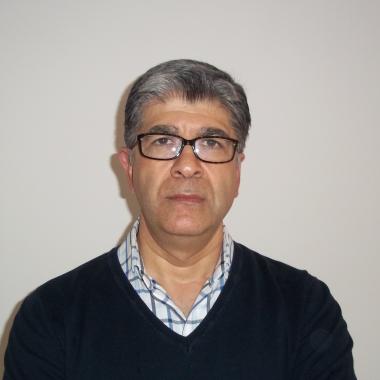
Dr David Khabaz
Lecturer in Sociology
Dr. David Khabaz is a Senior Lecturer and Course Leader for the Foundation Programme in Humanities, Law, and Social Sciences at the University of Westminster. He completed his undergraduate studies at Goldsmiths, University of London, and subsequently obtained both his MSc and PhD from the London School of Economics and Political Science. David’s research is situated within the critical analysis of media, with a particular focus on the production and reception of media texts in the context of post-Brexit and post-pandemic British society. His recent publication, Framing Brexit, investigates the mechanisms through which news content is increasingly weaponised via framing strategies that shape public understanding beyond the mere presentation of facts or events.
The Foundation Programme at the University of Westminster offers students a structured pathway to prepare for advanced study and progression to a full honours degree.
Course Team
Some of the other experts who will teach you include:
- Dr Dan Greenwood - Reader in Political Economy and Public Policy
- Professor Nitasha Kaul - Professor of Politics, International Relations, and Critical Interdisciplinary Studies
- Dr Ali Tajvidi - Senior Lecturer
- Dr Greg Aasen - Senior Lecturer
- Dr Ipshita Basu - Reader in Global Development and Politics
- Dr Elisabetta Brighi - Assistant Head of School, School of Social Sciences
- Professor David Chandler - Professor
- Dr Catherine Charrett - Senior Lecturer
- Dr Daniel Conway - Reader in Politics and International Relations
- Dr Bridget Cotter - Lecturer
- Dr Hannah Cross - Senior Lecturer
- Professor Roland Dannreuther - Professor
- Dr Magdalena Frennhoff Larsen - Reader
- Professor Aidan Hehir - Reader in International Relations
- Rob Macmaster - Principal Lecturer
- Dr Farhang Morady - Reader
- Dr Wojciech Ostrowski - Reader
- Dr Frands Pedersen - Senior Lecturer in International Relations
- Professor Sam Raphael - Professor
- Professor Graham Smith - Professor of Politics
- Dr Sahar Taghdisi Rad - Senior Lecturer
- Dr Paulina Tambakaki - Senior Lecturer
Why study this course?

Get career-ready
Studying politics and international relations will prepare you for a range of careers, including working as a civil servant, diplomat, campaigner, researcher or journalist.

Learn from experts
Our School of Social Sciences hosts the world-renowned Centre for the Study of Democracy, and the innovative Democratic Education Network initiative.

Study in a supportive environment
We provide an inclusive environment with high student satisfaction, and our teaching is structured to support your transition to higher education.
Democratic Education Network
The Democratic Education Network (DEN) is an academic, student-led organisation, part of the Department of Politics and International Relations.
It promotes social action and student engagement through local and international projects that solidify and enhance your experiences. It also provides numerous opportunities to transform your ideas into reality and make a real difference.
Participate every Thursday at our weekly meetings and check out our blog 'Inside Westminster'.
Entry Requirements
- A Levels – DEE (56 UCAS Tariff points)
- T levels – 56 UCAS Tariff points
- International Baccalaureate – 56 UCAS Tariff points from all components of the Diploma Programme. International Baccalaureate Career-related Programme will be considered on a case-by-case basis
- BTEC Extended Diploma – MPP
- BTEC Diploma – MM
- Access – 56 UCAS Tariff points from the Access course
If your first language is not English, you will need an IELTS of 6.0 overall, with 5.5 in each component.
We also welcome applications from students who are taking a combination of qualifications listed above. For further information, please contact Course Enquiries.
View more information about our entry requirements and the application process.
International Baccalaureate
56 UCAS Tariff points from all components of the Diploma Programme. International Baccalaureate Career-related Programme will be considered on a case-by-case basis. You can refer to the UCAS calculator to determine your point score. Find out more about acceptance of the International and European Baccalaureate.
Other international qualifications
We accept a wide range of international high school level qualifications. Please see information on Country-specific entry requirements.
International Foundation courses
We work in partnership with Kaplan International College London who provide International Foundation Certificate at their College based in London Bridge. These courses are for students who don't meet our direct entry requirements. Upon successful completion, you can progress to your chosen degree at the University of Westminster. Find out about the different university preparation courses that are accepted for entry.
English language requirements
If your first language is not English, you will need an IELTS of 6.0 overall, with 5.5 in each component.
Please note we accept a wide range of English language qualifications and assessments. Find out more at English language requirements.
If you don't meet the English language requirements yet, then we offer online and on campus pre-sessional English programmes to help develop your English language skills to the required level before you start your course. Find out more about our pre-sessional English programmes.
Study a University of Westminster degree overseas
We work in partnership with a number of academic institutions around the world that deliver a selection of our undergraduate programmes. Visit Transnational Education Partners for further information.
More information
- A Levels – DEE (56 UCAS Tariff points)
- T levels – 56 UCAS Tariff points
- International Baccalaureate – 56 UCAS Tariff points from all components of the Diploma Programme. International Baccalaureate Career-related Programme will be considered on a case-by-case basis
- BTEC Extended Diploma – MPP
- BTEC Diploma – MM
- Access – 56 UCAS Tariff points from the Access course
If your first language is not English, you will need an IELTS of 6.0 overall, with 5.5 in each component.
We also welcome applications from students who are taking a combination of qualifications listed above. For further information, please contact Course Enquiries.
View more information about our entry requirements and the application process.
International Baccalaureate
56 UCAS Tariff points from all components of the Diploma Programme. International Baccalaureate Career-related Programme will be considered on a case-by-case basis. You can refer to the UCAS calculator to determine your point score. Find out more about acceptance of the International and European Baccalaureate.
Other international qualifications
We accept a wide range of international high school level qualifications. Please see information on Country-specific entry requirements.
International Foundation courses
We work in partnership with Kaplan International College London who provide International Foundation Certificate at their College based in London Bridge. These courses are for students who don't meet our direct entry requirements. Upon successful completion, you can progress to your chosen degree at the University of Westminster. Find out about the different university preparation courses that are accepted for entry.
English language requirements
If your first language is not English, you will need an IELTS of 6.0 overall, with 5.5 in each component.
Please note we accept a wide range of English language qualifications and assessments. Find out more at English language requirements.
If you don't meet the English language requirements yet, then we offer online and on campus pre-sessional English programmes to help develop your English language skills to the required level before you start your course. Find out more about our pre-sessional English programmes.
Study a University of Westminster degree overseas
We work in partnership with a number of academic institutions around the world that deliver a selection of our undergraduate programmes. Visit Transnational Education Partners for further information.
More information
Learn new skills

Learn a new language
From Arabic to Spanish, you can learn a new language alongside your degree with our Polylang programme.

Develop your entrepreneurial skills
Access industry networking events, workshops, one-to-one business advice and start-up support through our award-winning WeNetwork.

Gain extra qualifications
We provide access to free online courses in Adobe and Microsoft Office applications, as well as thousands of specialist courses on LinkedIn Learning.
Fees and Funding
UK tuition fee: £5,760 (Price for Foundation year only)
The course fee applies to the Foundation year of your degree programme. When you progress from the Foundation year (level 3) to the degree (level 4), the fees will increase to match our standard degree-level fees for level 4 onwards.
Please note that if you defer your place, the first year’s tuition fees will be those of the academic year in which you enrol, which may be higher than the fee shown for this year.
Fees are subject to UK Government Parliamentary procedure.
Find out how we set our tuition fees.
Funding
As well as tuition fee loans, there is a range of funding available to help you fund your studies.
Find out about undergraduate student funding options.
Scholarships
The University is dedicated to supporting ambitious and outstanding students and we offer a variety of scholarships to eligible undergraduate students, which cover all or part of your tuition fees.
Find out if you qualify for one of our scholarships.
Additional costs
See what you may need to pay for separately and what your tuition fees cover.
International tuition fee: £19,000 (Price for Foundation year only)
When you have enrolled with us, your annual tuition fees will remain the same throughout your studies with us. We do not increase International tuition fees.
Please note that if you defer your place, the first year’s tuition fees will be those of the academic year in which you enrol, which may be higher than the fee shown for this year.
Find out how we set our tuition fees.
EU Qualifications Welcome Award Scheme
If you are an international student accepted on an undergraduate programme starting in September at level 3 (Foundation) or level 4 (first year) on the basis of an eligible EU qualification only, you will be awarded a £4,500 tuition fee reduction off your first year of studies. For more information, see the EU Qualifications Welcome Award Scheme.
International student funding
Find out about funding for international students.
Additional costs
See what you may need to pay for separately and what your tuition fees cover.
UK tuition fee: £5,760 (Price for Foundation year only)
The course fee applies to the Foundation year of your degree programme. When you progress from the Foundation year (level 3) to the degree (level 4), the fees will increase to match our standard degree-level fees for level 4 onwards.
Please note that if you defer your place, the first year’s tuition fees will be those of the academic year in which you enrol, which may be higher than the fee shown for this year.
Fees are subject to UK Government Parliamentary procedure.
Find out how we set our tuition fees.
Funding
As well as tuition fee loans, there is a range of funding available to help you fund your studies.
Find out about undergraduate student funding options.
Scholarships
The University is dedicated to supporting ambitious and outstanding students and we offer a variety of scholarships to eligible undergraduate students, which cover all or part of your tuition fees.
Find out if you qualify for one of our scholarships.
Additional costs
See what you may need to pay for separately and what your tuition fees cover.
International tuition fee: £19,000 (Price for Foundation year only)
When you have enrolled with us, your annual tuition fees will remain the same throughout your studies with us. We do not increase International tuition fees.
Please note that if you defer your place, the first year’s tuition fees will be those of the academic year in which you enrol, which may be higher than the fee shown for this year.
Find out how we set our tuition fees.
EU Qualifications Welcome Award Scheme
If you are an international student accepted on an undergraduate programme starting in September at level 3 (Foundation) or level 4 (first year) on the basis of an eligible EU qualification only, you will be awarded a £4,500 tuition fee reduction off your first year of studies. For more information, see the EU Qualifications Welcome Award Scheme.
International student funding
Find out about funding for international students.
Additional costs
See what you may need to pay for separately and what your tuition fees cover.
Teaching and Assessment
Below you will find how learning time and assessment types are distributed on this course. The graphs below give an indication of what you can expect through approximate percentages, taken either from the experience of previous cohorts, or based on the standard module diet where historic course data is unavailable. Changes to the division of learning time and assessment may be made in response to feedback and in accordance with our terms and conditions.
How you'll be taught
Teaching methods across all our undergraduate courses focus on active student learning through lectures, seminars, workshops, problem-based and blended learning, and where appropriate practical application. Learning typically falls into three broad categories:
- Scheduled hours: examples include lectures, seminars, practical classes, workshops, supervised time in a studio
- Placement: placement hours normally include placement opportunities, but may also include live projects or virtual activity involving employers
- Independent study: non-scheduled time in which students are expected to study independently. This may include preparation for scheduled sessions, follow-up work, wider reading or practice, completion of assessment tasks, or revision
How you'll be assessed
Our undergraduate courses include a wide variety of assessments.
Assessments typically fall into three broad categories:
- Practical: examples include presentations, videos, podcasts, lab work, creating artefacts
- Written exams: end of semester exams
- Coursework: examples include essays, reports, in-class tests, portfolios, dissertation
Data from the academic year 2025/26
Supporting you
We are ranked first in London for student support (Whatuni Student Choice Awards 2026).
Our Student Hub is where you’ll find out about the services and support we offer, helping you get the best out of your time with us.
- Study support – workshops, 1-2-1 support and online resources to help improve your academic and research skills
- Personal tutors – support you in fulfilling your academic and personal potential
- Student advice team – provide specialist advice on a range of issues including funding, benefits and visas
- Extra-curricular activities – volunteering opportunities, sports and fitness activities, student events and more

Course location
Our Regent Campus is comprised of two sites, situated on and around Regent Street – one of the most famous and vibrant streets in London.
Subjects including Criminology and Sociology, English and Creative Writing, History, Languages, Politics and International Relations and Visual Culture are based at 309 Regent Street, which includes recently refurbished social spaces, gym facilities and our Regent Street Cinema.
This course is based at Regent Street, though some teaching may take place at our other central London campuses.
For more details, visit our locations page.


CHANGES TO OUR COURSES
All content on our course pages is accurate at time of publication.
Where significant or material changes have been made, applicants will be informed of these in line with Competition and Markets Authority guidance.
Contact us
Call our dedicated team on:
+44 (0)20 7911 5000 ext 65511
Opening hours (GMT): 10am–4pm Monday to Friday
Opening hours (GMT): 10am–4pm Monday to Friday
More information
Your Westminster
Book an open day. Order a prospectus. Sign up for newsletters.