Course Overview
Attendance
* Price per 20-credit module
Course summary
This is an exciting, interdisciplinary degree at the heart of the humanities. It allows you to explore a wealth of literary texts while thinking deeply about the circumstances of their production and reception, and to learn about a range of events, themes and ideas in history and consider the literary and cultural responses to them.
You'll develop your knowledge and understanding of the key periods, themes, styles and techniques in literary studies, and be able to use that learning in critical form. You'll also develop substantial knowledge and understanding of the modern history of London, Britain and the world.
The course will give you the skills and knowledge to enter careers with a significant element of research, such as in broadcasting, journalism, teaching or publishing. It will also equip you with the transferable and cognitive skills necessary for lifelong personal and professional development.
English Literature
You'll study literature from a wide range of periods and genres, from Shakespeare to the present day, including non-fiction texts as well as novels, poetry and drama. In the first year, you'll develop your skills, knowledge and confidence in literary studies in the context of our small group tutorial system.
In the second and third years, a range of option modules is offered. Through these studies, you'll develop a deep understanding of literature and its place in British culture, and be able to relate the study of English literature to the broader context of Western history and thought.
History
You'll have access to a variety of interesting modules, many of them unique to our University. Our focus is explicitly modern, but within a very broad geographical sweep, including core modules in modern world history. We offer options on the fascinating history of London in peace and at war, along with an extensive range of other modules on topics such as France in the Second World War, the US civil rights movement, the history of international organisations, Irish history and the history of feminism. You can also take a credit-bearing internship in a museum, library or archive in London.
Top reasons to study with us
- London is your classroom – our modules include visits to museums, galleries and archives, and guided field visits to sites of specific literary or historical interest
- Try out your learning in the workplace – we have dedicated modules that allow students to undertake internship placements in a range of occupations for credit towards your degree
- Get experience before graduating – you’ll have the option to do a work placement as part of this course
- Excellent teaching staff – benefit from our experienced and renowned teaching staff
Studying History with us
Watch the video to learn more about studying history at the University of Westminster.
Modules
The main modes of teaching are seminars, workshops, lectures and field trips, and much of your learning is independent, conducted beyond the classroom (individually and in groups) in the library, at home, and via online learning.
Assessment methods include essays, critical analyses, exams, presentations, journals, portfolios and your dissertation.
You'll take some core modules in each of English and History, and the options allow you vary the balance of the two subject areas according to your interests. In Year 3 you'll complete the English Literature and History dissertation which allows you to refine and showcase, via a topic of your choosing, the skills developed over the course of your degree.
Types of module
Our undergraduate courses comprise three types of module:
- Core modules: compulsory modules that you must take each year
- Option modules: modules that you can choose from to tailor your course to your interests, normally related to your subject area
- Elective modules (also called 'Electives'): wider, interdisciplinary modules that you may be able to choose from to broaden your academic experience and skills – covering everything from learning a new language to building enterprise skills
Module availability
We aim to offer a wide range of option modules and electives, but we cannot always guarantee your preferred choices as availability can be affected by timetabling constraints, staff availability or student demand.
Elective modules may be subject to change, but you can look through an indicative list on our University-wide electives page.
For more information
Full details on course structure, modules, teaching and assessment can be found in the programme specification below.
Core modules
This module introduces a series of ‘keywords’ that have been historically central to the study of literature, and explores these in relation to specific critical approaches to, and theoretical understandings of, literary works.
No historical period can be seen in isolation from those which preceded it, but so many of the crucial factors in the making of the modern world emerged and developed in the extraordinary 150 years from the middle of the eighteenth century to the early twentieth. Ideas such as liberalism, democracy, republicanism, imperialism, socialism, and nationalism of course had their antecedents in earlier times, but it is in our period that they develop a seemingly unstoppable momentum, with profound consequences for societies all over the world and for the individual people who lived in them.
This is a module where teaching and learning takes place in small groups, with students meeting their academic tutor on a regular basis. The content of the tutorials is tailored to the individual group, designed to develop study skills and basic research skills; to help students understand assessment criteria and apply feedback; to learn through formative assessment and peer review. The tutorials also link academic and personal competencies to employability.
Option modules
This module provides you with an insight into the fabric of British history - from a social, cultural, political, and economic perspective - between 1760-1867. Through exploring a series of key moments, it traces the continuities and discontinuities of the period and strives to impart a textured understanding of modern British history that includes formerly marginalised voices. The module pays particular attention to the interplay between empire and metropole, and probes the ways that the British Empire influenced the everyday lives of Britons. The key moments under consideration include ideas of the empire; industrialisation; urbanisation; political reform radicalism; development of class politics; national identity; celebrity; the advent of mass-media and gender politics.
This module introduces some of the most exciting developments in poetry over the last 200 years. It examines how poetry intervenes in the modern world, exploring the role poetic form plays in the poet’s critique of key social and political issues. Spanning work from William Wordsworth to Frank O’Hara, Emily Dickinson to Nat Raha, the module considers issues such as the role of poetry and the poet, the politics of form, poetry’s engagement with political resistance, social reform, gender, the body, sexuality, class and cultural identity.
Since the French Revolution protests have been among the key drivers of the course of modern history. Using a wide variety of case studies in different settings this module addresses: when and why do protests occur; who protests and for what reasons; the different ways in which protests are expressed, from anarchy to terrorism; how far the nature of protests has changed over time; why some protests succeed and others do not.
Core modules
This module provides an introduction to the global history of the twentieth century, an age of extremes, looking beyond the traditional Eurocentric or Western approaches to the past. The module begins with the catastrophe of the First World War and ends with the dissolution of the Soviet Empire. Alongside major political shifts, the sessions on the module consider important cultural and social developments. You'll study a range of global turning points such as the Russian Revolution, inter-war feminism, the global rise of fascism, the Spanish Civil War, the Second World War, the Holocaust, the origins of the Cold War, Cold War in Asia, the 1968 revolutions, the Cambodian genocide, and Apartheid.
The Level 5 tutorials follow on from the Level 4 tutorials, providing you with weekly tutorials working in small groups with an Academic Tutor. The tutorials are divided between time spent developing practical academic skills and structured ‘employability’ sessions designed specifically to support and guide you in your preparation for employment. In terms of academic skills, the tutorials offer you the chance to reflect on your academic achievements so far and to build further on these achievements. They are designed to encourage you to actively engage in your own learning through student-centred activities.
The aim is to help you become a confident, self-reliant, independent learner and to develop your critical judgement and practical skills, thus enhancing your learning experience and improving your academic performance across all other modules, as well as preparing you for the Level 6 Dissertation module. The tutorials offer you regular access to informal academic advice that is tailored to your individual needs, as well as providing you with peer support throughout the academic year. The ‘employability’ component of the module consists of a minimum of five sessions devoted to employability skills and full-day immersive sessions which will include workshops, presentations, panel discussions and interaction with industry and workplace professionals.
Option modules
The following modules are examples of study options on this course.
For the full list of option modules, see the programme specification.
This module introduces you to the key debates and concepts that have been central to the formation of current understandings of memory, and its relationship to culture, history, and representation. Sample topics include slavery and its contemporary legacies; the Holocaust; and 9/11.
This module offers a critical investigation of the figure of the monster and the metaphors of monstrosity across a wide historical range of fictional, film, and non-fictional texts. The various ways in which textual and visual representations of monsters have been used in political, economic and social contexts will be considered, as will continuities and discontinuities in the conventions of these representations.
In the context of the society and economy of the East End of London, this module examines the series of murders of women that took place in 1888 - the 'Jack the Ripper' murders. You'll look at the circumstances of the lives of the victims; the police investigation; the role of the press; sex work and violence against women; popular culture in 1888 and the rise of detective fiction as well as cultural reinterpretations of the murders since 1888 in novels, film, theatre and 'Ripperology'.
This module is concerned with African-American thinkers, activists, and campaigns that protested the oppression of people of colour held in slavery and later denied equal rights. From runaway slaves and abolitionists to the renowned national leaders and unheralded local champions of the civil rights movement, you'll study the perceptions and actions of religious leaders, educators, feminists, communists, nationalists, and others. The module also develops the key historical skills of working with digital resources.
This module examines the literary, social and political concerns of Romanticism and its legacies across the period c.1790-1865. Centring on the idea of ‘revolution’, the module considers how a range of texts (poetry, the novel, non-fictional prose, and paintings) engage with issues as diverse as the natural world, political upheaval, liberty and the rise of the individual, ‘Englishness’ and the nation, gender and sexuality, the role of the artist, and the idea of modernity.
This module examines the literature, society and politics of the Victorian period, an age of considerable change and upheaval. Through close consideration of a range of texts – including poems, novels and visual material – you'll consider responses to pressing social and political issues such as industrialisation and the ‘Condition of England’, scientific developments, faith and doubt, psychology and the mind, gender, sexuality, imperialism and the empire, and decadence and the fin de siècle.
Four case studies in modern history, informed by staff research specialisms. Content may vary year-on-year.
Professional experience or study abroad year
Between Years 2 and 3, you’ll have the opportunity to undertake a professional placement year in industry. Completing the placement year will lead to the final award Bachelor of Arts with Honours – English Literature and History with Professional Experience.
Alternatively, you can undertake a period of study abroad at one of Westminster’s partner institutions. Successful completion will lead to the final award Bachelor of Arts with Honours – English Literature and History with International Experience.
Find out more about the costs involved in taking a study abroad or placement year.
Core modules
This module offers you the opportunity to undertake an extended piece of independent research and writing on a topic of your choosing, undertaken with individual supervision. The dissertation’s research questions and approach are developed and refined in consultation with your supervisor and you'll receive feedback on a draft chapter. Over the course of the academic year, you'll produce the final dissertation.
Twelve case studies in modern history, informed by staff research specialisms. Content may vary year-on-year.
Option modules
Internship and work experience module in a cultural institution that is concerned with history. This may be in an archive, museum, gallery, or media organisation subject to the approval of the module leader.
In this module, you'll explore the English novel after 1950 through the lens of temporality. You'll examine how the legacy of modernism and the events of the Second World War challenged ideas about the relationship between past, present, and future. The module will guide you through the conceptual debates these challenges provoked and show how they influenced the shape and form of the novel. You'll focus particularly on novels that have most clearly experimented with formal conventions in response to these temporal concerns.
The content of this module changes each year, allowing you to explore in depth a specific contemporary area or issue in literary studies, led by the research expertise of the teaching staff.
Fall of Berlin Wall; collapse of communism; the rise of China; genocide in Africa and/or the Balkans; terrorism; the rise of political Islam; Ukraine, Russia and the world; the Arab Spring and Middle East conflict; the impact of the AIDS epidemic and LGBTQ rights; globalisation and the rise of populism; sustainable development and the road to the SDGs; the impact of the Internet and AI.
In this module, you'll examine early 20th century modernism through the lens of intercultural encounters and their influence on formal innovation.
The first half of the module explores how major European modernists engaged with non-European cultures in their quest to create new forms for a new century. The second half of the module examines non-European modernism through the work of postcolonial and African American modernists.
Modernist remaking of form fundamentally rethinks the relation between all forms of representation and the world, and modernism will be examined in terms of its being both a reaction to and a constituent part of global modernity.
Through close analysis of selected key texts from the history of literary tragedy, you'll trace the development of tragedy as a genre. You'll explore its origins in the Ancient Greek polis through the works of Sophocles and Aeschylus, examine its revival in Renaissance England with Shakespeare, and consider its much-debated ‘crisis’ in modernity.
This is a work experience placement associated with employment with an appropriate employer that you as a graduate might eventually join, such as a small or large business, an arts organisation or a subject-based placement in a school.
Assessment consists of a portfolio which you'll complete. You'll need to source your own placement. Support is provided via three face-to-face teaching sessions: one introductory session, one session focused on the assessment, and one drop-in session to discuss work towards the assessment. You are also strongly encouraged to make full use of the support offered by discussing your placement and coursework with the module leader during the semester. In cases where you are unable to secure a placement by the end of the first week of the semester, or where a placement has fallen through, the University will support and facilitate a change in module.

For more details on course structure, modules, teaching and assessment Download the programme specification (PDF).
To request an accessible version please email [email protected]

Get your copy of the University of Westminster prospectus and browse the range of courses on offer.

Contact us for general course enquiries:
+44 (0)20 7911 5000 EXT 65511
(Mon–Fri, 10am–4pm BST)
Live chat with us
(Mon–Fri, 10am–4pm BST)
Hear from our students
Open days
Join us at an open day online or on campus. Get a feel for student life at the University of Westminster and talk to course leaders and our support teams.
Can't attend? See more open events
Careers

Gain valuable experience
We have dedicated modules that allow students to undertake internship placements in a range of occupations for credit towards your degree.

CV and interview skills
Get a head start in your graduate career with tailored support on CVs, job applications, interviews, psychometric tests and more through Zone29.
Employers around the world
Access a network of over 3,000 employers at the University’s new home for careers and enterprise, Zone29.
Career development
This course provides students with a valuable and wide-ranging skillset, allowing you to find employment in a number of different industries.
While many of our graduates find employment in broadcasting, journalism, teaching or publishing, this course will equip you with the critical thinking and communication skills necessary to succeed in the career of your choosing.
Work experience
We offer dedicated modules that allow students to undertake internship placements in a range of occupations for credit towards your degree, giving you experience in the working world before you graduate.
Job roles
This course prepares graduates for roles including:
- Business analyst
- Civil servant
- Digital marketing and communications officer
- Legal caseworker
- Researcher
- Teacher
Graduate employers
Previous graduates have found positions in organisations and sectors including:
- Imperial War Museum
- Premier CX
- Secondary schools
- The British Library
- The National Trust
- The Science Museum
- Wire
Unlock your career potential at Zone29
Zone29 is our new home of careers and enterprise, offering game-changing opportunities such as:
- jobs, placements and work experience
- tailored career guidance and mentoring
- step-by-step career planning through the Westminster Award
- work and study abroad programmes
- start-up, business and freelance support

International Opportunities
Many of our courses offer international study and work experiences, and the University provides other global opportunities that all students can apply for – so whatever you're studying, you'll have the chance to go abroad.
Opportunities could include:
- Taking part in semester or year-long exchanges at institutions around the world
- Attending an international summer school or field trip
- Developing your CV through volunteering or work placements abroad
International experience broadens horizons, boosts self-confidence, and improves global understanding, alongside being fantastic for your career.
Find out more about our international opportunities, including funding options and where you can go.

Course Leader
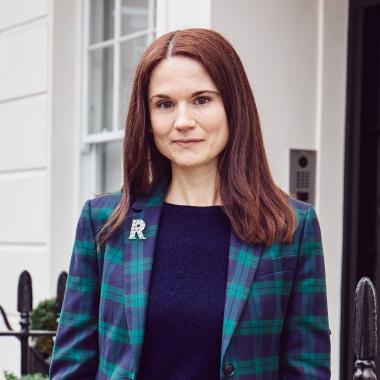
Dr Rachael Attwood
Senior Lecturer
Dr Rachael Attwood was awarded a DPhil from UCL in 2013, having previously studied at both UCL and the University of Oxford. She joined the University of Westminster in September 2015. Dr Attwood is programme leader for History and teaches on a variety of topics relating to British and Imperial History in the 19th and 20th centuries.
Her doctoral thesis is on the politics of activism against trafficking for sex work in turn-of-the-century Britain and, particularly, the representation of trafficking as 'white slavery'. She has taught at both UCL and the University of Sussex, where she was also a Research Fellow at the Centre for German-Jewish Studies.
Her current research focuses on the history of trafficking and migratory sex work in Britain and its empire, as well as on the history of trafficking and anti-trafficking actions in global Jewish communities. Dr Attwood is passionate about sharing her research outside of academia, particularly with child protection and anti-trafficking NGOs, and has acted as an advisor on a number of academic projects on the history of women's mobility and trafficking.
Our degrees teach an inclusive type of History, a History that challenges orthodoxies, amplifies marginalised voices and strives to set the record straight
Course Team
- Dr Patrick Smylie - Senior Lecturer
- Professor Pippa Catterall - Professor of History and Policy
- Dr Peter Speiser - Senior Lecturer in History
- Dr Katja Seidel - Reader
- Dr Ludivine Broch - Lecturer in HIstory
- Dr Rachael Attwood - Senior Lecturer
- Dr Lucy Bond - Head of the School of Humanities
- Dr Kate M. Graham - Senior Lecturer in English Literature (Theatre)
- Dr Simon Avery - Reader in Nineteenth-Century Literature and Culture
- Dr Gwilym Jones - Lecturer in English
- Dr John Baker - Senior Lecturer
- Dr Nigel Mapp - Senior Lecturer
- Dr Michelle Geric - Senior Lecturer in English Literature
- Dr Elinor Taylor - Senior Lecturer
Why study this course?

A city of history and literature
Discover London's 2,000 years of history and literature - our modules include visits to museums, galleries and archives, and guided field visits to sites of specific literary or historical interest.

Gain experience while you study
Take part in an internship in a museum, archive or other relevant organisation as part of your degree.

A holistic approach
By combining the study of literary texts with the study of history, you'll develop a greater understanding of the sociopolitical circumstances that influence literature.
Entry Requirements
- A Levels – CCC (96 UCAS Tariff points)
- T levels – 96 UCAS Tariff points
- International Baccalaureate – 96 UCAS Tariff points from all components of the Diploma Programme. International Baccalaureate Career-related programme will be considered on a case-by-case basis
- BTEC Extended Diploma – MMM
- BTEC Diploma – DD
- Access – 96 UCAS Tariff points from the Access course
If your first language is not English, you will need an IELTS of 6.0 overall, with 5.5 in each component.
We also welcome applications from students who are taking a combination of qualifications listed above. For further information, please contact Course Enquiries.
Direct (advanced) entry or transfer
Direct entry to Year 2 may be available for some of our programmes. You will need to have already successfully completed part of your undergraduate course elsewhere with the relevant number of credits of a comparable degree. Please note that admission to Year 3 is rarely granted. Applications for direct entry are made through UCAS, selecting the appropriate 'point of entry' whilst making your application e.g. for second year entry you would choose point of entry 2.
View more information about our entry requirements and the application process
International Baccalaureate
96 UCAS Tariff points from all components of the Diploma Programme. International Baccalaureate Career-related Programme will be considered on a case-by-case basis. You can refer to the UCAS calculator to determine your point score. Find out more about acceptance of the International and European Baccalaureate.
Other international qualifications
We accept a wide range of international high school level qualifications. Please see information on country-specific entry requirements.
International Foundation courses
We work in partnership with Kaplan International College London who provide the International Foundation Certificate at their College based in London Bridge. These courses are for students who don’t meet our direct entry requirements. Upon successful completion, you can progress to your chosen degree at the University of Westminster. Find out more about the different university preparation courses that are accepted for entry.
English language requirements
If your first language is not English, you will need an IELTS of 6.0 overall, with 5.5 in each component. Please note we accept a wide range of English language qualifications and assessments. Find out more at English language requirements.
If you don't meet the English language requirements yet, then we offer online and on campus pre-sessional English programmes to help develop your English language skills to the required level before you start your course. Find out more about our pre-sessional English programmes.
Direct (advanced) entry or transfer
We may be able to accept students into Year 2 or Year 3 if enough relevant credits from a comparable degree have been completed as part of an undergraduate course elsewhere. We will assess transcripts, module descriptions, and the number of credits completed to determine the appropriate entry level. We are unable to consider applications from international students who have failed any academic year in their current programme of study.
Applications for general direct entry are made through UCAS, selecting the appropriate 'point of entry', e.g. for second year entry, you would choose point of entry 2, for final year entry, you would choose point of entry 3.
Students who have completed an International Year One programme at a recognised partner institution can apply for year 2 entry for relevant programmes.
Study a University of Westminster degree overseas
We work in partnership with a number of academic institutions around the world that deliver a selection of our undergraduate programmes. Visit Transnational Education Partners for further information.
More information
- A Levels – CCC (96 UCAS Tariff points)
- T levels – 96 UCAS Tariff points
- International Baccalaureate – 96 UCAS Tariff points from all components of the Diploma Programme. International Baccalaureate Career-related programme will be considered on a case-by-case basis
- BTEC Extended Diploma – MMM
- BTEC Diploma – DD
- Access – 96 UCAS Tariff points from the Access course
If your first language is not English, you will need an IELTS of 6.0 overall, with 5.5 in each component.
We also welcome applications from students who are taking a combination of qualifications listed above. For further information, please contact Course Enquiries.
Direct (advanced) entry or transfer
Direct entry to Year 2 may be available for some of our programmes. You will need to have already successfully completed part of your undergraduate course elsewhere with the relevant number of credits of a comparable degree. Please note that admission to Year 3 is rarely granted. Applications for direct entry are made through UCAS, selecting the appropriate 'point of entry' whilst making your application e.g. for second year entry you would choose point of entry 2.
View more information about our entry requirements and the application process
International Baccalaureate
96 UCAS Tariff points from all components of the Diploma Programme. International Baccalaureate Career-related Programme will be considered on a case-by-case basis. You can refer to the UCAS calculator to determine your point score. Find out more about acceptance of the International and European Baccalaureate.
Other international qualifications
We accept a wide range of international high school level qualifications. Please see information on country-specific entry requirements.
International Foundation courses
We work in partnership with Kaplan International College London who provide the International Foundation Certificate at their College based in London Bridge. These courses are for students who don’t meet our direct entry requirements. Upon successful completion, you can progress to your chosen degree at the University of Westminster. Find out more about the different university preparation courses that are accepted for entry.
English language requirements
If your first language is not English, you will need an IELTS of 6.0 overall, with 5.5 in each component. Please note we accept a wide range of English language qualifications and assessments. Find out more at English language requirements.
If you don't meet the English language requirements yet, then we offer online and on campus pre-sessional English programmes to help develop your English language skills to the required level before you start your course. Find out more about our pre-sessional English programmes.
Direct (advanced) entry or transfer
We may be able to accept students into Year 2 or Year 3 if enough relevant credits from a comparable degree have been completed as part of an undergraduate course elsewhere. We will assess transcripts, module descriptions, and the number of credits completed to determine the appropriate entry level. We are unable to consider applications from international students who have failed any academic year in their current programme of study.
Applications for general direct entry are made through UCAS, selecting the appropriate 'point of entry', e.g. for second year entry, you would choose point of entry 2, for final year entry, you would choose point of entry 3.
Students who have completed an International Year One programme at a recognised partner institution can apply for year 2 entry for relevant programmes.
Study a University of Westminster degree overseas
We work in partnership with a number of academic institutions around the world that deliver a selection of our undergraduate programmes. Visit Transnational Education Partners for further information.
More information
What our students say

Hannah-Grace Murray
English Literature and History BA - 2026
I’ve found Westminster an incredible place to study, with invaluable academic support, fantastic resources in London, and a learning environment that has broadened my skills and opened countless opportunities.

Tiffany Pearmund
English Literature and History BA - 2025
My course was everything I hoped for and more. The range of modules was so diverse that I was always interested and engaged. The two subjects of my course complemented each other perfectly, giving me variety without ever feeling disconnected.
Learn new skills

Learn a new language
From Arabic to Spanish, you can learn a new language alongside your degree with our Polylang programme.

Develop your entrepreneurial skills
Access industry networking events, workshops, one-to-one business advice and start-up support through our award-winning WeNetwork.

Gain extra qualifications
We provide access to free online courses in Adobe and Microsoft Office applications, as well as thousands of specialist courses on LinkedIn Learning.
Fees and Funding
UK tuition fee: £1,675 (Price per 20-credit module)
Please note that if you defer your place, the first year’s tuition fees will be those of the academic year in which you enrol, which may be higher than the fee shown for this year.
Fees are subject to UK Government Parliamentary procedure.
Find out how we set our tuition fees.
Funding
As well as tuition fee loans, there is a range of funding available to help you fund your studies.
Find out about undergraduate student funding options.
Scholarships
The University is dedicated to supporting ambitious and outstanding students and we offer a variety of scholarships to eligible undergraduate students, which cover all or part of your tuition fees.
Find out if you qualify for one of our scholarships.
Additional costs
You should budget between £50–£100 for additional materials at Level 4, £50–£100 at Level 5 and £50–£100 at Level 6.
See also our general policy on what your tuition fees cover.
International tuition fee: £3,163 (Price per 20-credit module)
When you have enrolled with us, your annual tuition fees will remain the same throughout your studies with us. We do not increase International tuition fees.
Please note that if you defer your place, the first year’s tuition fees will be those of the academic year in which you enrol, which may be higher than the fee shown for this year.
Find out how we set our tuition fees.
EU Qualifications Welcome Award Scheme
If you are an international student accepted on an undergraduate programme starting in September at level 3 (Foundation) or level 4 (first year) on the basis of an eligible EU qualification only, you will be awarded a £4,500 tuition fee reduction off your first year of studies. For more information, see the EU Qualifications Welcome Award Scheme.
International student funding
Find out about funding for international students.
Additional costs
You should budget between £50–£100 for additional materials at Level 4, £50–£100 at Level 5 and £50–£100 at Level 6.
See also our general policy on what your tuition fees cover.
UK tuition fee: £1,675 (Price per 20-credit module)
Please note that if you defer your place, the first year’s tuition fees will be those of the academic year in which you enrol, which may be higher than the fee shown for this year.
Fees are subject to UK Government Parliamentary procedure.
Find out how we set our tuition fees.
Funding
As well as tuition fee loans, there is a range of funding available to help you fund your studies.
Find out about undergraduate student funding options.
Scholarships
The University is dedicated to supporting ambitious and outstanding students and we offer a variety of scholarships to eligible undergraduate students, which cover all or part of your tuition fees.
Find out if you qualify for one of our scholarships.
Additional costs
You should budget between £50–£100 for additional materials at Level 4, £50–£100 at Level 5 and £50–£100 at Level 6.
See also our general policy on what your tuition fees cover.
International tuition fee: £3,163 (Price per 20-credit module)
When you have enrolled with us, your annual tuition fees will remain the same throughout your studies with us. We do not increase International tuition fees.
Please note that if you defer your place, the first year’s tuition fees will be those of the academic year in which you enrol, which may be higher than the fee shown for this year.
Find out how we set our tuition fees.
EU Qualifications Welcome Award Scheme
If you are an international student accepted on an undergraduate programme starting in September at level 3 (Foundation) or level 4 (first year) on the basis of an eligible EU qualification only, you will be awarded a £4,500 tuition fee reduction off your first year of studies. For more information, see the EU Qualifications Welcome Award Scheme.
International student funding
Find out about funding for international students.
Additional costs
You should budget between £50–£100 for additional materials at Level 4, £50–£100 at Level 5 and £50–£100 at Level 6.
See also our general policy on what your tuition fees cover.
University Records and Archives
Our archival collection will provide you with hands-on experience and develop your research skills. University Records and Archives opens up a wide range of resources to you, enabling you to learn about our history and research significant themes by consulting thousands of items.

Teaching and Assessment
Below you will find how learning time and assessment types are distributed on this course. The graphs below give an indication of what you can expect through approximate percentages, taken either from the experience of previous cohorts, or based on the standard module diet where historic course data is unavailable. Changes to the division of learning time and assessment may be made in response to feedback and in accordance with our terms and conditions.
How you'll be taught
Teaching methods across all our undergraduate courses focus on active student learning through lectures, seminars, workshops, problem-based and blended learning, and where appropriate practical application. Learning typically falls into three broad categories:
- Scheduled hours: examples include lectures, seminars, practical classes, workshops, supervised time in a studio
- Placement: placement hours normally include placement opportunities, but may also include live projects or virtual activity involving employers
- Independent study: non-scheduled time in which students are expected to study independently. This may include preparation for scheduled sessions, follow-up work, wider reading or practice, completion of assessment tasks, or revision
How you'll be assessed
Our undergraduate courses include a wide variety of assessments.
Assessments typically fall into three broad categories:
- Practical: examples include presentations, videos, podcasts, lab work, creating artefacts
- Written exams: end of semester exams
- Coursework: examples include essays, reports, in-class tests, portfolios, dissertation
Data from the academic year 2025/26
Supporting you
We are ranked first in London for student support (Whatuni Student Choice Awards 2026).
Our Student Hub is where you’ll find out about the services and support we offer, helping you get the best out of your time with us.
- Study support – workshops, 1-2-1 support and online resources to help improve your academic and research skills
- Personal tutors – support you in fulfilling your academic and personal potential
- Student advice team – provide specialist advice on a range of issues including funding, benefits and visas
- Extra-curricular activities – volunteering opportunities, sports and fitness activities, student events and more

Course location
Our Regent Campus is comprised of two sites, situated on and around Regent Street – one of the most famous and vibrant streets in London.
Subjects including Criminology and Sociology, English and Creative Writing, History, Languages, Politics and International Relations and Visual Culture are based at 309 Regent Street, which includes recently refurbished social spaces, gym facilities and our Regent Street Cinema.
This course is based at Regent Street, though some teaching may take place at our other central London campuses.
For more details, visit our locations page.


CHANGES TO OUR COURSES
All content on our course pages is accurate at time of publication.
Where significant or material changes have been made, applicants will be informed of these in line with Competition and Markets Authority guidance.
Contact us
Call our dedicated team on:
+44 (0)20 7911 5000 ext 65511
Opening hours (GMT): 10am–4pm Monday to Friday
Opening hours (GMT): 10am–4pm Monday to Friday
More information
Your Westminster
Book an open day. Order a prospectus. Sign up for newsletters.