Course Overview
Attendance
* Price per academic year
Course summary
Our degree courses with Foundation year offer the opportunity to prepare you for advanced study before you progress onto a full honours degree at the University of Westminster.
Whether you do not feel ready for degree-level study, don’t have the right qualifications, want to change your subject specialism or return to study after an absence from education, we aim to encourage a broad range of students to undertake our Foundation year in order to progress onto their full honours degree with us.
The Foundation year is designed to give you the opportunity to explore new ideas, opening up new perspectives on the key debates within your chosen field. During the foundation year, you will explore a range of disciplines and get a chance to develop in your chosen field, benefiting from workshops in our high-end facilities and working with leading academics who will encourage you to become a confident and analytical thinker. Core modules accelerate your academic and professional development and you will also take modules within your chosen field, giving you the chance to develop a cross-disciplinary perspective on your course.
On successful completion of the Foundation year, you will be able to move on to study for the Data Science and Analytics BSc Honours over a further three years study. This forward-thinking course will equip you with advanced analytical, computing, and problem-solving skills that are essential for decision-making in today’s data-driven world.
In our rapidly changing global environment, the unprecedented use of social networks and the Internet of Things has led to an exponential increase in data generation.
As a result, there is a high demand for professionals who can process, understand, and effectively present data. These skills are crucial for businesses, governments, and charities that rely on data for evidence-based decision-making.
By studying this course, you will gain knowledge of the fundamental principles and technologies in mathematics, statistics, and computing. You will learn how to collect, store, prepare, analyse, and visualise data while also analysing and understanding the operations and environments of organisations.
Through hands-on projects, real-world case studies, and close ties with industry, you will develop the expertise to transform data into actionable insights that can impact business, technology, and society.
Additionally, you will have the opportunity to complete a year in industry (work placement) after your second year, helping you gain valuable work experience and enhance your employability after graduation.
Whether you aspire to become a data engineer, data analyst, machine learning engineer, or business intelligence professional, this course will prepare you to thrive in one of the fastest-growing and most in-demand fields of the digital age.
Top reasons to study with us
- Develop in-demand data skills – from coding and analytics to machine learning and AI deployment, graduating with the industry-ready skills employers need to drive data-informed decision-making
- State-of-the-art technologies and resources – access over 30 computing laboratories with an extensive range of software providing access to Linux/UNIX, Windows and Mac OS
- Start your journey as an IT professional – study a British Computer Society (BCS) accredited course, offering graduates pathways toward Chartered IT Professional (CITP) and Chartered Engineer (CEng) status. You'll also qualify for free student membership allowing you to enjoy a range of professional development and networking opportunities
- Gain knowledge and feedback from industry – engage and pitch your work to expert guest speakers and industry professionals to gain valuable feedback to prepare for your future career. Read more about Amirreza’s final year project, presenting to industry and experience on the course.
- Graduate with industry or international experience – improve your professional skills and global outlook through optional work placements and study abroad opportunities with our international partners. Previous work placements for our students have included: NHS, Unilever, Roche, Accenture, GORS, AXA Investment Managers
Professional accreditation
This course is accredited by BCS, The Chartered Institute for IT on behalf of the Engineering Council for the purposes of fully meeting the academic requirement for registration as a Chartered IT Professional and partially meeting the academic requirement for a Chartered Engineer for the period of five years until August 2028.

Modules
Types of module
Our undergraduate courses comprise three types of module:
- Core modules: compulsory modules that you must take each year
- Option modules: modules that you can choose from to tailor your course to your interests, normally related to your subject area
- Elective modules (also called 'Electives'): wider, interdisciplinary modules that you may be able to choose from to broaden your academic experience and skills – covering everything from learning a new language to building enterprise skills
Module availability
We aim to offer a wide range of option modules and electives, but we cannot always guarantee your preferred choices as availability can be affected by timetabling constraints, staff availability or student demand.
Elective modules may be subject to change, but you can look through an indicative list on our University-wide electives page.
For more information
Full details on course structure, modules, teaching and assessment can be found in the programme specification below.
Core modules
This module introduces the concepts of computing hardware and software, computer architecture and their uses for electronics and media. It also covers the fundamentals of computer networks, standards, protocols, interfaces and network security issues. The tutorial and laboratory exercises are designed not only to support the lectures but also to provide hands-on experience, skills and understanding of important aspects of computer systems and networks.
Critical thinking is fundamental to our ability to progress in an increasingly complex and changing world. It is an essential skill across a range of academic and practice-based disciplines.
This module helps you understand the importance and function of critical thinking both at university and beyond. By working in partnership with academic staff and peers, you will explore how critical thinking aligns with disciplinary practices, shapes scholarly knowledge, and addresses inequalities. Through problem-posing education and anti-racist practices, you will engage with real-world problems, fostering the ability to create a more just and sustainable world.
This module introduces practical mathematical and numerical problem solving relevant to computer science and engineering. Basic numeracy is revisited, and algebraic manipulation is revised and explored. Methods to take a real-world problem and to formulate and solve both symbolically and numerically are considered. Software tools will be used throughout. An applied, practical and real-world approach is taken whereby you'll gain skills to solve mathematical problems related to all areas of computer science and engineering gaining more confidence with numeracy related problems on your chosen course.
The module will be delivered with a combination of lectures and practical ‘hands on’ face-to-face tutorials. The material covered in this module will give you adequate necessary mathematical background to continue on any undergraduate course with the School.
This module introduces you to computer systems fundamentals and data systems fundamentals. An introduction to statistics is made and in particular how to gather, describe and visualise data collected through a survey or experiment. The aim of the module is to ensure that you have an understanding of the high-level systems and software that support data storage and retrieval to be able to work with such systems and to be able to critically and confidently operate with system stakeholders and technical partners such as data provider, storage, and data processing actors. Concepts of computer systems and data creation, storage, and retrieval systems will be introduced as well as compliance and security. This knowledge will be reinforced by practical sessions where you will create, store and retrieve data using standard tools, as well as have the opportunity to analyse and evaluate typical real-world data lifecycle scenarios. Also the module will provide practical experience in implementing databases and data querying in order to gain better understanding of data systems.
This module introduces you to the key academic, professional, and personal skills essential for success at university. It encourages good practices in writing, presentation, and time management, while also fostering reflection to help you build confidence as you transition to higher education. Open to all students enrolled in courses delivered through Westminster Foundation Pathways, the module provides a creative and supportive environment where you can reflect on and develop your academic and professional journey. You'll work with specialist facilitators who play a crucial role in guiding your academic and professional development.
With a focus on managing academic choices in a higher education setting, the module emphasises the importance of the United Nations Sustainable Development Goals (SDGs), using methodologies that prioritise equality, diversity, and inclusion. Through these lenses, you'll explore topics that prepare you to address real-world challenges as highlighted in the SDGs in a socially conscious, inclusive, and responsible manner.
This module introduces the concept of software. Students are introduced to the software development process and the design of simple programs firstly using visual methods of problem solving and then using a high-level programming language. The material covered in this module will give students a strong background and understanding to equip students to excel at Level 4 Programming modules.
Core modules
This module provides the fundamental concepts and mathematical methods required in the Computer Games Development, Smart Computer Systems, Data Science and Analytics and Computer Network Security degrees. It aims to strengthen your mathematical skills and improve your fluency in algebraic manipulation, equation solving, matrix algebra, vectors, geometry, trigonometry, transformations, calculus and statistics. The lectures will be made interactive and interspersed with hands-on worked examples and demonstrations to consolidate your understanding of a variety of problems that relate to your courses.
This module provides an introduction to interactive and generative AI systems. You'll develop the skills to optimise the responses of generative AI and apply interactive AI systems to real-world problems.
This module provides a comprehensive introduction to data modelling and database architecture. It covers foundational concepts such as relational database modelling and the use of Entity-Relationship (ER) diagrams for conceptual and logical database design. You'll gain hands-on experience with Structured Query Language (SQL), learning to perform key operations, including creating, reading, updating, and deleting (CRUD) data within a database. Through a combination of lectures and practical computing sessions, you'll become proficient in using standard database management systems and developing database-driven applications with practical programming examples. Additionally, the module explores contemporary Big Data technologies, introducing you to NoSQL databases and their applications in handling complex, large-scale data sets.
This module introduces the fundamental ideas of classical statistics. It covers descriptive statistics, the estimation of population moments using data and the basic ideas of statistical inference, hypothesis testing and interval estimation. It lays out the foundation for level 5 modules. Hence the topics such as data collection, data cleaning and data ethics are also covered.
An introduction to computer programming in a high-level programming language. The module concentrates on teaching the fundamentals of programming and algorithm design. Basic coding structures such as sequence, selection, and iteration will be covered. There will be an emphasis on practical exercises to develop programming experience and confidence.
The module aims to develop skills in the selection and implementation of problem-solving algorithms while learning the Java programming language. It will strengthen abilities in the implementation of algorithms, in terms of adherence to requirements, design and modelling, through to the application of sound programming principles. The understanding of structures and advanced programming methods will also be developed, including sorting, the implementation of classes and methods, as well as more sophisticated data structures such as lists, queues, and stacks.
Core modules
This module introduces you to the Operational Research (OR) techniques, commonly used for business analytics, such as Linear programming, forecasting, simulation and decision making. It helps you to develop and analyse analytical models that support making effective business decisions.
This module provides an applied understanding and practical experience of the data engineering pipeline to gather, understand, combine, clean, process and store data for further analysis. The module explores data pre-processing strategies and focus on both structured and unstructured data. Furthermore, the module covers issues related to data quality and governance, and metadata management.
This module is designed to equip you with the necessary skills to successfully undertake industrial projects in the IT and Data Science fields. It will develop the ability to apply project management and systems thinking methodologies to support the design and delivery of technical solutions in different global contexts. You'll be introduced to a range of contemporary development, testing and deployment strategies. You will gain valuable practical and professional experience working as part of a team on a prototype solution on behalf of an external organisation.
This module enables you to create engaging data visualisations to effectively communicate the results of data analysis to a diverse audience. You'll learn how to encode information in visual form and will create infographics and dashboards. You'll also learn to use the power of storytelling to create engaging data narratives. We use a mixture of open source tools, such as R and ggplot2 and commercial tools, like Microsoft Power BI or similar.
This module provides an understanding and hands-on experience in the fields of machine learning and data mining, covering the full life-cycle from preparing data to validating and optimising the learned model. The module covers different algorithms and approaches to machine learning and data mining, and the issues of using them on data sets of different sizes and complexity.
Option modules
This module teaches the foundations of business process management with a focus on analysing and optimising business processes using process mining and other cutting-edge techniques. You'll develop a practical understanding of how organisations operate and optimise workflows, preparing for roles where the ability to map, analyse and improve processes is crucial.
This module will teach the fundamental ideas behind the object-oriented approach to programming. It will provide you with knowledge and practical experience in writing computer programs using object-oriented programming techniques. It will cover in a practical way the design and implementation of object-oriented software for software applications through the entire software development lifecycle.
This module is designed to provide an understanding of sensing systems and signal processing, including the use of integrated smart sensing devices and the integration of sensors with computer systems. This introductory module addresses the: operational principles of standard sensors and transducers; principles of signal conditioning; methods used for the post processing (data analytics) of captured sensory data. Furthermore the module discusses the operational principles and selection of data conversion devices such as analog to digital and digital to analog converters.
Our course gives you the opportunity to take a year in industry (work placement) after completing the second year of your study. This will help you gain work experience and increase your chances of employability after you graduate.
You'll be offered help and support to find and secure placement opportunities through various workshops and events organised by the Careers and Employability Service and the course team.
Typically, you'll be assigned to roles involving tasks related to data science and analytics.
Find out more about the costs involved in taking a placement year.
Core modules
The module allows you to demonstrate in applied, written and oral forms the effective use of competences required to achieve the degree of study. It requires you to combine previously acquired knowledge and techniques, with new knowledge/ideas gained from investigation and research, and produce an extended piece of work related to the Data Science and Analytics BSc. It involves the conceptualisation, design, implementation and evaluation of a substantial piece of work which could consist of model(s), algorithm(s), software, process and/or experimental study.
In this module, you'll be introduced to key analytical topics in Operational Research, focusing on both deterministic and probabilistic approaches to decision-making. It covers Deterministic Optimisation, Stochastic Processes and Game Theory. Topics include Linear Programming, Integer Programming, Network Models, Multi-Objective Optimisation. You'll explore these in depth, with an emphasis on model formulation and solution techniques. Additionally, Markov Chains, Markov Decision Processes, and Game Theory will be introduced at an introductory level to provide you with a foundational understanding of stochastic and strategic decision-making contexts.
This module provides an introduction to the cloud computing principles and practices essential for secure and scalable AI deployment. It covers foundational topics such as cloud computing fundamentals, AI deployment workflows, and the differences between on-premise and cloud-based solutions. Students will also explore key considerations in security, compliance, and governance, along with practical aspects of real-time versus batch inference, CI/CD, and model orchestration. Additionally, the module addresses model performance tracking, experiment management, and A/B testing, ensuring a comprehensive understanding of best practices in maintaining data quality, handling data drift, and achieving model reproducibility and versioning.
This module provides a comprehensive overview of operations management. You'll be introduced to the most relevant analytical methods and techniques to develop solutions supporting key operations management decisions.
Option modules
The module will provide you with an understanding of the foundations of Artificial Intelligence and principal sub-fields of AI that have made significant impact, including but not limited to: Planning, Multi Agent Systems, Fuzzy Logic, Neural Networks, Evolutionary Computation, Computer Vision, Reinforcement Learning, Natural Language Processing, and Deep Learning. Each week an essential technique will be demonstrated via a complete implementation, followed by a presentation of the theory and conditions needed to enable you to set up and use the techniques yourself.
This module provides practical knowledge of applying Large Language Models (LLMs) and Generative Artificial Intelligence (Gen AI) in real-world business applications, along with techniques and strategies for training, tuning, and deployment. It provides the students with a technical foundation to help them bridge the gap between their taught knowledge in LLM and its counterparts' deployment in marketing, sales, finance, product, and more.
Students will learn the application of LLMs to transform business solutions while ensuring their security, resiliency, ease of management, and integration with existing technology ecosystems.
Recent advances in AI and Machine Learning make traditional financial services more accessible and play a crucial role in promoting financial opportunities for businesses. You'll explore the significant impact of FinTech on businesses, industries and financial markets through real-life examples and case studies. You'll learn how FinTech is reshaping the future of finance industry by using innovations to meet the evolving needs of businesses and enhance your employability in FinTech related job roles.

For more details on course structure, modules, teaching and assessment Download the programme specification (PDF).
To request an accessible version please email [email protected]

Get your copy of the University of Westminster prospectus and browse the range of courses on offer.

Contact us for general course enquiries:
+44 (0)20 7911 5000 EXT 65511
(Mon–Fri, 10am–4pm BST)
Live chat with us
(Mon–Fri, 10am–4pm BST)
Course Overview Videos
Learn more about this course from a member of the course team.
Once you’ve successfully completed the Foundation Year, you’ll continue onto the Data Science and Analytics BSc programme. Learn more about this course from a member of the course team.
Data Science and Analytics BSc at Westminster
Hear from final-year Data Science and Analytics BSc student, as he shares what he enjoyed most about studying his course at the University of Westminster.
Studying Computer Science and Engineering at Westminster
Watch the video below to find out more about studying Computer Science and Engineering at Westminster.
Open days
Join us at an open day online or on campus. Get a feel for student life at the University of Westminster and talk to course leaders and our support teams.
Can't attend? See more open events
More ways to meet us
Careers
We aim to create graduates who have a strong focus on solving real-world problems and the knowledge and technical capability to make an immediate impact in any organisation, whether it is in industries such as healthcare or retail, or in research or government.
Increase in demand for data professionals in five years
Demand for workers with specialist data skills more than tripled between 2013–2018.
Source: The Royal Society (Site accessed in April 2020)

State-of-the-art computing facilities
You’ll have access to 34 specialist labs, various Operating Systems (Windows 10, Unix, Linux and Mac OSX), Microsoft development software for free, and VR hardware available in our labs to develop with.
Employers
Access a network of over 3,000 employers at the University’s new home of careers and enterprise, Zone29.
Work experience
Our course gives you the opportunity to complete a year in industry (work placement) after completing the second year of your study. This will help you gain work experience and enhance your career potential.
You'll be offered help and support to find and secure placement opportunities through various workshops and events.
Typically, you'll be assigned into roles involving tasks related to data science and analytics.
Job roles
Graduates of the Data Science and Analytics BSc will seek roles including but not limited to:
- Business intelligence analyst/manager
- Data analyst/manager
- Data engineer
- Data scientist
- Operational research analyst/manager
Unlock your career potential at Zone29
Zone29 is our new home of careers and enterprise.
Our doors are set to open in spring 2026, but game-changing opportunities are available now, such as:
- jobs, placements and work experience
- tailored career guidance and mentoring
- step-by-step career planning through the Westminster Award
- work and study abroad programmes
- help with starting your own business or freelancing

International Opportunities
Many of our courses offer international study and work experiences, and the University provides other global opportunities that all students can apply for – so whatever you're studying, you'll have the chance to go abroad.
Opportunities could include:
- Taking part in semester or year-long exchanges at institutions around the world
- Attending an international summer school or field trip
- Developing your CV through volunteering or work placements abroad
International experience broadens horizons, boosts self-confidence, and improves global understanding, alongside being fantastic for your career.
Find out more about our international opportunities, including funding options and where you can go.

Course Leaders
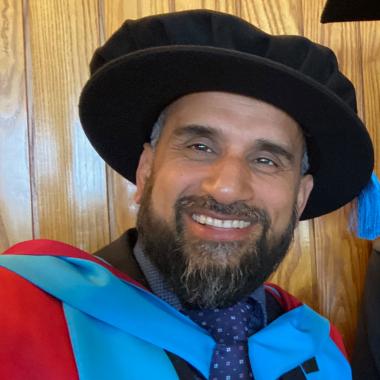
Foundation education goes beyond university preparation – it transforms how you see the world. We spark curiosity, build resilience, and develop your potential to shape the future of technology."
Dr Mohammad Shah
Lecturer
Dr Mohammad Shah is the Course Leader for Computer Science and Engineering Foundation at the University of Westminster. With over 20 years of academic and industry experience, he specialises in software engineering, intelligent systems, and cybersecurity. Dr Shah holds a PhD in AI and is a Fellow of the Higher Education Academy. Passionate about student success, he leads curriculum development and fosters an inclusive learning environment that bridges foundational knowledge with cutting-edge technologies. His leadership ensures students are well-prepared for undergraduate study and future careers in tech.
More about meSee full profile of Dr Mohammad ShahDr Salma Chahed
Senior Lecturer
Salma Chahed (DipEng, MSc, PhD, FHEA) is a Senior Lecturer in Business Analytics at the School of Computer Science and Engineering. She is also a member of the Health and Social Care Modelling Group (HSCMG) at the University of Westminster.
She has been involved in research and consultancy-based projects such as forecasting NHS continuing healthcare demand, profiling patients, modelling the capacity of a neonatal care unit, planning production and distribution of anti-cancer drugs and (re-)designing urgent care centres.
Salma has experience in teaching mathematical programming, operations management, forecasting and simulation modelling at both undergraduate and postgraduate levels. She was also involved in the organisation and delivery of professional courses specifically designed to provide modelling and analytics training for health and social care analysts and managers.
More about meSee full profile of Dr Salma Chahed
Data is everywhere. Start your data science journey with us to learn how to unlock the power of data for businesses, charities and governments.
Course Team
Why study this course?

Learn the fundamentals
Lay the foundations of your data and analytics career by studying the principles and technologies that underpin maths, statistics and computing.

Master key data science skills
Stand out from the crowd by learning how to use machine learning algorithms and statistical techniques, as well as top programming languages such as R and Python.

Study in London
Our central London location means that you'll be perfectly placed to take advantage of career and collaboration opportunities in the city.
Entry Requirements
- A Levels – DDE (64 UCAS Tariff points)
- T levels – 64 UCAS Tariff points
- International Baccalaureate – 64 UCAS Tariff points from all components of the Diploma Programme. International Baccalaureate Career-related Programme will be considered on a case-by-case basis
- BTEC Extended Diploma – MPP
- BTEC Diploma – MM
- Access – 64 UCAS Tariff points from the Access course
In addition to one of the above, you should have:
- GCSE English Language grade 4/C - IB grade 4 Higher level, GCSE Maths grade 4/C - IB grade 2, SL & HL - IB MYP 3
If your first language is not English, you will need an IELTS of 6.0 overall, with 5.5 in each component.
We also welcome applications from students who are taking a combination of qualifications listed above. For further information, please contact Course Enquiries.
View more information about our entry requirements and the application process
International Baccalaureate
64 UCAS Tariff points from all components of the Diploma Programme. International Baccalaureate Career-related Programme will be considered on a case-by-case basis. You can refer to the UCAS calculator to determine your point score. Find out more about acceptance of the International and European Baccalaureate.
Other international qualifications
We accept a wide range of international high school level qualifications. Please see information on country-specific entry requirements.
International Foundation courses
We work in partnership with Kaplan International College London who provide the International Foundation Certificate at their College based in Liverpool Street. These courses are for students who don’t meet our direct entry requirements. Upon successful completion, you can progress to your chosen degree at the University of Westminster. Find out more about the different university preparation courses that are accepted for entry.
English language requirements
If your first language is not English, you will need an IELTS of 6.0 overall, with 5.5 in each component. Please note we accept a wide range of English language qualifications and assessments. Find out more at English language requirements.
If you don't meet the English language requirements yet, then we offer online and on campus pre-sessional English programmes to help develop your English language skills to the required level before you start your course. Find out more about our pre-sessional English programmes.
More information
- A Levels – DDE (64 UCAS Tariff points)
- T levels – 64 UCAS Tariff points
- International Baccalaureate – 64 UCAS Tariff points from all components of the Diploma Programme. International Baccalaureate Career-related Programme will be considered on a case-by-case basis
- BTEC Extended Diploma – MPP
- BTEC Diploma – MM
- Access – 64 UCAS Tariff points from the Access course
In addition to one of the above, you should have:
- GCSE English Language grade 4/C - IB grade 4 Higher level, GCSE Maths grade 4/C - IB grade 2, SL & HL - IB MYP 3
If your first language is not English, you will need an IELTS of 6.0 overall, with 5.5 in each component.
We also welcome applications from students who are taking a combination of qualifications listed above. For further information, please contact Course Enquiries.
View more information about our entry requirements and the application process
International Baccalaureate
64 UCAS Tariff points from all components of the Diploma Programme. International Baccalaureate Career-related Programme will be considered on a case-by-case basis. You can refer to the UCAS calculator to determine your point score. Find out more about acceptance of the International and European Baccalaureate.
Other international qualifications
We accept a wide range of international high school level qualifications. Please see information on country-specific entry requirements.
International Foundation courses
We work in partnership with Kaplan International College London who provide the International Foundation Certificate at their College based in Liverpool Street. These courses are for students who don’t meet our direct entry requirements. Upon successful completion, you can progress to your chosen degree at the University of Westminster. Find out more about the different university preparation courses that are accepted for entry.
English language requirements
If your first language is not English, you will need an IELTS of 6.0 overall, with 5.5 in each component. Please note we accept a wide range of English language qualifications and assessments. Find out more at English language requirements.
If you don't meet the English language requirements yet, then we offer online and on campus pre-sessional English programmes to help develop your English language skills to the required level before you start your course. Find out more about our pre-sessional English programmes.
More information
What our students say

Asad Naeem
Data Science and Analytics BSc Honours - 2023
The academic support at the University has been tremendous, my favourite part about being a Westminster student so far. The lecturers are very engaging and adopt a conceptual approach, which makes learning more fun. The academic staff are always available and dedicated to helping students to reach their full academic potential.

Mehdi Zidani
Data Science and Analytics BSc Honours - 2023
The lecturers are very accessible and responsive. They’re only an email away if you ever have any questions and they respond within a reasonable time frame. In addition to lectures and seminars, the academic staff offer dedicated one-to-one meetings with students if and when they need them. I’ve seen lecturers leading modules with over 300 students and they still make the time to answer everyone’s questions.

Andreea Rodica Ursu
Data Science and Analytics BSc Honours - 2023
The computer labs are equipped with cutting-edge technology. Additionally, all students have free access to a wide range of professional tools and software provided by the university not only in the computer labs but also accessible on our personal computers.
What our students say

Amirreza Nozari Zarmehri
Data Science and Analytics BSc - 2026
My course played a crucial role in preparing me for my work placement. When I read the job description, it felt very similar to the content of our modules. Much of my work involved applying the skills I had learned in class, often to new data or different software.
Learn new skills

Learn a new language
From Arabic to Spanish, you can learn a new language alongside your degree with our Polylang programme.

Develop your entrepreneurial skills
Access industry networking events, workshops, one-to-one business advice and start-up support through our award-winning WeNetwork.

Gain extra qualifications
We provide access to free online courses in Adobe and Microsoft Office applications, as well as thousands of specialist courses on LinkedIn Learning.
Fees and Funding
UK tuition fee: £9,790 (Price per academic year)
Please note that if you defer your place, the first year’s tuition fees will be those of the academic year in which you enrol, which may be higher than the fee shown for this year.
Fees are subject to UK Government Parliamentary procedure.
Find out how we set our tuition fees.
Funding
As well as tuition fee loans, there is a range of funding available to help you fund your studies.
Find out about undergraduate student funding options.
Scholarships
The University is dedicated to supporting ambitious and outstanding students and we offer a variety of scholarships to eligible undergraduate students, which cover all or part of your tuition fees.
Find out if you qualify for one of our scholarships.
Additional costs
See what you may need to pay for separately and what your tuition fees cover.
International tuition fee: £17,600 (Price per academic year)
When you have enrolled with us, your annual tuition fees will remain the same throughout your studies with us. We do not increase International tuition fees.
Please note that if you defer your place, the first year’s tuition fees will be those of the academic year in which you enrol, which may be higher than the fee shown for this year.
Find out how we set our tuition fees.
EU Qualifications Welcome Award Scheme
If you are an international student accepted on an undergraduate programme starting in September at level 3 (Foundation) or level 4 (first year) on the basis of an eligible EU qualification only, you will be awarded a £4,500 tuition fee reduction off your first year of studies. For more information, see the EU Qualifications Welcome Award Scheme.
International student funding
Find out about funding for international students.
Additional costs
See what you may need to pay for separately and what your tuition fees cover.
UK tuition fee: £9,790 (Price per academic year)
Please note that if you defer your place, the first year’s tuition fees will be those of the academic year in which you enrol, which may be higher than the fee shown for this year.
Fees are subject to UK Government Parliamentary procedure.
Find out how we set our tuition fees.
Funding
As well as tuition fee loans, there is a range of funding available to help you fund your studies.
Find out about undergraduate student funding options.
Scholarships
The University is dedicated to supporting ambitious and outstanding students and we offer a variety of scholarships to eligible undergraduate students, which cover all or part of your tuition fees.
Find out if you qualify for one of our scholarships.
Additional costs
See what you may need to pay for separately and what your tuition fees cover.
International tuition fee: £17,600 (Price per academic year)
When you have enrolled with us, your annual tuition fees will remain the same throughout your studies with us. We do not increase International tuition fees.
Please note that if you defer your place, the first year’s tuition fees will be those of the academic year in which you enrol, which may be higher than the fee shown for this year.
Find out how we set our tuition fees.
EU Qualifications Welcome Award Scheme
If you are an international student accepted on an undergraduate programme starting in September at level 3 (Foundation) or level 4 (first year) on the basis of an eligible EU qualification only, you will be awarded a £4,500 tuition fee reduction off your first year of studies. For more information, see the EU Qualifications Welcome Award Scheme.
International student funding
Find out about funding for international students.
Additional costs
See what you may need to pay for separately and what your tuition fees cover.
Teaching and Assessment
Below you will find how learning time and assessment types are distributed on this course. The graphs below give an indication of what you can expect through approximate percentages, taken either from the experience of previous cohorts, or based on the standard module diet where historic course data is unavailable. Changes to the division of learning time and assessment may be made in response to feedback and in accordance with our terms and conditions.
How you'll be taught
Teaching methods across all our undergraduate courses focus on active student learning through lectures, seminars, workshops, problem-based and blended learning, and where appropriate practical application. Learning typically falls into three broad categories:
- Scheduled hours: examples include lectures, seminars, practical classes, workshops, supervised time in a studio
- Placement: placement hours normally include placement opportunities, but may also include live projects or virtual activity involving employers
- Independent study: non-scheduled time in which students are expected to study independently. This may include preparation for scheduled sessions, follow-up work, wider reading or practice, completion of assessment tasks, or revision
How you'll be assessed
Our undergraduate courses include a wide variety of assessments.
Assessments typically fall into three broad categories:
- Practical: examples include presentations, videos, podcasts, lab work, creating artefacts
- Written exams: end of semester exams
- Coursework: examples include essays, reports, in-class tests, portfolios, dissertation
Data from the academic year 2025/26
Supporting you
We are ranked first in London for student support (Whatuni Student Choice Awards 2026).
Our Student Hub is where you’ll find out about the services and support we offer, helping you get the best out of your time with us.
- Study support – workshops, 1-2-1 support and online resources to help improve your academic and research skills
- Personal tutors – support you in fulfilling your academic and personal potential
- Student advice team – provide specialist advice on a range of issues including funding, benefits and visas
- Extra-curricular activities – volunteering opportunities, sports and fitness activities, student events and more

Course Location
With state-of-the-art science and psychology labs and refurbished computer suites, our Cavendish Campus offers our science and technology students a range of learning spaces that are both dynamic and inspiring,
Located in central London, our Cavendish Campus is just a five-minute walk from Oxford Street and Tottenham Court Road.
For more details, visit our Cavendish Campus page.
This course is based at Cavendish, though some teaching may take place at our other central London campuses.


CHANGES TO OUR COURSES
All content on our course pages is accurate at time of publication.
Where significant or material changes have been made, applicants will be informed of these in line with Competition and Markets Authority guidance.
More information
Your Westminster
Book an open day. Order a prospectus. Sign up for newsletters.