Course Overview
Thank you for your interest. This course is now full for September 2026. For alternative start dates see the attendance options above.
Course summary
Our degree courses with Foundation year offer the opportunity to prepare you for advanced study before you progress onto a full honours degree at the University of Westminster. Whether you do not feel ready for degree-level study, don’t have the right qualifications, want to change your subject specialism or return to study after an absence from education, we aim to encourage a broad range of students to undertake our Foundation year in order to progress onto their full honours degree with us.
The Foundation year is designed to give you the opportunity to explore new ideas, opening up new perspectives on the key debates within your chosen field. During the foundation year you will explore a range of creative disciplines and get a chance to develop in your chosen field, benefiting from workshops in our high end facilities and working with leading academics who will encourage you to become a confident and creative thinker. Core modules accelerate your academic and professional development and you will also take modules within your chosen field, giving you the chance to develop a cross-disciplinary perspective on your course.
On successful completion of the Foundation year, you'll be able to move on to study for the Business Computing BSc Honours (formerly Business Information Systems BSc) over a further three years study.
Our Business Computing BSc combines key elements of computer science including, programming, databases, system analysis and design, analytics, and AI with business disciplines such as management, marketing, finance. The course emphasises the practical application of technology to solve real-world business challenges and improve digital business operations.
A career as an IT professional offers exciting and rewarding opportunities, especially as businesses increasingly rely on information systems and IT qualified managers to drive innovation, support daily operations and develop strategic plans to address future challenges and opportunities.
By studying the course, you’ll understand both the business environment in which computer systems operate, the technical aspects of how to design, build and select information systems applications to meet business needs and the value of artificial intelligence in business decisions and strategy.
Our course offers a short-term business-based learning experience that will give you the opportunity to work on a real-world business problem and put your new knowledge and skills into practice within the context of a business ecosystem, You’ll research, analyse and present a well-reasoned recommendation as a professional report or software utility to achieve certain organisational goals.
You’ll also have the opportunity to undertake a year in industry (work placement) after completing the second year of your study. This will help you gain work experience and enhance your employability.
The Business Computing BSc will prepare you for roles that bridge technology and business, including requirements and data analysis, IT management, cloud computing, entrepreneurship, information security, prompt engineering, AI and business innovation.
Top reasons to study with us
- Work on real business challenges – Gain valuable industry experience by engaging with live projects set by external organisations. You'll apply your knowledge to real-world business problems, try out ideas and develop the confidence and experience needed for internships and graduate roles
- Prepare for a career in business and digital transformation by building in-demand skills across business, IT, AI and project management, giving you the opportunity to explore your interests and prepare you for a wide range of graduate roles
- Graduate with industry or international experience – improve your professional skills, global outlook and experience new cultures through optional work placements and study abroad opportunities with our international partners
- State-of-the-art technologies and resources – access over 30 specialist computing laboratories, allowing you to experiment and become comfortable with the tools and technologies used across the industry. Our extensive range of software includes Linux/UNIX, Windows and Mac OS environments
- Showcase your work to industry – present and pitch your work to professionals, gaining valuable feedback and building your confidence. You'll also develop an independent final -year project, allowing you to explore a specialist area of business computing that aligns with your interests and career ambitions. Read more about Salvador’s final year project, presenting to industry and experience on the course.
- Start your journey as an IT professional – qualify for free British Computer Society (BCS) student membership allowing you access to a range of professional development resources, networking opportunities and a community of computing professionals
Professional accreditation
BSc Business Computing is designed to meet the educational requirements of the BCS accreditation towards CITP (Chartered IT Professional) and to partially meet the academic requirements for CEng (Chartered Engineer). The programme will be submitted for initial BCS accreditation before the first cohort graduates and, subject to BCS panel approval, accreditation is expected to be backdated to include the September 2025/26 intake.
Course Overview Videos
Learn more about this course from a member of the course team.
Modules
You’ll learn through a mixture of lectures, practical tutorials, laboratory sessions and independent study.
In Year 1 you will be introduced to business computing and information systems fundamentals, concepts, components and architectures.
In Years 2 and 3 you will follow the Specialist Themes that interest you the most.
Specialist themes
Business Computing, Entrepreneurship and Business Management
You'll focus on how value is created on cloud driven business activities through the use of IT to establish competitive advantage, and how the alignment between business strategy and technology can be managed in an efficient and effective way.
Business Computing, Machine Learning and Business Analytics
You'll focus on unlocking insights into data to improve business efficiency, financial performance and strategic management. You'll learn to interrogate information needs and transform information into knowledge, and knowledge to decisions and actions.
Business Innovation and Artificial intelligence
You'll focus on the transformative effects of artificial intelligence (AI) on business innovation and intelligence, finance, and e-commerce, on recent advancements and emerging trends in prompt engineering. In the financial sector, AI-driven solutions such as AI-powered chatbots and virtual assistants are revolutionizing risk management, fraud detection, and personalized financial services, leading to more secure and efficient systems
Business Computing and Systems Security and Assurance
You'll focus on IT security principles packed with real-world applications and examples for IT security, information assurance, and cybersecurity programs based on the Cloud paradigm.
Types of module
Our undergraduate courses comprise three types of module:
- Core modules: compulsory modules that you must take each year
- Option modules: modules that you can choose from to tailor your course to your interests, normally related to your subject area
- Elective modules (also called 'Electives'): wider, interdisciplinary modules that you may be able to choose from to broaden your academic experience and skills – covering everything from learning a new language to building enterprise skills
Module availability
We aim to offer a wide range of option modules and electives, but we cannot always guarantee your preferred choices as availability can be affected by timetabling constraints, staff availability or student demand.
Elective modules may be subject to change, but you can look through an indicative list on our University-wide electives page.
For more information
Full details on course structure, modules, teaching and assessment can be found in the programme specification below.
Core modules
This module introduces the concepts of computing hardware and software, computer architecture and their uses for electronics and media. It also covers the fundamentals of computer networks, standards, protocols, interfaces and network security issues. The tutorial and laboratory exercises are designed not only to support the lectures but also to provide hands-on experience, skills and understanding of important aspects of computer systems and networks.
Critical thinking is fundamental to our ability to progress in an increasingly complex and changing world. It is an essential skill across a range of academic and practice-based disciplines.
This module helps you understand the importance and function of critical thinking both at university and beyond. By working in partnership with academic staff and peers, you will explore how critical thinking aligns with disciplinary practices, shapes scholarly knowledge, and addresses inequalities. Through problem-posing education and anti-racist practices, you will engage with real-world problems, fostering the ability to create a more just and sustainable world.
This module introduces practical mathematical and numerical problem solving relevant to computer science and engineering. Basic numeracy is revisited, and algebraic manipulation is revised and explored. Methods to take a real-world problem and to formulate and solve both symbolically and numerically are considered. Software tools will be used throughout. An applied, practical and real-world approach is taken whereby you'll gain skills to solve mathematical problems related to all areas of computer science and engineering gaining more confidence with numeracy related problems on your chosen course.
The module will be delivered with a combination of lectures and practical ‘hands on’ face-to-face tutorials. The material covered in this module will give you adequate necessary mathematical background to continue on any undergraduate course with the School.
This module introduces you to computer systems fundamentals and data systems fundamentals. An introduction to statistics is made and in particular how to gather, describe and visualise data collected through a survey or experiment. The aim of the module is to ensure that you have an understanding of the high-level systems and software that support data storage and retrieval to be able to work with such systems and to be able to critically and confidently operate with system stakeholders and technical partners such as data provider, storage, and data processing actors. Concepts of computer systems and data creation, storage, and retrieval systems will be introduced as well as compliance and security. This knowledge will be reinforced by practical sessions where you will create, store and retrieve data using standard tools, as well as have the opportunity to analyse and evaluate typical real-world data lifecycle scenarios. Also the module will provide practical experience in implementing databases and data querying in order to gain better understanding of data systems.
This module introduces you to the key academic, professional, and personal skills essential for success at university. It encourages good practices in writing, presentation, and time management, while also fostering reflection to help you build confidence as you transition to higher education. Open to all students enrolled in courses delivered through Westminster Foundation Pathways, the module provides a creative and supportive environment where you can reflect on and develop their academic and professional journey. You'll work with specialist facilitators who play a crucial role in guiding your academic and professional development.
With a focus on managing academic choices in a higher education setting, the module emphasises the importance of the United Nations Sustainable Development Goals (SDGs), using methodologies that prioritise equality, diversity, and inclusion. Through these lenses, you'll explore topics that prepare you to address real-world challenges as highlighted in the SDGs in a socially conscious, inclusive, and responsible manner.
This module introduces the concept of software. You are introduced to the software development process and the design of simple programs, firstly using visual methods of problem solving and then using a high-level programming language. The material covered in this module will give you a strong background and understanding to equip you to excel at Level 4 programming modules.
Core modules
The rapid growth of data and its increasing complexity require businesses to adopt efficient computing solutions for data management and analysis. This module equips you with essential skills to design and implement data-driven applications that support business operations, including planning, customer management, and decision-making. You'll learn to work with modern tools such as Python, SQL, and Excel for data processing, storage, and retrieval, gaining hands-on experience in solving real-world business problems.
This module establishes a mathematical foundation for students pursuing studies in business computing and analytics. It covers key topics including algebraic expressions and their operations, equations, functions and graphs, as well as probability and statistics. The module is designed to prepare you for Level 5 modules in areas such as business computing, information systems, data science, and decision-making science.
This module aims to give you a comprehensive understanding of how information systems (IS) transform and enhance modern business operations. You'll explore various types and levels of IS, including distributed, networked, and cloud-based systems, while analysing their evolution through advancements such as IoT, cyber-physical systems, and smart manufacturing. The module also examines the ethical and legal challenges businesses face, alongside their corporate social responsibility, in a globalised context. You will delve into the application of IS in production, operations, and supply chain management, focusing on how smart/innovative technologies improve efficiency, quality control, and branding strategies. Additionally, the module investigates the evolution of digital marketing, emphasising how AI, big data, and machine learning enhance customer targeting while critically addressing the ethical implications of these practices. This integrated approach will equip you with the theoretical knowledge and practical insights necessary to navigate the complexities of technology-driven business environments effectively.
This module introduces the concepts of information systems requirements and the activity of visual modelling for the purposes of requirements specification in software development. You will learn the fundamental concepts and theories relating to requirements elicitation as well as some of the tools and techniques that are used to elicit and model requirements. You'll develop the ability to form, represent and communicate abstract models and use this skill and the knowledge gained from the module for specifying user and systems requirements for an information system.
This module provides a comprehensive introduction to data modelling and database architecture. It covers foundational concepts such as relational database modelling and the use of Entity-Relationship (ER) diagrams for conceptual and logical database design. You'll gain hands-on experience with Structured Query Language (SQL), learning to perform key operations, including creating, reading, updating, and deleting (CRUD) data within a database. Through a combination of lectures and practical computing sessions, you'll become proficient in using standard database management systems and developing database-driven applications with practical programming examples. Additionally, the module explores contemporary Big Data technologies, introducing you to NoSQL databases and their applications in handling complex, large-scale data sets.
This module introduces web technologies and covers theoretical and practical concepts of web development. It covers a variety of commonly used Internet programming languages. You'll gain practical experience of web page development, and you'll be expected to write programs and web pages conforming to given guidelines.
Core modules
This module aims to provide you with an understanding of what Agile Project Management is, adapting an Agile approach, and an understanding of respective methods, practices and frameworks. You'll develop an appreciation of the importance of project management and be able to use relevant software tool(s). You'll collaborate as part of a team to produce the project deliverable (a high-level software prototype) using an Agile approach.
The aim of this module is to equip you with an in-depth understanding of the object-oriented paradigm. You will acquire the required theoretical knowledge as well as practical skills that will allow you to develop object-oriented web-based solutions for BIS. You will learn how to undertake the analysis, the design and the development of business systems using object-oriented principles in order to produce quality systems in a productive way. Furthermore, you will learn a tool that will allow you to create web-based object-oriented programming applications.
This module will present and analyse major developments and issues in entrepreneurship and enterprise, underpinned and supported by information communication technologies, especially by cloud computing, the internet and enterprise systems. It will also encourage a mind-set in creative thinking in seeking opportunities for new information-driven start-ups and provide a critical assessment of their impact.
This module enables you to create engaging data visualisations to effectively communicate the results of data analysis to a diverse audience. You'll learn how to encode information in visual form and will create infographics and dashboards. You'll also learn to use the power of storytelling to create engaging data narratives. We use a mixture of open source tools, such as R and ggplot2 and commercial tools, like Microsoft Power BI or similar.
This module provides an understanding and hands-on experience in the fields of machine learning and data mining, covering the full life-cycle from preparing data to validating and optimising the learned model. The module covers different algorithms and approaches to machine learning and data mining, and the issues of using them on data sets of different sizes and complexity.
Option modules
This module introduces you to the Operational Research (OR) techniques, commonly used for business analytics, such as Linear programming, forecasting, simulation and decision making. It helps you to develop and analyse analytical models that support making effective business decisions.
This module teaches the foundations of business process management with a focus on analysing and optimising business processes using process mining and other cutting-edge techniques. You'll develop a practical understanding of how organisations operate and optimise workflows, preparing for roles where the ability to map, analyse and improve processes is crucial.
The module introduces you to the theoretical aspects of Human Computer Interaction (HCI) and User Experience (UX) as well as provides a practical understanding of current principles of effective interface design. The module equips you with the practical skills needed for the design and evaluation of interactive systems using a user-centred approach. It provides an understanding of the relevance and application of human abilities and limitations to the design of interactive systems and how context influences the human system interaction.
This course gives you the opportunity to take a year in industry (work placement) after completing the second year of your study. You can choose between professional experience or international experience.
The professional experience (work placement) year is planned in partnership with the Westminster Work Based Learning team. Typically, you will be assigned into roles involving tasks related to business information systems.
The international experience (study abroad) year offers one or two semesters studying at one of our overseas partner Universities. This is both an exciting experience and also one that helps you to develop a global outlook.
Find out more about the costs involved in taking a placement year.
Core modules
This module allows you to demonstrate in applied, written and oral forms the effective use of competences required to achieve the degree of study. It requires you to combine previously acquired knowledge and techniques, with new knowledge/ideas gained from investigation and research, and produce an extended piece of work related to your degree of study. You'll be required to demonstrate pertinent knowledge of Information technologies, data technologies and business networking including digital technologies and Artificial Intelligence to support the design development and management of digital businesses and enterprises.
Apply prompt engineering to build business generative AI models. This module is designed to equip you with the knowledge and skills needed to effectively integrate AI and generative AI into your business operations, processes and strategies. You will explore AI not only as an automation tool, but as a strategic enabler that transforms business operations, enhances innovation capabilities, and advances your career in an AI-business driven world.
Information Systems (IS) or Information Technology (IT) in general are now regarded as a key strategic resource by many businesses. Indeed, IS/IT can be so critical as to disrupt classic business models, threatening traditional revenue streams and even driving industry sectors to extinction. This module offers you an opportunity to explore how organisations (small to large) exploit and use IS strategically in order to enhance organisational performance. You'll utilise strategic tools and frameworks for strategic planning and for developing a digital strategy, and will learn fundamental concepts relating to strategy development and IS/IT management.
This module bridges the gap between theory and practical applications of Information Systems Security and Business Assurance. The module examines the issues involved with recognising security threats to computer systems and networks, their consequences, and methods of mitigating such threats. It provides an overview of physical and logical security, including access controls, systems security configuration and development, and business assurance risk management, operations and administration to comply with policy, legal and legislation.
Option modules
This module provides an in-depth analysis of the state-of-the-art in Big Data Analytics. In addition to providing an overview of key concepts and technological trends, the module explores how Big Data systems are implemented and utilised in the business context to derive important insight and support real-world decision making. Furthermore, the module will cover key technical challenges to Big Data Analytics, including issues relating to data governance and data quality.
The module addresses the requirements and opportunities of the burgeoning Search Engine Optimisation (SEO), Digital Marketing, Social Media and Web Analytics industry by exposing you to the theory and practice of the field. This module gives you theoretical and practical knowledge of how to effectively promote an interactive multimedia product (including web pages) in terms of SEO, email marketing, and social media marketing. It discusses different web marketing models and compares them with traditional marketing models. Furthermore, this module discusses security and privacy issues in relation to web analytics and social media.
Recent advances in AI and Machine Learning make traditional financial services more accessible and play a crucial role in promoting financial opportunities for businesses. You'll explore the significant impact of FinTech on businesses, industries and financial markets through real-life examples and case studies. You'll learn how FinTech is reshaping the future of finance industry by using innovations to meet the evolving needs of businesses and enhance your employability in FinTech related job roles.

For more details on course structure, modules, teaching and assessment Download the programme specification (PDF).
To request an accessible version please email [email protected]

Get your copy of the University of Westminster prospectus and browse the range of courses on offer.

Contact us for general course enquiries:
+44 (0)20 7911 5000 EXT 65511
(Mon–Fri, 10am–4pm BST)
Live chat with us
(Mon–Fri, 10am–4pm BST)
Business Computing BSc at Westminster
Hear from a final-year Business Information Systems BSc (now Business Computing BSc) student, as she shares what she has enjoyed most about studying her course at the University of Westminster.
Studying Computer Science and Engineering at Westminster
Watch the video below to find out more about studying Computer Science and Engineering at Westminster.
Open days
Join us at an open day online or on campus. Get a feel for student life at the University of Westminster and talk to course leaders and our support teams.
Can't attend? See more open events
Careers

Transferable skills
You'll gain the knowledge and experience to work in roles such as business analyst, change manager, IT consultant, project manager, security analyst, system analyst, systems architect and web designer.

Work placement opportunities
You’ll have the opportunity to undertake a work placement year to develop your skills and enhance your employability.
Employers
Access a network of over 3,000 employers at the University’s new home of careers and enterprise, Zone29.
Career development
Our course offers a short-term work-based learning experience by providing you with an opportunity to work on a real-life problem, which is normally set by an external organisation as a small-scale project.
This experience will allow you to put your new knowledge and skills into practice by addressing a real-life situation, usually within the context of a business-related problem.
This experience will also help you develop subject-specific technical skills as well as employability skills such as leadership, organisation and commercial awareness.
Our course also gives you the opportunity to undertake a year in industry (work placement) after completing the second year of your study and gain work experience, enhancing your employability. You'll be offered help and support to find and secure placement opportunities through various workshops and events.
Graduate employment
Graduates from this course have found employment at organisations including:
- Citi Group
- GlaxoSmithKline
- HP
- IBM
- NHS
Job roles
A fast-growing area of sustainable job growth, Business Computing prepares you for immediate employment opportunities in:
Business Analysis and Requirements Gathering
- Business Analyst
- Systems Analyst
- Data Analyst
Business Innovation and Artificial Intelligence
- Prompt engineer
- Financial analyst
- Business development manager
Application Development and Implementation
- Software/Web Developer
- Database Administrator (DBA)
Project Management
- Project Manager
- Business Project Manager
- IT Consultant
- Digital Marketing Analyst
Information systems security assurance
- Security Analyst
- Information Security Officer (ISO)
Unlock your career potential at Zone29
Zone29 is our new home of careers and enterprise, offering game-changing opportunities such as:
- jobs, placements and work experience
- tailored career guidance and mentoring
- step-by-step career planning through the Westminster Award
- work and study abroad programmes
- start-up, business and freelance support

International Opportunities
Many of our courses offer international study and work experiences, and the University provides other global opportunities that all students can apply for – so whatever you're studying, you'll have the chance to go abroad.
Opportunities could include:
- Taking part in semester or year-long exchanges at institutions around the world
- Attending an international summer school or field trip
- Developing your CV through volunteering or work placements abroad
International experience broadens horizons, boosts self-confidence, and improves global understanding, alongside being fantastic for your career.
Find out more about our international opportunities, including funding options and where you can go.

Course Leaders

Business Computing is where data becomes insight, technology becomes opportunity, and innovation creates measurable value.
Dr Alan Vallavaraj
Lecturer
Dr Alan Vallavaraj is an educator, researcher, and Course Leader in BSc Business Computing, with expertise spanning computing, Business Intelligence, artificial intelligence, electronics, media, music technology, and audio processing. He specialises in data-driven decision-making, digital transformation, business information systems, social media business, and digital marketing. His research includes evolutionary music generation, audio modelling, and human–computer interaction. Having taught across computing and International Business Management, Alan brings a multidisciplinary perspective that connects technology, creativity, business strategy, and industry practice.
More about meSee full profile of Dr Alan VallavarajDr Mohammad Shah
Senior Lecturer
Dr Mohammad Shah is the Course Leader for Computer Science and Engineering Foundation at the University of Westminster. With over 20 years of academic and industry experience, he specialises in software engineering, intelligent systems, and cybersecurity. Dr Shah holds a PhD in AI and is a Fellow of the Higher Education Academy. Passionate about student success, he leads curriculum development and fosters an inclusive learning environment that bridges foundational knowledge with cutting-edge technologies. His leadership ensures students are well-prepared for undergraduate study and future careers in tech.
More about meSee full profile of Dr Mohammad Shah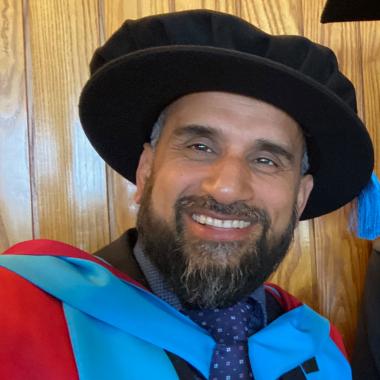
Foundation education goes beyond university preparation – it transforms how you see the world. We spark curiosity, build resilience, and develop your potential to shape the future of technology."
Course Team
- Professor Tamas Kiss - Professor in Distributed Computing
- Dr Salma Chahed - Senior Lecturer
- Dr Francois Roubert - Senior Lecturer
- Dr Fang He - Senior Lecturer
- Vassiliki Bouki - Principal Lecturer
- Huseyin Dagdeviren - Senior Lecturer
- Frantzeska Kolyda - Senior Lecturer
- Dr Mohammad Shah - Senior Lecturer
- Dr Mahmoud Aldraimli - Senior Lecturer
- Dr Rolf Banziger - Senior Lecturer
- Noam Weingarten - Senior Lecturer
Why study this course?

Get ahead before graduating
Our work placement opportunities will prepare you for your career after graduation and improve your employability.

Fantastic central London location
Based in our Cavendish Campus in central London, you’ll enjoy the benefits of studying in a global business hub.

A supportive environment
We provide our students with the right environment, support and guidance throughout their studies to keep them motivated.
Entry Requirements
- A Levels – DDE (64 UCAS Tariff points)
- T levels – 64 UCAS Tariff points
- International Baccalaureate – 64 UCAS Tariff points from all components of the Diploma Programme. International Baccalaureate Career-related Programme will be considered on a case-by-case basis
- BTEC Extended Diploma – MPP
- BTEC Diploma – MM
- Access – 64 UCAS Tariff points from the Access course
In addition to one of the above, you should have:
- GCSE English Language grade 4/C – IB grade 4 Higher Level, GCSE Maths grade 4/C – IB grade 2, SL & HL - IB MYP 3
If your first language is not English, you will need an IELTS of 6.0 overall, with 5.5 in each component.
We also welcome applications from students who are taking a combinations of qualifications listed above. For further information, please contact Course Enquiries.
View more information about our entry requirements and the application process
International Baccalaureate
64 UCAS Tariff points from all components of the Diploma Programme. International Baccalaureate Career-related Programme will be considered on a case-by-case basis. You can refer to the UCAS calculator to determine your point score. Find out more about acceptance of the International and European Baccalaureate.
Other international qualifications
We accept a wide range of international high school level qualifications. Please see information on Country-specific entry requirements.
International Foundation courses
We work in partnership with Kaplan International College London who provide International Foundation Certificate at their College based in London Bridge. These courses are for students who don't meet our direct entry requirements. Upon successful completion, you can progress to your chosen degree at the University of Westminster. Find out about the different university preparation courses that are accepted for entry.
English language requirements
If your first language is not English, you will need an IELTS of 6.0 overall, with 5.5 in each component.
Please note we accept a wide range of English language qualifications and assessments. Find out more at English language requirements.
If you don't meet the English language requirements yet, then we offer online and on campus pre-sessional English programmes to help develop your English language skills to the required level before you start your course. Find out more about our pre-sessional English programmes.
More information
- A Levels – DDE (64 UCAS Tariff points)
- T levels – 64 UCAS Tariff points
- International Baccalaureate – 64 UCAS Tariff points from all components of the Diploma Programme. International Baccalaureate Career-related Programme will be considered on a case-by-case basis
- BTEC Extended Diploma – MPP
- BTEC Diploma – MM
- Access – 64 UCAS Tariff points from the Access course
In addition to one of the above, you should have:
- GCSE English Language grade 4/C – IB grade 4 Higher Level, GCSE Maths grade 4/C – IB grade 2, SL & HL - IB MYP 3
If your first language is not English, you will need an IELTS of 6.0 overall, with 5.5 in each component.
We also welcome applications from students who are taking a combinations of qualifications listed above. For further information, please contact Course Enquiries.
View more information about our entry requirements and the application process
International Baccalaureate
64 UCAS Tariff points from all components of the Diploma Programme. International Baccalaureate Career-related Programme will be considered on a case-by-case basis. You can refer to the UCAS calculator to determine your point score. Find out more about acceptance of the International and European Baccalaureate.
Other international qualifications
We accept a wide range of international high school level qualifications. Please see information on Country-specific entry requirements.
International Foundation courses
We work in partnership with Kaplan International College London who provide International Foundation Certificate at their College based in London Bridge. These courses are for students who don't meet our direct entry requirements. Upon successful completion, you can progress to your chosen degree at the University of Westminster. Find out about the different university preparation courses that are accepted for entry.
English language requirements
If your first language is not English, you will need an IELTS of 6.0 overall, with 5.5 in each component.
Please note we accept a wide range of English language qualifications and assessments. Find out more at English language requirements.
If you don't meet the English language requirements yet, then we offer online and on campus pre-sessional English programmes to help develop your English language skills to the required level before you start your course. Find out more about our pre-sessional English programmes.
More information
Learn new skills

Learn a new language
From Arabic to Spanish, you can learn a new language alongside your degree with our Polylang programme.

Develop your entrepreneurial skills
Access industry networking events, workshops, one-to-one business advice and start-up support through our award-winning WeNetwork.

Gain extra qualifications
We provide access to free online courses in Adobe and Microsoft Office applications, as well as thousands of specialist courses on LinkedIn Learning.
Fees and Funding
UK tuition fee: £9,790 (Price per academic year)
Please note that if you defer your place, the first year’s tuition fees will be those of the academic year in which you enrol, which may be higher than the fee shown for this year.
Fees are subject to UK Government Parliamentary procedure.
Find out how we set our tuition fees.
Funding
As well as tuition fee loans, there is a range of funding available to help you fund your studies.
Find out about undergraduate student funding options.
Scholarships
The University is dedicated to supporting ambitious and outstanding students and we offer a variety of scholarships to eligible undergraduate students, which cover all or part of your tuition fees.
Find out if you qualify for one of our scholarships.
International tuition fee: £17,600 (Price per academic year)
When you have enrolled with us, your annual tuition fees will remain the same throughout your studies with us. We do not increase International tuition fees.
Please note that if you defer your place, the first year’s tuition fees will be those of the academic year in which you enrol, which may be higher than the fee shown for this year.
Find out how we set our tuition fees.
EU Qualifications Welcome Award Scheme
If you are an international student accepted on an undergraduate programme starting in September at level 3 (Foundation) or level 4 (first year) on the basis of an eligible EU qualification only, you will be awarded a £4,500 tuition fee reduction off your first year of studies. For more information, see the EU Qualifications Welcome Award Scheme.
International student funding
Find out about funding for international students.
UK tuition fee: £9,790 (Price per academic year)
Please note that if you defer your place, the first year’s tuition fees will be those of the academic year in which you enrol, which may be higher than the fee shown for this year.
Fees are subject to UK Government Parliamentary procedure.
Find out how we set our tuition fees.
Funding
As well as tuition fee loans, there is a range of funding available to help you fund your studies.
Find out about undergraduate student funding options.
Scholarships
The University is dedicated to supporting ambitious and outstanding students and we offer a variety of scholarships to eligible undergraduate students, which cover all or part of your tuition fees.
Find out if you qualify for one of our scholarships.
International tuition fee: £17,600 (Price per academic year)
When you have enrolled with us, your annual tuition fees will remain the same throughout your studies with us. We do not increase International tuition fees.
Please note that if you defer your place, the first year’s tuition fees will be those of the academic year in which you enrol, which may be higher than the fee shown for this year.
Find out how we set our tuition fees.
EU Qualifications Welcome Award Scheme
If you are an international student accepted on an undergraduate programme starting in September at level 3 (Foundation) or level 4 (first year) on the basis of an eligible EU qualification only, you will be awarded a £4,500 tuition fee reduction off your first year of studies. For more information, see the EU Qualifications Welcome Award Scheme.
International student funding
Find out about funding for international students.
What our students say

Hannah Edward
Business Information Systems BSc (now Business Computing BSc) - 2024
I find the course very stimulating as it equips me with the practical skills that are highly relevant in today's tech-driven business world. The combination of business knowledge and technical skills makes the course a valuable asset for any aspiring business or IT professional.

Salvador Maya Ponce
Business Information Systems BSc (now Business Computing BSc) - 2026
What I have enjoyed most, is how the course was designed as a complete, interconnected experience rather than a set of isolated subjects. By the time you reach the final year, you realise the course has equipped you with a full, practical toolkit for navigating the different layers of how business and technology work together.
Teaching and Assessment
Below you will find how learning time and assessment types are distributed on this course. The graphs below give an indication of what you can expect through approximate percentages, taken either from the experience of previous cohorts, or based on the standard module diet where historic course data is unavailable. Changes to the division of learning time and assessment may be made in response to feedback and in accordance with our terms and conditions.
How you'll be taught
Teaching methods across all our undergraduate courses focus on active student learning through lectures, seminars, workshops, problem-based and blended learning, and where appropriate practical application. Learning typically falls into three broad categories:
- Scheduled hours: examples include lectures, seminars, practical classes, workshops, supervised time in a studio
- Placement: placement hours normally include placement opportunities, but may also include live projects or virtual activity involving employers
- Independent study: non-scheduled time in which students are expected to study independently. This may include preparation for scheduled sessions, follow-up work, wider reading or practice, completion of assessment tasks, or revision
How you'll be assessed
Our undergraduate courses include a wide variety of assessments.
Assessments typically fall into three broad categories:
- Practical: examples include presentations, videos, podcasts, lab work, creating artefacts
- Written exams: end of semester exams
- Coursework: examples include essays, reports, in-class tests, portfolios, dissertation
Data from the academic year 2025/26
Supporting you
We are ranked first in London for student support (Whatuni Student Choice Awards 2026).
Our Student Hub is where you’ll find out about the services and support we offer, helping you get the best out of your time with us.
- Study support – workshops, 1-2-1 support and online resources to help improve your academic and research skills
- Personal tutors – support you in fulfilling your academic and personal potential
- Student advice team – provide specialist advice on a range of issues including funding, benefits and visas
- Extra-curricular activities – volunteering opportunities, sports and fitness activities, student events and more

Course location
With state-of-the-art science and psychology labs and refurbished computer suites, our Cavendish Campus offers our science and technology students a range of learning spaces that are both dynamic and inspiring,
Located in central London, our Cavendish Campus is just a five-minute walk from Oxford Street and Tottenham Court Road.
For more details, visit our Cavendish Campus page.
This course is based at Cavendish, though some teaching may take place at our other central London campuses.


CHANGES TO OUR COURSES
All content on our course pages is accurate at time of publication.
Where significant or material changes have been made, applicants will be informed of these in line with Competition and Markets Authority guidance.
Contact us
Call our dedicated team on:
+44 (0)20 7911 5000 ext 65511
Opening hours (GMT): 10am–4pm Monday to Friday
Opening hours (GMT): 10am–4pm Monday to Friday
More information
Your Westminster
Book an open day. Order a prospectus. Sign up for newsletters.