Course Overview
Course summary
Are you ready to turn curiosity about culture into credible journalism? Journalism (Lifestyle, Arts & Culture) MA at Westminster is a contemporary journalism degree for writers, creators and storytellers who want to produce influential coverage of culture, creativity and everyday life. Designed for a rapidly evolving media landscape, the course prepares you to work across print, digital, social and broadcast platforms, combining credibility with creative flair.
You’ll develop the craft of feature writing, interviewing and multiplatform storytelling, producing compelling journalism on fashion, travel, food, music, film, design and the arts. The course emphasises originality, voice and critical insight, teaching you how to spot trends, interrogate cultural narratives and create work that resonates.
Central to the course is a series of live production days, where students collaborate to create content for an online lifestyle and culture magazine and associated social channels. You’ll pitch ideas, commission and edit work, and produce stories in text, audio, video and visual formats, gaining practical experience of working to deadlines in a professional editorial environment.
Alongside production, you’ll explore the wider social, ethical and economic contexts of lifestyle journalism. The course addresses questions of representation, diversity, and sustainability in cultural coverage, equipping you to engage audiences thoughtfully while maintaining integrity in a competitive digital marketplace.
The course attracts students from a wide range of cultural backgrounds, creating an internationally focused learning environment. Inclusive reporting is fundamental to the course, with a strong emphasis on responsible storytelling and amplifying diverse voices within lifestyle, arts and cultural journalism.
Top reasons to study with us
- Develop advanced feature writing and multimedia storytelling skills across lifestyle, arts and culture
- Benefit from the opportunity to study digital audiences and influencer strategy, focusing on analytics, audience growth and professional presence
- Publish work through live editorial projects linked to an online lifestyle and culture platform
- Study in London, at the heart of global fashion, media, music and creative industries
- Get hands-on experience in our £1.2m Melvyn Williams Broadcast Suite at Harrow, with TV studios, podcasting facilities and editing suites
- Take part in live newsroom simulations that mirror professional broadcast and digital environments
- Learn from experienced journalists and guest speakers from leading media organisations
- Study full-time (one year) or part-time (two years), depending on your circumstances
- Choose from a range of modules to shape your studies to your future career plans
Course structure
You will study five core modules and a Final Journalism Project, which will be a piece of long-form journalism. You will also study one optional module. You will learn through a rich mix of teaching styles including tutorials, seminars, workshops, case studies, group projects and independent research, with the course consisting of around 70 per cent practical work and 30 per cent theory.
The following modules are indicative of what you will study on this course.
We aim to offer a wide range of option modules. However, availability may be affected by timetabling, staff availability, or student demand, so preferred choices cannot always be guaranteed.
Core modules
This module places you in newsroom environments replicating professional practice, producing live news output across broadcast and digital platforms. You'll participate in twelve weekly newsdays, covering roles from live reporting and studio presentation to gallery management and editorial leadership. Supplementary sessions provide the legal, ethical and practical frameworks needed to scaffold each newsday. Voice training is integrated to ensure broadcast-standard delivery in line with accreditation requirements. The module embeds reflection on equality, diversity and the environmental impact of reporting decisions, preparing you for fast-paced careers in broadcast and digital news.
20 credits
An exploration of the factors that influence journalistic practices in Britain and around the world. There is a detailed discussion of the theory and contexts of media law, ethical issues, regulation, and voluntary codes of conduct that must be followed by journalists. Additionally, there is also a discussion of public affairs – local and national government. To comply with the course accreditation from the BJTC it is essential that students pass the law, ethics, and public affairs test assignment to be able to graduate. Any student who fails at the first attempt can do a referral test, but that mark will be capped at a pass.
20 credits
This module introduces the craft of multiplatform reporting and writing for text, broadcast, and online outlets. You will learn how to adapt storytelling across formats, combining strong foundational skills in news and feature writing with broadcast presentation, social media strategies, and digital-first workflows. Practical newsroom-style workshops build proficiency in interviewing, research, verification, writing for online, print, voice and pictures, SEO/UX, and basic data analytics. You'll also experiment with emerging AI tools that support journalistic tasks, from transcription to headline optimisation.
20 credits
This practical studio module immerses students in the creation of multiplatform journalism. Through workshops and supervised sessions with technical staff, students gain hands-on experience in filming, editing, podcasting, mobile journalism and web publishing. Voice training is integrated to ensure broadcast-standard delivery in line with accreditation requirements. Students also experiment with AI-assisted production tools to support editorial workflows.
20 credits
This module enables you to design and deliver an independent journalism project to professional standards. Emphasising multiplatform practice, it encourages work across text, audio, video, photography and interactive formats. You'll demonstrate rigorous research, originality and ethical awareness, producing engaging journalism and a reflective analysis of your practice.
40 credits
This module combines a work placement with professional development. You'll gain industry experience and explore how technology is reshaping journalism careers. You will take initiative in securing placements that match your goals, developing self-promotion skills and industry insight.
20 credits
This module introduces the principles and practices of lifestyle journalism, focusing on features and specialist niches. You'll explore how to pitch, commission and freelance for magazines, digital outlets and branded content markets. Practical workshops develop distinctive narrative voice and style, while also integrating multimedia elements (audio, video, photography, social) into lifestyle features. You will learn how creativity and professional practice intersect in magazine, lifestyle, and entrepreneurial media contexts.
20 credits
Optional modules
In this module you'll learn about the different facets of podcast making, exploring genres (e.g. journalistic/investigative, personal storytelling, fictional narrative, sports, comedy, interest groups) and the production techniques required for specific formats. Students also learn about idea incubation, pitching, marketing and monetisation.
20 credits
This develops your practical production skills further into making documentary radio and television. Instead of reacting to immediate events as you do in broadcast news, documentary requires a more considered approach to the subject and offers time to research and dig into the topic.
20 credits
Fashion lives and thrives through stories. From the initial sketch to the shop floor, the success of a fashion designer or beauty brand is often determined through getting the right message at the right time across to the press and the public. Public relations and communications in fashion and beauty helps to create, develop and communicate these messages to a market where standing out is as important as selling well. This module introduces the exciting and innovative world of fashion and luxury PR, examines the promotional strategies it employs and offers you the opportunity to develop the practical skills required to understand and create fashion and luxury-related PR campaigns.
20 credits
This module explores how journalism attracts, engages and retains audiences in a digital-first environment. You'll learn to interpret analytics, manage online communities and design strategies to expand reach and deepen engagement. Practical sessions cover the creative use of still images, photography and multimedia content for audience growth. The module also examines personal branding and influencer strategies, enabling you to develop a professional presence in a competitive media marketplace.
20 credits
Course accreditation
The programme will apply for accreditation from the Broadcast Journalism Training Council (BJTC). As the accreditation visit includes discussions with students currently studying on the course, it takes place after the programme begins. If the application is successful and subject to approval, the accreditation is expected to apply to students starting in September 2026.

For more details on course structure, modules, teaching and assessment Download the programme specification (PDF).
To request an accessible version please email [email protected]

Get your copy of the University of Westminster prospectus and browse the range of courses on offer.

Contact us for general course enquiries:
+44 (0)20 7911 5000 EXT 65511
(Mon–Fri, 10am–4pm BST)
Live chat with us
(Mon–Fri, 10am–4pm BST)
Open evenings
Join us at an open evening online or on campus. Get a feel for student life at the University of Westminster and talk to course leaders and our support teams.
Can't attend? See more open events
Careers
Graduates pursue careers across lifestyle media, digital publications, magazines and creative agencies, working as writers, editors, content creators and social media producers. The skills developed also support careers in PR, brand storytelling, communications and digital marketing. New technologies, including AI, are changing the way newsrooms work at a rapid pace. Here at Westminster, we work closely with industry to ensure our students are not only prepared for current work practices but will be equipped to deal with the changes that are still to come. This practice-based MA also provides a strong foundation for doctoral research.

Gain job search support
Find out about jobs and industry opportunities on our dedicated media jobs site.
Employers
Access a network of over 3,000 employers at the University’s new home for careers and enterprise, Zone29.

Get an industry perspective
Spend a minimum of 10 days on placement at a media company as a mandatory part of your course.
Industry links
A key factor of the Journalism (Lifestyle, Arts & Culture) MA is its links with some of the main organisations in UK news. You’ll be taught by experienced professionals who have significant experience in multiplatform news. We host regular guest talks from senior industry figures and visit top media organisations. All students must complete two weeks’ work experience. Students secure their own placements, supported by our CareerZone platform and team, who publicise opportunities, guide you on where to search, and help with CVs, applications and interview technique.
The course benefits from our links with a range of organisations, including:
- BBC 50:50
- BJTC
- Press Association
- Royal Television Society (RTS)
- The Media Society
- The Frontline Club
- Women in Journalism
Job roles
This course will prepare you for a variety of roles in a range of present and future industries, including:
- Arts and lifestyle journalist
- Multimedia entertainment reporter/producer
- Multimedia news reporter/producer
- Video journalist
- Digital marketing producer
- Online content creator
- Public relations executive
- Advertising executive
- Social media content creator
- Researcher
Graduate employers
This course will prepare you for roles such as:
- Content editor
- Magazine editor
- Newspaper reporter
- Publisher
- Social media manager
- Video journalist
Graduates from this course have gone on to work at companies including:
- BBC Interactive
- Rolling Stone India
- Sky News
- The Guardian
- The Independent
Accelerate your career at Zone29
Zone29 is our new home of careers and enterprise, offering game-changing opportunities such as:
- jobs and placements
- tailored career advice and industry mentoring
- careers events led by industry experts
- start-up and freelance support
- structured career planning through the Westminster Award

Course Leader

Jim Grice
Senior Lecturer
Jim Grice worked across the UK news industry for 25 years before becoming a lecturer. In that time, he worked for the BBC in local radio and national radio news, before switching to the BBC News channel and BBC Breakfast. He then worked for Sky as a Programme Editor for Channel 5 News before switching to online coverage, serving as Head of Video for the Press Association for 7 years. He has covered a range of major national and international news, entertainment and sporting events in the UK and overseas. He has been lecturing at Westminster University since 2022, becoming Course Leader in January 2026.
Journalism is rapidly evolving through AI and new technologies. Our Postgraduate Journalism courses equip aspiring journalists with the skills needed to succeed in a changing industry.
Course Team
Why study this course?

Respected by industry
The course is accredited by the Broadcast Journalism Training Council.

London location
Some modules are delivered in central London allowing students to cover stories in the heart of the city.

Access exceptional facilities
Get hands-on in our £1.2m Melvyn Williams Broadcast Suite which hosts industry-standard newsroom facilities.
Entry Requirements
A minimum of a lower second class honours degree (2:2). Applicants who don’t meet the minimum criteria but have relevant work experience are encouraged to apply.
Applicants are required to include a link to one sample of their own published work in their personal statement. This could be a sample of writing (in English), video or audio output (e.g. a blog post, a published news article, YouTube video or similar).
If your first language is not English, you should have an IELTS 7.0 with 6.0 in writing and no element below 5.5.
Recognition of prior learning and experience
If you have previously studied at university level, or have equivalent work experience, academic credit may be awarded towards your course at Westminster. For more information, visit our Recognition of Prior Learning page.
Application process
Visit our How to apply page for more information on:
- the application process
- what you need to apply
- deadlines for applications
A minimum of a lower second class honours degree (2:2). Applicants who don’t meet the minimum criteria but have relevant work experience are encouraged to apply.
Applicants are required to include a link to one sample of their own published work in their personal statement. This could be a sample of writing (in English), video or audio output (e.g. a blog post, a published news article, YouTube video or similar).
If your first language is not English, you should have an IELTS 7.0 with 6.0 in writing.
International qualifications
We accept a wide range of international qualifications. Please see information on country-specific entry requirements.
Application process
Visit our How to apply page for more information on:
- the application process
- what to include with your application
- deadlines for application and enrolment
More information
A minimum of a lower second class honours degree (2:2). Applicants who don’t meet the minimum criteria but have relevant work experience are encouraged to apply.
Applicants are required to include a link to one sample of their own published work in their personal statement. This could be a sample of writing (in English), video or audio output (e.g. a blog post, a published news article, YouTube video or similar).
If your first language is not English, you should have an IELTS 7.0 with 6.0 in writing and no element below 5.5.
Recognition of prior learning and experience
If you have previously studied at university level, or have equivalent work experience, academic credit may be awarded towards your course at Westminster. For more information, visit our Recognition of Prior Learning page.
Application process
Visit our How to apply page for more information on:
- the application process
- what you need to apply
- deadlines for applications
A minimum of a lower second class honours degree (2:2). Applicants who don’t meet the minimum criteria but have relevant work experience are encouraged to apply.
Applicants are required to include a link to one sample of their own published work in their personal statement. This could be a sample of writing (in English), video or audio output (e.g. a blog post, a published news article, YouTube video or similar).
If your first language is not English, you should have an IELTS 7.0 with 6.0 in writing.
International qualifications
We accept a wide range of international qualifications. Please see information on country-specific entry requirements.
Application process
Visit our How to apply page for more information on:
- the application process
- what to include with your application
- deadlines for application and enrolment
More information
What our students say

Shaurya Thapa
Journalism (Lifestyle, Arts and Culture) MA (formerly Multimedia Journalism MA (Print and Online)) - 2024
The course stood out for its hands-on approach—featuring regular news days, fieldwork, and on-the-ground reporting tasks. The integration of social media content creation and multimedia storytelling alongside core journalism and media law modules made it a well-rounded and future-facing programme.
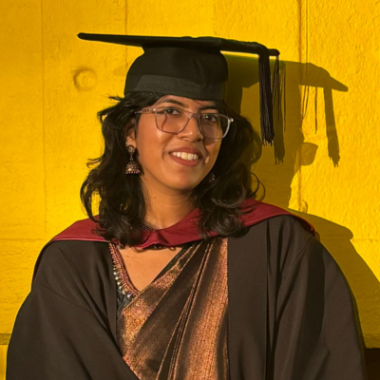
Malavika Pradeep
Journalism (Lifestyle, Arts and Culture) MA (formerly Multimedia Journalism MA (Print and Online)) - 2024
The University of Westminster will always provide you the right space to thrive academically and personally. The curriculum is well-planned, facilities are constantly evolving, the mix of cultures is unparalleled, and lecturers always want what's best for you.
What our alumni say

Learn new skills

Volunteer and gain new skills
Learn new skills, create connections and make a difference in the community through our volunteering opportunities.
Gain entrepreneurial expertise
Access industry networking events, workshops, one-to-one business advice and start-up support through our award-winning WeNetwork.

Get extra qualifications
Free access to online courses in Adobe and Microsoft Office, and specialist training on LinkedIn Learning.
Fees and Funding
UK tuition fee: £11,315 (Price per academic year)
When you have enrolled with us, your annual tuition fees will remain the same throughout your studies with us. We do not increase your tuition fees each year.
Find out how we set our tuition fees.
Paying your fees
If you don't wish to pay the whole amount of your fees at once, you may be able to pay by instalments. This opportunity is available if you have a personal tuition fee liability of £2,000 or more and if you are self-funded or funded by the Student Loans Company.
Find out more about paying your fees.
Alumni discount
This course is eligible for an alumni discount. Find out if you are eligible and how to apply by visiting our Alumni discounts page.
Funding
There is a range of funding available that may help you fund your studies, including Student Finance England (SFE).
Find out more about postgraduate student funding options.
Scholarships
The University is dedicated to supporting ambitious and outstanding students and we offer a variety of scholarships to eligible postgraduate students.
Find out if you qualify for one of our scholarships.
International tuition fee: £18,685 (Price per academic year)
When you have enrolled with us, your annual tuition fees will remain the same throughout your studies with us. We do not increase your tuition fees each year.
Find out how we set our tuition fees.
Paying your fees
If you don't wish to pay the whole amount of your fees at once, you may be able to pay by instalments. This opportunity is available if you have a personal tuition fee liability of £2,000 or more and if you are self-funded or funded by the Student Loans Company.
Find out more about paying your fees.
Alumni discount
This course is eligible for an alumni discount. Find out if you are eligible and how to apply by visiting our Alumni discounts page.
Funding
There are a number of funding schemes available to help you fund your studies with us.
Find out more about funding for international students.
Scholarships
The University is dedicated to supporting ambitious and outstanding students and we offer a variety of scholarships to eligible postgraduate students.
Find out if you qualify for one of our scholarships.
UK tuition fee: £11,315 (Price per academic year)
When you have enrolled with us, your annual tuition fees will remain the same throughout your studies with us. We do not increase your tuition fees each year.
Find out how we set our tuition fees.
Paying your fees
If you don't wish to pay the whole amount of your fees at once, you may be able to pay by instalments. This opportunity is available if you have a personal tuition fee liability of £2,000 or more and if you are self-funded or funded by the Student Loans Company.
Find out more about paying your fees.
Alumni discount
This course is eligible for an alumni discount. Find out if you are eligible and how to apply by visiting our Alumni discounts page.
Funding
There is a range of funding available that may help you fund your studies, including Student Finance England (SFE).
Find out more about postgraduate student funding options.
Scholarships
The University is dedicated to supporting ambitious and outstanding students and we offer a variety of scholarships to eligible postgraduate students.
Find out if you qualify for one of our scholarships.
International tuition fee: £18,685 (Price per academic year)
When you have enrolled with us, your annual tuition fees will remain the same throughout your studies with us. We do not increase your tuition fees each year.
Find out how we set our tuition fees.
Paying your fees
If you don't wish to pay the whole amount of your fees at once, you may be able to pay by instalments. This opportunity is available if you have a personal tuition fee liability of £2,000 or more and if you are self-funded or funded by the Student Loans Company.
Find out more about paying your fees.
Alumni discount
This course is eligible for an alumni discount. Find out if you are eligible and how to apply by visiting our Alumni discounts page.
Funding
There are a number of funding schemes available to help you fund your studies with us.
Find out more about funding for international students.
Scholarships
The University is dedicated to supporting ambitious and outstanding students and we offer a variety of scholarships to eligible postgraduate students.
Find out if you qualify for one of our scholarships.
Broadcast Suite
Our Broadcast Suite is designed to give students a realistic experience of working in the UK news and digital media industries.
The suite features a fully equipped TV news set with professional cameras and lighting, while the surrounding space is fitted with interactive touchscreens to create an immersive and engaging learning environment. In addition to TV and video production, the Broadcast Suite is designed for modern multi-platform journalism. Students can produce video, audio, podcasts, social media and online content simultaneously, reflecting the workflows used by many of the UK’s leading media organisations.
Learn more about our Broadcast Suite.

Teaching and Assessment
Below you will find how learning time and assessment types are distributed on this course. The graphs below give an indication of what you can expect through approximate percentages, taken either from the experience of previous cohorts, or based on the standard module diet where historic course data is unavailable. Changes to the division of learning time and assessment may be made in response to feedback and in accordance with our terms and conditions.
How you’ll be taught
Teaching methods across all our postgraduate courses focus on active student learning through lectures, seminars, workshops, problem-based and blended learning, and where appropriate practical application. Learning typically falls into two broad categories:
- Scheduled hours: examples include lectures, seminars, practical classes, workshops, supervised time in a studio
- Independent study: non-scheduled time in which students are expected to study independently. This may include preparation for scheduled sessions, dissertation/final project research, follow-up work, wider reading or practice, completion of assessment tasks, or revision
How you’ll be assessed
Our postgraduate courses include a variety of assessments, which typically fall into two broad categories:
- Practical: examples include presentations, podcasts, blogs
- Coursework: examples include essays, in-class tests, portfolios, dissertation
Data from the academic year 2024/25
Research groups
Our research achieves real-world impact and we are proud to claim a rich and diverse profile of high-quality research and knowledge exchange in a wide range of disciplines.
Find out more about our research groups related to this course:

Supporting you
We are ranked first in London for student support (Whatuni Student Choice Awards 2026).
Our Student Hub is where you’ll find out about the services and support we offer, helping you get the best out of your time with us.
- Study support – workshops, 1-2-1 support and online resources to help improve your academic and research skills
- Personal tutors – support you in fulfilling your academic and personal potential
- Student advice team – provide specialist advice on a range of issues including funding, benefits and visas
- Extra-curricular activities – volunteering opportunities, sports and fitness activities, student events and more

Course Location
Harrow is our creative and cultural hub, home to most of our arts, media and digital courses. It houses state-of-the-art facilities for every discipline, including project and gallery spaces, film studios, creative labs, collaborative learning spaces, and the Westminster Enterprise Network.
Harrow Campus is based in north-west London, just 20 minutes from the city centre by train.
For more details, visit our Harrow Campus page.
This course is based at our Harrow Campus, but to make the most of our teaching spaces and wider learning opportunities, some modules or activities may take place at our central London campuses. These may include guest lectures, degree shows or other teaching activities.


CHANGES TO OUR COURSES
All content on our course pages is accurate at time of publication.
Where significant or material changes have been made, applicants will be informed of these in line with Competition and Markets Authority guidance.
Contact us
Call our dedicated team on:
+44 (0)20 7911 5000 ext 65511
Opening hours (GMT): 10am–4pm Monday to Friday
Opening hours (GMT): 10am–4pm Monday to Friday
More information
Your Westminster
Book an open day. Order a prospectus. Sign up for newsletters.