Course Overview
Course summary
Media doesn’t just report the world: it informs how we see, experience, and act within it.
The contemporary media environment presents intense challenges for institutions, industries and audiences. The growing influence of AI, rising tensions in online cultures, and debates over the regulation of global platforms are reshaping media systems and raising urgent questions about power, responsibility, and global impact.
The Media and Communication MA aims to enable you to navigate this complex media ecosystem. Through real-world case studies, diverse theoretical perspectives and professionally oriented assessment, it will provide you with advanced skills and qualities that are increasingly valued across media, policy, and cultural industries.
Through core modules, you’ll examine the impact of technological developments on media regulation, cultural production, and audience experience, and investigate global forms of popular entertainment such as animation, gaming and online drama. You’ll also develop hands-on experience in conducting research, learning how to define your own questions and to apply media theory to create impactful, sustainable projects. In addition, your choice of optional modules will enable you to gain practical experience in areas such as podcast production, social media campaign design and business planning and pitching.
The course is delivered by research-active academics with industry experience across major broadcasters and media companies in London, (the UK’s media hub) and other parts of the world.
With its distinctive focus on the relationship between media policy, industry practice and global popular culture, the course draws on Westminster’s 50+ years of teaching media studies to prepare graduates for fields such as digital strategy, communications, media policy and consultancy, as well as providing a foundation for doctoral studies.
Top reasons to study with us
- Question today’s media and politics, shape tomorrow’s public conversations. Studying our Media and Communication MA, you’ll interrogate how power, platforms and publics interact, and develop original research, sharp analysis and persuasive communication.
- You’ll be taught by academics from Westminster’s Communication and Media Research Institute (CAMRI), a world‑leading centre for critical research on media, democracy and political communication, learning with academics who influence global policy debates and practitioners with frontline industry experience.
- From podcasting and pitching to policy analysis, campaigning and digital storytelling, optional modules let you build a mix of critical and practical skills.
- Based 20 minutes from central London’s media, political and cultural institutions, you’ll learn in the heart of UK public life. Our students go on to careers in the creative industries, politics, government, NGOs, global organisations – or progress to a PhD.
Course structure
The following modules are indicative of what you’ll study on this course.
We aim to offer a wide range of option modules. However, availability may be affected by timetabling, staff availability, or student demand, so preferred choices cannot always be guaranteed.
Core modules
This module guides you through the process of planning, developing, and completing an independent dissertation or professional project. You will identify your own area of research interest or professional inquiry and, with the guidance of an allocated supervisor, shape it into a meaningful question, focus, or goal. Workshops provide support in key aspects of the research process, including project design, data collection and analysis, and academic writing. Throughout the module, you will also engage in structured opportunities to refine and develop your ideas, ensuring that the final written submission is the result of a well-supported and iterative research process.
20 credits
Research expertise is increasingly important across a wide range of career paths. This module equips you with essential research skills for media and related fields, providing a foundation in methods that cuts across disciplines, approaches, contexts, and sectors. Emphasis is placed on how data is made and put to use across different contexts. Using real-world case studies and scenarios, along with hands-on workshops in data collection and analysis, you will explore diverse methods and data types, assessing their strengths, limitations, and relevance to scholarly, policy, industry, and civil society audiences. You will learn to critique existing research, make informed methodological and ethical decisions, and reflect on how a range of values and assumptions shape the research process.
20 credits
This module explores what makes global media content gratifying, popular, and global by combining theoretical approaches with practical analysis. You will systematically examine a diverse range of “global” media texts—including animation, gaming, online drama, global sports, comedy, and influencer videos. By engaging in lectures and seminars, you will investigate the unique features of global digital texts, cultures, and practices, critically considering what makes these forms both globally resonant and entertaining. The module prioritises active engagement with media, giving you opportunities to apply and reflexively critique established theories of global media, enhancing both your analytical and practical understanding.
20 credits
This module prepares you for dynamic careers in media, communications, and policy by exploring how technological change, power structures, and regulation shape today’s media landscape. By examining the impact of streaming services, digital platforms, and artificial intelligence on media industries, cultural production, and audience experience, you gain insights that are highly valued in fields such as digital strategy, communications, media policy, and technology consultancy. The module emphasises critical analysis of global (geo)political, social, cultural, economic, and environmental factors, helping you develop critical thinking skills to address real-world challenges in contemporary media settings.
20 credits
This module examines how media theory can be used to approach and address some of the key challenges of the contemporary media landscape. Rather than offering fixed answers, it focuses on asking questions and developing skills in critical enquiry that are essential in the context of rapidly changing digital media environments. During the module, you will examine a series of real-world problems relating to media, culture, and society from diverse global theoretical perspectives. You will also develop and critically frame your own urgent questions, learning to apply media theory in practical ways to create impactful projects that contribute to sustainable improvements to society, the economy, and the environment.
20 credits
Option modules
This module requires you to work in teams. Initially, you will use your group as a brainstorming unit, going through the ideation process and sharing digital media business ideas with each other. You will each develop one original digital media business idea and submit it individually as a lean feasibility study (formative submission).
Based on feedback from the lecturer, your group will then select the best or most feasible idea to develop into a business plan proposal for a new digital media start-up (CW1). For CW2, you will individually pitch your group’s business plan to a panel of industry experts.
20 credits
This module begins with an overview of media audiences, and goes on to analyse audiences and media institutions, passive/ active audiences, media influence and effects, and ethnography and media audiences. The second part of the module is devoted to discussions of media and identity, fans, diasporas and new media audiences.
20 credits
This module offers a critical assessment of the role of media in political mobilization, social movements, dissent, wars, conflicts, elections, and political and social crises. The module considers the impact of different forms of censorship and regulation on social, political and cultural expression in the media. It also looks at the impact of the internet and new means of transparency and communications on journalism and activism in a range of circumstances from secure democracies through different kinds of political systems.
20 credits
This module will introduce you to the political economy approach to analysing the production, distribution and consumption of media content in text and audiovisual form, whether online or offline, as well as the workings of telecoms networks behind online media. It identifies distinctive economic features of media and relates these to trends in the organisation of specific media industries, taking account of ways in which the economics of media have been affected by the spread of digital technologies.
20 credits
If your first language is not English, or you have no experience of the British education system, you will benefit from this module. You will be taken through the process of producing a piece of written work, from note taking to editing, so as to enable you to produce written work in accordance with current British academic standards and practices.
20 credits
We are surrounded by artificial intelligence (AI) applications, whether we are aware of this or not. From personal assistants to automated news, from facial recognition technologies to self-driving cars, these are just a few examples of how AI is already impacting our lives. This module explains what AI is and offers a systematic overview of what is behind AI. It also looks into the controversies and challenges related to AI. The module teaches you to think critically about AI and assess the societal impact of AI. By mapping a broad range of applications, issues arising, and key debates, the module will equip you with a systematic understanding of current AI developments and their impact on society.
20 credits
In this module, you will learn about the different facets of podcast making, exploring genres (e.g. journalistic/investigative, personal storytelling, fictional narrative, sports, comedy, interest groups) and the production techniques required for specific formats. You will also learn about idea incubation, pitching, marketing and monetisation.
20 credits
This module investigates the transformation of the entire global media landscape. You will examine how a diverse spectrum of organisations, from public service broadcasters and government agencies to community media, activist NGOs, and global digital platforms, are evolving their strategies in the face of technological, social, and economic disruption. You will develop a critical framework for understanding these shifts and gain hands-on experience with strategic foresight tools, enabling you to confidently analyse and anticipate the future of the media ecosystem in an evidence-based way.
20 credits

For more details on course structure, modules, teaching and assessment Download the programme specification (PDF).
To request an accessible version please email [email protected]

Get your copy of the University of Westminster prospectus and browse the range of courses on offer.

Contact us for general course enquiries:
+44 (0)20 7911 5000 EXT 65511
(Mon–Fri, 10am–4pm BST)
Live chat with us
(Mon–Fri, 10am–4pm BST)
Open evenings
Join us at an open evening online or on campus. Get a feel for student life at the University of Westminster and talk to course leaders and our support teams.
Can't attend? See more open events
Careers
The degree will benefit those seeking a competitive edge in a career market that values high-level skills in communication, research and critical thinking. Our graduates have gone on to media organisations in the UK and around the world, some progressing to government or regulatory roles in the public sector, broader international organisations and NGOs. Others pursue research through a PhD. For people already working in media jobs, the course can be a route to a more senior role within their organisation, or to a different sector of the media.

Industry engagement
We have strong links with media organisations around the world such as the BBC and CGTN.

Networking opportunities
Build your network through a varied programme of events including external speakers, workshops and conferences.
Employers
Access a network of over 3,000 employers at the University’s new home of careers and enterprise, Zone29.
Industry links
We have strong links with media organisations around the world. Previous external speakers have included the Senior Content Editor of the Times and Sunday Times, and visits to media organisations such as CGNT Europe and the Frontline Club. In addition, CAMRI runs regular seminars, workshops and conferences which our students can attend for free. These workshops and conferences bring together academic researchers, industry representatives, as well as regulators and policymakers.
Job roles
- Policy Analyst/Advisor
- Audience Researcher
- Communication Campaign Manager
- Consultant
- Digital Communication Strategist
- Journalist
- Information Officer
- Communication Information Manager
- Evidence & Impact Officer
- NGO Media Manager
Graduate employers
Graduates from the subject Media and Communication have found roles in a wide variety of media and communications organisations, including:
- Amazon Web Services
- BBC World Service
- CGTN/CCTV
- KBS (Korea)
- Netflix India
- Shanghai Media Group
- Tencent
- Twitter India
- Xinhua News Agency
The roles recent graduates have gone on to include:
- CCTV - Europe Bureau Chief
- CGTN – Head of News Commentary Department
- Xinhua News Agency (Germany) – Executive Deputy Bureau Chief
- Xinhua (North America) – Bureau Chief
- Shanghai Media Group – Senior Editor
Accelerate your career at Zone29
Zone29 is our new home of careers and enterprise, offering game-changing opportunities such as:
- jobs and placements
- tailored career advice and industry mentoring
- careers events led by industry experts
- start-up and freelance support
- structured career planning through the Westminster Award

What our Graduates Say

Diana Dikhanbayeva
Media and Communication MA (formerly Communication MA) - 2025
The academic support was one of the most valuable aspects of my experience. Across the programme, I was fortunate to learn from a number of excellent lecturers who created a genuinely supportive and intellectually engaging environment.

Alex Best
Media and Communication MA (formerly Communication MA) - 2025
One of the reasons I was drawn to the University was its strong research background in communications. The MA also gave me the opportunity to study different aspects of communications, including the increasing involvement of artificial intelligence, policy, and activism.

Priyal Yadav
Media and Communication MA (formerly Global Media MA) - 2023
I enjoyed every aspect of my course. It was versatile, academically challenging, and combined theory with research and contemporary issues.
What our Graduates Say

Marija Tomsone
Communication MA - 2022
Westminster is an amazingly diverse place, offering students unique experiences and helping them to determine and achieve their life goals. I have spent five years at Westminster, and now, at the end of my journey, I know my experience in London would not be the same without it.
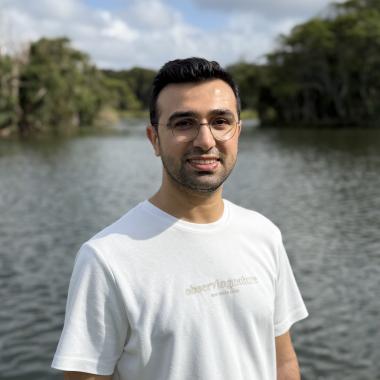
Omer Avci
Media and Communication MA (formerly Global Media MA) - 2022
The diverse academic environment and the international nature of the city together gave me a broader perspective and a more global outlook.

Xin Chen
Communication MA - 2022
I really like that my course provides theoretical knowledge about communication and media while combining theories with real-world issues. For our final major project, we are encouraged to conduct it on social issues we care about. Our group discussions during seminars allow us to express our ideas and share personal stories, which I find really motivating.
Course Leader

Professor Maria Michalis
Professor
Maria Michalis is Professor of Communication Policy and Deputy Director of the Communication and Media Research Institute (CAMRI). She is also Co-President of the International Association of Public Media Researchers (IAPMR). Her current work focuses on digital governance, the future of public service media and digital sustainability. She is author of “Governing European Communications” and has published numerous refereed academic articles and book chapters. Maria is regularly called upon by industry and regulators for expert input – in 2024–25, she contributed to the Systemic Threats to Public Service Media initiative by the Council of Europe and partner organisations.
This MA empowers students to understand, question, and actively shape the contemporary media landscape, while developing valuable research and professional skills.
Course Team
Why study this course?

Leading provider
We’re ranked top 16 in the UK for communication and media studies in the QS World University Rankings 2024.

Learn from experts
You’ll be taught by internationally-renowned researchers within our world-leading research centre CAMRI.

Close to London’s media industries
Based 20 mins from central London, you’ll be well-placed to access networking and placement opportunities.
Entry Requirements
A minimum of a lower second class honours degree (2:2).
If your first language is not English you should have an IELTS 6.5 overall, with at least 5.5 in each element.
A personal statement is required.
Recognition of prior learning and experience
If you have previously studied at university level, or have equivalent work experience, academic credit may be awarded towards your course at Westminster. For more information, visit our Recognition of Prior Learning page.
Application process
Visit our How to apply page for more information on:
- the application process
- what you need to apply
- deadlines for applications
A minimum of a lower second class honours degree (2:2). We consider applicants with qualifications in a wide range of subject areas, and do not require any specific subjects.
If your first language is not English you should have an IELTS 6.5 overall, with at least 5.5 in each element.
A personal statement is required.
International qualifications
We accept a wide range of international qualifications. Please see information on country-specific entry requirements.
Application process
Visit our How to apply page for more information on:
- the application process
- what to include with your application
- deadlines for application and enrolment
More information
University preparation courses
Our partner college, Kaplan International College London, offers Pre-Master’s courses that, upon successful completion, offer entry to a wide range of postgraduate degree at Westminster.
Find out more about the range of university preparation courses available.
A minimum of a lower second class honours degree (2:2).
If your first language is not English you should have an IELTS 6.5 overall, with at least 5.5 in each element.
A personal statement is required.
Recognition of prior learning and experience
If you have previously studied at university level, or have equivalent work experience, academic credit may be awarded towards your course at Westminster. For more information, visit our Recognition of Prior Learning page.
Application process
Visit our How to apply page for more information on:
- the application process
- what you need to apply
- deadlines for applications
A minimum of a lower second class honours degree (2:2). We consider applicants with qualifications in a wide range of subject areas, and do not require any specific subjects.
If your first language is not English you should have an IELTS 6.5 overall, with at least 5.5 in each element.
A personal statement is required.
International qualifications
We accept a wide range of international qualifications. Please see information on country-specific entry requirements.
Application process
Visit our How to apply page for more information on:
- the application process
- what to include with your application
- deadlines for application and enrolment
More information
University preparation courses
Our partner college, Kaplan International College London, offers Pre-Master’s courses that, upon successful completion, offer entry to a wide range of postgraduate degree at Westminster.
Find out more about the range of university preparation courses available.
What our Students say
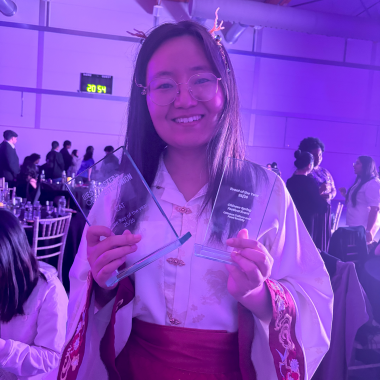
Jiabei Jia
Media and Communication MA (formerly Global Media MA) - 2026
London is a diverse and creative city, so I have been able to learn about media and culture not only in the classroom, but also through everyday life, museums, events, performances and different communities.
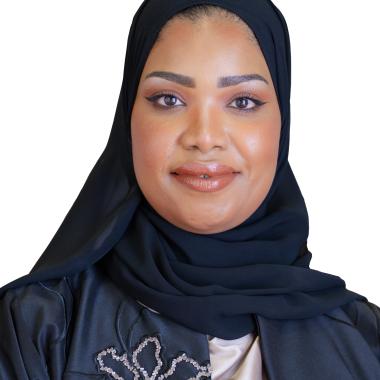
Najya Al Balushi
Media and Communication MA (formerly Communication MA) - 2026
I chose the University of Westminster because of its strong reputation in media and communication studies, its diverse international environment, and its location in the heart of London.
Learn new skills

Volunteer and gain new skills
Learn new skills, create connections and make a difference in the community through our volunteering opportunities.

Gain entrepreneurial expertise
Access industry networking events, workshops, one-to-one business advice and start-up support through our award-winning WeNetwork.

Get extra qualifications
Free access to online courses in Adobe and Microsoft Office, and specialist training on LinkedIn Learning.
Fees and Funding
UK tuition fee: £11,315 (Price per academic year)
When you have enrolled with us, your annual tuition fees will remain the same throughout your studies with us. We do not increase your tuition fees each year.
Find out how we set our tuition fees.
Paying your fees
If you don't wish to pay the whole amount of your fees at once, you may be able to pay by instalments. This opportunity is available if you have a personal tuition fee liability of £2,000 or more and if you are self-funded or funded by the Student Loans Company.
Find out more about paying your fees.
Alumni discount
This course is eligible for an alumni discount. Find out if you are eligible and how to apply by visiting our Alumni discounts page.
Funding
There is a range of funding available that may help you fund your studies, including Student Finance England (SFE).
Find out more about postgraduate student funding options.
Scholarships
The University is dedicated to supporting ambitious and outstanding students and we offer a variety of scholarships to eligible postgraduate students.
Find out if you qualify for one of our scholarships.
Additional costs
Find out more about what you may need to pay for and what your tuition fees cover.
International tuition fee: £18,685 (Price per academic year)
When you have enrolled with us, your annual tuition fees will remain the same throughout your studies with us. We do not increase your tuition fees each year.
Find out how we set our tuition fees.
Paying your fees
If you don't wish to pay the whole amount of your fees at once, you may be able to pay by instalments. This opportunity is available if you have a personal tuition fee liability of £2,000 or more and if you are self-funded or funded by the Student Loans Company.
Find out more about paying your fees.
Alumni discount
This course is eligible for an alumni discount. Find out if you are eligible and how to apply by visiting our Alumni discounts page.
Funding
There are a number of funding schemes available to help you fund your studies with us.
Find out more about funding for international students.
Scholarships
The University is dedicated to supporting ambitious and outstanding students and we offer a variety of scholarships to eligible postgraduate students.
Find out if you qualify for one of our scholarships.
Additional costs
Find out more about what you may need to pay for and what your tuition fees cover.
UK tuition fee: £11,315 (Price per academic year)
When you have enrolled with us, your annual tuition fees will remain the same throughout your studies with us. We do not increase your tuition fees each year.
Find out how we set our tuition fees.
Paying your fees
If you don't wish to pay the whole amount of your fees at once, you may be able to pay by instalments. This opportunity is available if you have a personal tuition fee liability of £2,000 or more and if you are self-funded or funded by the Student Loans Company.
Find out more about paying your fees.
Alumni discount
This course is eligible for an alumni discount. Find out if you are eligible and how to apply by visiting our Alumni discounts page.
Funding
There is a range of funding available that may help you fund your studies, including Student Finance England (SFE).
Find out more about postgraduate student funding options.
Scholarships
The University is dedicated to supporting ambitious and outstanding students and we offer a variety of scholarships to eligible postgraduate students.
Find out if you qualify for one of our scholarships.
Additional costs
Find out more about what you may need to pay for and what your tuition fees cover.
International tuition fee: £18,685 (Price per academic year)
When you have enrolled with us, your annual tuition fees will remain the same throughout your studies with us. We do not increase your tuition fees each year.
Find out how we set our tuition fees.
Paying your fees
If you don't wish to pay the whole amount of your fees at once, you may be able to pay by instalments. This opportunity is available if you have a personal tuition fee liability of £2,000 or more and if you are self-funded or funded by the Student Loans Company.
Find out more about paying your fees.
Alumni discount
This course is eligible for an alumni discount. Find out if you are eligible and how to apply by visiting our Alumni discounts page.
Funding
There are a number of funding schemes available to help you fund your studies with us.
Find out more about funding for international students.
Scholarships
The University is dedicated to supporting ambitious and outstanding students and we offer a variety of scholarships to eligible postgraduate students.
Find out if you qualify for one of our scholarships.
Additional costs
Find out more about what you may need to pay for and what your tuition fees cover.
Teaching and Assessment
Below you will find how learning time and assessment types are distributed on this course. The graphs below give an indication of what you can expect through approximate percentages, taken either from the experience of previous cohorts, or based on the standard module diet where historic course data is unavailable. Changes to the division of learning time and assessment may be made in response to feedback and in accordance with our terms and conditions.
How you’ll be taught
Teaching methods across all our postgraduate courses focus on active student learning through lectures, seminars, workshops, problem-based and blended learning, and where appropriate practical application. Learning typically falls into two broad categories:
- Scheduled hours: examples include lectures, seminars, practical classes, workshops, supervised time in a studio
- Independent study: non-scheduled time in which students are expected to study independently. This may include preparation for scheduled sessions, dissertation/final project research, follow-up work, wider reading or practice, completion of assessment tasks, or revision
How you’ll be assessed
Our postgraduate courses include a variety of assessments, which typically fall into two broad categories:
- Practical: examples include presentations, podcasts, blogs
- Coursework: examples include essays, in-class tests, portfolios, dissertation
Data from the academic year 2025/26
Research groups
Our research achieves real-world impact and we are proud to claim a rich and diverse profile of high-quality research and knowledge exchange in a wide range of disciplines.
Find out more about our research groups related to this course:

Supporting you
We are ranked first in London for student support (Whatuni Student Choice Awards 2026).
Our Student Hub is where you’ll find out about the services and support we offer, helping you get the best out of your time with us.
- Study support – workshops, 1-2-1 support and online resources to help improve your academic and research skills
- Personal tutors – support you in fulfilling your academic and personal potential
- Student advice team – provide specialist advice on a range of issues including funding, benefits and visas
- Extra-curricular activities – volunteering opportunities, sports and fitness activities, student events and more

Course Location
Harrow is our creative and cultural hub, home to most of our arts, media and digital courses. It houses state-of-the-art facilities for every discipline, including project and gallery spaces, film studios, creative labs, collaborative learning spaces, and the Westminster Enterprise Network.
Harrow Campus is based in north-west London, just 20 minutes from the city centre by train.
For more details, visit our Harrow Campus page.
This course is based at our Harrow Campus, but to make the most of our teaching spaces and wider learning opportunities, some modules or activities may take place at our central London campuses. These may include guest lectures, degree shows or other teaching activities.


CHANGES TO OUR COURSES
All content on our course pages is accurate at time of publication.
Where significant or material changes have been made, applicants will be informed of these in line with Competition and Markets Authority guidance.
Contact us
Call our dedicated team on:
+44 (0)20 7911 5000 ext 65511
Opening hours (GMT): 10am–4pm Monday to Friday
Opening hours (GMT): 10am–4pm Monday to Friday
More information
Your Westminster
Book an open day. Order a prospectus. Sign up for newsletters.