Media and Communication MA (formerly Global Media MA) – 2026
London is a diverse and creative city, so I have been able to learn about media and culture not only in the classroom, but also through everyday life, museums, events, performances and different communities.
Why did you choose the University of Westminster?
I chose the University of Westminster because of its central London location and its strong focus on media, communication and global perspectives. The University of Westminster also has a partnership with Communication University of China, and my teacher at Communication University of China recommended Westminster to me. This made me feel that the course would be a good fit for my academic background and future development. As a Global Media student, I wanted to study in an international environment where I could connect media theory with real cultural and professional experiences.
How has your experience been studying in London?
Studying in London has been a very inspiring experience. London is a diverse and creative city, so I have been able to learn about media and culture not only in the classroom, but also through everyday life, museums, events, performances and different communities.
As a Global Media student, I also had opportunities to connect my studies with real media environments, such as taking part in visits and activities related to CGTN and the BBC. These experiences helped me understand media production, communication and cultural representation in a more practical way.
As an international student, living in London has helped me become more independent and confident. It has also encouraged me to communicate with people from different backgrounds and to think more deeply about culture, identity and belonging. My experience in London has connected closely with my studies in Global Media, because the city itself feels like a living example of global communication and cultural exchange.
Tell us about your course and what have you particularly enjoyed?
One of the modules I particularly enjoyed was Podcast Production. I liked this module because it allowed me to combine creativity, research and practical media production. Through the module, I learned about different podcast genres, such as personal storytelling, documentary-style podcasts, news and interest-based formats, as well as the production skills needed for each type.
What I enjoyed most was developing my own podcast idea from the beginning: shaping the concept, planning the structure, conducting interviews, recording narration and thinking about how sound, voice and music can create emotion and meaning. The module also helped me understand the wider podcast industry, including pitching, audience engagement, marketing and monetisation.
For me, Podcast Production was especially valuable because it made media study feel practical and creative. It helped me become more confident in using my own voice, telling stories and communicating ideas to an audience.
How have you found academic support as part of your studies?
I have found the academic and lecturer support very positive during my studies. As a course representative, I received support from lecturers and the school when collecting student feedback and communicating students’ experiences. This made me feel that student voices were taken seriously and that there were opportunities to contribute to the learning community.
I also felt supported as the founder of a Chinese cultural society. Many lecturers and staff were willing to attend our gatherings and cultural activities, which was very encouraging. Their participation showed me that student-led cultural activities are valued at Westminster and that academic support can extend beyond the classroom.
Overall, the support from lecturers and the school helped me feel more confident, connected and motivated. It also encouraged me to take a more active role in both my studies and the wider university community.
Are there any stand-out facilities associated with your course?
Yes, the recording and editing facilities have stood out to me, especially as part of the Podcast Production module. Having access to recording spaces and editing rooms helped me understand podcast production in a much more practical way. It allowed me to move beyond theory and experience the real process of planning, recording, editing and refining audio work.
I found these facilities very useful because they supported both creative and technical learning. They helped me become more confident with audio production, sound editing and using voice as a form of storytelling. For a media-related course, these practical facilities are very valuable because they connect classroom learning with professional media practice.
How has Zone29 - our home of careers and enterprise - helped you with your career journey?
Zone29 has supported my career journey by helping me think more clearly about my skills, future goals and employability. Through the careers and enterprise support, I became more aware of how to present my experiences, such as being a course representative, organising student-led cultural activities and founding a Chinese cultural society, in a professional way.
I found tools and activities such as CV support, CareerSet and the Westminster Award especially helpful. They encouraged me to reflect on my communication, leadership, teamwork and event organisation skills, and to understand how these experiences could relate to future roles in media, cultural communication, student engagement or community work.
Zone29 also helped me feel more confident about career planning. It showed me that career development is not only about applying for jobs, but also about recognising the value of the experiences I have already gained during my time at Westminster.
Tell us about any activities that you have undertaken outside of your course
Outside of my course, I have been actively involved in student engagement, cultural activities and media-related opportunities at Westminster. I founded a Chinese cultural society, which aims to create a welcoming space for students to learn about Chinese culture, food, festivals and creative practices. Through the society, I helped organise cultural gatherings, weekly calligraphy workshops and activities that encouraged students from different backgrounds to connect with each other.
I also took part in the University’s Lunar New Year celebrations as both an organiser and participant. The event attracted more than 200 participants and involved a team of over 40 student volunteers and staff. This experience helped me develop my skills in event planning, communication, teamwork and leadership.
In addition, I helped support cultural and media-related activities such as a Hanfu float parade connected with CGTN and a tea culture documentary screening on campus. These activities allowed me to connect Chinese cultural expression with media, education and community engagement.
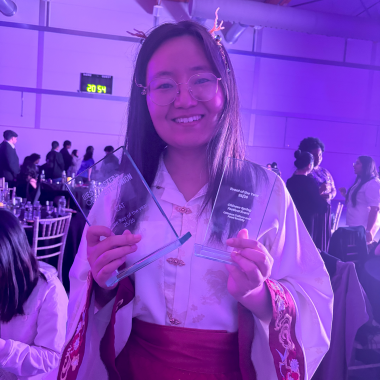
I have also been involved as a course representative, collecting student feedback and contributing to the student voice at Westminster. I was pleased to receive recognition for my work as a course representative, which encouraged me to continue supporting student participation and inclusion.
Overall, these experiences have been an important part of my Westminster journey. They helped me feel more connected to the university community and allowed me to develop practical skills that are closely related to my future interests in media, cultural communication and student engagement.
What would your advice be to someone considering studying at Westminster?
My advice would be to be open to new experiences and try to socialise with people from different backgrounds. Westminster and London are both very diverse, and many meaningful experiences happen outside the classroom as well as inside it.
For example, I lived in student accommodation with five flatmates from different countries. We celebrated birthdays together, joined each other’s cultural festivals and shared different traditions. One of my Mexican flatmates was also a course representative, and she organised many student activities. We often exchanged ideas and supported each other when planning events.
These everyday interactions helped me learn about other cultures in a very personal way, not only through academic study. We shared food, daily habits, conversations and different ways of seeing the world. These small exchanges made my experience in London more meaningful and helped me become more confident in intercultural communication.
So my advice to future students is do not only focus on your course. Talk to people, join activities, share your culture and be curious about others. These experiences can help you build friendships, confidence and a stronger sense of belonging at Westminster.
What's the best aspect of being a University of Westminster student?
The best aspect of being a University of Westminster student is the opportunity to be part of a diverse and active community. Westminster is not only a place to study, but also a place where students can participate, share ideas and create new opportunities.
For me, the most valuable part has been feeling that students can make a real contribution to university life. Through being a course representative, founding a Chinese cultural society and organising cultural activities, I felt that my voice and experiences mattered. I was able to connect with students and staff, share my culture and help create spaces where others could feel welcomed and included. One of the most memorable moments was during the Chinese New Year celebration, when Vice-Chancellor Peter Bonfield prepared flowers for me. This small gesture made me feel recognised and encouraged, and it showed me that student-led cultural work is valued at Westminster.
I also think Westminster’s location in London is a very special advantage. The city offers so many cultural, media and professional opportunities, which makes the student experience much richer. Overall, the best aspect is that Westminster gives students the chance to grow academically, socially and personally.
What’s the most surprising or unexpected aspect of your Westminster experience?
The most surprising aspect of my Westminster experience was how many opportunities there were for students to try new things. I did not expect university life to be so open and encouraging beyond the classroom.
What surprised me most was that the university environment did not make students afraid of making mistakes. Instead, it encouraged us to try different roles, activities and ideas. Whether it was becoming a course representative, founding a Chinese cultural society, organising events or joining media-related visits, I felt that Westminster gave students the space to learn through experience.
This was very meaningful for me because I realised that growth does not only come from doing everything perfectly. It also comes from trying, making mistakes, receiving support and becoming more confident. Westminster helped me become more willing to step out of my comfort zone and take part in university life more actively.
Would you like to add anything else about your Westminster experience?
My Westminster experience has been much more than an academic journey. It has been a process of becoming more confident, independent and connected to others. As an international student, I came to London to study Global Media, but I also found many opportunities to take part in university life beyond the classroom.
What I value most is that Westminster gave me the space to try new things. I was encouraged to communicate, organise, make mistakes, learn from experience and grow. I will remember Westminster not only as the place where I studied, but also as the place where I became more confident in sharing my ideas, my culture and my voice.