Course Overview
Attendance
* Price for Foundation year only
Course summary
Our degree courses with foundation year offer the opportunity to prepare you for advanced study before you progress onto a full honours degree at the University of Westminster. Whether you do not feel ready for degree-level study, don’t have the right qualifications, want to change your subject specialism or return to study after an absence from education, we aim to encourage a broad range of students to undertake our Foundation year in order to progress onto their full honours degree with us.
The foundation year is designed to give you the opportunity to explore new ideas, opening up new perspectives on the key debates within your chosen field. Core modules accelerate your academic and professional development and you will also take modules from areas closely related to your chosen field, giving you the chance to develop a cross-disciplinary perspective on your course.
On successful completion of the foundation year, you'll be able to move on to study for the Sociology BA Honours degree.
Choose Sociology at the University of Westminster and you'll never think about society in the same way again. Studying with us means engaging with a dynamic 21st-century subject and exploring current social issues and debates, using the latest research methods.
Investigating the nature of societal structures and their impact on people's everyday lives and interactions is central to the course. You'll consider questions of how power is exercised and normalised at all levels of society, from the state to individual emotions, through explorations of social class, gender, race, ethnicity, sexuality, and other factors. You'll gain a sensitive understanding of diversity as well as a keen self-awareness and ability to make sense of your own social location in terms of identities, cultures, beliefs and values.
You'll be taught by active researchers, whose innovative books and articles are helping to set the global sociological agenda. The course makes full use of the amazing resources our central London location provides, from the museums on our doorstep to street-art field trips and the diverse cultures and subcultures that will inform and inspire your own research.
Drawing on cutting-edge research, this is a course that will put you at the forefront of contemporary sociological thinking and practice. Our students graduate with the knowledge and expertise that gives them a competitive advantage in a range of people-centred careers, including the charitable and NGO sector, education, government, journalism and media, management, social work, and academic research.
Top reasons to study with us
- Inspiring learning opportunities inside and outside the classroom – our central London location provides unique opportunities to explore contemporary social and cultural life, including creative classroom activities, film screenings, external speakers, street-based explorations and visits to museums and galleries
- An inclusive and diverse curriculum engaged with issues of social justice – students of diverse faith backgrounds, ethnicities, cultures and genders come to work together to challenge inequality and explore some of the most important social and cultural questions in the world today
- In year two, our work-based learning module offers you the opportunity to gain work experience through placement opportunities such as our Metropolitan Police scheme, the Explore Teaching Scheme and other work placements.
- The University of Westminster is ranked 7th in London for Sociology (Complete University Guide 2026).
Studying Sociology with us
Watch the video to learn more about studying sociology at the University of Westminster.
Modules
You can choose from a wide number of specialist option modules with a range of assessment formats to suit different learning styles, from essays and exams to portfolios, research reports, projects and reviews. Our supportive and dedicated teaching team will train you in critical analysis, thinking and debate, and enable you to develop strong presentational, interpersonal and communication skills.
The first year of the BA provides an accessible introduction to contemporary sociological debates, and you'll receive specialist training in researching London as a global city, and in the key study skills you need to excel in the subject, along with optional modules in race and gender. In Years 2 and 3 you'll explore modern and contemporary social theory, youth culture, extend your research skills and, in your final year, work closely with a member of the Sociology team to conduct an independent project in an area of your own choosing.
You can select from a range of options, which includes modules on consumption and race, education, families, gender studies and the body, London's pleasures and perils, sexuality, food, politics and protest, and the media.
Our Work Experience module in the second year gives you the opportunity to put into practice the personal and professional skills you will develop while studying.
Types of module
Our undergraduate courses comprise three types of module:
- Core modules: compulsory modules that you must take each year
- Option modules: modules that you can choose from to tailor your course to your interests, normally related to your subject area
- Elective modules (also called 'Electives'): wider, interdisciplinary modules that you may be able to choose from to broaden your academic experience and skills – covering everything from learning a new language to building enterprise skills
Module availability
We aim to offer a wide range of option modules and electives, but we cannot always guarantee your preferred choices as availability can be affected by timetabling constraints, staff availability or student demand.
Elective modules may be subject to change, but you can look through an indicative list on our University-wide electives page.
For more information
Full details on course structure, modules, teaching and assessment can be found in the programme specification below.
There are no optional or elective modules offered at Level 3, as the focus is on the development of key academic skills through a broad understanding of social sciences and humanities.
Core modules
This module introduces contemporary political questions in the global context. Current political issues such as statelessness, politics of underdevelopment, power and inequality, and climate change will be discussed and analysed. The idea of nations and nationhood features prominently in the module, as do the issues related to faith, religion and ideological belief. The module is designed to introduce concepts and themes such as democracy, power and politics, inequality, global society, human rights and states, territories and statelessness.
This module introduces you to the key academic, professional, and personal skills essential for success at university. It encourages good practices in writing, presentation, and time management, while also fostering reflection to help you build confidence as you transition to higher education. Open to all students enrolled in courses delivered through Westminster Foundation Pathways, the module provides a creative and supportive environment where you can reflect on and develop their academic and professional journey. You'll work with specialist facilitators who play a crucial role in guiding your academic and professional development.
With a focus on managing academic choices in a higher education setting, the module emphasises the importance of the United Nations Sustainable Development Goals (SDGs), using methodologies that prioritise equality, diversity, and inclusion. Through these lenses, you'll explore topics that prepare you to address real-world challenges as highlighted in the SDGs in a socially conscious, inclusive, and responsible manner.
This module introduces you to the relationship between crime and society, equipping you with foundational knowledge of key criminological concepts and debates. By examining crime from multiple perspectives, you'll develop skills in thinking critically about its definition, measurement, and impact on individuals and communities. The module highlights the roles of media, policing, youth justice, and the criminal justice system as a whole in shaping perceptions and responses to crime. Additionally, you'll investigate the intersections of crime with social factors such as gender, race, and victimisation. Through lectures, seminars, and independent study, this module promotes critical thinking, research skills, and an understanding of the broader societal implications of crime, preparing you for further study in related fields of social sciences, humanities and law.
Critical thinking is fundamental to our ability to progress in an increasingly complex and changing world. It is an essential skill across a range of academic and practice-based disciplines.
This module helps you understand the importance and function of critical thinking both at university and beyond. By working in partnership with academic staff and peers, you will explore how critical thinking aligns with disciplinary practices, shapes scholarly knowledge, and addresses inequalities. Through problem-posing education and anti-racist practices, you will engage with real-world problems, fostering the ability to create a more just and sustainable world.
This module explores law as a question of power – asking what law, power and authority are, where you are located, how you operate, and how you change. The questions are raised through a particular focus on law and politics, the sociology of law and the history of legal ideas. The module’s assessments serve to build the research and writing skills needed to succeed in higher education and beyond, and encourage you to develop and express your own diverse viewpoints on key issues relating to social justice, (in)equality and sustainability.
This module introduces you to some current topics in the study of society, with a focus on key debates in sociology such as gender, race, class, the family and crime. The module prepares you to engage with the methods of teaching and learning at the university level. The multidisciplinary nature of the module enables you to form a more critical and analytical approach to issues which are relevant to your life experience.
Core modules
This module provides a critical vocabulary for exploring and understanding the relationship between the self and society. It introduces classic and contemporary accounts of identity and critically explores sociological accounts of identity and its formation.
London Explored takes the city as a context to explore the urban sociology literature and to undertake a research project on London which culminates in an individual project proposal. You will choose a topic of interest and write an individual literature review, and then formulate a research question and develop a quantitative research project proposal which explores your research question.
Researching Society is an introduction to doing sociology. Taking research on London as a focus, you learn how to formulate sociological questions and how to identify what kinds of research methods are appropriate for answering them. The module also introduces the academic skills essential to degree level learning, such as sourcing and retrieving information, referencing and academic writing, and assists in supporting your transition to HE.
Social media provides us with an accessible and up-to-date point of departure for an exploration of contemporary culture and society. The module introduces key concepts in digital sociology and provides you with tools to analyse a variety of cultural texts and practices. Grounded in students’ own use of social media, we reflect on some of the significant ways in which technology shapes, and is shaped by, everyday life in the 21st century.
This module is an introduction to how classical sociological theory has explained social structures and divisions in society. The work of Marx, Durkheim and Weber is introduced to explain the transition from traditional to modern society. Drawing on key features of contemporary society the module also questions and critiques the classical theorists’ applicability to 21st century global society.
Option modules
This module provides an introduction to gender and sexuality studies via feminist, queer and intersectional social thought. The first part of the module sets out the interconnections between sex, gender and sexuality, critiques of essentialism and ethnocentrism, and questions of privilege and inequality. The rest of the module explores a range of contemporary topics in gender, sexuality and LGBTQ studies including gender-based and sexual violence, masculinities, bodies and cultural representations.
This module provides an introduction to contemporary debates in the sociology of race. Each week is organised around a key concept, challenging ‘common sense’ ideas about racial difference, ethnicity and culture. Exploring the significance of race in the organisation of social and cultural life, this module assumes no prior knowledge of the topic, and provides an excellent foundation for the further study of race at levels 5 and 6. This module includes an external visit such as a walking tour of ‘black London’ led by a professional tour guide.
Core modules
This module explores the development of social theorising in the 20th century, continuities and discontinuities in social theorising and how core concepts of classical theory have been reworked in response to changing times. Theories include the Frankfurt School, Marxism, feminism and postcolonial critiques. Module outcomes include becoming a critical and creative thinker, a literate and effective communicator, global in outlook and social awareness.
In this module, students will develop their understanding of a range of quantitative and qualitative research methodologies. We pay particular attention to practical and ethical issues involved in designing and conducting research, and how to choose the most appropriate methodological approach to answer different types of research questions. The module adopts a critical approach to research methodology, focusing on how sociological and criminological research can help us understand and challenge power and inequality, and how we can develop collaborative and respectful relationships with research participants.
This module provides work-based learning (WBL), requiring you to prepare for employment through evaluating skills, producing a CV and LinkedIn profile, undertaking WBL activities and reflecting on the skills gained with reference to the wider structure of the labour market and graduate employment.
Option modules
This module explores how childhood and youth are understood and experienced in contemporary societies. Critical perspectives on childhood development, risk, family relationships, digital lives, youth culture, identity and place, and generational justice will be examined. The module has a strong policy focus and will be of particular interest to those planning a future working with children or young people.
This module examines contemporary issues in education practice and policy. Through study of the sociology of education literature and of English education policy, you'll examine the inequalities of the English neoliberal school system, through the lenses of social class, gender, race, (dis)ability, sexuality and beyond. You'll also examine assessment and accountability (including school inspection), early years education, school discipline, mental health and wellbeing, and alternative and home education. We include a guest session with a secondary school teacher, in the context of a week looking at teachers' experiences.
Emotions are not just a private matter. This module explores the centrality of emotions to interpersonal and social life such as love, shame and anger. It examines theories which challenge our assumptions that emotions are solely psychological cognitive states. It will offer alternative models which make the case that emotions emerge out of the social relations in which you are experienced, and are thus tied to social inequalities of gender, class and race. The module includes a reflective assessment, in the form of an individual interactive ‘interview’, which addresses how the sociology of emotions can be used to transform professional practice for psychology, counselling and sociology.
This module focuses on the study of food, taste and consumption. Based primarily in sociological thinking, it will explore how the experience of taste is not limited to our own sensual likes and dislikes, but deeply embedded in class, history, patterns of migration, tourism and culture. It will also focus on the ‘experience economy’ of the dining and eating scene in London - from fine dining to fusion ‘global’ cuisine and the rise of farmers’ markets and food festivals.
The strong link between globalisation and the media has brought about some of the most fundamental social, political and economic changes across the globe. This module assesses how globalisation facilitates the instant exchange of information and the news, and asks questions about the expanded reach of multinational corporations through greater information connectivity, global advertising strategies, and integration of economic activity across borders.
This module provides a critical introduction to the sociology of leisure. It examines the ways leisure is embedded in existing forms of inequality and the ways our leisure activities can both resist and reinforce existing discourses of work, time, public space, and identity. Drawing upon recent scholarship in urban studies, cultural studies and sociology, the module asks how you might critically evaluate and understand leisure and, in doing so, challenge normative notions of pleasure.
This module takes recent and established research in urban sociology and urban policy to examine the themes of belonging, community, and diversity in the contemporary city. The ways cities are represented, lived, imagined, planned and researched will be critically examined in light of wider sociological debates about identity, diversity, and globalisation. Using London as a focus, the module examines a range of contemporary debates including gentrification, the right to the city, public space, and the spatialisation of inequality.
Professional experience or study abroad year
Between Years 2 and 3, you’ll have the opportunity to undertake a professional placement year in industry. Completing the placement year will lead to the final award Bachelor of Arts with Honours - Sociology with Professional Experience.
Alternatively, you can undertake a period of study abroad at one of Westminster’s partner institutions. Successful completion will lead to the final award Bachelor of Arts with Honours - Sociology with International Experience.
Find out more about the costs involved in taking a study abroad or placement year.
Core modules
This module is an exploration in contemporary social theory. It introduces poststructuralist perspectives, and engages with an eclectic range of sociological theories and debates that provide new and exciting ways of thinking about life in the 21st century. You are shown how theories can be used to explore, explain and understand contemporary social issues, problems or concerns.
The dissertation is about doing sociology. Students select a topic of their choice for in-depth research, which normally relates to their experience or something of interest in a module. Students showcase the knowledge and skills gained throughout their degree in setting their own question, operationalising key concepts in a coherent research framework, conducting, analysing and critically evaluating their research.
Option modules
The following modules are examples of study options on this course.
For the full list of option modules, see the programme specification.
The module examines family diversity, family practices and intimate relationships, drawing on contemporary sociological work in family studies and in childhood studies. It uses cross-cultural perspectives to explore transformations in family structures, love and intimacy, parenting, childhood, and queer families, and it examines family policy and how this shapes and is shaped by the ways we live together.
Education shapes pupil identities through the structure, policies, curriculum, culture and psycho-social dynamics of schooling. Using gender as the lens, and an intersectional analysis to evaluate other differences, eg class, ethnicity, religion, sexuality and disability, this module examines identity work at school. You'll employ autobiographical methods to evaluate how you negotiated their educational identities at school.
As humans our experience of the world is fundamentally embodied; lived in, through and as bodies. This module explores how those bodies are ‘made’ culturally, and how some are imbued with power while others are sites of oppression.
The module highlights the centrality of gender, race, class and sexuality in feminist and sociological debates about the body and identity, and focuses on critiques of the Western mind/body dualism.
Further topics covered on the module include medicalisation, de/colonised bodies, reproduction, body modification, health, fat bodies, transgender embodiment and disability.
This module examines the processes of the production and dissemination of news in contemporary societies. The main focus is on assessing the consequences of the concentration of media ownership and whether new media offers a viable alternative to monopolised media production. Based on case studies, the module analyses how news is produced, both linguistically and institutionally, the politics of citizenship and the need for a rigorous public realm.
This module introduces students to key theoretical perspectives in political sociology and media studies of relevance to the study of activism, protest and social movements. Exploring a range of historical and contemporary examples from around the world, it examines how different theoretical frameworks have been used to understand social movements and their significance for modern and contemporary societies.
The module pays special attention to the relationship between social movements and media, including the significance of new communications technologies.
Classical sociologists anticipated the decline of religion whereas contemporary theorists identify 'desecularisation' or religious revivalism occurring in the 21st century. This module takes a global perspective, introducing students to the theories and methods of the sociology of religion, examining the definitions, social origins, historical and contemporary significance of religion at individual, institutional and societal levels.
Critically engaged with ongoing debates and designed to illuminate and validate your personal experiences, this module explores the cultural politics of race. From the issue of representation in the media and cultural industries to controversies about ‘cultural appropriation’ and ‘colourism’ to debates about racism and digital technology, this module considers the production and contestation of racial meanings in contemporary culture.

For more details on course structure, modules, teaching and assessment Download the programme specification (PDF).
To request an accessible version please email [email protected]

Get your copy of the University of Westminster prospectus and browse the range of courses on offer.

Contact us for general course enquiries:
+44 (0)20 7911 5000 EXT 65511
(Mon–Fri, 10am–4pm BST)
Live chat with us
(Mon–Fri, 10am–4pm BST)
Open days
Join us at an open day online or on campus. Get a feel for student life at the University of Westminster and talk to course leaders and our support teams.
Can't attend? See more open events
Careers

Successful alumni
Previous graduates have found positions in organisations including the British Red Cross, Citizens Advice and the London Evening Standard.

Exciting placements
Gain work experience before you graduate – recent work placements have included the Explore Teaching Scheme, Great Ormond Street Hospital and the Prisoner Advice and Care Trust.
Employers
Access a network of over 3,000 employers at the University’s new home for careers and enterprise, Zone29.
Career development
Our students graduate with knowledge and expertise that gives them a competitive advantage in people-centred careers, including the charitable and NGO sector, education, government, journalism and media, management, social work, and academic research.
Our Work Experience module in the second year gives students the opportunity to put into practice the personal and professional skills they'll develop while studying.
Recent placements include:
- Explore Teaching Scheme
- George Mitchell School
- Great Ormond Street Hospital
- Prisoner Advice and Care Trust
Job roles
This course will prepare students for roles and sectors including:
- Charity and NGO sector
- Journalism and media
- Local government and Civil Service
- Management and human resources
- Teaching and other professional education work
Graduate employers
Previous graduates of this course have found positions in organisations, including:
- Accelerate Learning
- Barclays
- British Airways
- British Red Cross
- Citizens Advice
- East London NHS Foundation Trust
- Harris Academy
- London Evening Standard
- Mulberry UTC
- Stamford Hill Primary School
- Victim Support
Many Sociology graduates go on to postgraduate study in subjects including social sciences, law, human relations, education, psychology and counselling.
Unlock your career potential at Zone29
Zone29 is our new home of careers and enterprise, offering game-changing opportunities such as:
- jobs, placements and work experience
- tailored career guidance and mentoring
- step-by-step career planning through the Westminster Award
- work and study abroad programmes
- start-up, business and freelance support

International Opportunities
Many of our courses offer international study and work experiences, and the University provides other global opportunities that all students can apply for – so whatever you're studying, you'll have the chance to go abroad.
Opportunities could include:
- Taking part in semester or year-long exchanges at institutions around the world
- Attending an international summer school or field trip
- Developing your CV through volunteering or work placements abroad
International experience broadens horizons, boosts self-confidence, and improves global understanding, alongside being fantastic for your career.
Find out more about our international opportunities, including funding options and where you can go.

Course Leader
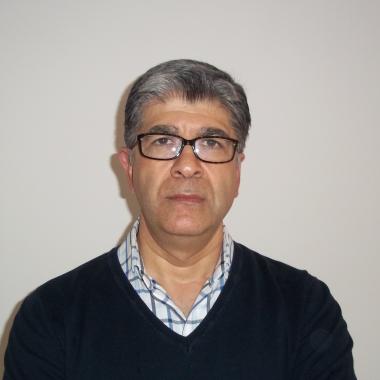
Dr David Khabaz
Lecturer in Sociology
Dr. David Khabaz is a Senior Lecturer and Course Leader for the Foundation Programme in Humanities, Law, and Social Sciences at the University of Westminster. He completed his undergraduate studies at Goldsmiths, University of London, and subsequently obtained both his MSc and PhD from the London School of Economics and Political Science. David’s research is situated within the critical analysis of media, with a particular focus on the production and reception of media texts in the context of post-Brexit and post-pandemic British society. His recent publication, Framing Brexit, investigates the mechanisms through which news content is increasingly weaponised via framing strategies that shape public understanding beyond the mere presentation of facts or events.
The Foundation Programme at the University of Westminster offers students a structured pathway to prepare for advanced study and progression to a full honours degree.
Course Team
- Dr Ben Pitcher - Reader in Sociology
- Dr Naomi Rudoe - Senior Lecturer in Sociology
- Dr Umit Cetin - Reader
- Dr Adam Eldridge - Senior Lecturer
- Professor Val Gillies - Professor
- Dr Hilde Stephansen - Senior Lecturer
- Dr Emily Falconer - Senior Lecturer
- Dr Celia Jenkins - Principal Lecturer in Sociology
- Dr David Khabaz - Lecturer in Sociology
- Dr Francis Ray White - Reader
Why study this course?
Student satisfaction
100% of our Sociology BA students agreed that they were satisfied with the course.
Source: Discover Uni (Accessed December 2020)

Central London location
Study sociology in the heart of a multi-cultural, global city. Hear from a student about London life.

An expert teaching staff
You'll be taught by active researchers, whose innovative books and articles are helping to set the global sociological agenda.
Entry Requirements
- A levels – DEE (56 UCAS Tariff points)
- T levels – 56 UCAS Tariff points
- International Baccalaureate – 56 UCAS Tariff points from all components of the Diploma Programme. International Baccalaureate Career-related Programme will be considered on a case-by-case basis
- BTEC Extended Diploma – MPP
- BTEC Diploma – MM
- Access – 56 UCAS Tariff points from the Access course
If your first language is not English, you will need an IELTS of 6.0 overall, with 5.5 in each component.
We also welcome applications from students who are taking a combination of qualifications listed above. For further information, please contact Course Enquiries.
View more information about our entry requirements and the application process.
International Baccalaureate
56 UCAS Tariff points from all components of the Diploma Programme. International Baccalaureate Career-related Programme will be considered on a case-by-case basis. You can refer to the UCAS calculator to determine your point score. Find out more about acceptance of the International and European Baccalaureate.
Other international qualifications
We accept a wide range of international high school level qualifications. Please see information on Country-specific entry requirements.
International Foundation courses
We work in partnership with Kaplan International College London who provide International Foundation Certificate at their College based in London Bridge. These courses are for students who don't meet our direct entry requirements. Upon successful completion, you can progress to your chosen degree at the University of Westminster. Find out about the different university preparation courses that are accepted for entry.
English language requirements
If your first language is not English, you will need an IELTS of 6.0 overall, with 5.5 in each component.
Please note we accept a wide range of English language qualifications and assessments. Find out more at English language requirements.
If you don't meet the English language requirements yet, then we offer online and on campus pre-sessional English programmes to help develop your English language skills to the required level before you start your course. Find out more about our pre-sessional English programmes.
Study a University of Westminster degree overseas
We work in partnership with a number of academic institutions around the world that deliver a selection of our undergraduate programmes. Visit Transnational Education Partners for further information.
More information
- A levels – DEE (56 UCAS Tariff points)
- T levels – 56 UCAS Tariff points
- International Baccalaureate – 56 UCAS Tariff points from all components of the Diploma Programme. International Baccalaureate Career-related Programme will be considered on a case-by-case basis
- BTEC Extended Diploma – MPP
- BTEC Diploma – MM
- Access – 56 UCAS Tariff points from the Access course
If your first language is not English, you will need an IELTS of 6.0 overall, with 5.5 in each component.
We also welcome applications from students who are taking a combination of qualifications listed above. For further information, please contact Course Enquiries.
View more information about our entry requirements and the application process.
International Baccalaureate
56 UCAS Tariff points from all components of the Diploma Programme. International Baccalaureate Career-related Programme will be considered on a case-by-case basis. You can refer to the UCAS calculator to determine your point score. Find out more about acceptance of the International and European Baccalaureate.
Other international qualifications
We accept a wide range of international high school level qualifications. Please see information on Country-specific entry requirements.
International Foundation courses
We work in partnership with Kaplan International College London who provide International Foundation Certificate at their College based in London Bridge. These courses are for students who don't meet our direct entry requirements. Upon successful completion, you can progress to your chosen degree at the University of Westminster. Find out about the different university preparation courses that are accepted for entry.
English language requirements
If your first language is not English, you will need an IELTS of 6.0 overall, with 5.5 in each component.
Please note we accept a wide range of English language qualifications and assessments. Find out more at English language requirements.
If you don't meet the English language requirements yet, then we offer online and on campus pre-sessional English programmes to help develop your English language skills to the required level before you start your course. Find out more about our pre-sessional English programmes.
Study a University of Westminster degree overseas
We work in partnership with a number of academic institutions around the world that deliver a selection of our undergraduate programmes. Visit Transnational Education Partners for further information.
More information
What our students say

Larissa Bernard
Sociology BA - 2025
I've particularly enjoyed how the course combines theory with real-world experience - from food market visits with Senior Lecturer, Dr Emily Falconer, through to placements with organisations like the Metropolitan Police. These practical elements really bring our learning to life.

Kelsea Costin
Sociology BA - 2023
The Sociology team at Westminster are incredibly compassionate, and I always felt supported in and outside of class. This helped to create trusting relationships with my lecturers and I felt comfortable being myself.

Harkiran Kaur Bharij
Sociology BA - 2020
I always knew that I wanted to study in London. Not only is the city home to some of the best universities internationally, but it's also one of the most multicultural and diverse places in the world.
Learn new skills

Learn a new language
From Arabic to Spanish, you can learn a new language alongside your degree with our Polylang programme.

Develop your entrepreneurial skills
Access industry networking events, workshops, one-to-one business advice and start-up support through our award-winning WeNetwork.

Gain extra qualifications
We provide access to free online courses in Adobe and Microsoft Office applications, as well as thousands of specialist courses on LinkedIn Learning.
Fees and Funding
UK tuition fee: £5,760 (Price for Foundation year only)
The course fee applies to the Foundation year of your degree programme. When you progress from the Foundation year (level 3) to the degree (level 4), the fees will increase to match our standard degree-level fees for level 4 onwards.
Please note that if you defer your place, the first year’s tuition fees will be those of the academic year in which you enrol, which may be higher than the fee shown for this year.
Fees are subject to UK Government Parliamentary procedure.
Find out how we set our tuition fees.
Funding
As well as tuition fee loans, there is a range of funding available to help you fund your studies.
Find out about undergraduate student funding options.
Scholarships
The University is dedicated to supporting ambitious and outstanding students and we offer a variety of scholarships to eligible undergraduate students, which cover all or part of your tuition fees.
Find out if you qualify for one of our scholarships.
Additional costs
See what you may need to pay for separately and what your tuition fees cover.
International tuition fee: £19,000 (Price for Foundation year only)
When you have enrolled with us, your annual tuition fees will remain the same throughout your studies with us. We do not increase International tuition fees.
Please note that if you defer your place, the first year’s tuition fees will be those of the academic year in which you enrol, which may be higher than the fee shown for this year.
Find out how we set our tuition fees.
EU Qualifications Welcome Award Scheme
If you are an international student accepted on an undergraduate programme starting in September at level 3 (Foundation) or level 4 (first year) on the basis of an eligible EU qualification only, you will be awarded a £4,500 tuition fee reduction off your first year of studies. For more information, see the EU Qualifications Welcome Award Scheme.
International student funding
Find out about funding for international students.
Additional costs
See what you may need to pay for separately and what your tuition fees cover.
UK tuition fee: £5,760 (Price for Foundation year only)
The course fee applies to the Foundation year of your degree programme. When you progress from the Foundation year (level 3) to the degree (level 4), the fees will increase to match our standard degree-level fees for level 4 onwards.
Please note that if you defer your place, the first year’s tuition fees will be those of the academic year in which you enrol, which may be higher than the fee shown for this year.
Fees are subject to UK Government Parliamentary procedure.
Find out how we set our tuition fees.
Funding
As well as tuition fee loans, there is a range of funding available to help you fund your studies.
Find out about undergraduate student funding options.
Scholarships
The University is dedicated to supporting ambitious and outstanding students and we offer a variety of scholarships to eligible undergraduate students, which cover all or part of your tuition fees.
Find out if you qualify for one of our scholarships.
Additional costs
See what you may need to pay for separately and what your tuition fees cover.
International tuition fee: £19,000 (Price for Foundation year only)
When you have enrolled with us, your annual tuition fees will remain the same throughout your studies with us. We do not increase International tuition fees.
Please note that if you defer your place, the first year’s tuition fees will be those of the academic year in which you enrol, which may be higher than the fee shown for this year.
Find out how we set our tuition fees.
EU Qualifications Welcome Award Scheme
If you are an international student accepted on an undergraduate programme starting in September at level 3 (Foundation) or level 4 (first year) on the basis of an eligible EU qualification only, you will be awarded a £4,500 tuition fee reduction off your first year of studies. For more information, see the EU Qualifications Welcome Award Scheme.
International student funding
Find out about funding for international students.
Additional costs
See what you may need to pay for separately and what your tuition fees cover.
Teaching and Assessment
Below you will find how learning time and assessment types are distributed on this course. The graphs below give an indication of what you can expect through approximate percentages, taken either from the experience of previous cohorts, or based on the standard module diet where historic course data is unavailable. Changes to the division of learning time and assessment may be made in response to feedback and in accordance with our terms and conditions.
How you'll be taught
Teaching methods across all our undergraduate courses focus on active student learning through lectures, seminars, workshops, problem-based and blended learning, and where appropriate practical application. Learning typically falls into three broad categories:
- Scheduled hours: examples include lectures, seminars, practical classes, workshops, supervised time in a studio
- Placement: placement hours normally include placement opportunities, but may also include live projects or virtual activity involving employers
- Independent study: non-scheduled time in which students are expected to study independently. This may include preparation for scheduled sessions, follow-up work, wider reading or practice, completion of assessment tasks, or revision
How you'll be assessed
Our undergraduate courses include a wide variety of assessments.
Assessments typically fall into three broad categories:
- Practical: examples include presentations, videos, podcasts, lab work, creating artefacts
- Written exams: end of semester exams
- Coursework: examples include essays, reports, in-class tests, portfolios, dissertation
Data from the academic year 2025/26
Supporting you
We are ranked first in London for student support (Whatuni Student Choice Awards 2026).
Our Student Hub is where you’ll find out about the services and support we offer, helping you get the best out of your time with us.
- Study support – workshops, 1-2-1 support and online resources to help improve your academic and research skills
- Personal tutors – support you in fulfilling your academic and personal potential
- Student advice team – provide specialist advice on a range of issues including funding, benefits and visas
- Extra-curricular activities – volunteering opportunities, sports and fitness activities, student events and more

Course location
Our Regent Campus is comprised of two sites, situated on and around Regent Street – one of the most famous and vibrant streets in London.
Subjects including Criminology and Sociology, English and Creative Writing, History, Languages, Politics and International Relations and Visual Culture are based at 309 Regent Street, which includes recently refurbished social spaces, gym facilities and our Regent Street Cinema.
This course is based at Regent Street, though some teaching may take place at our other central London campuses.
For more details, visit our locations page.
Sociology in the City blog
A blog for students, prospective students, alumni and staff of the Sociology department at the University of Westminster.


CHANGES TO OUR COURSES
All content on our course pages is accurate at time of publication.
Where significant or material changes have been made, applicants will be informed of these in line with Competition and Markets Authority guidance.
Contact us
Call our dedicated team on:
+44 (0)20 7911 5000 ext 65511
Opening hours (GMT): 10am–4pm Monday to Friday
Opening hours (GMT): 10am–4pm Monday to Friday
More information
Your Westminster
Book an open day. Order a prospectus. Sign up for newsletters.