Course Overview
Course summary
Our exciting specialist course will enable you to develop your imaginative and creative skills, while giving you a sound knowledge and understanding of animation processes, techniques and critical theory.
Commercial animation is a rapidly growing and vibrant industry, encompassing a broad range of rewarding and fascinating creative job opportunities. Our strong emphasis on creative practice will help you to develop your skills in drawing and design, along with the imaginative development and innovation of ideas expressed sequentially. These skills, together with the professional practice aspects of the course, will ensure that you have the confidence and expertise to succeed in industry, whether as a producer, technician, designer or manager. You’ll also develop the transferable and cognitive skills necessary for lifelong personal and professional development.
Throughout the course, there are opportunities for you to take part in national and international competitions and film festivals. Our course is delivered by a large team of experienced animation practitioners, staff and industry visitors, and you’ll work in dedicated specialist animation studios with facilities for blue screen, rostrum animation, CGI, drawing, stop-frame, film, photography, set building, sound and video.
Successful animators need to be flexible and able to adapt to changing cultures and new initiatives, and our course seeks to reflect this fluidity. You’ll rapidly develop your own practice in animation, and will be encouraged to work on shared initiatives. Based at our Harrow Campus – home to the Westminster School of Arts and the Westminster School of Media and Communications – you’ll work alongside students from film, photography, music, fashion and journalism, in a unique creative hothouse.
Top reasons to study with us
- Master multiple animation methods – You’ll have the chance to master a wide range of animation methods, both traditional and cutting-edge
- Learn from expert tutors – In-depth subject-specific support is provided by our large team of animation tutors, each with their own areas of expertise
- Showcase your animation – Your work will be shown at our Regent Street Cinema – the birthplace of British cinema
- Study in a creative environment – Our Harrow Campus offers opportunities for collaboration with artists, musicians, filmmakers and designers from around the world
- Westminster is ranked among the UK's top five universities for Research Quality in Drama, Dance and Cinematics by the Complete University Guide 2027.
Programme recognition
This course is delivered through a partnership with BAFTA albert Education, which provides staff and graduates with the tools and techniques needed to learn about environmentally responsible working practices and their professional relevance. The partnership will help students develop knowledge about sustainability, carbon footprinting and planet placement in programmes.
This course is also delivered in collaboration with our industry partner, Aardman Animations, the UK’s leading animation production house. Aardman Animations is responsible for creating some of the world's best-loved animation films such as Wallace and Gromit. The partnership will allow students to have access to Aardman’s training materials and masterclasses organised by their staff members.
This course is industry-recognised by ScreenSkills, the industry-led skills body for the UK's screen-based industries, and carries the ScreenSkills Select quality-mark, which indicates courses best suited to prepare students for a career in the screen industries.



Programme training opportunities
This course is committed to health and safety training, and has partnered with the Mark Milsome Foundation to offer an optional online course for students wishing to develop their skills in this area. The Mark Milsome Foundation Skillset Production Safety Passport course ensures that students are equipped with essential safety knowledge, as they venture into careers in the film and TV industry. Created in memory of Mark Milsome, the course provides a Level II Production Safety Passport valid for 5 years from ScreenSkills. This additional course is available free of charge to University of Westminster students studying this Undergraduate course.
Programme membership
The International Association of Film and Television Schools (Centre International de Liaison des Ecoles de Cinéma et de Télévision – CILECT)
We are full members of CILECT, the International Association of Film and Television Schools (Centre International de Liaison des Ecoles de Cinéma et de Télévision), the prestigious global network of top-tier film, television, and animation institutions.
CILECT unites over 180 leading media schools from more than 63 countries across six continents, fostering collaboration among students and staff to share the best professional, educational, and artistic practices.
Our CILECT membership is in recognition of our exceptional facilities, the high quality of our students’ work, and our commitment to the highest standards in research, education and training in the moving image.
Course Overview Video
Learn more about this course from a member of the course team.
Modules
You'll learn through high-level, tutor-guided studio practice, and by doing – we actively promote experimentation, reflection and the sharing of enthusiasms and influences.
The unique integrated theoretical elements of the course provide a critical framework within which you can examine animation and related time-based practices, and will significantly support and inform your own practice.
All modules are assessed through coursework, and we offer a range of methods including crits, submitted work, research plans and seminar presentations.
Types of module
Our undergraduate courses comprise three types of module:
- Core modules: compulsory modules that you must take each year
- Option modules: modules that you can choose from to tailor your course to your interests, normally related to your subject area
- Elective modules (also called 'Electives'): wider, interdisciplinary modules that you may be able to choose from to broaden your academic experience and skills – covering everything from learning a new language to building enterprise skills
Module availability
We aim to offer a wide range of option modules and electives, but we cannot always guarantee your preferred choices as availability can be affected by timetabling constraints, staff availability or student demand.
Elective modules may be subject to change, but you can look through an indicative list on our University-wide electives page.
For more information
Full details on course structure, modules, teaching and assessment can be found in the programme specification below.
You are introduced to a broad range of concepts in animation and visual design, and you will work both independently and collaboratively. The practice and integrated theory modules are project-led, and all involve elements of research, problem solving and experimentation with processes and ideas.
Core modules
This module is an introduction to working with 2D animation software. It will give you an overview of the various applications of 2D modelling and animation, as well as an understanding of 2D aesthetics. A series of workshops will introduce you to the skills needed to create your own 2D assets, and you will practice animating a 2D rig. These workshops will be the building blocks you need to develop your own concept for a 2D asset or animation.
This module introduces you to the practice and production of 3D computer and video games art. You will consider some of the principles and methods used to create objects as assets for game environments. To do this, you will look at simple briefs and consider the different ways in which a brief for a game can be interpreted creatively. You will then learn how to use 2-dimensional and 3-dimensional tools to create 3D game assets in response to a brief.
The 12 animation principles are the keystones of animation production. Putting them into practice every time you animate will allow you to polish your animation skills for a showreel that stands out to employers. This module will introduce you to the principles of animation through a series of workshops and support you as you put them into practice for your own animation clip. Analysis of existing contemporary industry animation practices will help you to understand the various ways to implement the animation principles and help you to interpret these animation styles for your own animation production.
This module will introduce you to the contexts and industries in which animation is used. You'll examine the professional roles of the animator, as well as the various forms and applications of animation. Workshops and projects will introduce you to the way actions are visualised into movement through filmic languages and processes.
This module focuses on visual storytelling and narrative filmmaking for animation, with a particular focus on narrative in relation to the visual sequence. You'll engage with and critically reflect on a variety of sources and apply some of these approaches in your own practice. The module is designed to provide a link between animation theory and practice. You'll produce critical writing and also participate in weekly practical experiments.
Option modules
This module introduces you to the practice and production of 2-dimensional (2D) game development. You will consider some of the principles used to develop 2D games. Look at the concepts and methods used to create 2D assets to match a games design brief, including those used to create retro styles such as pixel art.
This module introduces you to the creative and professional practice of concept art across games, film, and related creative industries. You will develop your ability to communicate visual ideas through a range of traditional and digital techniques while exploring the role of research, iteration, and presentation in visual storytelling. You'll investigate how historical, cultural, and global perspectives shape visual languages and production contexts, and how awareness of inclusion, representation, and audience can inform creative choices. Through workshops, research-led visual studies, and iterative creative projects, you will produce original concept work that demonstrates both creative intent and contextual understanding.
This module is designed to open up speculative enquiry and creative exploring of drawing approaches. Learning on this module is transferable and interdisciplinary offering a range of practical workshops and projects to widen the potential of possibilities in drawing practice and deepen your understanding of visual design and image-making.
This module introduces you to core game development concepts of level design and environment art. You will consider some of the principles and methods used to design a level for a game and then concept and develop the game assets used to build the environment. To do this, you will look at simple briefs and consider the different ways in which a brief for a game can be interpreted creatively.
You are encouraged to take more individual responsibility for developing your ideas and approaches to animation, and to enter your work for external competitions and film festivals. You will begin to develop your own individual approaches to animation production, so practical work has a higher conceptual demand, and you are encouraged to be innovative and experimental.
Core modules
This module is an introduction to working in 3D. It will give you an overview of the various applications of 3D modelling and animation, as well as an understanding of 3D aesthetics. A series of workshops will introduce you to the skills needed to model your own 3D assets, and you will practice animating a 3D rig. These workshops will be the building blocks you need to develop your own concept for a 3D asset or animation. You will develop a digital 3D computer animation using tools such as Toon Boom / Maya.
This module asks you to develop and apply your intellectual, creative and technical abilities to produce an impactful short film that has a high relevance to the real world and the contemporary experience. Working either individually or in small teams (maximum 3), you will create a short film that meets festival distribution standards, ready for exhibition at the Animation end-of-year Show. This film project provides you with essential learning and preparation for your Level 6 experience and your Major Project. You will learn ‘voice-embodiment skills’ (the use of lip sync and expressive body language), consolidate your visual skills and practice of animation workflows, and expand your editorial skills and imagination to make meaningful relationships between word and image.
This year-long module provides you with a complete experience in animation film-making. You are expected to engage with this project sustainably and with good professionalism. The following aspects will be key to the success of your project: attendance to classes and respect for deadlines, a willingness to work iteratively with animatics and documentary making approaches, experimentation with film language, storytelling, and visual aesthetics, attention given to production workflows and audience reception, your intellectual and ethical commitment to your chosen issue and subject, and your engagement with collaboration and peer/tutor feedback.
This module provides students with the opportunity to experience industry-standard professional practice through participation in a live or simulated client project, such as producing a title sequence, ident, or promotional animation for a recognised broadcaster (eg BBC), charity, or cultural organisation. Students will work collaboratively to interpret a professional brief, manage production workflows, and deliver a creative solution that meets client expectations for quality, tone, and audience engagement. The project is supported by workshops on team management, sustainability, and professional communication, ensuring students gain a realistic understanding of creative industry practice. The module embeds BAFTA albert sustainability principles, encouraging ethical and environmentally conscious approaches to production.
This module gives you an introduction to the use of visual effects (VFX) for film and games. The module will explore digital aesthetics and creating digital workflows, and the software used to create VFX. Technical support will be available through live demonstrations and online support. When possible, external lectures by industry professionals will enhance your learning on this module. You'll have a varied set of digital experiences when you start the module, so teaching and learning activities will be adapted to suit both those who require extra support, and those who are already familiar with the core software and wish to improve their knowledge and experience.
Option modules
The following modules are examples of study options on this course.
For the full list of option modules, see the programme specification.
Visual Identity and branding are key areas of engagement for visual designers. Branding employs design solutions to bring recognition to a wide range of companies, organisations, products, services and causes - providing users with meaningful ways to access and interact with them.In this module, you will consider some of the principles and methods behind visual Identity and branding. The module will introduce design research methods towards the construction of a brand identity and will look at branding from historical and contemporary positions.
Through a combination of research, academic writing and design processes, you'll explore the dual sides of branding as both a generator of potent narratives and the impetus behind problematic consumerism, evoking related social contexts and the responsibility of the designer's role in this. As technologies and new user experiences are increasingly embedded within branding and visual identities, the module opens areas of creative exploration to complement physical, spatial and conceptual outcomes.
This module develops your creative and technical understanding of character and creature design within the context of games and related creative industries. You'll explore how anatomy, form, silhouette, and visual style contribute to personality, narrative, and gameplay. Through research, sketching, and iterative design, you'll generate ideas that can be taken from concept art to a resolved visual piece. Working with both traditional and digital techniques, you will develop awareness of cultural influences, representation, and inclusivity in design practice. The module encourages critical reflection on how different artistic and cultural traditions inform the design of characters and creatures, and how concept artists contribute to visual world-building across genres and media.
This module enables you to create a modern piece of interactive media in the form of a website, while also expanding your knowledge of the theories and practices common to the production of interactive media. Through definition and research, you will develop an exciting and unique website project concept, using creative technologies to produce a final professional product. The final prototype website will be developed using current industry digital tools.
Through immersive technologies, creatives have new opportunities to create interactive and immersive experiences, exhibit work at any scale and bridge distances between audiences and artistic experiences. This module will focus on the different aspects of designing for extended reality, while learning about the development of immersive arts as a medium and exploring the ways in which emerging technologies are being utilised by contemporary artists for the exploration of new digital realms. Within this module, you'll be provided with an academic space to creatively explore a range of emerging technologies suited for producing immersive VR and AR experiences.
You'll be exposed to software and hardware relevant for VR and AR, and a selection of workshops will form the framework for creative enquiry and exploration. You'll have the option to explore either AR or VR-based production approaches in your final project, depending on individual interests, with both pathways supported in the workshop course. Within the assessment, there is scope to be experimental, speculative, or applied within the exploration of immersive technology.
This module introduces students to the narrative traditions of the video game industry, with a focus on the use of interactive stories and text-based games to give players a sense of agency. It compares the nature of these works with more traditional narrative forms, and introduces concepts of narrative mechanics, narrative choice and consequence, and audience agency. Students will learn to develop ideas and designs in response to gameplay and narrative requirements, and then develop them from the concept stage through to full digital artefacts.
This module provides you with the opportunity to explore stop-motion animation practices, including puppet animation, sand or paint on glass, pixilation, cut-outs, time-lapse etc. You'll complete a self-negotiated animation, working either individually or in a group, through a process of negotiation with tutors and peers.
In this module, you will explore key principles and theories of narrative. You will be invited to discuss a range of traditional and contemporary applications for visual narrative. Through practical projects, you will examine basic narrative structure, the role of character, environment, action, time, technology, culture and audience interaction in the storytelling process.
Between Years 2 and 3, you’ll have the option to spend a year abroad at a partner institution or in employment to progress your career.
Find out more about the costs involved in taking a study abroad or placement year.
You will work on self-directed projects within both theory and practice elements of the course, enabling you to intensively focus on personal development, whether you plan to work as an independent animator or within a growing commercial context such as advertising, the animation games industry or interactive design. Integrated 'theory of practice' modules will ensure that you develop the skills and confidence required to operate effectively in a range of professional situations.
The work produced at this level can be used as evidence in support of application to further study or professional commissions and employment.
Core modules
This Level 6 module focuses on professional promotion and industry engagement for animation projects. You will create individual promotional packages – such as festival packs, pitch decks, or online campaigns – demonstrating creativity, originality, and industry-standard presentation. You will apply research into audience expectations, industry trends, and sustainability to inform your work. In addition, you will collaborate on a group promotional campaign for a major showcase, developing teamwork, project planning, and professional delivery skills. By the end of the module, you'll be equipped to present your work confidently to industry, festival, and online audiences while demonstrating professional readiness for careers in animation. The module embeds BAFTA albert sustainability training, encouraging environmentally and ethically responsible professional practice in all aspects of your work.
This module gives you the opportunity to plan and produce a complete character performance (animated or sequential) to industry standards. The module puts a strong emphasis on self‐directed processes and developing your individual and personal creative approach to the visualisation of your character's performance. You are expected to expand your aesthetic range, make imaginative use of software/tools, and produce a character performance that will be a great asset for a showreel and/or portfolio.
This module is designed to support you to produce a sequence that shows the best of your creative and technical skills. To do this you'll examine your creative practice in the light of contextual studies, and your understanding of the contemporary animation industry. This analysis will help you identify areas of your practice that are your best asset, so that you can develop an innovative piece of work that will make your professional showreel really stand out to employers.
This module provides you with the guidance to produce a practice portfolio that will serve you in preparation for your future employment, further study, personal and professional objectives. Tutorial guidance is supervisory, and projects and practice undertaking is self-defined with minimal guidance from tutors. At the end of this module, you'll have produced an original piece of animation showcasing your signature style, that you can submit for competitions, festivals, and in your job applications.
Option modules
This module offers the space for a research-led critical enquiry into a topic connected to your area of creative practice. Including a research presentation and a short academic essay, you will undertake a self-directed investigation into a key aspect of the discourse specific context that surrounds your visual output. Researching and writing about contemporary concerns that frame visual culture will provide a path to a more critical approach to studio practice. This module will be of particular interest to students who may be considering a postgraduate degree.
The module focuses on collaboration with others from different disciplines, to research, explore and experiment with possibilities for expanding storytelling. Through hands-on workshops and critical provocations, you will explore multi-sensory approaches to interactive storytelling, spatial narratives and installation design. Playfulness, speculation and experimentation are encouraged as you work individually or collaboratively to develop proposals and prototypes for a narrative experience.
This module will support you in researching and planning your postgraduate employment journey, whether as a freelancer or by starting a small business in the media, creative, and related digital industries. Through the module, you will develop an awareness of commercial opportunities and learn how to focus your entrepreneurial skills on a chosen field – learning how to develop business ideas and how to present and pitch them effectively. You'll develop a plan to create a start-up business or become a freelancer, learning about personal branding, marketing, project management, budgeting, sustainability, and building an online presence along the way.
This module encourages you to engage with experimental practice as a form of inquiry and research. You will explore creative processes that push beyond traditional subject-disciplined techniques and methods, embracing risk-taking, innovation, and interdisciplinary approaches. Through practice-based investigation, you'll be challenged to develop work that questions boundaries, explores new territories, and opens alternative ways of thinking about your subject discipline and its role in contemporary culture.
In this module, you will explore the opportunities and creative challenges of publishing in various printed formats, ranging from low-fi to luxury, including zines, booklets, magazines, art books, and books. You will be required to pitch, design, and publish an outcome that incorporates writing, illustration, photography, design, typography, and layout, expressed across a range of possible materials and processes. Working in multidisciplinary groups, you will fill all roles needed to conceive, develop, populate, and produce a publication that channels your personal voice, complemented by an appropriate design and format for a specific audience. Skills covering technical, project management, writing, and creative branding components will be supported. The final publication will be an excellent addition to any portfolio.

For more details on course structure, modules, teaching and assessment Download the programme specification (PDF).
To request an accessible version please email [email protected]

Get your copy of the University of Westminster prospectus and browse the range of courses on offer.

Contact us for general course enquiries:
+44 (0)20 7911 5000 EXT 65511
(Mon–Fri, 10am–4pm BST)
Live chat with us
(Mon–Fri, 10am–4pm BST)
Studying Animation at Westminster
Open days
Join us at an open day online or on campus. Get a feel for student life at the University of Westminster and talk to course leaders and our support teams.
Can't attend? See more open events
More ways to meet us
Designing the future of travel: develop sustainable event planning skills
Careers
Commercial animation is a rapidly growing and vibrant industry, encompassing a broad range of rewarding and fascinating creative job opportunities.
Career development is embedded in the course. Students can work part-time, on placements and enjoy work-related learning across all three years of study.
Student satisfaction
100% of our Animation BA students were satisfied with the quality of the course.
(Source: Discover Uni - site accessed in November 2020)

Become multi-skilled
You’ll have the chance to master multiple animation methods, both traditional and cutting-edge, opening you up to more career opportunities.
Graduates in work and/or further study
90% of our Animation BA graduates are in work and/or further study 15 months after graduation.
Source: Discover Uni – (site accessed in November 2020)
Industry links
We have links with the Royal Television Society and the British Animation Awards.
Recent guests have included:
- Michael Rosen
- Michaël Dudok de Wit
- Caroline Leaf
- Jelly London (agency)
Work experience
Our students have had regular work experience opportunities at the Royal College of Art and National Film and Television School, and in the past, we've organised an annual masterclass for our animation students at the Aardman Academy.
Our Animation students have also been assisted in securing work experience and internships by our WeNetwork.
Job roles
This course will prepare you for a range of roles, including:
- Animator
- Art Director
- Character Designer
- Director
- Editor
Graduate employers
Graduates from this course have found employment at organisations including:
- Entertainment One
- Lupus Films
- One of Us
- Weta Digital
- WildBrain
Unlock your career potential at Zone29
Zone29 is our new home of careers and enterprise, offering game-changing opportunities such as:
- jobs, placements and work experience
- tailored career guidance and mentoring
- step-by-step career planning through the Westminster Award
- work and study abroad programmes
- start-up, business and freelance support

International Opportunities
Many of our courses offer international study and work experiences, and the University provides other global opportunities that all students can apply for – so whatever you're studying, you'll have the chance to go abroad.
Opportunities could include:
- Taking part in semester or year-long exchanges at institutions around the world
- Attending an international summer school or field trip
- Developing your CV through volunteering or work placements abroad
International experience broadens horizons, boosts self-confidence, and improves global understanding, alongside being fantastic for your career.
Find out more about our international opportunities, including funding options and where you can go.

Course Leader
Stephen Ryley
Principal Lecturer
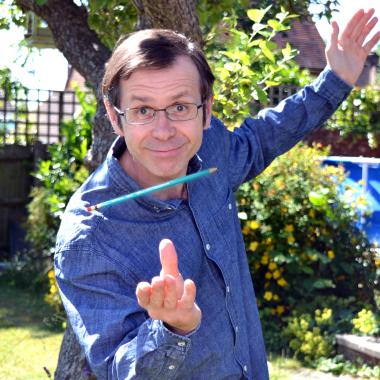
Stephen Ryley has been Course Leader of the Animation BA at the University of Westminster since 2004. Graduating from the Royal College of Art, Stephen has worked in a variety of roles, producing several long-running educational animation series for the BBC, and directing music videos, title sequences and TV commercials at Digital Pictures Ltd. His research includes roles as animation advisor for Cambridge Animation Systems ( Animo project) and Anthropics Technologies Ltd (Synthespian project).
As a freelance animator, Stephen has worked for clients including Dolby Laboratories, Oxford University Press, Sky and Planet 24, before moving into academia as a senior lecturer and course leader at the London College of Communication (LCC) for nine years. This broad-ranging career has informed the design of our current animation syllabus, blending theory into practice, and enhancing the vocational core of the programme. Stephen frequently acts as external examiner/validator for animation courses nationally, and has sat as a jury member for BAFTA.
Animation = Imagination x Effort
Course Team
Staff all have industry experience and a range of creative specialisms – from stop-frame animation, to documentaries and graphic novels. Contact time with tutors is a priority, so we keep our class sizes small, and give you the attention that you need to make the most interesting projects possible. We bring the industry into the classroom with live projects and competitions – we know that there is nothing better than seeing your work in the real world.
Why study this course?

Industry-standard software
You'll use industry-standard software such as Adobe Suite, Maya, Dragonframe and TV Paint.

A multi-disciplinary creative environment
You'll work alongside students from film, photography, music, fashion and journalism.

Specialist facilities and support
You'll have access to excellent facilities and a full-time animation technician to support you.
Student Work
A selection of short films created by Animation BA students. Visit the Westminster Animation Showcase to see other examples of student work projects from our students.
Virtual tour
In 2023, the University of Westminster proudly celebrated its rich and illustrious heritage. 185 years ago, our Regent Street Campus, then known as the Polytechnic Institution, opened its doors to the very first cohort of students. In celebration of this historic anniversary, first-year students from our Animation, Illustration, and Graphic Design courses embarked on a unique project. As part of their course module focused on industry, they organised and curated an exhibition to share some of the captivating and fascinating tales from our distinguished history.
Take a virtual tour of the exhibition and hear from our student creators about some of their pieces.
Westminster Degree Shows
The Westminster Degree Shows are an annual collection that showcases the creativity, vibrancy and artistic talent of our undergraduate arts courses. You can see the latest online collection on Westminster Degree Shows.
Image: student work by Nathan Hunter – Illustration BA

Entry Requirements
- A levels – CCC (96 UCAS Tariff points)
- T levels – 96 UCAS Tariff points
- International Baccalaureate – 96 UCAS Tariff points from all components of the Diploma Programme. International Baccalaureate Career-related Programme will be considered on a case-by-case basis
- BTEC Extended Diploma – MMM
- BTEC Diploma – DD
- Access – 96 UCAS Tariff points from the Access course
In addition to one of the above, you should have:
- GCSE English Language grade 4/C – IB grade 4 Higher level, GCSE Maths not required
If your first language is not English, you will need an IELTS of 6.0 overall, with at least 5.5 in each component.
We also welcome applications from students taking a combination of the above-mentioned qualifications. For further information, please contact Course Enquiries.
Direct (advanced) entry or transfer
Direct entry to Year 2 or Year 3 may be available for some of our programmes. You will need to have already successfully completed part of your undergraduate course elsewhere with the relevant number of credits of a comparable degree. Please note that admission to Year 3 is rarely granted. Applications for direct entry are made through UCAS, selecting the appropriate 'point of entry' whilst making your application, eg for second-year entry, you would choose a point of entry 2.
More information
Portfolio guidance
Number of recommended portfolio pieces.
Please be selective and do not include more than 20 images, and/or two minutes of video.
What should I include in my portfolio submission?
- Still images: Drawings, paintings or photographs. We are also interested in seeing images of any costumes, puppets and models.
- Screen-based work: web design, graphics, videos etc. Music or audio work.
Just choose a few of your favourite things, and try to show a range of skills. Typically candidates submit about 8 to 12 items.
How should I structure my portfolio?
Your portfolio should be hosted online using any of the following platforms: Wordpress or similar, YouTube, Vimeo, ArtStation. A link to your portfolio should be submitted - please make sure that this link can be viewed by the public.
How will my portfolio be evaluated?
Your work will be reviewed by a member of the course team. You do not need to demonstrate animation skills - our course is designed to start you off from first principles, but we are interested to see examples of your general drawing, visualisation and design skills. We are looking for a diverse range of candidates, because this helps create a lively and stimulating learning community. We recruit visual communicators who have something they want to say, so submit work that helps us to understand who you are, and what interests you.
What happens next?
After review, the course team will make a decision about your suitability for the course. They'll communicate this with the admissions team, who will let you, the applicant, know the result.
Top tip from our course team
Don't worry about showing us polished work that looks like something you have seen on your screen at home - we are most interested in your original vision. Please don't worry if you have not made any animation before- we get a lot of students who are in this situation, so our course starts everyone off from first principles - and you quickly become an animator!
Please do not send in portfolios until requested to do so by the University's Admissions team. You will be notified by email about when to submit your portfolio.
International Baccalaureate
96 UCAS Tariff points from all components of the Diploma Programme. International Baccalaureate Career-related Programme will be considered on a case-by-case basis. You can refer to the UCAS calculator to determine your point score. Find out more about acceptance of the International and European Baccalaureate.
Other international qualifications
We accept a wide range of international high school level qualifications. Please see information on country-specific entry requirements.
International Foundation courses
We work in partnership with Kaplan International College London who provide the International Foundation Certificate at their College based in London Bridge. These courses are for students who don’t meet our direct entry requirements. Upon successful completion, you can progress to your chosen degree at the University of Westminster. Find out more about the different university preparation courses that are accepted for entry.
English language requirements
If your first language is not English, you will need an IELTS of 6.0 overall, with at least 5.5 in each component. Please note we accept a wide range of English language qualifications and assessments. Find out more at English language requirements.
If you don't meet the English language requirements yet, then we offer online and on campus pre-sessional English programmes to help develop your English language skills to the required level before you start your course. Find out more about our pre-sessional English programmes.
Direct (advanced) entry or transfer
We may be able to accept students into Year 2 or Year 3 if enough relevant credits from a comparable degree have been completed as part of an undergraduate course elsewhere. We will assess transcripts, module descriptions, and the number of credits completed to determine the appropriate entry level. We are unable to consider applications from international students who have failed any academic year in their current programme of study.
Applications for general direct entry are made through UCAS, selecting the appropriate 'point of entry', e.g. for second year entry, you would choose point of entry 2, for final year entry, you would choose point of entry 3.
Students who have completed an International Year One programme at a recognised partner institution can apply for year 2 entry for relevant programmes.
Study a University of Westminster degree overseas
We work in partnership with a number of academic institutions around the world that deliver a selection of our undergraduate programmes. Visit Transnational Education Partners for further information.
More information
Portfolio guidance
Number of recommended portfolio pieces.
Please be selective and do not include more than 20 images, and/or two minutes of video.
What should I include in my portfolio submission?
- Still images: Drawings, paintings or photographs. We are also interested in seeing images of any costumes, puppets and models.
- Screen-based work: web design, graphics, videos etc. Music or audio work.
Just choose a few of your favourite things, and try to show a range of skills.
Normally candidates submit about 8 to 12 items
How should I structure my portfolio?
Your portfolio should be hosted online using any of the following platforms: Wordpress or similar, YouTube, Vimeo, ArtStation. A link to your portfolio should be submitted - please make sure that this link can be viewed by the public.
How will my portfolio be evaluated?
Your work will be reviewed by a member of the course team. You do not need to demonstrate animation skills - our course is designed to start you off from first principles, but we are interested to see examples of your general drawing, visualisation and design skills. We are looking for a diverse range of candidates, because this helps create a lively and stimulating learning community. We recruit visual communicators who have something they want to say, so submit work that helps us to understand who you are, and what interests you.
What happens next?
After review, the course team will make a decision about your suitability for the course. They'll communicate this with the admissions team, who will let the applicant know the result.
Top tip from our course team
Don't worry about showing us polished work that looks like something you have seen on your screen at home - we are most interested in your original vision. Please don't worry if you have not made any animation before- we get a lot of students who are in this situation, so our course starts everyone off from first principles - and you quickly become an animator!
Please do not send in portfolios until requested to do so by the University's Admissions team. You will be notified by email about when to submit your portfolio.
- A levels – CCC (96 UCAS Tariff points)
- T levels – 96 UCAS Tariff points
- International Baccalaureate – 96 UCAS Tariff points from all components of the Diploma Programme. International Baccalaureate Career-related Programme will be considered on a case-by-case basis
- BTEC Extended Diploma – MMM
- BTEC Diploma – DD
- Access – 96 UCAS Tariff points from the Access course
In addition to one of the above, you should have:
- GCSE English Language grade 4/C – IB grade 4 Higher level, GCSE Maths not required
If your first language is not English, you will need an IELTS of 6.0 overall, with at least 5.5 in each component.
We also welcome applications from students taking a combination of the above-mentioned qualifications. For further information, please contact Course Enquiries.
Direct (advanced) entry or transfer
Direct entry to Year 2 or Year 3 may be available for some of our programmes. You will need to have already successfully completed part of your undergraduate course elsewhere with the relevant number of credits of a comparable degree. Please note that admission to Year 3 is rarely granted. Applications for direct entry are made through UCAS, selecting the appropriate 'point of entry' whilst making your application, eg for second-year entry, you would choose a point of entry 2.
More information
Portfolio guidance
Number of recommended portfolio pieces.
Please be selective and do not include more than 20 images, and/or two minutes of video.
What should I include in my portfolio submission?
- Still images: Drawings, paintings or photographs. We are also interested in seeing images of any costumes, puppets and models.
- Screen-based work: web design, graphics, videos etc. Music or audio work.
Just choose a few of your favourite things, and try to show a range of skills. Typically candidates submit about 8 to 12 items.
How should I structure my portfolio?
Your portfolio should be hosted online using any of the following platforms: Wordpress or similar, YouTube, Vimeo, ArtStation. A link to your portfolio should be submitted - please make sure that this link can be viewed by the public.
How will my portfolio be evaluated?
Your work will be reviewed by a member of the course team. You do not need to demonstrate animation skills - our course is designed to start you off from first principles, but we are interested to see examples of your general drawing, visualisation and design skills. We are looking for a diverse range of candidates, because this helps create a lively and stimulating learning community. We recruit visual communicators who have something they want to say, so submit work that helps us to understand who you are, and what interests you.
What happens next?
After review, the course team will make a decision about your suitability for the course. They'll communicate this with the admissions team, who will let you, the applicant, know the result.
Top tip from our course team
Don't worry about showing us polished work that looks like something you have seen on your screen at home - we are most interested in your original vision. Please don't worry if you have not made any animation before- we get a lot of students who are in this situation, so our course starts everyone off from first principles - and you quickly become an animator!
Please do not send in portfolios until requested to do so by the University's Admissions team. You will be notified by email about when to submit your portfolio.
International Baccalaureate
96 UCAS Tariff points from all components of the Diploma Programme. International Baccalaureate Career-related Programme will be considered on a case-by-case basis. You can refer to the UCAS calculator to determine your point score. Find out more about acceptance of the International and European Baccalaureate.
Other international qualifications
We accept a wide range of international high school level qualifications. Please see information on country-specific entry requirements.
International Foundation courses
We work in partnership with Kaplan International College London who provide the International Foundation Certificate at their College based in London Bridge. These courses are for students who don’t meet our direct entry requirements. Upon successful completion, you can progress to your chosen degree at the University of Westminster. Find out more about the different university preparation courses that are accepted for entry.
English language requirements
If your first language is not English, you will need an IELTS of 6.0 overall, with at least 5.5 in each component. Please note we accept a wide range of English language qualifications and assessments. Find out more at English language requirements.
If you don't meet the English language requirements yet, then we offer online and on campus pre-sessional English programmes to help develop your English language skills to the required level before you start your course. Find out more about our pre-sessional English programmes.
Direct (advanced) entry or transfer
We may be able to accept students into Year 2 or Year 3 if enough relevant credits from a comparable degree have been completed as part of an undergraduate course elsewhere. We will assess transcripts, module descriptions, and the number of credits completed to determine the appropriate entry level. We are unable to consider applications from international students who have failed any academic year in their current programme of study.
Applications for general direct entry are made through UCAS, selecting the appropriate 'point of entry', e.g. for second year entry, you would choose point of entry 2, for final year entry, you would choose point of entry 3.
Students who have completed an International Year One programme at a recognised partner institution can apply for year 2 entry for relevant programmes.
Study a University of Westminster degree overseas
We work in partnership with a number of academic institutions around the world that deliver a selection of our undergraduate programmes. Visit Transnational Education Partners for further information.
More information
Portfolio guidance
Number of recommended portfolio pieces.
Please be selective and do not include more than 20 images, and/or two minutes of video.
What should I include in my portfolio submission?
- Still images: Drawings, paintings or photographs. We are also interested in seeing images of any costumes, puppets and models.
- Screen-based work: web design, graphics, videos etc. Music or audio work.
Just choose a few of your favourite things, and try to show a range of skills.
Normally candidates submit about 8 to 12 items
How should I structure my portfolio?
Your portfolio should be hosted online using any of the following platforms: Wordpress or similar, YouTube, Vimeo, ArtStation. A link to your portfolio should be submitted - please make sure that this link can be viewed by the public.
How will my portfolio be evaluated?
Your work will be reviewed by a member of the course team. You do not need to demonstrate animation skills - our course is designed to start you off from first principles, but we are interested to see examples of your general drawing, visualisation and design skills. We are looking for a diverse range of candidates, because this helps create a lively and stimulating learning community. We recruit visual communicators who have something they want to say, so submit work that helps us to understand who you are, and what interests you.
What happens next?
After review, the course team will make a decision about your suitability for the course. They'll communicate this with the admissions team, who will let the applicant know the result.
Top tip from our course team
Don't worry about showing us polished work that looks like something you have seen on your screen at home - we are most interested in your original vision. Please don't worry if you have not made any animation before- we get a lot of students who are in this situation, so our course starts everyone off from first principles - and you quickly become an animator!
Please do not send in portfolios until requested to do so by the University's Admissions team. You will be notified by email about when to submit your portfolio.
What our students say

Ligia-Petra Prejbeanu
Animation BA - 2027
The dedicated animation studios are a huge advantage, they are well-equipped with everything you need and they are open until late. Another important asset is access to industry-standard software, mastering these tools is vital when it comes to building a successful career in animation. The workshops are also amazing, they have a large and accessible variety of materials that you can experiment and be creative. The Regent Street Cinema is a fantastic facility, it’s truly amazing to have access to a venue with such historical value and to be able to screen our films there.

Dania Rahal
Animation BA - 2025
The support which I’ve received from the staff is the best aspect whilst at University of Westminster. They’re always available to help, whether it’s academically or personally, they genuinely care about students’ success and well-being.
Facilities

Lightboxing

Make it

Photography

Sculpting

Film

Regent Street Cinema

Workshops
Access to specialist facilities is essential for you to make the most of your degree, and it's our priority to make sure that you have everything you need.
Our specialist facilities include:
- Dedicated animation studios that are open long hours
- An invaluable full-time Animation Technician
- Free use of LinkedIn Learning for online tutorials
- Industry-standard software: Adobe suite, Maya, Dragonframe and TV Paint
- Space and equipment to experiment: animation lightboxes, rostrum cameras, digital line-testers, puppet animation and blue-screen studios
- The historical Regent Street Cinema for screenings
- TV Studios – for professional-standard cameras and staging
- Sound Studios – to record interviews and effects
- Green Screen – our professional studio is great for special effects
- Multiskills workshop – you can make just about anything here!
- Printmaking – if you want to get your hands dirty and get creative
- Photography and printing
Learn new skills

Learn a new language
From Arabic to Spanish, you can learn a new language alongside your degree with our Polylang programme.

Develop your entrepreneurial skills
Access industry networking events, workshops, one-to-one business advice and start-up support through our award-winning WeNetwork.

Gain extra qualifications
We provide access to free online courses in Adobe and Microsoft Office applications, as well as thousands of specialist courses on LinkedIn Learning.
Fees and Funding
UK tuition fee: £10,050 (Price per academic year)
Please note that if you defer your place, the first year’s tuition fees will be those of the academic year in which you enrol, which may be higher than the fee shown for this year.
Fees are subject to UK Government Parliamentary procedure.
Find out how we set our tuition fees.
Funding
As well as tuition fee loans, there is a range of funding available to help you fund your studies.
Find out about undergraduate student funding options.
Scholarships
The University is dedicated to supporting ambitious and outstanding students and we offer a variety of scholarships to eligible undergraduate students, which cover all or part of your tuition fees.
Find out if you qualify for one of our scholarships.
Additional costs
See what you may need to pay for separately and what your tuition fees cover.
International tuition fee: £19,000 (Price per academic year)
When you have enrolled with us, your annual tuition fees will remain the same throughout your studies with us. We do not increase International tuition fees.
Please note that if you defer your place, the first year’s tuition fees will be those of the academic year in which you enrol, which may be higher than the fee shown for this year.
Find out how we set our tuition fees.
EU Qualifications Welcome Award Scheme
If you are an international student accepted on an undergraduate programme starting in September at level 3 (Foundation) or level 4 (first year) on the basis of an eligible EU qualification only, you will be awarded a £4,500 tuition fee reduction off your first year of studies. For more information, see the EU Qualifications Welcome Award Scheme.
International student funding
Find out about funding for international students.
Additional costs
See what you may need to pay for separately and what your tuition fees cover.
UK tuition fee: £10,050 (Price per academic year)
Please note that if you defer your place, the first year’s tuition fees will be those of the academic year in which you enrol, which may be higher than the fee shown for this year.
Fees are subject to UK Government Parliamentary procedure.
Find out how we set our tuition fees.
Funding
As well as tuition fee loans, there is a range of funding available to help you fund your studies.
Find out about undergraduate student funding options.
Scholarships
The University is dedicated to supporting ambitious and outstanding students and we offer a variety of scholarships to eligible undergraduate students, which cover all or part of your tuition fees.
Find out if you qualify for one of our scholarships.
Additional costs
See what you may need to pay for separately and what your tuition fees cover.
International tuition fee: £19,000 (Price per academic year)
When you have enrolled with us, your annual tuition fees will remain the same throughout your studies with us. We do not increase International tuition fees.
Please note that if you defer your place, the first year’s tuition fees will be those of the academic year in which you enrol, which may be higher than the fee shown for this year.
Find out how we set our tuition fees.
EU Qualifications Welcome Award Scheme
If you are an international student accepted on an undergraduate programme starting in September at level 3 (Foundation) or level 4 (first year) on the basis of an eligible EU qualification only, you will be awarded a £4,500 tuition fee reduction off your first year of studies. For more information, see the EU Qualifications Welcome Award Scheme.
International student funding
Find out about funding for international students.
Additional costs
See what you may need to pay for separately and what your tuition fees cover.
Teaching and Assessment
Below you will find how learning time and assessment types are distributed on this course. The graphs below give an indication of what you can expect through approximate percentages, taken either from the experience of previous cohorts, or based on the standard module diet where historic course data is unavailable. Changes to the division of learning time and assessment may be made in response to feedback and in accordance with our terms and conditions.
How you'll be taught
Teaching methods across all our undergraduate courses focus on active student learning through lectures, seminars, workshops, problem-based and blended learning, and where appropriate practical application. Learning typically falls into three broad categories:
- Scheduled hours: examples include lectures, seminars, practical classes, workshops, supervised time in a studio
- Placement: placement hours normally include placement opportunities, but may also include live projects or virtual activity involving employers
- Independent study: non-scheduled time in which students are expected to study independently. This may include preparation for scheduled sessions, follow-up work, wider reading or practice, completion of assessment tasks, or revision
How you'll be assessed
Our undergraduate courses include a wide variety of assessments.
Assessments typically fall into three broad categories:
- Practical: examples include presentations, videos, podcasts, lab work, creating artefacts
- Written exams: end of semester exams
- Coursework: examples include essays, reports, in-class tests, portfolios, dissertation
Data from the academic year 2025/26
Supporting you
We are ranked first in London for student support (Whatuni Student Choice Awards 2026).
Our Student Hub is where you’ll find out about the services and support we offer, helping you get the best out of your time with us.
- Study support – workshops, 1-2-1 support and online resources to help improve your academic and research skills
- Personal tutors – support you in fulfilling your academic and personal potential
- Student advice team – provide specialist advice on a range of issues including funding, benefits and visas
- Extra-curricular activities – volunteering opportunities, sports and fitness activities, student events and more

Course Location
Harrow is our creative and cultural hub, home to most of our arts, media and digital courses. It houses state-of-the-art facilities for every discipline, including project and gallery spaces, film studios, creative labs, collaborative learning spaces, and the Westminster Enterprise Network.
Harrow Campus is based in north-west London, just 20 minutes from the city centre by train.
For more details, visit our Harrow Campus page.
This course is based at our Harrow Campus, but to make the most of our teaching spaces and wider learning opportunities, some modules or activities may take place at our central London campuses. These may include guest lectures, degree shows or other teaching activities.


CHANGES TO OUR COURSES
All content on our course pages is accurate at time of publication.
Where significant or material changes have been made, applicants will be informed of these in line with Competition and Markets Authority guidance.
Contact us
Call our dedicated team on:
+44 (0)20 7911 5000 ext 65511
Opening hours (GMT): 10am–4pm Monday to Friday
Opening hours (GMT): 10am–4pm Monday to Friday
More information
Your Westminster
Book an open day. Order a prospectus. Sign up for newsletters.