Course Overview
Course summary
Our Digital Media and Communication BA is ideal for those who are interested in internet cultures, data and society and media and communication research. The course has been designed to prepare you for the fast-changing media and communication industries and digital media roles of the future. You’ll become a highly skilled media professional who can create and share messages professionally across any digital platform, to truly connect with an audience. You’ll also be prepared for further postgraduate study.
The course starts with a shared first year, where you will study alongside students on the other Digital Media BA pathways in Media Production, Journalism, Public Relations and Advertising. Together you’ll study the broad principles of digital media to produce a portfolio of digital content, develop your research skills and gain a critical understanding of core academic concepts. You’ll gain skills in content creation, digital media production, storytelling, and research, alongside a critical appreciation of the role of media in society.
At the end of your first year, you’ll have the choice to continue with Digital Media and Communication or change to another pathway on the course to reflect your interests and aspirations.
In your second and third year, you’ll build on your practical skills and conceptual insights. You’ll develop advanced digital production skills across platforms, with the opportunity to specialise in areas such as working with data and AI. You’ll learn how media organisations interact with society, including settings such as policy, charity, consultancy and government.
You’ll have the opportunity to learn from industry professionals throughout the course and can benefit from our industry links by opting to complete a work placement year or expand your educational experience by studying aboard between Years 2 and 3.
Top reasons to study with us
- Gain hands-on experience in our Industry-standard media facilities – access our Broadcast Suite, featuring TV studios, podcasting and professional editing facilities. You'll also have access to our Emerging Media Space with cutting-edge AR/VR and virtual production technologies.
- Graduate with industry and international experience – improve your professional skills and global outlook through taught employability modules, optional work placements and study abroad opportunities with our international partners
- Shape your degree to your interests and career goals – choose from a range of specialist modules that let you apply your skills to exciting and emerging fields in digital media
- Build your portfolio – produce your own content through industry collaborations and personal projects throughout the course. You can also gain hands-on broadcasting experience with Westminster Waves, our DAB radio station broadcasting across west London
- Learn from media experts – be taught by experienced industry professionals and academics, including leading researchers from our internationally recognised Communication and Media Research Institute (CAMRI), known for its world-leading media and communication research
Programme recognition
This course is delivered through a partnership with BAFTA albert Education, which provides staff and graduates with the tools and techniques needed to learn about environmentally responsible working practices and their professional relevance. The partnership will help students develop knowledge about sustainability, carbon footprinting and planet placement in programmes.

Programme Training Opportunities
This course is committed to health and safety training, and has partnered with the Mark Milsome Foundation to offer an optional online course for students wishing to develop their skills in this area. The Mark Milsome Foundation Skillset Production Safety Passport course ensures that students are equipped with essential safety knowledge, as they venture into careers in the film and TV industry. Created in memory of Mark Milsome, the course provides a Level II Production Safety Passport valid for 5 years from ScreenSkills. This additional course is available free of charge to University of Westminster students studying this Undergraduate course.
Course Overview Video
Learn more about this course from a member of the course team.
Modules
During your first year, you’ll study alongside students on the other Digital Media BA pathways.
At the end of your first year, you’ll have the choice to continue with Digital Media and Communication or change your specialism to one of our other Digital Media pathways in Media Production, Journalism or PR and Advertising. Each pathway will give you a distinctive preparation in one of the most important fields of digital media.
These pathways, along with a variety of optional modules, provide you with the opportunity to customise your degree and expertise according to your interests and career objectives.
Types of module
Our undergraduate courses comprise three types of module:
- Core modules: compulsory modules that you must take each year
- Option modules: modules that you can choose from to tailor your course to your interests, normally related to your subject area
- Elective modules (also called 'Electives'): wider, interdisciplinary modules that you may be able to choose from to broaden your academic experience and skills – covering everything from learning a new language to building enterprise skills
Module availability
We aim to offer a wide range of option modules and electives, but we cannot always guarantee your preferred choices as availability can be affected by timetabling constraints, staff availability or student demand.
Elective modules may be subject to change, but you can look through an indicative list on our University-wide electives page.
For more information
Full details on course structure, modules, teaching and assessment can be found in the programme specification below.
Core modules
This is an introductory module that teaches you a range of basic multimedia production skills. The module is designed to prepare you for a media industry that increasingly expects young professionals to work across a range of platforms and formats. You'll learn and apply in practice the following main principles of creating digital content: Written text, working with information and online publishing platforms; designing digital and web layouts; visual communication; photography, graphics, illustration; audio and digital production; video production for various platforms. You'll learn how to create digital content in a variety of formats.
The module is structured in four blocks of six weeks. You'll learn and apply in practice the following main principles (order may be changed):
- Weeks 1-6 – Written text, working with information and online publishing platforms, designing digital and web layouts
- Weeks 7-12 – Visual communication, photography, graphics, illustration; Weeks 13-18 – Audio and digital production
- Weeks 19-24 – Video production for various platforms
There is an assessment at the end of each block that tests how well you learned and applied each group of skills. Three of the assessments are individual, and the video package is group work.
This module introduces you to the creative industries in which digital media skills are in demand. It provides an introduction to the role of digital media professionals in a range of creative industries, including journalism, radio, public relations, advertising, as well as in policy, consultancy, and postgraduate research. The module equips you with key entry-level skills specific to those professions, and with the knowledge and understanding to differentiate between those professions, enabling you to choose your course pathway in level 5. It culminates in a panel Q&A with course teams, alumni and external guests. Where possible, the module features guest speakers from industry, as well as simulated work environments such as a simulated newsroom.
This module introduces key debates concerning the social, political, economic and technological significance of the changing digital media industries. It aims to provide an understanding of the relationship between society and digital media. By exploring key concepts such as structure, agency, power, representation, and communication, this module will question how digital media shape our interactions and experiences, how they change institutions (both social and industrial), and what the effects of this are on the changing digital media landscape. You'll be equipped with knowledge and critical understanding of the key features of contemporary digital media environments.
This module examines the production of knowledge in digital media research. It introduces the relevance and use of research in the media and cultural industries and in academia, and looks at the pertinence, strengths and weaknesses of different approaches to research when applied to the study of media institutions, digital media users/audiences and texts. You'll be introduced to the main research traditions in media and communication studies, key theoretical and ethical issues underpinning research within both practical and academic realms, and conventions and styles in critical reading and academic writing. The module will enhance your practical skills in critical reading, critical thinking, academic writing, and research design.
This module provides an introduction to theories of narrative and a critical application of narrative theory to examples of storytelling in different media and professional contexts, evaluating and interrogating them from both academic and professional viewpoints. The module equips you with the tools, vocabulary and historical perspective required to engage critically with content creation across the spectrum of digital, still and moving image and audio texts. You'll analyse media content created in different formats, for various media outlets – from news stories and video documentaries to podcasts, social media feeds, PR campaigns, advertising, and television. You'll be encouraged to explore ways of applying the theoretical knowledge gained to your own storytelling work and media creation. The work you complete in this module will be directly linked to the production skills acquired in the core Year 1 module, Creating Digital Content.
In Year 2, you’ll take two shared core modules, two pathway modules and two option modules.
Core modules
The module provides a comprehensive introduction to the theories that have informed our thinking on media and communication. It covers a range of theoretical approaches in a loosely historical sequence, showing the development of theoretical reflection around the media and the interconnections between different ideas. Drawing on contemporary examples, the module encourages you to use these theoretical tools to reflect on current developments in media and communication. These may include, for instance, social media surveillance, the discourses and ideologies promoted by the news, radio and television, or the role of digital media in contemporary propaganda techniques.
This module is designed to prepare you for life after graduation and for working and building sustainable careers in the media business and creative industries. It helps you develop some basic career skills (eg, effective self-presentation, interview skills), with a view to helping you apply for a work placement at a media company. It also aims to build your understanding of the media as business, via a focus on media (television, radio, films, news and journalism, books, music and video games) as economic institutions, and above all on how these industries are being changed by technological innovation.
Conceiving of technology as a central, although by no means determinant, factor for explaining media industry change, the module draws on various traditions of scholarly enquiry to help you gain a critical understanding of how media industries are being affected by digital technologies, highlighting the continuities in economic and business logics as well as the transformations. You use the knowledge gained to develop a critical case of a media business where you would like to work, outlining the key challenges that the business faces, but also the key opportunities within it for media professionals, particularly new graduates.
Pathway modules
This module provides a conceptual and practical understanding of the development, significance and contemporary uses of social media, and grounds these within histories of the internet and internet cultures. It encourages you to engage in both critical analysis and reflective practice in the networked digital media environment. You will critically engage with key ideas surrounding internet technologies and industries, and with the social and cultural dimensions of internet use in the social media environment.
This module builds on the core research module in year 1. It further explores the main research traditions in media and communication studies and applies a range of methods of data collection and analysis employed in social research, considering their respective strengths and weaknesses when applied to researching media institutions, users/audiences and texts. This module is designed to further develop your practical research skills, and will prepare you for the Dissertation module at Level 6.
Option modules
The following modules are examples of study options on this course.
For the full list of option modules, see the programme specification.
This module introduces students to concepts of 3D user interfaces for interactive media. It covers essential topics including 3D modelling principles, methods and techniques, complex object creation, deformation and transformations, texture mapping, colour and lighting. It uses an industry-standard games engine to demonstrate 3D animation concepts, properties, controllers and scripting to create interactive media content. This is part of the Usability and Interaction and Games and Computer Graphics Development themes for Computer Science, but is open to all courses with no pre-requisite. Supported coursework path is the production of an interactive rich media product.
This module offers a critical exploration of the evolving role celebrities play in the media, public relations, advertising and wider contemporary culture.
In this module, you will learn various aspects of music radio broadcasting, based on the commercial radio sector. You'll develop skills in studio organisation and production, carrying out roles that mirror industry practice. You will build on your knowledge of music scheduling, and learn about key components of the radio show, including branding, imaging, monetisation of content, social media interaction and visualisation. You will be able to understand the ecology of music radio markets in the broader radio/audio landscape.
This module allows you to develop and test your multimedia skills in more demanding production tasks, and in particular to develop specialist skills in audio/video and online/future media technologies. The focus of the module is on creating multimedia for a mobile-first world. Whilst you can begin the module by learning more about traditional broadcast news, online audio and video and more general online content creation, you ultimately come together to work on multimedia stories and content optimised to work on mobile platforms. You investigate different ways to create multimedia news and features online and with new media technologies. You will learn to use social media more effectively, as a reporting tool, as a way to tell stories, break news and network with a community. You'll learn how to work in broadcast and online newsrooms, updating stories throughout the day and live-blogging breaking events. You will then finish by developing mobile-first content and exploring mobile storytelling approaches via news day assessments
This module helps you develop a critical understanding of the consumer as a key figure in capitalist society, by drawing on different analytical approaches including political economy, cultural studies and feminist theory. The module analyses themes such as choice, surveillance, resistance, consumption management, and self-policing. It aims to make sense of the function that promotional industries (advertising, marketing communications, PR) play within late capitalist democracy, and in the context of global and national crises (environmental, financial, social, political). It introduces you to key theoretical ideas from social and critical theory, political economy and political philosophy, and encourages you both to reflect on your personal and professional experience, and to apply ideas discussed in the module to real-world problems and examples. It aims to develop your ability to critique the function, practices and dominant narratives of promotional communication.
This module introduces you to the challenges of an increasingly complex world where design thinking and processes can contribute to more positive, inclusive and sustainable outcomes. This course encourages you to think critically about your circumstances and your responsibilities as communicators to serve the best interests of the future of our planet. As communicators and citizens, you must assume a greater role in rethinking, pursuing, creating and achieving smarter, more practical, and less wasteful approaches to our practical needs.
This module enables you to create a modern piece of interactive media in the form of a website, while also expanding your knowledge of the theories and practices common to the production of interactive media. Through definition and research, you will develop an exciting and unique website project concept, using creative technologies to produce a final professional product. The final prototype website will be developed using current industry digital tools.
Digital Media Placement Year: if you choose to take the opportunity of one-year work placement after Year 2, you’ll complete the Digital Media Extended Work Placement module.
International Experience Year: if you choose to take the opportunity to spend one academic year after Year 2 studying overseas at one of our Exchange Partner Institutions, you’ll complete the Digital Media Study Abroad module.
Find out more about the costs involved in taking a study abroad or placement year.
In Year 3, you’ll take two shared core modules, one pathway module and two option modules.
Core modules
This module gives you the opportunity to test and extend the skills and knowledge gained in previous years on the course by developing and working together on a live collaborative group project. The nature of the project will depend on students’ past experience and pathway on the course – it could be a pop-up radio station or a live news website, a YouTube channel or a promotional website with linked social media or a print magazine/social media presence, a public relations campaign strategy or a research communication project working with our Professors and Readers.
You'll also have the chance to work together across pathways and disciplines, and to develop your own briefs or to respond to live briefs from industry partners. As you work together, you'll learn how to develop ideas, identify gaps in the market and target audiences, research and develop editorial and business strategies, create content across a range of media platforms to tight deadlines, and research, engage with and develop their users. You'll also learn how to evaluate the success of their work against equivalent real-world professional campaigns/publications/sites/channels via the creation of a critical research report on the success of their project.
This module provides an opportunity for students to carry out a substantial piece of self-directed, original research, informed by a critical understanding of current theories and debates in the field, assisted by one-to-one supervision with a member of staff. The module is taught through a series of lectures as well as through workshops and seminars. In the second semester students are offered individual guidance by an allocated supervisor while they conduct research and write up their individual projects.
Pathway modules
The aim of this module is to lay the theoretical and conceptual foundations for understanding and investigating the intersection of digital data and society. In the module, you will engage with key critical debates surrounding the rise of datafication – the tendency to turn many aspects of everyday life into data and how information is increasingly recognised as a new form of value. It introduces critical data studies and analyses a broad range of digital data practices, exploring how you shape and are shaped by socio-cultural, economic, and political factors. You'll be introduced to key concepts and theoretical frameworks from an interdisciplinary perspective, apply them to different contexts and case studies, and engage with those through a combination of lectures, interactive seminars and independent study. The assessment consists of a data project and a written assignment.
Option modules
The following modules are examples of study options on this course.
For the full list of option modules, see the programme specification.
This module will support you in researching and planning your postgraduate employment journey, whether as a freelancer or by starting a small business in the media, creative, and related digital industries. Through the module, you will develop an awareness of commercial opportunities and learn how to focus your entrepreneurial skills on a chosen field – learning how to develop business ideas and how to present and pitch them effectively. You'll develop a plan to create a start-up business or become a freelancer, learning about personal branding, marketing, project management, budgeting, sustainability, and building an online presence along the way.
In this module, you'll begin to understand issues of communication in the context of contemporary advertising. Through case studies and assignments, you learn the importance of assessing and responding to consumer needs in the development of creative and effective advertising. Strong emphasis is placed on concept development, and you are introduced to the importance of marketing communication through answering a strategic brief in the form of a creative strategy. Typical assignments will include analogue print, digital content creation, moving image, and other media projects that utilise layout, typographic, and photographic skills. Course delivery includes lectures, one-on-one consultations and in-class critiques. All assignments require verbal and written presentations that include research and visual components.
This module introduces you to the knowledge, skills and techniques needed to be a specialist public relations professional and looks more generally at the role of specialist public relations. It builds on the general skills you have developed over the course, allowing you the chance to do more specialist work covering a particular sector. The module offers four specialist areas: Entertainment PR, Healthcare PR, Non-Profit PR, and Public Affairs. You choose one of the areas – with each allowing for further specialisation – for example, Healthcare, where you could focus on areas such as the NHS, pharmaceuticals, or policy; Entertainment, where you could work on projects related to sectors such as broadcasting, music, or film. You will learn about the dynamics and challenges of working in various sectors and be introduced to the different stakeholders and media with which specialist professionals interact. Additionally, you are expected to demonstrate a critical understanding of public relations practice and to develop a sophisticated grasp of trends and issues in your chosen sector.
This module enables you to gain a critical understanding of the main theories and debates on race, multiculturalism, representation, citizenship, and the political and social contexts of reporting on or discussing diversity. It builds on key concepts from social, political and media theory. Taking both a theoretical and historical approach, the module examines why certain groups in society were included in, or excluded from, the mainstream, demonised or praised, and what the role of institutions, opinion leaders, and media of all sorts was in these societal developments.
The module offers an innovative mix of theory and practice and not only looks at traditional and digital media but also other cultural forms (the syllabus may at times include campaigning, advertisements, film and museums), to discuss how various cultural products impact the understanding of diversity. Recent political developments and case studies will be discussed. The seminars primarily feature interactive and creative tasks that stimulate multi-perspective, problem-based learning. You will be assessed via practical media work as well as a more traditional academic essay.
This module is designed for those who wish to research and plan their post-graduate employment journey as a freelancer or by starting a small business in the media, creative, and related digital industries. Building on skills and knowledge developed throughout the course, this module gives you the chance to learn about the diverse ecologies of media business, in particular working on the innovative and creative digital sector, with specific reference to your own pathway in the degree. You will develop an awareness of commercial opportunities and how to focus your entrepreneurial skills in your chosen field – you will learn how to develop business ideas and how to present and pitch them effectively.
You will also learn about and incorporate key facets, including intellectual property rights, marketing, project management, budgeting, sustainability, and financial management. This will help to deepen your critical understanding of how the development of media industries is influenced by digital technologies and how these transformations create new opportunities for emerging businesses. You will apply the knowledge you have developed and the ideas you have generated to a cutting-edge business plan, which you will have the opportunity to present.
This module introduces theories of media audiences and the practical analysis of measuring audiences, using both qualitative (eg focus groups, observation and diaries) and quantitative methods. The module assesses key and critical concepts used in audience research, providing examples from the UK as well as Africa and the Middle East. The module encourages students to extend and test their knowledge individually and as part of groups, to a strict deadline, on practical audience projects for radio, public relations, news, television and social media. The transforming element is looked at in relation to new technologies, globalisation and identity politics. Overall, the module teaches the theoretical and practical issues and also how to write critical essays about transforming audiences, from different perspectives. Marks will be awarded for group work and for individual contributions.
This module develops advanced content creation skills by leveraging a range of production techniques, including the use of AI. Subject to the availability of specific technologies, you will learn skills in AI image, audio and/or video generation, and produce a piece of work that combines these new technologies with traditional audio storytelling techniques, such as feature, podcast or documentary making. To support the work, you'll be introduced to key critical debates surrounding the use of AI in creative media, examining the subject from both academic and professional perspectives. The aim is to produce compelling pieces of visualised audio content, enhanced by pioneering AI technologies, that showcase technical competency alongside a sustained creative and analytical engagement with the developing technologies.

For more details on course structure, modules, teaching and assessment Download the programme specification (PDF).
To request an accessible version please email [email protected]

Get your copy of the University of Westminster prospectus and browse the range of courses on offer.

Contact us for general course enquiries:
+44 (0)20 7911 5000 EXT 65511
(Mon–Fri, 10am–4pm BST)
Live chat with us
(Mon–Fri, 10am–4pm BST)
Open days
Join us at an open day online or on campus. Get a feel for student life at the University of Westminster and talk to course leaders and our support teams.
Can't attend? See more open events
Careers
Digital skills are among the most sought after in graduates. As a result, our students are ideally placed to build successful careers across both the private and public sector.
Expanding sector
This is how much the UK’s world leading digital and tech sector is worth (Department for Digital, Culture, Media and Sport, November 2018)

Get work-ready
Access insight talks from industry experts and gain professional experience during the optional work placement year.

Cross-disciplinary course
The structure of the programme is designed so you can also work collaboratively with other students on cross-disciplinary projects.
Industry links
We offer our students strong industry connections to employers across a wide range of digital media industries in London, one of the two pre-eminent global centres for the media. You will also benefit from access to our internationally renowned research academics, members of our Communication and Media Research Institute (CAMRI), whose work is at the cutting-edge of research exploring the implications for digital and legacy media of issues such as globalisation, activism, artificial intelligence and fake news.
Job roles
- Content Researcher
- Data journalist
- Media planner
- Policy maker/special advisor (parliamentary)
- Research analyst
- Research Assistant
- SEO (Search Engine Optimisation) analyst
- Social media influencer
- User/Audience researcher
Work experience
Work-based learning is provided through the core module Working in Digital Media 1 in Year 2. You’ll be able to choose to take an optional sandwich year between Years 2 and 3, with a maximum 40-week placement to develop your employability skills, and boost your CV with relevant work experience. A sandwich year coordinator will help students identify placements through leveraging our industry contacts, but it is ultimately the student’s responsibility to find a placement.
Graduate employers
Graduates from this course will be able to find employment in a wide range of sectors and professions, including government and the not-for-profit sector as well as the creative industries.
Our graduates are able to work independently as well as collaboratively in roles that demand advanced communication and research skills, such as consultancy, research, administration and management. The programme also enables graduates to continue on to further postgraduate study.
Graduates from our media and communication courses have found employment at organisations including:
- BBC TV News, Online and World Service
- Elle Magazine
- Financial Times
- ITN
- McKinsey Consulting
- Ogilvy
- Royal College of Art
- Sky TV and Online
- The Guardian
Unlock your career potential at Zone29
Zone29 is our new home of careers and enterprise, offering game-changing opportunities such as:
- jobs, placements and work experience
- tailored career guidance and mentoring
- step-by-step career planning through the Westminster Award
- work and study abroad programmes
- start-up, business and freelance support

International Opportunities
Many of our courses offer international study and work experiences, and the University provides other global opportunities that all students can apply for – so whatever you're studying, you'll have the chance to go abroad.
Opportunities could include:
- Taking part in semester or year-long exchanges at institutions around the world
- Attending an international summer school or field trip
- Developing your CV through volunteering or work placements abroad
International experience broadens horizons, boosts self-confidence, and improves global understanding, alongside being fantastic for your career.
Find out more about our international opportunities, including funding options and where you can go.

Course Leaders
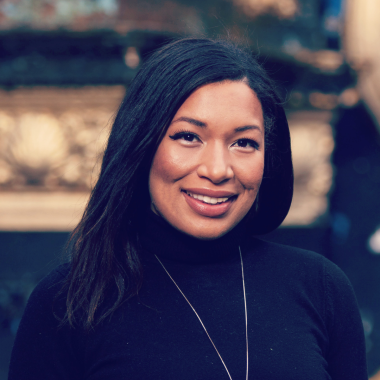
Studying Digital Media at Westminster opens doors to careers in media, advertising, PR, and beyond. Through a fusion of innovation, creativity, theory, and hands-on practice, we equip you with the skills and support needed to achieve your goals!
Alexis Anthony
Lecturer
Dr Alexis Anthony is an innovation-focused creative practitioner, researcher and educator currently serving as a Lecturer in Digital Media Production and Co-Course Leader for the Digital Media BA programmes. Before completing her Ph.D. at Westminster, she worked across the creative industries as a content creator, strategist, writer and designer across in-house, agency and freelance environments in the U.S., U.K. and Australia. Her research focuses on new media’s impact on human connection and behaviour. Dr Anthony’s passion for visual, literary and performance art is infused in all areas of her teaching, and she loves to champion forward-thinking student work.
More about meSee full profile of Alexis AnthonyLara Bellini
Senior Lecturer
Lara is an award-winning radio producer, broadcast journalist and music writer.
As a business manager at the BBC, she contributed to organisational change management that cemented BBC Radio 3 as one of Europe's leading cultural broadcasters.
As a creative, she has produced programmes for BBC Radio, worked as Broadcast Journalist and was a music writer for the BBC Music website and other online and print outlets. She is a radio voiceover artist.
In Higher Education, her area of expertise covers entrepreneurship and media. She is a Senior Fellow of the Higher Education Academy, and Director of Employability at the Westminster School of Media and Communication.
More about meSee full profile of Lara Bellini
Digital Media is about content that speaks to the hearts and minds of audiences and embraces innovation. As the media industry evolves, we equip you with the skills to realise your creative vision and succeed in your career.
Course Team
Entry Requirements
- A levels – CCC (96 UCAS Tariff points)
- T levels – 96 UCAS Tariff points
- International Baccalaureate – 96 UCAS Tariff points from all components of the Diploma Programme. International Baccalaureate Career-related Programme will be considered on a case-by-case basis
- BTEC Extended Diploma – MMM
- BTEC Diploma – DD
- Access – 96 UCAS Tariff points from the Access course
In addition to one of the above, you should have:
- GCSE English Language grade 4/C – IB grade 4 Higher level, GCSE Maths Pass – IB Pass
If your first language is not English, you will need an IELTS of 6.0 overall, with 5.5 in each component.
We also welcome applications from students who are taking a combination of qualifications listed above. For further information, please contact Course Enquiries.
Direct (advanced) entry or transfer
Direct entry to Year 2 may be available for some of our programmes. You will need to have already successfully completed part of your undergraduate course elsewhere with the relevant number of credits of a comparable degree. Please note that admission to Year 3 is rarely granted. Applications for direct entry are made through UCAS, selecting the appropriate 'point of entry' whilst making your application e.g. for second year entry you would choose point of entry 2.
View more information about our entry requirements and the application process
International Baccalaureate
96 UCAS Tariff points from all components of the Diploma Programme. International Baccalaureate Career-related Programme will be considered on a case-by-case basis. You can refer to the UCAS calculator to determine your point score. Find out more about acceptance of the International and European Baccalaureate.
Other international qualifications
We accept a wide range of international high school level qualifications. Please see information on country-specific entry requirements.
International Foundation courses
We work in partnership with Kaplan International College London who provide the International Foundation Certificate at their College based in London Bridge. These courses are for students who don’t meet our direct entry requirements. Upon successful completion, you can progress to your chosen degree at the University of Westminster. Find out more about the different university preparation courses that are accepted for entry.
English language requirements
If your first language is not English, you should have an IELTS score of 6.5 overall, with a score of 5.5 in each component. Please note we accept a wide range of English language qualifications and assessments. Find out more at English language requirements.
If you don't meet the English language requirements yet, then we offer online and on campus pre-sessional English programmes to help develop your English language skills to the required level before you start your course. Find out more about our pre-sessional English programmes.
Direct (advanced) entry or transfer
We may be able to accept students into Year 2 or Year 3 if enough relevant credits from a comparable degree have been completed as part of an undergraduate course elsewhere. We will assess transcripts, module descriptions, and the number of credits completed to determine the appropriate entry level. We are unable to consider applications from international students who have failed any academic year in their current programme of study.
Applications for general direct entry are made through UCAS, selecting the appropriate 'point of entry', e.g. for second year entry, you would choose point of entry 2, for final year entry, you would choose point of entry 3.
Students who have completed an International Year One programme at a recognised partner institution can apply for year 2 entry for relevant programmes.
Study a University of Westminster degree overseas
We work in partnership with a number of academic institutions around the world that deliver a selection of our undergraduate programmes. Visit Transnational Education Partners for further information.
More information
- A levels – CCC (96 UCAS Tariff points)
- T levels – 96 UCAS Tariff points
- International Baccalaureate – 96 UCAS Tariff points from all components of the Diploma Programme. International Baccalaureate Career-related Programme will be considered on a case-by-case basis
- BTEC Extended Diploma – MMM
- BTEC Diploma – DD
- Access – 96 UCAS Tariff points from the Access course
In addition to one of the above, you should have:
- GCSE English Language grade 4/C – IB grade 4 Higher level, GCSE Maths Pass – IB Pass
If your first language is not English, you will need an IELTS of 6.0 overall, with 5.5 in each component.
We also welcome applications from students who are taking a combination of qualifications listed above. For further information, please contact Course Enquiries.
Direct (advanced) entry or transfer
Direct entry to Year 2 may be available for some of our programmes. You will need to have already successfully completed part of your undergraduate course elsewhere with the relevant number of credits of a comparable degree. Please note that admission to Year 3 is rarely granted. Applications for direct entry are made through UCAS, selecting the appropriate 'point of entry' whilst making your application e.g. for second year entry you would choose point of entry 2.
View more information about our entry requirements and the application process
International Baccalaureate
96 UCAS Tariff points from all components of the Diploma Programme. International Baccalaureate Career-related Programme will be considered on a case-by-case basis. You can refer to the UCAS calculator to determine your point score. Find out more about acceptance of the International and European Baccalaureate.
Other international qualifications
We accept a wide range of international high school level qualifications. Please see information on country-specific entry requirements.
International Foundation courses
We work in partnership with Kaplan International College London who provide the International Foundation Certificate at their College based in London Bridge. These courses are for students who don’t meet our direct entry requirements. Upon successful completion, you can progress to your chosen degree at the University of Westminster. Find out more about the different university preparation courses that are accepted for entry.
English language requirements
If your first language is not English, you should have an IELTS score of 6.5 overall, with a score of 5.5 in each component. Please note we accept a wide range of English language qualifications and assessments. Find out more at English language requirements.
If you don't meet the English language requirements yet, then we offer online and on campus pre-sessional English programmes to help develop your English language skills to the required level before you start your course. Find out more about our pre-sessional English programmes.
Direct (advanced) entry or transfer
We may be able to accept students into Year 2 or Year 3 if enough relevant credits from a comparable degree have been completed as part of an undergraduate course elsewhere. We will assess transcripts, module descriptions, and the number of credits completed to determine the appropriate entry level. We are unable to consider applications from international students who have failed any academic year in their current programme of study.
Applications for general direct entry are made through UCAS, selecting the appropriate 'point of entry', e.g. for second year entry, you would choose point of entry 2, for final year entry, you would choose point of entry 3.
Students who have completed an International Year One programme at a recognised partner institution can apply for year 2 entry for relevant programmes.
Study a University of Westminster degree overseas
We work in partnership with a number of academic institutions around the world that deliver a selection of our undergraduate programmes. Visit Transnational Education Partners for further information.
More information
What our students say

Elisa Hernandez Biffa
Digital Media BA
I love how different the teaching has been compared to how it is in my country. I feel like I have a voice and what I say really matters. As an Erasmus student, I’ve felt welcome and part of the Westminster community. To be a Westminster student is an experience that I will never forget.
Westminster Degree Shows
The Westminster Degree Shows are an annual collection that showcases the creativity, vibrancy and artistic talent of our undergraduate arts courses. You can see the latest online collection on Westminster Degree Shows.
Image: student work by Nathan Hunter – Illustration BA

Learn new skills

Learn a new language
From Arabic to Spanish, you can learn a new language alongside your degree with our Polylang programme.

Develop your entrepreneurial skills
Access industry networking events, workshops, one-to-one business advice and start-up support through our award-winning WeNetwork.

Gain extra qualifications
We provide access to free online courses in Adobe and Microsoft Office applications, as well as thousands of specialist courses on LinkedIn Learning.
Fees and Funding
UK tuition fee: £10,050 (Price per academic year)
Please note that if you defer your place, the first year’s tuition fees will be those of the academic year in which you enrol, which may be higher than the fee shown for this year.
Fees are subject to UK Government Parliamentary procedure.
Find out how we set our tuition fees.
Funding
As well as tuition fee loans, there is a range of funding available to help you fund your studies.
Find out about undergraduate student funding options.
Scholarships
The University is dedicated to supporting ambitious and outstanding students and we offer a variety of scholarships to eligible undergraduate students, which cover all or part of your tuition fees.
Find out if you qualify for one of our scholarships.
When you have enrolled with us, your annual tuition fees will remain the same throughout your studies with us. We do not increase your tuition fees each year.
Find out how we set our tuition fees.
Funding
As well as tuition fee loans, there is a range of funding available to help you fund your studies.
Find out about undergraduate student funding options.
Scholarships
The University is dedicated to supporting ambitious and outstanding students and we offer a variety of scholarships to eligible undergraduate students, which cover all or part of your tuition fees.
Find out if you qualify for one of our scholarships.
Additional costs
See what you may need to pay for separately and what your tuition fees cover.
International tuition fee: £19,000 (Price per academic year)
When you have enrolled with us, your annual tuition fees will remain the same throughout your studies with us. We do not increase International tuition fees.
Please note that if you defer your place, the first year’s tuition fees will be those of the academic year in which you enrol, which may be higher than the fee shown for this year.
Find out how we set our tuition fees.
EU Qualifications Welcome Award Scheme
If you are an international student accepted on an undergraduate programme starting in September at level 3 (Foundation) or level 4 (first year) on the basis of an eligible EU qualification only, you will be awarded a £4,500 tuition fee reduction off your first year of studies. For more information, see the EU Qualifications Welcome Award Scheme.
International student funding
Find out about funding for international students.
When you have enrolled with us, your annual tuition fees will remain the same throughout your studies with us. We do not increase your tuition fees each year. Find out how we set our tuition fees.
EU Qualifications Welcome Award Scheme
If you are an international student accepted on an undergraduate programme starting in September 2023 or September 2024 at level 3 (Foundation) or level 4 (first year) on the basis of an eligible EU qualification only, you will be awarded a tuition fee reduction which will align your fee more closely to the one for UK students. For more information, see the EU Qualifications Welcome Award Scheme.
International student funding
Find out about funding for international students.
Additional costs
See what you may need to pay for separately and what your tuition fees cover.
UK tuition fee: £10,050 (Price per academic year)
Please note that if you defer your place, the first year’s tuition fees will be those of the academic year in which you enrol, which may be higher than the fee shown for this year.
Fees are subject to UK Government Parliamentary procedure.
Find out how we set our tuition fees.
Funding
As well as tuition fee loans, there is a range of funding available to help you fund your studies.
Find out about undergraduate student funding options.
Scholarships
The University is dedicated to supporting ambitious and outstanding students and we offer a variety of scholarships to eligible undergraduate students, which cover all or part of your tuition fees.
Find out if you qualify for one of our scholarships.
When you have enrolled with us, your annual tuition fees will remain the same throughout your studies with us. We do not increase your tuition fees each year.
Find out how we set our tuition fees.
Funding
As well as tuition fee loans, there is a range of funding available to help you fund your studies.
Find out about undergraduate student funding options.
Scholarships
The University is dedicated to supporting ambitious and outstanding students and we offer a variety of scholarships to eligible undergraduate students, which cover all or part of your tuition fees.
Find out if you qualify for one of our scholarships.
Additional costs
See what you may need to pay for separately and what your tuition fees cover.
International tuition fee: £19,000 (Price per academic year)
When you have enrolled with us, your annual tuition fees will remain the same throughout your studies with us. We do not increase International tuition fees.
Please note that if you defer your place, the first year’s tuition fees will be those of the academic year in which you enrol, which may be higher than the fee shown for this year.
Find out how we set our tuition fees.
EU Qualifications Welcome Award Scheme
If you are an international student accepted on an undergraduate programme starting in September at level 3 (Foundation) or level 4 (first year) on the basis of an eligible EU qualification only, you will be awarded a £4,500 tuition fee reduction off your first year of studies. For more information, see the EU Qualifications Welcome Award Scheme.
International student funding
Find out about funding for international students.
When you have enrolled with us, your annual tuition fees will remain the same throughout your studies with us. We do not increase your tuition fees each year. Find out how we set our tuition fees.
EU Qualifications Welcome Award Scheme
If you are an international student accepted on an undergraduate programme starting in September 2023 or September 2024 at level 3 (Foundation) or level 4 (first year) on the basis of an eligible EU qualification only, you will be awarded a tuition fee reduction which will align your fee more closely to the one for UK students. For more information, see the EU Qualifications Welcome Award Scheme.
International student funding
Find out about funding for international students.
Additional costs
See what you may need to pay for separately and what your tuition fees cover.
We Are Westminster Blog
Read our blog to get an insight into student life and studying at the University of Westminster.
Broadcast Suite
Our Broadcast Suite is designed to give students a realistic experience of working in the UK news and digital media industries.
The suite features a fully equipped TV news set with professional cameras and lighting, while the surrounding space is fitted with interactive touchscreens to create an immersive and engaging learning environment. In addition to TV and video production, the Broadcast Suite is designed for modern multi-platform journalism. Students can produce video, audio, podcasts, social media and online content simultaneously, reflecting the workflows used by many of the UK’s leading media organisations.
Learn more about our Broadcast Suite.

Teaching and Assessment
Below you will find how learning time and assessment types are distributed on this course. The graphs below give an indication of what you can expect through approximate percentages, taken either from the experience of previous cohorts, or based on the standard module diet where historic course data is unavailable. Changes to the division of learning time and assessment may be made in response to feedback and in accordance with our terms and conditions.
How you'll be taught
Teaching methods across all our undergraduate courses focus on active student learning through lectures, seminars, workshops, problem-based and blended learning, and where appropriate practical application. Learning typically falls into three broad categories:
- Scheduled hours: examples include lectures, seminars, practical classes, workshops, supervised time in a studio
- Placement: placement hours normally include placement opportunities, but may also include live projects or virtual activity involving employers
- Independent study: non-scheduled time in which students are expected to study independently. This may include preparation for scheduled sessions, follow-up work, wider reading or practice, completion of assessment tasks, or revision
How you'll be assessed
Our undergraduate courses include a wide variety of assessments.
Assessments typically fall into three broad categories:
- Practical: examples include presentations, videos, podcasts, lab work, creating artefacts
- Written exams: end of semester exams
- Coursework: examples include essays, reports, in-class tests, portfolios, dissertation
Data from the academic year 2025/26
Supporting you
We are ranked first in London for student support (Whatuni Student Choice Awards 2026).
Our Student Hub is where you’ll find out about the services and support we offer, helping you get the best out of your time with us.
- Study support – workshops, 1-2-1 support and online resources to help improve your academic and research skills
- Personal tutors – support you in fulfilling your academic and personal potential
- Student advice team – provide specialist advice on a range of issues including funding, benefits and visas
- Extra-curricular activities – volunteering opportunities, sports and fitness activities, student events and more

Course Location
Harrow is our creative and cultural hub, home to most of our arts, media and digital courses. It houses state-of-the-art facilities for every discipline, including project and gallery spaces, film studios, creative labs, collaborative learning spaces, and the Westminster Enterprise Network.
Harrow Campus is based in north-west London, just 20 minutes from the city centre by train.
For more details, visit our Harrow Campus page.
This course is based at our Harrow Campus, but to make the most of our teaching spaces and wider learning opportunities, some modules or activities may take place at our central London campuses. These may include guest lectures, degree shows or other teaching activities.


CHANGES TO OUR COURSES
All content on our course pages is accurate at time of publication.
Where significant or material changes have been made, applicants will be informed of these in line with Competition and Markets Authority guidance.
Contact us
Call our dedicated team on:
+44 (0)20 7911 5000 ext 65511
Opening hours (GMT): 10am–4pm Monday to Friday
Opening hours (GMT): 10am–4pm Monday to Friday
More information
Your Westminster
Book an open day. Order a prospectus. Sign up for newsletters.