Course Overview
Course summary
Our course in Fashion Marketing and Promotion has been designed to cater for creative, passionate and motivated students who want to pursue a creative degree within the fashion industry and develop a solid understanding of the fashion industry in our digital era.
The fashion marketing and promotion industry offers some of the most attractive jobs in the industry and our course allows you to experience the wide spectrum of this field. The course will also give you a much better understanding of how you could use your strengths to achieve your future ambitions in the arena of fashion marketing and promotion.
Our aim is to help you realise your potential by directing you to the areas that are of greatest interest to you, both for your studies and in the future.
We’ve developed this course with expertise from the industry in order to respond to the changing needs of fashion brands in our ever-changing and innovative fashion industry landscape. Our industry experts are increasingly looking for creative and digitally literate fashion business graduates to help drive their marketing and promotion strategy across multiple customer touchpoints and channels.
This course is designed to develop your creative, technical, analytical and business skills on a commercial and strategic level.
During your three years on the course, you'll be introduced to a wide range of fashion promotion and marketing projects, including trend forecasting and insights, creative marketing and communication, branding, styling, photography, film and media, visual merchandising and storytelling, brand narratives, strategic marketing, digital content creation and new developments in social media and emerging media.
You'll also have the opportunity to apply for a semester abroad during your second year of study at one of our partner institutions. Our exchange programme is designed to equip you with the creative skills, knowledge and practical experience, along with the development of a professional character that is key to successful employment.
Fashion Sustainability Statement
Our Fashion courses are defined by a critical, research-led approach to fashion education. Rooted in radical thinking and informed by material and archival practices, we examine fashion as a cultural, social, and industrial system. Rather than treating sustainability as a fixed agenda, we approach it as a field of enquiry shaped by competing values, material conditions, and industry realities.
Our approach is informed by the UN Sustainable Development Goals and international sustainability frameworks championed by the Copenhagen Fashion Summit and Global Fashion Agenda.
Top reasons to study with us
- Fantastic location – With central London only a 20-minute tube ride away, you’ll enjoy the benefits of studying in a major fashion capital
- Learn real-world skills beyond the classroom – We work closely with a huge range of iconic businesses across London to provide the best student experience possible, through visits, networking, and industry-led project work with fashion brands
- Degree show exhibition – After your final project you’ll get to exhibit your work in a degree show
- A multidisciplinary creative environment – You’ll work alongside students from film, photography, music, radio and journalism
- Overseas exchange – You'll have the opportunity to apply for a semester abroad during your second year of study at one of our partner institutions
- Westminster is ranked 2nd in the UK in the Complete University Guide 2023 for ‘Research Quality’ in Art and Design
Course Overview Video
Learn more about this course from a member of the course team.
Modules
Teaching and learning are interactive, covering academic, creative practice and industry-applied elements.
You'll learn through a broad mix of lectures, group and individual tutorials, crits, and workshops, supporting the development of skills across fashion promotion and marketing.
We use a variety of assessment methods, including practical projects, presentations, written work, blogs, websites, research tasks and portfolios.
Types of module
Our undergraduate courses comprise three types of module:
- Core modules: compulsory modules that you must take each year
- Option modules: modules that you can choose from to tailor your course to your interests, normally related to your subject area
- Elective modules (also called 'Electives'): wider, interdisciplinary modules that you may be able to choose from to broaden your academic experience and skills – covering everything from learning a new language to building enterprise skills
Module availability
We aim to offer a wide range of option modules and electives, but we cannot always guarantee your preferred choices as availability can be affected by timetabling constraints, staff availability or student demand.
Elective modules may be subject to change, but you can look through an indicative list on our University-wide electives page.
For more information
Full details on course structure, modules, teaching and assessment can be found in the programme specification below.
The first-year modules are designed to provide a fundamental understanding and application of promotional and marketing tools.
Core modules
This module introduces you to the principles of fashion branding and how fashion brands employ creative narratives. Brand identity and image will be explored. You will gain an understanding of how fashion retail brands attract, communicate and sell to the customer, through their creative presentations and displays, which utilise different formats and visual merchandising strategies. You'll evaluate how fashion retail and brand communication channels work successfully, when aligned with one core narrative and message. You will also learn and practice design thinking and apply the process to creative research and concept development, informing a concept proposal and final creative design outcome, presented in a portfolio.
This module provides the fundamental knowledge and skills to enable you to successfully transition to Higher Education and academic development throughout your degree. By examining the fashion industry, you'll be introduced to the essential skills such as report writing, research, presentation and the technical software packages to allow you to meet the course requirements of fashion students. The context of the fashion business will be used to develop these skills, which can then be applied to all other modules throughout the course. You'll be required to examine your own skills set measured against the marking criteria and learning outcomes.
The module will also lay the foundation for and practice of successful team work in both an academic and professional environment. The UNSDG (United Nations Sustainable Development Goals) will be introduced to give you knowledge of their relevance across the fashion industry. Through an engaging and diverse learning environment consisting of lectures, workshops and field trips, you will enhance your academic abilities, personal skill set and networking opportunities which should support you towards success at the university and employment.
This module explores strategies and formats of fashion styling in the current fashion market. Focusing on presenting and promoting the product on a model, using digital image to communicate to a fashion audience, through image and narrative. You'll work in groups researching and developing, fashion styling concept ideas; collating visual design research in a portfolio and pitching the final concept in a presentation. Teamwork will support a practical outcome of organising, directing, styling and implementing a fashion shoot.
The module will provide you with a fundamental understanding of the philosophy and concepts of marketing and the recognition of the importance of marketing in business. The module also provides you with the tools to identify and apply the principal concepts and techniques of marketing to the fashion business. It aims to develop both your creative and business skills to apply these further to branding and marketing proposals. You will study how to define customer groups through segmentation analysis, measure customer needs and market change while monitoring market performance.
This module will introduce the you to the fields of Fashion Promotion and Media, and its role throughout the fashion and fashion-related industries. You'll be able to explore the ways in which promotional tools and roles are designed to communicate fashion and lifestyle products. It aims to develop your basic creative research skills, promotional practices and evaluation of key industry issues, while developing your understanding of customer profiles. Each week will examine a range of promotional methods and campaigns, enabling you to develop both critical and creative skills. The module will also develop your photographic, CAD, writing and presentation skills.
Option modules
This module provides induction and understanding of creative research practice, assessment processes and group working required for creative practice subjects. You'll be challenged to experiment individually, undertaking contextual and practical research, which will contribute to a significant group project where students will be allocated creative roles in groups working collaboratively. This will introduce you to the peer assessment framework required for future collaborative projects.
This module introduces you to the core principles and practices of digital fashion marketing with a central focus on social media. You'll learn to identify and interpret emerging trends within the digital space, developing an understanding of how social media is reshaping consumer engagement and brand strategy in the fashion industry. By investigating digital marketing techniques, you'll explore how fashion brands from luxury to high street utilise social platforms to connect with audiences, create brand narratives, and drive awareness through targeted campaigns. This module emphasises the strategic use of social media for brand visibility and commercial success, equipping you with the skills needed to research, design, and execute compelling digital campaigns that respond to market trends and consumer expectations.
The second year develops the practical application of your marketing and promotion skills and includes industry led project work with fashion brands.
Core modules
This exciting module explores the development and implementation of content creation within the digital arena. The module focuses on development and use of digital tools required to produce engaging and compelling content, such as video production. Students are expected to research and analyse the visual language used within digital fashion to engage with a particular target demographic through producing engaging content.
This module introduces you to the professional creative industries and provides you with experience of related workplace environments, relevant to fashion marketing and promotion, through a range of tailored professional projects, including work placements (alternatives may include client-set briefs and curated public events).
You'll be introduced to the module in Level 5, enabling you to undertake a work placement during the vacation period before Level 6. Taught sessions introduce different career possibilities and provide an overview of professional skills, as well as introducing you to relevant support within the university and external professional networks and support services.
This module considers and fulfils the UN Sustainable Development Goals Standards, referring to 5-Gender Equality, 8-Decent Work and Economic Growth and 9-Industry Innovation and Infrastructure.
This module investigates how fashion brands are represented through various written, visual and promotional outcomes. It is supported by historical and theoretical lectures, seminars and workshops, which explore key developments of promotional communication practices in the fashion industry. This will demonstrate and question what can be developed from the past, by analysing the fashion industry within a historical and culturally diverse context. You will explore branding tools and how these help brands differentiate their identity and promise in order to deliver a set of specific features, benefits and values by creating emotional meaning in the minds of targeted customers.
This module further develops your skills within the field of Fashion Promotion and its role throughout the fashion and fashion-related industries by answering the industry requirements through industry-led projects. You'll be able to immerse yourself within the relevant forms of fashion promotion to answer specific projects set by the industry. It aims to further nourish your creative, promotional and research skills. The module will focus on an integrated approach to explore the factors that contribute to the success of campaigns. You'll further develop both critical skills and a creative body of work using a series of promotional tools to form an integrated promotional campaign to answer the industry’s demand. This module will also further develop your technical and presentation skills.
Option modules
This module focuses on research, analysis and developing deep understanding of the market, applying this understanding to digital promotion and creative solutions and, finally, to communicate your ideas to a client. Research and investigation enable you to feel confident with the client (the brand), allowing you to showcase your digital creativity and innovative skills while possessing in-depth knowledge of the brand and its products. Getting inside the company’s heart means that the ideas and vision are appropriate, balancing innovation with commercial awareness, regardless of the brand's level and the breadth or narrowness of its product range.
This module will focus on the advanced development of a more articulate and active approach to fashion culture through the support of advanced study in consumer lifestyle, trends, sociology, and the semiotics of communication. The module is designed to provide an advanced level of analysis of the lifestyles and consumer trends that shape global fashion today.
The purpose of this module is to analyse current fashion retail strategies, underpinning the design and creation of fashion experiences and spaces. Digital and physical mediums will be investigated that work to promote, display and sell fashion products. Customer experience strategies will be explored, looking at ways to engage the consumer and interact with the brand. You'll gain knowledge on omni channel retailing strategies, innovation in technology and experiential design. You'll present a concept proposal and research to support the development of a creative fashion retail experience concept. And you'll communicate your final design work in a digital portfolio.
Between Years 2 and 3, you’ll have the opportunity to undertake a professional placement year in industry. Completing the placement year will lead to the final award Bachelor of Arts with Honours – Fashion Marketing and Promotion with Professional Experience.
Find out more about the costs involved in taking a placement year.
The final year is designed to develop your creative portfolio and strategic management skills and allows you to special in an area of fashion promotion that best suits your creative/ business skills. The final project will culminate in a degree show where you will present your work.
Core modules
In a creative world saturated with endless new concepts, products, innovations and promotion how do you arrive at solutions which combine fresh ideas, communicative narrative and workable business concepts? It is no longer simply enough to “think outside the box” or engage in “blue-sky thinking”, there must be a solid foundation of research, market awareness, clarity and a freshness to a creative proposal. How do you set about communicating an idea in the creative fashion marketing promotion industry?
This module will allow you to use your research, creative, technical and writing skills to create a creative final major project. You'll be able to assimilate all the knowledge learned from the 3 years and from the variety of skills into one cohesive project, with the creative freedom that will allow new perspectives concerning different marketing and communication concepts.
The module will stimulate your critical thinking by identifying new ways to promote and market a well-researched idea for a brand. You'll identify consumer insight, target market, marketing plan and budgets in a supportive and realistic marketing report to support your creative idea. The module will require you to combine your creative, entrepreneurial thinking and digital skills towards an innovative strategic approach in fashion communication.
This module will include teaching that relates to the UN Sustainable Development Goals 4(Quality Education), 5(Gender Equality), 10(Reduced Inequalities), 12 (Responsible Consumption Production), 16 (Peace, Justice Strong Institutions).
This module introduces you to new, creative, and innovative possibilities in emerging markets for producing content-rich media, thereby enhancing diversity in your portfolio. You are expected to engage with innovative practices in designing for a range of interactive media platforms within the new media sector, demonstrated and implemented through a range of practical coursework using best industry practices based upon theoretical research and assigned readings. The module investigates the capacity to apply industry best practices in fashion marketing to a range of new media, addressing key research and theoretical studies based on the psychology of consumer behaviour, target audiences, and sociologies in relation to fashion marketing and promotion.
This module supports you to gain knowledge of the planning, management, marketing, promotion and design of a fashion event. You'll explore how the current fashion market utilises physical events to engage both fashion audiences, gain press opportunity and fundamentally promote a fashion product. Event formats will be investigated, including fashion shows, trade shows, exhibitions and press launches. You'll undertake exploration of an industry standard brief to plan, design and implement a viable event concept and apply relevant marketing and promotional strategies to the communication of the event.
Option modules
The purpose of this module is to provide you with the opportunity to apply fundamental design skills and knowledge of branding strategies previously taught, to the production of creative outcomes. You'll work to an industry inspired brief, underpinning an innovative approach to a re-branding project. Research, concept development and innovation will inform creative branded practical outcomes, utilising multiple channels of communication and presented in aligned multiple formats. This module will relate to the UN Sustainable Development Goals of 4- Quality Education and 12- Responsible Production and Consumption.
Many students possess entrepreneurial characteristics such as vision, energy, confidence and self-reliance. This module will develop student’s natural abilities as entrepreneurs as well as providing a framework for exploring a viable business plan. A series of lectures will analyse the theory and practice of enterprise, the processes involved and the skills required. Industry experts will provide specialised knowledge. Case studies will also be applied to discuss success and failure in Industry. The module will discuss all elements of launching a business venture, from business plan projections, through to sales and marketing strategies and key performance indicators used to pursue strategic goals.
This module focuses on how future fashion industry managers identify opportunities and develop innovative products and services. You'll examine how trends emerge and evolve, and consider your own impact on the fashion retail landscape. You'll be challenged to explore new sources of information and to think beyond your existing experience and reference points.
The module highlights the central role of data and insight in planning fashion products, operations, marketing, and retail strategies. External speakers and field research form an integral part of the learning experience, expanding your industry awareness and professional insight. You'll have extensive opportunities to research trends, brands, and markets, with a particular focus on how industry professionals conduct research and generate new ideas.
Collaborative group work is a key component of the module, enabling you to share ideas and knowledge while developing professional self-awareness, teamwork, and communication skills. This approach reflects the way trends and insights teams operate within the fashion industry.
This module provides a comprehensive knowledge of historical, current and emerging brands and their identity, products, services and practices that go to make up luxury brands and their respective businesses. Although there is a central focus on the present, you'll analyse and learn from past examples demonstrating how luxury businesses need to be both resilient and flexible, balancing reputation and growth.
You'll also analyse how luxury brands evolve while maintaining their signature style through developing new innovative extensions, collaborations and innovations while often simultaneously commercially exploiting carefully curated and commercially exploited archives. It will show the unique course that luxury brands need to navigate to maintain their status and reflect contemporary society. This will give you a deep insight into maintaining a cohesive brand message and image while staying relevant.
This module examines the ethical behaviour of business and consumers and the environmental profit and loss in the Fashion industry. The issues will be illustrated in terms of the positive and negative effects on People, Planet and Profit and discuss the potential for sustainable practice within the fashion industry. You'll develop the knowledge to identify, develop and establish effective Corporate Social Responsibility (CSR) policies and to manage and promote more sustainable approaches in product development, manufacturing and marketing.
You'll gain an understanding of how values at organisation-level affect decisions regarding equality, diversity, exclusivity and social justice. In particular this module explores the following UN SDGs. 6: Clean water sanitation; 8: Decent work economic growth; 9: Industry, innovation infrastructure; 12: Responsible consumption production; 14: Life below water 15: Life on land.

For more details on course structure, modules, teaching and assessment Download the programme specification (PDF).
To request an accessible version please email [email protected]

Get your copy of the University of Westminster prospectus and browse the range of courses on offer.

Contact us for general course enquiries:
+44 (0)20 7911 5000 EXT 65511
(Mon–Fri, 10am–4pm GMT)
Live chat with us
(Mon–Fri, 10am–4pm GMT)
Open days
Join us at an open day online or on campus. Get a feel for student life at the University of Westminster and talk to course leaders and our support teams.
Can't attend? See more open events
More ways to meet us
Designing the future of travel: develop sustainable event planning skills
Careers

Transferable skills
You'll gain the knowledge and experience to work in areas such as advertising, branding promotion, creative marketing, digital marketing, public relations, styling, trend prediction and visual merchandising.

Overseas exchange
You'll have the opportunity to apply for a semester abroad during your second year of study at one of our partner institutions.
Employers around the world
Access a network of over 3,000 employers at the University’s new home of careers and enterprise, Zone29.
Career development
Our course is designed to set high standards for professional achievement in the fashion marketing and promotion industry roles and prepare you for the challenge and opportunity of a multi-skilled portfolio career.
Our Fashion Marketing and Promotion BA will develop the creative, academic, digital, practical and commercial skills required for the fashion marketing and promotion role, however, students are also equipped for careers in advertising, graphics, PR, branding, styling and trend forecasting, and e-commerce, retail management.
Employment areas
Our students graduate with the skills to work in all areas of fashion marketing and promotion. Common areas include:
- Advertising
- Branding promotion
- Creative marketing
- Digital marketing
- Public relations
- Styling
- Trend prediction
- Visual merchandising
Unlock your career potential at Zone29
Zone29 is our new home of careers and enterprise, offering game-changing opportunities such as:
- jobs, placements and work experience
- tailored career guidance and mentoring
- step-by-step career planning through the Westminster Award
- work and study abroad programmes
- start-up, business and freelance support

International Opportunities
Many of our courses offer international study and work experiences, and the University provides other global opportunities that all students can apply for – so whatever you're studying, you'll have the chance to go abroad.
Opportunities could include:
- Taking part in semester or year-long exchanges at institutions around the world
- Attending an international summer school or field trip
- Developing your CV through volunteering or work placements abroad
International experience broadens horizons, boosts self-confidence, and improves global understanding, alongside being fantastic for your career.
Find out more about our international opportunities, including funding options and where you can go.

Course Leader
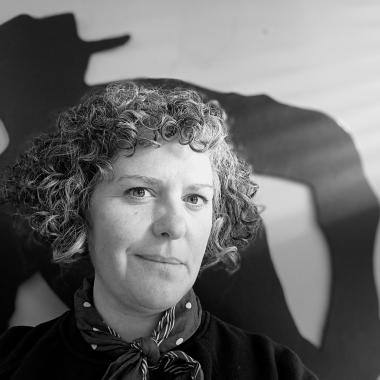
Rachel Jones
Senior Lecturer
Rae (Rachel) has been with the University of Westminster since 2015 working with the Fashion Business Management course until moving across to be Course Leader with Fashion Marketing and Promotion BA in 2024. Her expertise lies in entrepreneurship, trend forecasting & insights and consumer behaviour.
A trained footwear and accessories designer she is an experienced trend forecaster and consultant who has worked with most of the top trend agencies. As something of a serial entrepreneur, she has developed numerous businesses in a variety of sectors and very much enjoys encouraging students to start their own enterprise journeys.
Rae is a published author and has extensive experience teaching at a range of UK universities and is a regular guest speaker at the College for Creative Studies in Detroit and an External Examiner in footwear design at De Montfort University.
Rae is the liaison tutor for Fashion Design at IED in Barcelona as part of the university’s partnerships programme.
Our course allows you to be creative whilst learning how to develop your ideas and apply them in the world of fashion marketing, promotion, styling, or communication.
Course Team
Our course team is also supported by visiting lecturers all with particular industry experience and skillsets.
Why study this course?

Fantastic location
With central London only a 20-minute tube ride away, you’ll enjoy the benefits of studying in a major fashion capital.

Degree show exhibition
After your final project, you’ll get to exhibit your work in a degree show.

A multidisciplinary creative environment
You’ll work alongside students from film, photography, music, radio and journalism.
Entry Requirements
- A levels – CCC (96 UCAS Tariff points), with Art and Design or an arts based subject
- T levels – 96 UCAS Tariff points
- International Baccalaureate – 96 UCAS Tariff points from the IB including 5 in a HL Visual Arts
- BTEC Extended Diploma – MMM in Art & Design or an arts related subject
- BTEC Diploma – DD in an arts related subject
- Access – 96 UCAS Tariff points from the Access course
In addition to one of the above, you should have:
- GCSE English Language grade 4/C – IB grade 4 Higher level, GCSE Maths pass - IB pass
If your first language is not English, you will need an IELTS of 6.0 overall, with at least 5.5 in each component.
You will be required to submit a portfolio or design project (see below for guidance).
We also welcome applications from students who are taking a combination of qualifications listed above. For further information, please contact Course Enquiries.
Direct (advanced) entry or transfer
Direct entry to Year 2 or Year 3 may be available for some of our programmes. You will need to have already successfully completed part of your undergraduate course elsewhere with the relevant number of credits of a comparable degree. Please note that admission to Year 3 is rarely granted. Applications for direct entry are made through UCAS, selecting the appropriate 'point of entry' whilst making your application, eg for second-year entry, you would choose a point of entry 2.
More information
Portfolio guidance
Number of recommended portfolio pieces.
Please include a selection of projects or previous work. You should show your strongest projects from start to finish including sketchbooks; ideally your three best projects (these can be photographed). Please include a maximum of 10 pages.
What should I include in my portfolio submission?
- Please include a selection of projects or work from your current or previous studies. This could include photography, styling, graphics, design work or art projects.
- We are looking for examples of your creativity, including sketches, photography or any media-based work you may have undertaken.
- Please note we are looking for quality over quantity and we expect you to be able to self-edit your work so that we get a sense of you as a person and as a creative thinker.
- If you are not studying Level 3 qualifications in fashion, media, art or design or do not have a portfolio, you can complete the following project:
Project: Design a fashion collaboration event invite
We would like you to undertake creative research into a recent fashion brand collaboration of your choosing. We would then like you to design an invite to a launch event for this collaboration. Your creative research work should show the development of your ideas from start to finish in addition to the final piece of work.
How should I structure my portfolio?
Portfolios should be sent digitally, ideally in a single PDF format (max 10MB) and uploaded. Please try to avoid lots of individual images. If your portfolio or project is very large you can save the documents on a platform such as Behance, Flickr, Googledocs or Dropbox and send us a link to it.
How will my portfolio be evaluated?
We are interested in how you have completed the work and what your design process was for it. We want to see what you are interested in and to see the creative outputs of your research as well as where your ideas came from.
What happens next?
An academic will assess the written statement, portfolio provided and the requested project (if applicable) and make a decision about suitability for the course. They'll communicate this with the admissions team, who will let the applicant know the result.
Top tip from our course team
Try to show us work that reflects your interests, these don't need to just be fashion but could also be art and design, film or current marketing campaigns you like.
Please do not send in portfolios until requested to do so by the University's Admissions team. You will be notified by email about when to submit your portfolio.
International Baccalaureate
96 UCAS Tariff points from the IB including 5 in a HL Visual Arts. You can refer to the UCAS calculator to determine your point score. Find out more about acceptance of the International and European Baccalaureate.
Other international qualifications
We accept a wide range of international high school level qualifications. Please see information on country-specific entry requirements.
International Foundation courses
We work in partnership with Kaplan International College London who provide the International Foundation Certificate at their College based in London Bridge. These courses are for students who don’t meet our direct entry requirements. Upon successful completion, you can progress to your chosen degree at the University of Westminster. Find out more about the different university preparation courses that are accepted for entry.
English language requirements
- If your first language is not English, you will need an IELTS of 6.0 overall, with at least 5.5 in each component. Please note we accept a wide range of English language qualifications and assessments. Find out more at English language requirements.
- If you don't meet the English language requirements yet, then we offer online and on campus pre-sessional English programmes to help develop your English language skills to the required level before you start your course. Find out more about our pre-sessional English programmes.
Direct (advanced) entry or transfer
We may be able to accept students into Year 2 or Year 3 if enough relevant credits from a comparable degree have been completed as part of an undergraduate course elsewhere. We will assess transcripts, module descriptions, and the number of credits completed to determine the appropriate entry level. We are unable to consider applications from international students who have failed any academic year in their current programme of study.
Applications for general direct entry are made through UCAS, selecting the appropriate 'point of entry', e.g. for second year entry, you would choose point of entry 2, for final year entry, you would choose point of entry 3.
Students who have completed an International Year One programme at a recognised partner institution can apply for year 2 entry for relevant programmes.
Study a University of Westminster degree overseas
We work in partnership with a number of academic institutions around the world that deliver a selection of our undergraduate programmes. Visit Transnational Education Partners for further information.
More information
Portfolio guidance
Number of recommended portfolio pieces.
Please include a selection of projects or previous work. You should show your strongest projects from start to finish including sketchbooks; ideally your three best projects (these can be photographed). Please include a maximum of 10 pages.
What should I include in my portfolio submission?
- Please include a selection of projects or work from your current or previous studies. This could include photography, styling, graphics, design work or art projects.
- We are looking for examples of your creativity, including sketches, photography or any media-based work you may have undertaken.
- Please note we are looking for quality over quantity and we expect you to be able to self-edit your work so that we get a sense of you as a person and as a creative thinker.
- If you are not studying Level 3 qualifications in fashion, media, art or design or do not have a portfolio, you can complete the following project:
Project: Design a fashion collaboration event invite
We would like you to undertake creative research into a recent fashion brand collaboration of your choosing. We would then like you to design an invite to a launch event for this collaboration. Your creative research work should show the development of your ideas from start to finish in addition to the final piece of work.
How should I structure my portfolio?
Portfolios should be sent digitally, ideally in a single PDF format (max 10MB) and uploaded. Please try to avoid lots of individual images. If your portfolio or project is very large you can save the documents on a platform such as Behance, Flickr, Googledocs or Dropbox and send us a link to it.
How will my portfolio be evaluated?
We are interested in how you have completed the work and what your design process was for it. We want to see what you are interested in and to see the creative outputs of your research as well as where your ideas came from.
What happens next?
An academic will assess the written statement, portfolio provided and the requested project (if applicable) and make a decision about suitability for the course. They'll communicate this with the admissions team, who will let the applicant know the result.
Top tip from our course team
Try to show us work that reflects your interests, these don't need to just be fashion but could also be art and design, film or current marketing campaigns you like.
Please do not send in portfolios until requested to do so by the University's Admissions team. You will be notified by email about when to submit your portfolio.
- A levels – CCC (96 UCAS Tariff points), with Art and Design or an arts based subject
- T levels – 96 UCAS Tariff points
- International Baccalaureate – 96 UCAS Tariff points from the IB including 5 in a HL Visual Arts
- BTEC Extended Diploma – MMM in Art & Design or an arts related subject
- BTEC Diploma – DD in an arts related subject
- Access – 96 UCAS Tariff points from the Access course
In addition to one of the above, you should have:
- GCSE English Language grade 4/C – IB grade 4 Higher level, GCSE Maths pass - IB pass
If your first language is not English, you will need an IELTS of 6.0 overall, with at least 5.5 in each component.
You will be required to submit a portfolio or design project (see below for guidance).
We also welcome applications from students who are taking a combination of qualifications listed above. For further information, please contact Course Enquiries.
Direct (advanced) entry or transfer
Direct entry to Year 2 or Year 3 may be available for some of our programmes. You will need to have already successfully completed part of your undergraduate course elsewhere with the relevant number of credits of a comparable degree. Please note that admission to Year 3 is rarely granted. Applications for direct entry are made through UCAS, selecting the appropriate 'point of entry' whilst making your application, eg for second-year entry, you would choose a point of entry 2.
More information
Portfolio guidance
Number of recommended portfolio pieces.
Please include a selection of projects or previous work. You should show your strongest projects from start to finish including sketchbooks; ideally your three best projects (these can be photographed). Please include a maximum of 10 pages.
What should I include in my portfolio submission?
- Please include a selection of projects or work from your current or previous studies. This could include photography, styling, graphics, design work or art projects.
- We are looking for examples of your creativity, including sketches, photography or any media-based work you may have undertaken.
- Please note we are looking for quality over quantity and we expect you to be able to self-edit your work so that we get a sense of you as a person and as a creative thinker.
- If you are not studying Level 3 qualifications in fashion, media, art or design or do not have a portfolio, you can complete the following project:
Project: Design a fashion collaboration event invite
We would like you to undertake creative research into a recent fashion brand collaboration of your choosing. We would then like you to design an invite to a launch event for this collaboration. Your creative research work should show the development of your ideas from start to finish in addition to the final piece of work.
How should I structure my portfolio?
Portfolios should be sent digitally, ideally in a single PDF format (max 10MB) and uploaded. Please try to avoid lots of individual images. If your portfolio or project is very large you can save the documents on a platform such as Behance, Flickr, Googledocs or Dropbox and send us a link to it.
How will my portfolio be evaluated?
We are interested in how you have completed the work and what your design process was for it. We want to see what you are interested in and to see the creative outputs of your research as well as where your ideas came from.
What happens next?
An academic will assess the written statement, portfolio provided and the requested project (if applicable) and make a decision about suitability for the course. They'll communicate this with the admissions team, who will let the applicant know the result.
Top tip from our course team
Try to show us work that reflects your interests, these don't need to just be fashion but could also be art and design, film or current marketing campaigns you like.
Please do not send in portfolios until requested to do so by the University's Admissions team. You will be notified by email about when to submit your portfolio.
International Baccalaureate
96 UCAS Tariff points from the IB including 5 in a HL Visual Arts. You can refer to the UCAS calculator to determine your point score. Find out more about acceptance of the International and European Baccalaureate.
Other international qualifications
We accept a wide range of international high school level qualifications. Please see information on country-specific entry requirements.
International Foundation courses
We work in partnership with Kaplan International College London who provide the International Foundation Certificate at their College based in London Bridge. These courses are for students who don’t meet our direct entry requirements. Upon successful completion, you can progress to your chosen degree at the University of Westminster. Find out more about the different university preparation courses that are accepted for entry.
English language requirements
- If your first language is not English, you will need an IELTS of 6.0 overall, with at least 5.5 in each component. Please note we accept a wide range of English language qualifications and assessments. Find out more at English language requirements.
- If you don't meet the English language requirements yet, then we offer online and on campus pre-sessional English programmes to help develop your English language skills to the required level before you start your course. Find out more about our pre-sessional English programmes.
Direct (advanced) entry or transfer
We may be able to accept students into Year 2 or Year 3 if enough relevant credits from a comparable degree have been completed as part of an undergraduate course elsewhere. We will assess transcripts, module descriptions, and the number of credits completed to determine the appropriate entry level. We are unable to consider applications from international students who have failed any academic year in their current programme of study.
Applications for general direct entry are made through UCAS, selecting the appropriate 'point of entry', e.g. for second year entry, you would choose point of entry 2, for final year entry, you would choose point of entry 3.
Students who have completed an International Year One programme at a recognised partner institution can apply for year 2 entry for relevant programmes.
Study a University of Westminster degree overseas
We work in partnership with a number of academic institutions around the world that deliver a selection of our undergraduate programmes. Visit Transnational Education Partners for further information.
More information
Portfolio guidance
Number of recommended portfolio pieces.
Please include a selection of projects or previous work. You should show your strongest projects from start to finish including sketchbooks; ideally your three best projects (these can be photographed). Please include a maximum of 10 pages.
What should I include in my portfolio submission?
- Please include a selection of projects or work from your current or previous studies. This could include photography, styling, graphics, design work or art projects.
- We are looking for examples of your creativity, including sketches, photography or any media-based work you may have undertaken.
- Please note we are looking for quality over quantity and we expect you to be able to self-edit your work so that we get a sense of you as a person and as a creative thinker.
- If you are not studying Level 3 qualifications in fashion, media, art or design or do not have a portfolio, you can complete the following project:
Project: Design a fashion collaboration event invite
We would like you to undertake creative research into a recent fashion brand collaboration of your choosing. We would then like you to design an invite to a launch event for this collaboration. Your creative research work should show the development of your ideas from start to finish in addition to the final piece of work.
How should I structure my portfolio?
Portfolios should be sent digitally, ideally in a single PDF format (max 10MB) and uploaded. Please try to avoid lots of individual images. If your portfolio or project is very large you can save the documents on a platform such as Behance, Flickr, Googledocs or Dropbox and send us a link to it.
How will my portfolio be evaluated?
We are interested in how you have completed the work and what your design process was for it. We want to see what you are interested in and to see the creative outputs of your research as well as where your ideas came from.
What happens next?
An academic will assess the written statement, portfolio provided and the requested project (if applicable) and make a decision about suitability for the course. They'll communicate this with the admissions team, who will let the applicant know the result.
Top tip from our course team
Try to show us work that reflects your interests, these don't need to just be fashion but could also be art and design, film or current marketing campaigns you like.
Please do not send in portfolios until requested to do so by the University's Admissions team. You will be notified by email about when to submit your portfolio.
WHAT OUR STUDENTS SAY

Ilayda Ahmet
Fashion Marketing and Promotion BA - 2023
If you're a creative person, I would recommend considering the University of Westminster for your studies. The university offers excellent opportunities for developing your creativity in a professional setting and gaining access to internships and other resources to help you showcase your passion and skills.

Greta Lukoseviciute
Fashion Marketing and Promotion BA - 2024
What I love about this course is how dynamic it is, offering an amazing opportunity to explore a wide range of subjects within the fashion industry from a cultural, economic and political view. As you look into various topics, you not only discover what truly interests you in the industry, but you also end up learning more about yourself as an individual and uncovering your own capabilities along the way.

Migle Vainauskaite
Fashion Marketing and Promotion BA - 2024
Although London is a big city and sometimes can be a bit overwhelming, I have found great friends here that have become like family. London has offered so many networking connections for me that I will definitely use while continuing my career path.
Hannah Seex
Fashion Marketing and Promotion BA - 2026
All of the tutors have been amazing, they each bring different aspects to your studies, and they are all so passionate on what they teach. I have felt comfortable seeking advice from all of my tutors, whether that’s with advice on my coursework, or where I want to take my future career.
Westminster Degree Shows
The Westminster Degree Shows are an annual collection that showcases the creativity, vibrancy and artistic talent of our undergraduate arts courses. You can see the latest online collection on Westminster Degree Shows.
Image: student work by Nathan Hunter – Illustration BA

Westminster Menswear Archive
The Westminster Menswear Archive has examples of some of the most important and exciting menswear garments covering the last 100 years. The archive includes garments from Alexander McQueen, Craig Green, Stone Island, Ralph Lauren, Tommy Nutter, Liam Hodges, Carol Christian Poell, C.P. Company, Jean Paul Gaultier, Calvin Klein, Meadham Kirchhoff, Kim Jones, Aitor Throup, Vivienne Westwood, Mr Fish, Irvine Sellars, Umbro, MA.Strum, adidas, Nanamica, Belstaff, Barbour, Burberry, Maison Margiela, Jeremy Scott, Vexed Generation, Aquascutum, Levis, Jeremy Scott, Berghaus, Penfield, Griffin, and Comme Des Garcons.
Additionally, the archive includes an extensive range of utilitarian and uniform garments from the Army, Police, US Marines, GPO, Coldstream Guards, French fire service and others.

Learn new skills

Learn a new language
From Arabic to Spanish, you can learn a new language alongside your degree with our Polylang programme.

Develop your entrepreneurial skills
Access industry networking events, workshops, one-to-one business advice and start-up support through our award-winning WeNetwork.

Gain extra qualifications
We provide access to free online courses in Adobe and Microsoft Office applications, as well as thousands of specialist courses on LinkedIn Learning.
Fees and Funding
UK tuition fee: £10,050 (Price per academic year)
Please note that if you defer your place, the first year’s tuition fees will be those of the academic year in which you enrol, which may be higher than the fee shown for this year.
Fees are subject to UK Government Parliamentary procedure.
Find out how we set our tuition fees.
Funding
As well as tuition fee loans, there is a range of funding available to help you fund your studies.
Find out about undergraduate student funding options.
Scholarships
The University is dedicated to supporting ambitious and outstanding students and we offer a variety of scholarships to eligible undergraduate students, which cover all or part of your tuition fees.
Find out if you qualify for one of our scholarships.
Additional costs
You may incur extra costs associated with your studies, which you'll need to plan for:
- Printing: Fashion Marketing and Promotion involves completing course work both digitally and in print (in the form of publication, essays etc.). You’ll need to allocate money for printing. It’s recommended that you purchase an external hard drive to back up all your digital work (technical details will be provided in your welcome week).
- Books/magazines: Whilst we have a selection of books and magazines in the University’s library, you might occasionally need to purchase books and magazines as part of your studies.
- Digital portfolio subscription: You should consider a yearly subscription for an online portfolio in both year two and three.
- Fashion shoots: Undertaking fashion shoots and the making of a fashion film will incur model costs for booking/travel and set/props. What you spend will depend on the scope of your project.
- Equipment/materials: In general, you’ll need a laptop, two USB memory sticks – minimum 16GB 1 TB external hard drive. Notebooks - A5 and A4 sketch book and general stationery (pens, pencils etc.).
- Visits/travel costs : As a Fashion Marketing and Promotion student, you’ll need to undertake research trips around London to visit locations, museums, exhibitions and retail locations. In year two there’s a mandatory four or eight-week work placement unit where you’ll need to pay for your own travel costs.
See what you may need to pay for separately and what your tuition fees cover.
International tuition fee: £19,000 (Price per academic year)
When you have enrolled with us, your annual tuition fees will remain the same throughout your studies with us. We do not increase International tuition fees.
Please note that if you defer your place, the first year’s tuition fees will be those of the academic year in which you enrol, which may be higher than the fee shown for this year.
Find out how we set our tuition fees.
EU Qualifications Welcome Award Scheme
If you are an international student accepted on an undergraduate programme starting in September at level 3 (Foundation) or level 4 (first year) on the basis of an eligible EU qualification only, you will be awarded a £4,500 tuition fee reduction off your first year of studies. For more information, see the EU Qualifications Welcome Award Scheme.
International student funding
Find out about funding for international students.
Additional costs
You may incur extra costs associated with your studies, which you'll need to plan for:
- Printing: Fashion Marketing and Promotion involves completing course work both digitally and in print (in the form of publication, essays etc.). You’ll need to allocate money for printing. It’s recommended that you purchase an external hard drive to back up all your digital work (technical details will be provided in your welcome week).
- Books/magazines: Whilst we have a selection of books and magazines in the University’s library, you might occasionally need to purchase books and magazines as part of your studies.
- Digital portfolio subscription: You should consider a yearly subscription for an online portfolio in both year two and three.
- Fashion shoots: Undertaking fashion shoots and the making of a fashion film will incur model costs for booking/travel and set/props. What you spend will depend on the scope of your project.
- Equipment/materials: In general, you’ll need a laptop, two USB memory sticks – minimum 16GB 1 TB external hard drive. Notebooks - A5 and A4 sketch book and general stationery (pens, pencils etc.).
- Visits/travel costs : As a Fashion Marketing and Promotion student, you’ll need to undertake research trips around London to visit locations, museums, exhibitions and retail locations. In year two there’s a mandatory four or eight-week work placement unit where you’ll need to pay for your own travel costs.
See more information on what your tuition fees cover.
UK tuition fee: £10,050 (Price per academic year)
Please note that if you defer your place, the first year’s tuition fees will be those of the academic year in which you enrol, which may be higher than the fee shown for this year.
Fees are subject to UK Government Parliamentary procedure.
Find out how we set our tuition fees.
Funding
As well as tuition fee loans, there is a range of funding available to help you fund your studies.
Find out about undergraduate student funding options.
Scholarships
The University is dedicated to supporting ambitious and outstanding students and we offer a variety of scholarships to eligible undergraduate students, which cover all or part of your tuition fees.
Find out if you qualify for one of our scholarships.
Additional costs
You may incur extra costs associated with your studies, which you'll need to plan for:
- Printing: Fashion Marketing and Promotion involves completing course work both digitally and in print (in the form of publication, essays etc.). You’ll need to allocate money for printing. It’s recommended that you purchase an external hard drive to back up all your digital work (technical details will be provided in your welcome week).
- Books/magazines: Whilst we have a selection of books and magazines in the University’s library, you might occasionally need to purchase books and magazines as part of your studies.
- Digital portfolio subscription: You should consider a yearly subscription for an online portfolio in both year two and three.
- Fashion shoots: Undertaking fashion shoots and the making of a fashion film will incur model costs for booking/travel and set/props. What you spend will depend on the scope of your project.
- Equipment/materials: In general, you’ll need a laptop, two USB memory sticks – minimum 16GB 1 TB external hard drive. Notebooks - A5 and A4 sketch book and general stationery (pens, pencils etc.).
- Visits/travel costs : As a Fashion Marketing and Promotion student, you’ll need to undertake research trips around London to visit locations, museums, exhibitions and retail locations. In year two there’s a mandatory four or eight-week work placement unit where you’ll need to pay for your own travel costs.
See what you may need to pay for separately and what your tuition fees cover.
International tuition fee: £19,000 (Price per academic year)
When you have enrolled with us, your annual tuition fees will remain the same throughout your studies with us. We do not increase International tuition fees.
Please note that if you defer your place, the first year’s tuition fees will be those of the academic year in which you enrol, which may be higher than the fee shown for this year.
Find out how we set our tuition fees.
EU Qualifications Welcome Award Scheme
If you are an international student accepted on an undergraduate programme starting in September at level 3 (Foundation) or level 4 (first year) on the basis of an eligible EU qualification only, you will be awarded a £4,500 tuition fee reduction off your first year of studies. For more information, see the EU Qualifications Welcome Award Scheme.
International student funding
Find out about funding for international students.
Additional costs
You may incur extra costs associated with your studies, which you'll need to plan for:
- Printing: Fashion Marketing and Promotion involves completing course work both digitally and in print (in the form of publication, essays etc.). You’ll need to allocate money for printing. It’s recommended that you purchase an external hard drive to back up all your digital work (technical details will be provided in your welcome week).
- Books/magazines: Whilst we have a selection of books and magazines in the University’s library, you might occasionally need to purchase books and magazines as part of your studies.
- Digital portfolio subscription: You should consider a yearly subscription for an online portfolio in both year two and three.
- Fashion shoots: Undertaking fashion shoots and the making of a fashion film will incur model costs for booking/travel and set/props. What you spend will depend on the scope of your project.
- Equipment/materials: In general, you’ll need a laptop, two USB memory sticks – minimum 16GB 1 TB external hard drive. Notebooks - A5 and A4 sketch book and general stationery (pens, pencils etc.).
- Visits/travel costs : As a Fashion Marketing and Promotion student, you’ll need to undertake research trips around London to visit locations, museums, exhibitions and retail locations. In year two there’s a mandatory four or eight-week work placement unit where you’ll need to pay for your own travel costs.
See more information on what your tuition fees cover.
We Are Westminster Blog
Read our blog to get an insight into student life and studying at the University of Westminster.
Facilities


FOLLOW US ON INSTAGRAM
Teaching and Assessment
Below you will find how learning time and assessment types are distributed on this course. The graphs below give an indication of what you can expect through approximate percentages, taken either from the experience of previous cohorts, or based on the standard module diet where historic course data is unavailable. Changes to the division of learning time and assessment may be made in response to feedback and in accordance with our terms and conditions.
How you'll be taught
Teaching methods across all our undergraduate courses focus on active student learning through lectures, seminars, workshops, problem-based and blended learning, and where appropriate practical application. Learning typically falls into three broad categories:
- Scheduled hours: examples include lectures, seminars, practical classes, workshops, supervised time in a studio
- Placement: placement hours normally include placement opportunities, but may also include live projects or virtual activity involving employers
- Independent study: non-scheduled time in which students are expected to study independently. This may include preparation for scheduled sessions, follow-up work, wider reading or practice, completion of assessment tasks, or revision
How you'll be assessed
Our undergraduate courses include a wide variety of assessments.
Assessments typically fall into three broad categories:
- Practical: examples include presentations, videos, podcasts, lab work, creating artefacts
- Written exams: end of semester exams
- Coursework: examples include essays, reports, in-class tests, portfolios, dissertation
Data from the academic year 2025/26
Supporting you
We are ranked first in London for student support (Whatuni Student Choice Awards 2026).
Our Student Hub is where you’ll find out about the services and support we offer, helping you get the best out of your time with us.
- Study support – workshops, 1-2-1 support and online resources to help improve your academic and research skills
- Personal tutors – support you in fulfilling your academic and personal potential
- Student advice team – provide specialist advice on a range of issues including funding, benefits and visas
- Extra-curricular activities – volunteering opportunities, sports and fitness activities, student events and more

Course Location
Harrow is our creative and cultural hub, home to most of our arts, media and digital courses. It houses state-of-the-art facilities for every discipline, including project and gallery spaces, film studios, creative labs, collaborative learning spaces, and the Westminster Enterprise Network.
Harrow Campus is based in north-west London, just 20 minutes from the city centre by train.
For more details, visit our Harrow Campus page.
This course is based at our Harrow Campus, but to make the most of our teaching spaces and wider learning opportunities, some modules or activities may take place at our central London campuses. These may include guest lectures, degree shows or other teaching activities.


CHANGES TO OUR COURSES
All content on our course pages is accurate at time of publication.
Where significant or material changes have been made, applicants will be informed of these in line with Competition and Markets Authority guidance.
Contact us
Call our dedicated team on:
+44 (0)20 7911 5000 ext 65511
Opening hours (GMT): 10am–4pm Monday to Friday
Opening hours (GMT): 10am–4pm Monday to Friday
More information
Your Westminster
Book an open day. Order a prospectus. Sign up for newsletters.