Course Overview
Attendance
* Price per 20-credit module
Course summary
Our innovative Fine Art Mixed Media BA will give you the opportunity to explore and develop work across boundaries, within the ever-expanding contemporary fine art disciplines.
Our course enables you to work across disciplines or within the more traditionally defined areas of practice, while referencing relevant critical and theoretical debates.
You'll be encouraged to bring highly individual approaches to studio practice, coupled with an emphasis on experiential learning – these are the defining factors that have established the course at the cutting edge of contemporary practice.
We encourage creativity, individuality and personal growth, and once you've acquired the basic skills you can negotiate your own individual programme of study with tutors.
We select only the most dedicated and creative students who have the energy, enthusiasm and commitment that our course requires.
Based at our Harrow Campus, you'll work alongside students from film, photography, music, fashion and journalism, in a unique hothouse of creative opportunity.
Our studio-based course provides you with a permanent space, depending on the type of work you engage with as you progress through the programme.
You'll be taught by practising artists with national and international profiles working in and across the mediums of sculpture, painting, moving image, performance, photography and sound. Our exceptional team are supported by state-of-the-art facilities and workshops that are at the forefront of current technical innovation.
Our teaching and learning methods will encourage you to create a body of work characterised by personal commitment and an increasing sense of autonomy.
Our teaching methods include lectures, tutorials (individual and group), presentations, crits, workshops, and gallery visits and talks.
Fine art disciplines include:
- Digital
- Drawing
- Installation
- Intervention
- Interdisciplinary
- Moving image
- Painting
- Performance
- Photography
- Printmaking
- Sculpture
- Sound
Top reasons to study with us
- Westminster is ranked 2nd in the UK in the Complete University Guide 2027 for ‘Research Quality’ in Art and Design
- Your own studio space – You'll have your own fine art studio space for the length of your course in which to experiment with your practice
- Dedicated facilities and technical support staff – You'll have access to specialist facilities including professional darkrooms and processing facilities, a photographic green screen and film studios, moving image editing suites, 3D workshops, digital facilities and traditional printing areas
- Open supportive environment – We'll support you in exploring your fine art practice, using interdisciplinary mixed media and cutting-edge processes alongside traditional media
- Develop your professional practice – You'll develop your professional practice via dedicated modules giving you direct practical experience, helping you decide on and pursue a career in the creative arts
- Optional field trips – You'll have the opportunity to take part in field trips abroad and within the UK. Past destinations have included New York, Berlin, the Venice Biennale, the Kassel documenta
- Learn through exhibiting – You'll exhibit your work regularly throughout the course, culminating in your degree show at the internationally acclaimed central London gallery space, Ambika P3
Course Overview Video
Learn more about this course from a member of the course team.
Studying the Fine Art Mixed Media BA
Modules
The course emphasis on creativity and individuality is supported by regular tutorials and studio discussion. This encourages you to explore different approaches to practice, coupled with technical introductions and workshops, enabling you to conceive increasingly ambitious projects.
Contemporary fine art practice is the focus of debate in both lectures and the studio, supported by the programme of visiting artists and lecturers. You'll develop increasing insight into the exciting and diverse contemporary London art scene.
In Years 2 and 3, you will continue to focus on your chosen area of practice. Experimentation and innovation are consolidated, and you'll undertake a work placement within the creative industries to test your emerging aspirations.
Contextual studies, theory and practice are allied, with you defining the topic through tutorial discussion for your Research Project. The final year culminates in the degree show, and you'll engage in fundraising, promotion and curation of this public event.
The contents of this course are the same, whether you study full-time or part-time. Please note, Level 4 corresponds to Year 1 of the full-time version of the course, Level 5 corresponds to Year 2, Level 6 corresponds to Year 3.
Types of module
Our undergraduate courses comprise three types of module:
- Core modules: compulsory modules that you must take each year
- Option modules: modules that you can choose from to tailor your course to your interests, normally related to your subject area
- Elective modules (also called 'Electives'): wider, interdisciplinary modules that you may be able to choose from to broaden your academic experience and skills – covering everything from learning a new language to building enterprise skills
Module availability
We aim to offer a wide range of option modules and electives, but we cannot always guarantee your preferred choices as availability can be affected by timetabling constraints, staff availability or student demand.
Elective modules may be subject to change, but you can look through an indicative list on our University-wide electives page.
For more information
Full details on course structure, modules, teaching and assessment can be found in the programme specification below.
Core modules
Drawing on the experience gained in Semester 1, this module helps you to develop your continued individual practical pursuit in fine art practice. It encourages an independent approach to developing fine art practice with the aim of producing a substantial body of work for exhibition. Delivery consists of fine art and technical workshops. Initial tutorials, reflecting on work so far, with later tutorial input and the course of gallery visits, seminars and talks to aid the practical and theoretical research process, and increase critical awareness, within an increasingly professional context.
This module provides an induction and understanding of creative and collaborative research practice, assessment processes and group working required in creative practice subjects. The module will introduce you to the University’s commitment to the United Nations’ Sustainability Development Goals (SDGs).
You'll be challenged to experiment individually, undertaking contextual and practical research, which will contribute to a significant group project where students will be allocated creative roles in groups working collaboratively.
As well as exploring creative processes, the module provides an opportunity for you to gain an understanding of other disciplines, and if you choose, to work with students from other disciplines, or use disciplinary approaches beyond your own course of study. It also introduces you to the wider community of creative practice at the Harrow Campus.
An introduction to the practical and critical challenges of producing contemporary fine art. Using proposed starting points as triggers to self directed enquiry, the aim is to provoke a process of practical and critical enquiry across a range of media. You will consider context and content via presentations and through a journal. A course of technical workshops and on-going tutorial support, screenings and seminars provide additional impetus alongside an on going diet of recommended exhibitions and events.
Option modules
The module will examine, via a series of lectures with the potential for discussion, the contemporary art context you are historically located within. In particular focussing on the very diverse (pluralist) contemporary scene that puts an emphasis on ‘practice’ over materials. The course involves a broad overview of key themes from 20th century art such as Pop Art, Conceptual Art, Feminist Art and Participatory Art. Further to which the prefix of ‘Post’ – as in Post-Modern, PostColonial or Post-Conceptual will be unpacked and elucidated. Lectures and discussion will also introduce you to principles of academic writing, such as essay structure, bibliography and using footnotes.
Core modules
The aim of this module is to raise and discuss issues that drive contemporary art practice. It will critically examine the way that ideas take form and how histories of contemporary art are written and received. These issues are explored with reference to the work of a range of contemporary artists, practices and critical texts. This module also acts as an important transitional point between previous contextual studies and studio-based modules and the Level 6 dissertation. Students are encouraged to identify and explore an essay topic that will form the basis of their dissertation research.
This module is studio based. The aim of the module is to encourage you to experiment and take risks with materials, processes and ideas which you may have encountered in level 4. Within the module your developing body of work is supported by a growing awareness of the need to contextualise and critically evaluate the work you produce, including in relation to Sustainable Development Goals (SDGs). You will be required to attend specific seminars, tutorials and workshops. You will obtain new skills, technical, practical and critical which will support your practice. You will be required to exhibit your work at the end of the semester, give a presentation to your tutor group and discuss your approach and influences.
This module introduces you to the professional creative industries and provides you with experience of related workplace environments, relevant to the host course, through a range of tailored professional projects, including a work placement (alternatives may include client-set briefs and curated public events). Taught sessions introduce different career possibilities and provide an overview of professional skills, as well as introducing you to relevant support within the University and external professional networks and support services.
Option modules
This module introduces key debates within Fine Art from the 20th century to the present. It focuses on the theoretical concepts that have influenced visual art practices and the contexts from which they have arisen. It considers the emergence of new art forms, such as performance and video, and current questions concerning more dispersed, relational and research-based practices. A series of lectures, some by visiting speakers, will provide you with an understanding of the relationships these debates have to different areas of practice in contemporary Fine Art.
This module is practice based and supports you to consolidate personal concerns relevant to the development of your practice, within the arena of contemporary Fine Art. The module enables you to develop a body of work with increasing conceptual depth, and to build on your ability to contextualise and critical evaluate your work. Within the module you are required to attend seminars, tutorials and artists talks. The module facilitates and guides independent research. The curated end of year show develops an understanding and confidence in the issues and processes of curation.
Between Year 2 and 3, you may also undertake an optional year-long placement. If you take advantage of this option, you’ll undertake an additional year-long industry placement module running parallel to your work placement, and your final degree award will be BA Honours Fine Art Mixed Media with Professional Experience.
Find out more about the costs involved in taking a placement year.
Core modules
This is an intensive practice-based module that enables you to develop a deeper engagement with and understanding of the work that you produce. The aim is to create a body of work that demonstrates a high level of engagement with materials, mediums and media and the conceptual, critical and contextual concerns that inform contemporary fine art practices. This module should be a summative experience for you that culminates in the realisation of a body of work for the Degree Show at the end of the module. The professional skills of planning, curating and installing an exhibition are combined with participation in the publicity and marketing of your work in the Degree show. A Critical Evaluation is also a requirement of the module to ensure that your developing body of work is supported by your increasing ability to contextualise and critically analyse and evaluate your practice and the work that you produce. The module also helps you to focus on the relationship between the practical and the professional. You'll be encouraged to focus on and consider the way that you present yourself and your specific practices in the context of future career options and post-graduate study opportunities.
The Research Project is an extended piece of work, building on a proposal developed at Level 5 in the host course. Through self-initiated research, you'll identify an appropriate topic relevant to your discipline and embark on a process of supervised but independent inquiry. A distinctive feature of this Research Project is that it is a substantial piece of critical academic work, which embeds research and a theoretical framework as appropriate for a dissertation but offers you options in terms of output format. The format might be that of a Dissertation (8,000 words), but alternative forms are also available, to be negotiated and agreed with your project supervisor.
Option modules
This is a practice-based module that encourages you to reflect on, reconsider and/or consolidate what you have learned and achieved in the Contemporary Fine Art Practice modules at Level 5. The aim of the module is to ensure that your developing body of work is supported by your increasing ability to select, experiment with and use appropriate materials, mediums and media. It also focuses on your ability to research and develop your conceptual, contextual and critical engagement with the work that you produce. The teaching on the module also encourages you to develop a more confident and independent approach to your practice that is derived from your individual interests, concerns and ambitions.

For more details on course structure, modules, teaching and assessment Download the programme specification (PDF).
To request an accessible version please email [email protected]

Get your copy of the University of Westminster prospectus and browse the range of courses on offer.

Contact us for general course enquiries:
+44 (0)20 7911 5000 EXT 65511
(Mon–Fri, 10am–4pm BST)
Live chat with us
(Mon–Fri, 10am–4pm BST)
Open days
Join us at an open day online or on campus. Get a feel for student life at the University of Westminster and talk to course leaders and our support teams.
Can't attend? See more open events
Careers

Build industry connections
Our dedicated Work Based and Placement Learning module will help you to develop strong links within the fine art sector in London and beyond.

Be inspired by our graduates
Course alumnus Oscar Murillo was a collective winner of the Turner Prize in 2019.

Show your work
You'll benefit from exhibiting your work regularly with us, culminating at our acclaimed gallery space Ambika P3 in the heart of central London.
Graduate employers
Graduates from this course have found employment at organisations including:
- Annka Kulty Gallery
- Artists Damien Hirst and Phyllida Barlow
- Bluecoat Gallery, Liverpool
- Camden Art Centre
- Tate Modern
Work experience
All of our students develop strong links within the fine art sector in London and beyond through our dedicated Work Based and Placement Learning module. Our teaching staff are active practitioners in their field producing and showing work internationally.
Artists and organisations where students have volunteered/worked during the course in the past include:
- Blain Southern Gallery
- Brian Eno, Artist and Musician
- Camden Art Centre
- CORE Arts Therapy
- Dairy Arts Centre
- David Zwirner Gallery
- Elle Decor Magazine
- Estorick Collection
- Heath Robinson Museum
- Hew Locke, artist
- Guest Projects London
- Kettle Yard, Cambridge
- Larry Achiampong, artist
- Limoncello Gallery
- London Art Fair
- Mark Titchner, artist
- Matt Collishaw, artist
- Milton Keynes Gallery
- MIRAJ Magazine
- Monster Chetwynd, artist
- Richard Woods, artist
- Rob Tufnell Gallery
- Rose Wylie, artist
- Royal Opera House, Covent Garden
- Saatchi Gallery
- Wei Hua, artist (in-studio, in China)
- White Cube Gallery
- Yinka Shonibare, artist
Job roles
This course will prepare you for a range of roles, including:
- Advertising executive
- Artist
- Arts educator
- Curator
- Features writer
- Gallery owner or director
- Journalist
- Moving image production professional
- Museum archivist
Industry links
Our fine art students are commissioned each year by Travis Smith, a City of London law firm, to provide works for display in the law firm's public-facing London offices.
In the past, students from both the Royal Academy and the Royal College of Art have visited our Fine Art Mixed Media BA course every year, delivering workshops and artist talks, offering a unique perspective of young, up-and-coming professional artists.
We have a wide range of guest speakers join us, which in the past has included:
- Dexter Dalwood
- Eddie Peake
- Francis Sommers
- Georgina Starr
- Grayson Perry
- Hayley Newman
- Ian Davenport
- Jem Finer
- Jenkin Van Zyl
- Jeremy Deller
- John Hill
- John Smith
- Larry Achiampong
- Laure Provost
- Lindsey Seers
- Lolly Adams
- Mandy El Sayegh
- Mark Leckey
- Matt Collishaw
- Molly Soda
- Oscar Murillo
- Phoebe Cummings
- R.I.P. Germaine
- Rupert Ackroyd
- Simon Faithful
- Uriel Orlo
Unlock your career potential at Zone29
Zone29 is our new home of careers and enterprise, offering game-changing opportunities such as:
- jobs, placements and work experience
- tailored career guidance and mentoring
- step-by-step career planning through the Westminster Award
- work and study abroad programmes
- start-up, business and freelance support

Graduate success
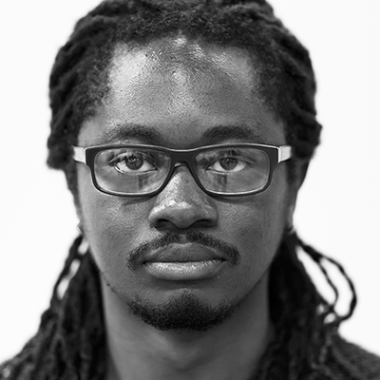
Larry Achiampong
Fine Art Mixed Media BA - 2005
Larry has performed and presented projects at Tate Modern, Tate Britain, Somerset House, Documenta 13 Kassel, BFI, David Art Foundation and MOMA Oxford.
He completed a BA in Fine Art Mixed Media at University of Westminster (2005) and an MA in Sculpture at Slade School of Fine Art (2008). He lives and works in London. "Thank you so much to the tutors for your support. If I hadn't done the video module (no longer taught, however students can still learn video skills as part of the course) in the first year, I'm not sure I would be making films like this - it's something I will never forget."
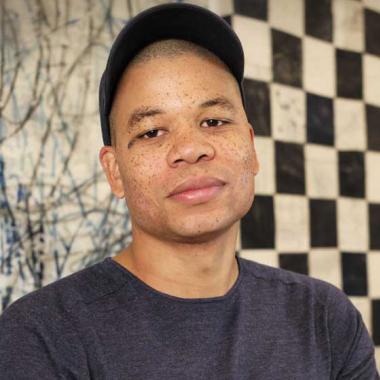
Oscar Murillo
Fine Art Mixed Media BA - 2007
Oscar was a collective winner of the Turner Prize in 2019. Solo exhibitions include South London Gallery and David Zwirner London. Oscar participated in the 2015 Venice Biennale and Forever Now at MOMA New York.
"The University of Westminster was my very first experience of an incredibly supportive educational system that nurtured my desire to develop into the complexities of being an artist in today's world.
This was due to the honest relationships I had with the tutoring cohort, my peers and, to my surprise, its positive distance away from the disruptive energy of the city of London."
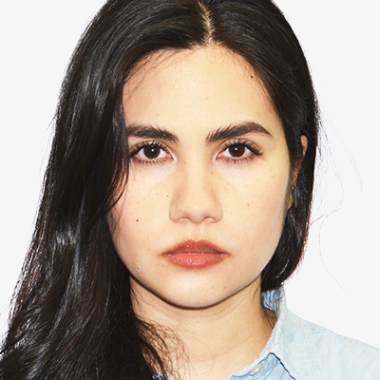
Mandy El-Sayegh
Fine Art Mixed Media BA - 2007
Mandy had a solo show at the Chisenhale in 2020 and has exhibited at Carlos Ishikawa, Carl Kostyal and the Sharjah Biennial 13, 2017.
"The course helped me to gain a profound foundational understanding to develop my practice, as the tutors were invested in a way that is probably less common in other courses in London.
I was offered a real freedom to experiment and make mistakes, but also got a good reality check into what it could mean practising art outside the institution. This, for me, was valuable."
Course Leader
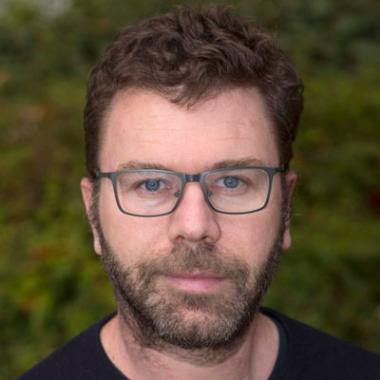
Raine Smith
Senior Lecturer
Raine Smith leads the Fine Art Mixed Media BA course.
His fine art practice spans 20 years and has led to him working with Tate Modern and Camden Arts Centre as well as exhibiting internationally.
His practice engages with lens-based media, such as photography, and sculpture.
We are interested in your passion and drive to pursue fine art with the view to enable you to explore and enjoy your practice.
Course Team
- Maria Bartolo - Senior Lecturer
- Dr Stuart Cumberland - Senior Lecturer and Researcher
- Peggy Atherton - Senior Lecturer
- Dr Sarah Pucill - Reader
- Raine Smith - Senior Lecturer
- Kerry Stewart - Senior Lecturer
- Douglas Fishbone - PTVL - CAT
- Tessa Peters - Senior Lecturer
- Shezad Dawood - Senior Research Fellow
- Phillip Allen - PTVL - CAT
- Daniel Burley - PTVL - CAT
Why study this course?

Learn in an open, supportive environment
Explore your fine art practice while being supported by our academic and technical staff.

Easy access to central London
Based just a 20-minute tube ride from the heart of the city, you'll be perfectly placed to access the work experience opportunities, potential collaborators and art scene of central London.

Benefit from your own studio space
You can experiment with your practice in your own dedicated fine art studio space for the duration of your course.
What our students say
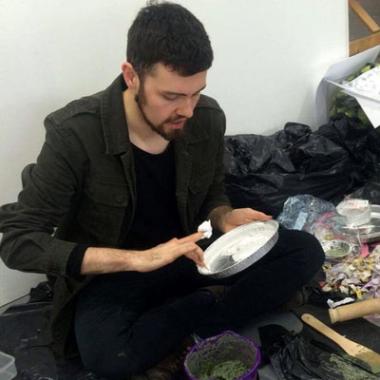
Jack Evans
Fine Art Mixed Media BA
"I had a really enjoyable experience during my three years at university playing with a range of mediums, without the pressure of restricting myself to a particular pathway - this allowed my practice to thrive somewhere between drawing and installation.
The tutors are fab, with a huge bank of experience and knowledge of the contemporary art scene in London."
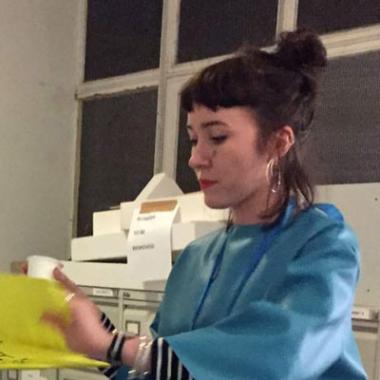
Kitty Tredwin
Fine Art Mixed Media BA
"I found the tutors some of the most inspiring people I have met while living and studying in London. As they have each led a life of art through different mediums and different artistic paths there is a great number of ways they help their students.
I also personally found it really great to watch the tutors put on their own show in Berlin and London - they showed us how to work hard, how important it is to be invested in your ideas and how fun the real art world is outside of university."
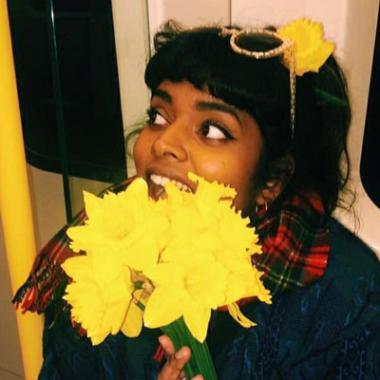
Kavitha Balasingham
Fine Art Mixed Media BA
"The studios are huge! Do not take them for granted, you will miss them when you are gone. There were also lots of artist talks. I had weekly one-on-one meetings with tutors to help my development.
Some modules push you to work in galleries and learn more about the outside world. This course has helped prepare me for life after university, introducing me to lots of connections."
What our students say
Yuqi Wang
Fine Art Mixed Media BA - 2023
What I've greatly appreciated about my course is its unrestricted nature. The Fine Art Mixed Media BA encompasses a broad spectrum, including painting, installations, performances, films, and more. You could be making a movie one semester, and organise a band for a performance art show the next, with this course you are not limiting your pursuits.
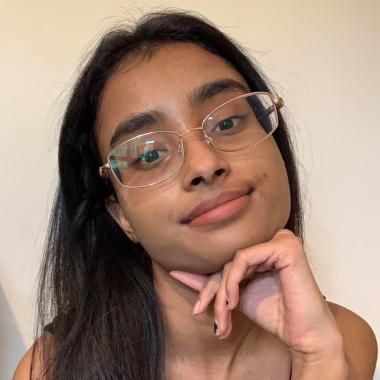
Hansnii Aukhjee
Fine Art Mixed Media BA - 2023
The Fine Art Mixed Media course at the University of Westminster is designed to be highly independent. This has granted me the freedom to explore and work with a wide array of materials and subjects that align with my personal interests and artistic practice.
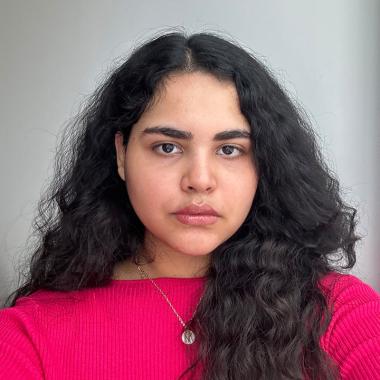
Rainha De Souza
Fine Art Mixed Media BA - 2023
My course has been an exciting and an extensive journey of learning and development. I particularly enjoyed the freedom of experimenting with variety of different media in my creative practice. Moreover, the collaboration with tutors and like-minded peers made the learning experience more enthralling.
Entry Requirements
- A levels – CCC (96 UCAS Tariff points)
- T levels – 96 UCAS Tariff points
- International Baccalaureate – 96 UCAS Tariff points from all components of the Diploma Programme. International Baccalaureate Career-related Programme will be considered on a case-by-case basis
- BTEC Extended Diploma – MMM in a creative subject
- BTEC Diploma – DD in a creative subject
- Access – 96 UCAS Tariff points from the Access course
In addition to one of the above, you should have:
- GCSE English Language grade 4/C – IB grade 4 Higher level, GCSE Maths Pass – IB Pass
If your first language is not English, you will need an IELTS of 6.0 overall, with 5.5 in each component.
You will be required to submit a portfolio. We would like to see a selection of images of your fine art work – this should include images of your sketchbook work (if not online) as well as finished pieces. Think about how you can collate/curate these images within your digital portfolio. We are looking to see your creative and experimental approach to fine art practice so look for work which demonstrates your passion and interest in fine art. It will also be useful for you to include short pieces of text which could help us understand your work and processes. We will also be looking for an awareness and interest in contemporary fine art evidenced by artists, periodicals, reviews, exhibition and gallery visits.
We also welcome applications from students who are taking a combination of qualifications listed above. For further information, please contact Course Enquiries.
More information
Portfolio guidance
Number of recommended portfolio pieces.
We recommend you share 5-8 pieces of work with us.
What should I include in my portfolio?
We would like to see a selection of your fine artwork. This might include coursework and/or personal work. You can include work from a sketchbook should you wish to.
How should I structure my portfolio?
Include your best work, the work of which you are most proud, or through which you learnt most. For onsite interviews, please bring your portfolio with you. For online interviews, please compile all items of your portfolio into a single file (preferably PDF format).
How will my portfolio be evaluated?
Your portfolio will be the starting point for our conversation when we meet for your interview.
We are looking for:
- Creativity and originality - We would like to see work which conveys your personal creative identity or interests.
- Passion for Fine Art. We are keen to discover your passion for Fine Art.
What happens next?
After your interview, the programme team will make a decision about your application for the course. They will communicate this with the admissions team, who will let you know the result.
Top Tip from our course team
Be yourself! We really want to see you show the best of yourselves.
Please do not send in portfolios until requested to do so by the University's Admissions team. You will be notified by email about when to submit your portfolio.
International Baccalaureate
96 UCAS Tariff points from all components of the Diploma Programme. International Baccalaureate Career-related Programme will be considered on a case-by-case basis. You can refer to the UCAS calculator to determine your point score. Find out more about acceptance of the International and European Baccalaureate.
Other international qualifications
We accept a wide range of international high school level qualifications. Please see information on country-specific entry requirements.
International Foundation courses
We work in partnership with Kaplan International College London who provide the International Foundation Certificate at their College based in London Bridge. These courses are for students who don’t meet our direct entry requirements. Upon successful completion, you can progress to your chosen degree at the University of Westminster. Find out more about the different university preparation courses that are accepted for entry.
English language requirements
If your first language is not English, you will need an IELTS of 6.0 overall, with 5.5 in each component. Please note we accept a wide range of English language qualifications and assessments. Find out more at English language requirements.
If you don't meet the English language requirements yet, then we offer online and on campus pre-sessional English programmes to help develop your English language skills to the required level before you start your course. Find out more about our pre-sessional English programmes.
Study a University of Westminster degree overseas
We work in partnership with a number of academic institutions around the world that deliver a selection of our undergraduate programmes. Visit Transnational Education Partners for further information.
More information
Portfolio guidance
Number of recommended portfolio pieces.
We recommend you share 5-8 pieces of work with us.
What should I include in my portfolio?
We would like to see a selection of your fine artwork. This might include coursework and/or personal work. You can include work from a sketchbook should you wish to.
How should I structure my portfolio?
Include your best work, the work of which you are most proud, or through which you learnt most. For onsite interviews, please bring your portfolio with you. For online interviews, please compile all items of your portfolio into a single file (preferably PDF format).
How will my portfolio be evaluated?
Your portfolio will be the starting point for our conversation when we meet for your interview.
We are looking for:
- Creativity and originality - We would like to see work which conveys your personal creative identity or interests.
- Passion for Fine Art. We are keen to discover your passion for Fine Art.
What happens next?
After your interview, the programme team will make a decision about your application for the course. They will communicate this with the admissions team, who will let you know the result.
Top Tip from our course team
Be yourself! We really want to see you show the best of yourselves.
Please do not send in portfolios until requested to do so by the University's Admissions team. You will be notified by email about when to submit your portfolio.
- A levels – CCC (96 UCAS Tariff points)
- T levels – 96 UCAS Tariff points
- International Baccalaureate – 96 UCAS Tariff points from all components of the Diploma Programme. International Baccalaureate Career-related Programme will be considered on a case-by-case basis
- BTEC Extended Diploma – MMM in a creative subject
- BTEC Diploma – DD in a creative subject
- Access – 96 UCAS Tariff points from the Access course
In addition to one of the above, you should have:
- GCSE English Language grade 4/C – IB grade 4 Higher level, GCSE Maths Pass – IB Pass
If your first language is not English, you will need an IELTS of 6.0 overall, with 5.5 in each component.
You will be required to submit a portfolio. We would like to see a selection of images of your fine art work – this should include images of your sketchbook work (if not online) as well as finished pieces. Think about how you can collate/curate these images within your digital portfolio. We are looking to see your creative and experimental approach to fine art practice so look for work which demonstrates your passion and interest in fine art. It will also be useful for you to include short pieces of text which could help us understand your work and processes. We will also be looking for an awareness and interest in contemporary fine art evidenced by artists, periodicals, reviews, exhibition and gallery visits.
We also welcome applications from students who are taking a combination of qualifications listed above. For further information, please contact Course Enquiries.
More information
Portfolio guidance
Number of recommended portfolio pieces.
We recommend you share 5-8 pieces of work with us.
What should I include in my portfolio?
We would like to see a selection of your fine artwork. This might include coursework and/or personal work. You can include work from a sketchbook should you wish to.
How should I structure my portfolio?
Include your best work, the work of which you are most proud, or through which you learnt most. For onsite interviews, please bring your portfolio with you. For online interviews, please compile all items of your portfolio into a single file (preferably PDF format).
How will my portfolio be evaluated?
Your portfolio will be the starting point for our conversation when we meet for your interview.
We are looking for:
- Creativity and originality - We would like to see work which conveys your personal creative identity or interests.
- Passion for Fine Art. We are keen to discover your passion for Fine Art.
What happens next?
After your interview, the programme team will make a decision about your application for the course. They will communicate this with the admissions team, who will let you know the result.
Top Tip from our course team
Be yourself! We really want to see you show the best of yourselves.
Please do not send in portfolios until requested to do so by the University's Admissions team. You will be notified by email about when to submit your portfolio.
International Baccalaureate
96 UCAS Tariff points from all components of the Diploma Programme. International Baccalaureate Career-related Programme will be considered on a case-by-case basis. You can refer to the UCAS calculator to determine your point score. Find out more about acceptance of the International and European Baccalaureate.
Other international qualifications
We accept a wide range of international high school level qualifications. Please see information on country-specific entry requirements.
International Foundation courses
We work in partnership with Kaplan International College London who provide the International Foundation Certificate at their College based in London Bridge. These courses are for students who don’t meet our direct entry requirements. Upon successful completion, you can progress to your chosen degree at the University of Westminster. Find out more about the different university preparation courses that are accepted for entry.
English language requirements
If your first language is not English, you will need an IELTS of 6.0 overall, with 5.5 in each component. Please note we accept a wide range of English language qualifications and assessments. Find out more at English language requirements.
If you don't meet the English language requirements yet, then we offer online and on campus pre-sessional English programmes to help develop your English language skills to the required level before you start your course. Find out more about our pre-sessional English programmes.
Study a University of Westminster degree overseas
We work in partnership with a number of academic institutions around the world that deliver a selection of our undergraduate programmes. Visit Transnational Education Partners for further information.
More information
Portfolio guidance
Number of recommended portfolio pieces.
We recommend you share 5-8 pieces of work with us.
What should I include in my portfolio?
We would like to see a selection of your fine artwork. This might include coursework and/or personal work. You can include work from a sketchbook should you wish to.
How should I structure my portfolio?
Include your best work, the work of which you are most proud, or through which you learnt most. For onsite interviews, please bring your portfolio with you. For online interviews, please compile all items of your portfolio into a single file (preferably PDF format).
How will my portfolio be evaluated?
Your portfolio will be the starting point for our conversation when we meet for your interview.
We are looking for:
- Creativity and originality - We would like to see work which conveys your personal creative identity or interests.
- Passion for Fine Art. We are keen to discover your passion for Fine Art.
What happens next?
After your interview, the programme team will make a decision about your application for the course. They will communicate this with the admissions team, who will let you know the result.
Top Tip from our course team
Be yourself! We really want to see you show the best of yourselves.
Please do not send in portfolios until requested to do so by the University's Admissions team. You will be notified by email about when to submit your portfolio.
Follow us on Instagram
View the latest work from our Fine Art Mixed Media BA students on Instagram.
Facilities
We provide dedicated, high-specification studios for our portfolio of art and design courses.
At our Harrow Campus, we have a suite of 3D making facilities which include metal fabrication, moulding and casting, wood and ceramics. There are additionally laser cutters and 3D printers, as well as a wood and metal store on campus, and we have a selection of tools available for loan.
You can also experiment in a range of media using all of the technical facilities the University has to offer. These include photographic studios and darkrooms, professional moving image production facilities including studios and dedicated edit suites, traditional printing processes including mono and silk screen printing, and dedicated digital facilities.
We have a wide range of professional photographic, sound and moving image equipment available for loan.


Student work
A selection of work created by our Fine Art Mixed Media BA students.


Westminster Degree Shows
The Westminster Degree Shows are an annual collection that showcases the creativity, vibrancy and artistic talent of our undergraduate arts courses. You can see the latest online collection on Westminster Degree Shows.
Image: student work by Nathan Hunter – Illustration BA

Learn new skills

Learn a new language
From Arabic to Spanish, you can learn a new language alongside your degree with our Polylang programme.

Develop your entrepreneurial skills
Access industry networking events, workshops, one-to-one business advice and start-up support through our award-winning WeNetwork.

Gain extra qualifications
We provide access to free online courses in Adobe and Microsoft Office applications, as well as thousands of specialist courses on LinkedIn Learning.
Fees and Funding
UK tuition fee: £1,675 (Price per 20-credit module)
Please note that if you defer your place, the first year’s tuition fees will be those of the academic year in which you enrol, which may be higher than the fee shown for this year.
Fees are subject to UK Government Parliamentary procedure.
Find out how we set our tuition fees.
Funding
As well as tuition fee loans, there is a range of funding available to help you fund your studies.
Find out about undergraduate student funding options.
Scholarships
The University is dedicated to supporting ambitious and outstanding students and we offer a variety of scholarships to eligible undergraduate students, which cover all or part of your tuition fees.
Find out if you qualify for one of our scholarships.
Additional costs
Optional field trips on this course and some fine art materials may cost extra.
See what you may need to pay for separately and what your tuition fees cover.
International tuition fee: £3,163 (Price per 20-credit module)
When you have enrolled with us, your annual tuition fees will remain the same throughout your studies with us. We do not increase International tuition fees.
Please note that if you defer your place, the first year’s tuition fees will be those of the academic year in which you enrol, which may be higher than the fee shown for this year.
Find out how we set our tuition fees.
EU Qualifications Welcome Award Scheme
If you are an international student accepted on an undergraduate programme starting in September at level 3 (Foundation) or level 4 (first year) on the basis of an eligible EU qualification only, you will be awarded a £4,500 tuition fee reduction off your first year of studies. For more information, see the EU Qualifications Welcome Award Scheme.
International student funding
Find out about funding for international students.
Additional costs
Optional field trips on this course may cost extra.
See what you may need to pay for separately and what your tuition fees cover.
UK tuition fee: £1,675 (Price per 20-credit module)
Please note that if you defer your place, the first year’s tuition fees will be those of the academic year in which you enrol, which may be higher than the fee shown for this year.
Fees are subject to UK Government Parliamentary procedure.
Find out how we set our tuition fees.
Funding
As well as tuition fee loans, there is a range of funding available to help you fund your studies.
Find out about undergraduate student funding options.
Scholarships
The University is dedicated to supporting ambitious and outstanding students and we offer a variety of scholarships to eligible undergraduate students, which cover all or part of your tuition fees.
Find out if you qualify for one of our scholarships.
Additional costs
Optional field trips on this course and some fine art materials may cost extra.
See what you may need to pay for separately and what your tuition fees cover.
International tuition fee: £3,163 (Price per 20-credit module)
When you have enrolled with us, your annual tuition fees will remain the same throughout your studies with us. We do not increase International tuition fees.
Please note that if you defer your place, the first year’s tuition fees will be those of the academic year in which you enrol, which may be higher than the fee shown for this year.
Find out how we set our tuition fees.
EU Qualifications Welcome Award Scheme
If you are an international student accepted on an undergraduate programme starting in September at level 3 (Foundation) or level 4 (first year) on the basis of an eligible EU qualification only, you will be awarded a £4,500 tuition fee reduction off your first year of studies. For more information, see the EU Qualifications Welcome Award Scheme.
International student funding
Find out about funding for international students.
Additional costs
Optional field trips on this course may cost extra.
See what you may need to pay for separately and what your tuition fees cover.
Teaching and Assessment
Below you will find how learning time and assessment types are distributed on this course. The graphs below give an indication of what you can expect through approximate percentages, taken either from the experience of previous cohorts, or based on the standard module diet where historic course data is unavailable. Changes to the division of learning time and assessment may be made in response to feedback and in accordance with our terms and conditions.
How you'll be taught
Teaching methods across all our undergraduate courses focus on active student learning through lectures, seminars, workshops, problem-based and blended learning, and where appropriate practical application. Learning typically falls into three broad categories:
- Scheduled hours: examples include lectures, seminars, practical classes, workshops, supervised time in a studio
- Placement: placement hours normally include placement opportunities, but may also include live projects or virtual activity involving employers
- Independent study: non-scheduled time in which students are expected to study independently. This may include preparation for scheduled sessions, follow-up work, wider reading or practice, completion of assessment tasks, or revision
How you'll be assessed
Our undergraduate courses include a wide variety of assessments.
Assessments typically fall into three broad categories:
- Practical: examples include presentations, videos, podcasts, lab work, creating artefacts
- Written exams: end of semester exams
- Coursework: examples include essays, reports, in-class tests, portfolios, dissertation
Data from the academic year 2025/26
Supporting you
We are ranked first in London for student support (Whatuni Student Choice Awards 2026).
Our Student Hub is where you’ll find out about the services and support we offer, helping you get the best out of your time with us.
- Study support – workshops, 1-2-1 support and online resources to help improve your academic and research skills
- Personal tutors – support you in fulfilling your academic and personal potential
- Student advice team – provide specialist advice on a range of issues including funding, benefits and visas
- Extra-curricular activities – volunteering opportunities, sports and fitness activities, student events and more

Course Location
Harrow is our creative and cultural hub, home to most of our arts, media and digital courses. It houses state-of-the-art facilities for every discipline, including project and gallery spaces, film studios, creative labs, collaborative learning spaces, and the Westminster Enterprise Network.
Harrow Campus is based in north-west London, just 20 minutes from the city centre by train.
For more details, visit our Harrow Campus page.
This course is based at our Harrow Campus, but to make the most of our teaching spaces and wider learning opportunities, some modules or activities may take place at our central London campuses. These may include guest lectures, degree shows or other teaching activities.


CHANGES TO OUR COURSES
All content on our course pages is accurate at time of publication.
Where significant or material changes have been made, applicants will be informed of these in line with Competition and Markets Authority guidance.
Contact us
Call our dedicated team on:
+44 (0)20 7911 5000 ext 65511
Opening hours (GMT): 10am–4pm Monday to Friday
Opening hours (GMT): 10am–4pm Monday to Friday
More information
Your Westminster
Book an open day. Order a prospectus. Sign up for newsletters.