Course Overview
Course summary
Our degree courses with Foundation year offer the opportunity to prepare you for advanced study before you progress onto a full honours degree at the University of Westminster.
Whether you do not feel ready for degree-level study, don’t have the right qualifications, want to change your subject specialism or return to study after an absence from education, we aim to encourage a broad range of students to undertake our Foundation year in order to progress onto their full honours degree with us.
Our foundation year in Art and Design is designed to provide you with an introduction to our range of subject areas, and to prepare you for the discipline of your choice. It will give you the opportunity to explore new ideas, opening up new perspectives on the key debates within the field. It begins in the first semester with the development of fundamental Art and Design skills, as well as practical exploration across all of the disciplines in our Art and Design foundation programme. In the second semester you are encouraged to specialise in your own discipline and are supported by our experienced staff team as you prepare your work for an end of foundation year public exhibition. You will also benefit from workshops in our high-end facilities, and from working with leading academics who will encourage you to become a confident and creative thinker. Your practical development is accompanied by modules in both semesters on foundational academic skills – skills that will be essential as you progress to your chosen full degree.
On successful completion of the Foundation year, you'll be able to move on to study for the Creative Media Arts BA Honours degree over a further three years study.
Our Creative Media Arts BA (previously Contemporary Media Practice) will challenge you to develop cutting-edge approaches to media arts with an emphasis on innovation and emerging creative technologies.
It will give you the opportunity to work across media disciplines to prepare you for a dynamic and ever-changing media arts landscape. Our graduates have a wide range of career options in the creative industries, such as content production across interactive media, immersive technologies, CGI and VFX, videogame design, film, experience design and emerging technologies including Artificial Intelligence and the Metaverse.
The course delivers disciplinary skills in a range of media practices including filmmaking, photography, interaction design, virtual reality (VR), augmented reality (AR), video and art installation, motion graphics, animation, projection mapping, creative coding, 3D scanning and printing, 3D modelling and design, sound art, audio production and web design.
Our unique course combines traditional art school approaches to creative practice – where students develop skills in critical thinking, innovation and contextual awareness – with industry-level professionalism. This approach will enable you to develop engaging practical projects and to participate in contemporary cultural debates through your awareness of the political, ethical and aesthetic implications of your work.
Core modules give you the skills to work across media boundaries, and at the frontiers of emerging media. These provide a breadth and depth of media production skills together with transferrable skills in project management, collaborative practice and entrepreneurship. Combined, these will give you the ability to adapt to the creative opportunities of the contemporary media landscape.
The course is part of the University of Westminster's School of Arts, based at our Harrow Campus – a cutting-edge creative hub, and one of the leading media, arts and design educational facilities in Europe.
Top reasons to study with us
- State-of-the-art facilities – As a Creative Media Arts student, you will have access to extensive industry-level facilities including photographic, green screen and film studios, video editing suites, photography printing and darkroom facilities, 3D workshops, emerging media and computer labs
- Taught by industry experts – You will be taught by a course team of experienced media practitioners, researchers and visiting industry experts, ensuring that the course reflects and adapts to current developments in media practice
- Employability and entrepreneurial skills are emphasised in modules through the use of practical, problem-solving tasks that mirror professional environments
- Work-based learning provided through a core module in Year 2
- Connected to CREAM (Centre for Research and Education in Arts and Media) - You will be taught by researchers from the University’s CREAM research Centre
- Westminster is ranked 2nd in the UK in the Complete University Guide 2027 for ‘Research Quality’ in Art and Design
Programme Recognition
This course is industry-recognised by ScreenSkills, the industry-led skills body for the UK's screen-based industries, and carries the ScreenSkills Select quality-mark, which indicates courses best suited to prepare students for a career in the screen industries.
This course is also delivered through a partnership with BAFTA albert Education, which provides staff and graduates with the tools and techniques needed to learn about environmentally responsible working practices and their professional relevance. The partnership will help students develop knowledge about sustainability, carbon footprinting and planet placement in programmes.

Programme Training Opportunities
This course is committed to health and safety training, and has partnered with the Mark Milsome Foundation to offer an optional online course for students wishing to develop their skills in this area. The Mark Milsome Foundation Skillset Production Safety Passport course ensures that students are equipped with essential safety knowledge, as they venture into careers in the film and TV industry. Created in memory of Mark Milsome, the course provides a Level II Production Safety Passport valid for 5 years from ScreenSkills. This additional course is available free of charge to University of Westminster students studying this Undergraduate course.
Course Overview Video
Learn more about this course from a member of the course team.
Modules
You'll be taught through a mix of workshops, group and individual tutorials, and lectures supporting the development of your practical and conceptual skills.
Assessment methods include submission of practical projects and research material, live crits, seminar presentations, visual essays and online study tasks.
Types of module
Our undergraduate courses comprise three types of module:
- Core modules: compulsory modules that you must take each year
- Option modules: modules that you can choose from to tailor your course to your interests, normally related to your subject area
- Elective modules (also called 'Electives'): wider, interdisciplinary modules that you may be able to choose from to broaden your academic experience and skills – covering everything from learning a new language to building enterprise skills
Module availability
We aim to offer a wide range of option modules and electives, but we cannot always guarantee your preferred choices as availability can be affected by timetabling constraints, staff availability or student demand.
Elective modules may be subject to change, but you can look through an indicative list on our University-wide electives page.
For more information
Full details on course structure, modules, teaching and assessment can be found in the programme specification below.
There are no optional or elective modules offered at Level 3, as the focus is on the development of key academic skills through a broad understanding of Media and Design
Core modules
Critical thinking is fundamental to our ability to progress in an increasingly complex and changing world. It is an essential skill across a range of academic and practice-based disciplines.
This module helps you understand the importance and function of critical thinking both at university and beyond. By working in partnership with academic staff and peers, you will explore how critical thinking aligns with disciplinary practices, shapes scholarly knowledge, and addresses inequalities. Through problem-posing education and anti-racist practices, you will engage with real-world problems, fostering the ability to create a more just and sustainable world.
This module provides you with an opportunity to develop a broad understanding of the key working methods, concepts and principles of the Art and Design disciplines within the Foundation course. You will be challenged to complete a sequence of short projects, working across a range of techniques within the subject disciplines. Self- evaluation and documenting your learning are both important elements of this process, and you will be learning by doing.
This Semester 2 module deepens and consolidates the fundamental skills, approaches and processes of Art and Design research and practice developed in Semester 1 through a practical Extended Project. It helps you to develop your creative practice, based on iterative practical, technical and contextual research, and undertaken through a negotiated project. With an overarching theme set across disciplinary pathways, you will work within a chosen discipline, with group and individual tutorial support, to develop a project proposal in response to the initial brief that after approval is realised through a body of work aimed at presentation in a public exhibition.
This Semester 1 module introduces fundamentals of Art and Design practice and research. It helps you to develop your individual creative practice based on an understanding of visual and contextual research processes through structured studio, research and technical activities.
This module introduces you to the key academic, professional, and personal skills essential for success at university. It encourages good practices in writing, presentation, and time management, while also fostering reflection to help you build confidence as you transition to higher education. Open to all students enrolled in courses delivered through Westminster Foundation Pathways, the module provides a creative and supportive environment where you can reflect on and develop their academic and professional journey. You'll work with specialist facilitators who play a crucial role in guiding your academic and professional development.
With a focus on managing academic choices in a higher education setting, the module emphasises the importance of the United Nations Sustainable Development Goals (SDGs), using methodologies that prioritise equality, diversity, and inclusion. Through these lenses, you'll explore topics that prepare you to address real-world challenges as highlighted in the SDGs in a socially conscious, inclusive, and responsible manner.
Following the Art and Design modules of Semester 1, this module provides you with the opportunity to engage with some of the key themes and practices of Art and Design disciplines. You will be challenged to complete several projects of approximately one month’s duration, selecting techniques and working methods from the available disciplines. Self-evaluation and documenting your learning continue to be important elements of this process, and you will be learning by doing.
Your first year is concerned with establishing core media production skills, and supporting your transition into higher education with skills in research and analysis of media culture. Alongside technical workshops in a range of moving image, photographic and interactive media, you will develop practical projects around given themes. These projects introduce key skills in conceptual development and will challenge your creative abilities.
Core modules
This module provides an induction and understanding of creative and collaborative research practice, assessment processes and group working required in creative practice subjects. The module will introduce you to the University’s commitment to the United Nations’ Sustainability Development Goals (SDGs).
You'll be challenged to experiment individually, undertaking contextual and practical research, which will contribute to a significant group project where students will be allocated creative roles in groups working collaboratively.
As well as exploring creative processes, the module provides an opportunity for you to gain an understanding of other disciplines, and if you choose, to work with students from other disciplines, or use disciplinary approaches beyond your own course of study. It also introduces you to the wider community of creative practice at the Harrow Campus.
This module further develops the practical skills introduced in Creativity and Collaboration and Storytelling: Photography and Web Media, together with methods for research and conceptual development, in the production of a Space, Place and Experience (SPE) Practical Project (70%). You'll undertake workshops throughout the module to enhance your technical abilities in all media areas. The individual Written Essay (30%) is based on choosing one from a series of set questions and challenges you to critically reflect on the themes addressed in the SPE Project.
This module establishes the interrelationship between media theory and practice by introducing theoretical and conceptual frameworks that underpin creativity in the contemporary media arts industries. This interconnectedness is reflected in the assessment structure, which comprises an interdisciplinary Storytelling Project (70%) and a Written Essay (30%) to be chosen from a series of questions based on themes and debates addressed throughout the module. As such, the module develops key academic and creative skills for critical research and analysis.
Option modules
This module allows you to engage with the practices and characteristics of screen-based traditions, typically expanded photography, moving image and animation. The emphasis is on experimental and exploratory approaches, where traditions, ideas and technologies are subject to critical analysis, creative play, mixing/blurring, and realisation/production.
You'll propose a personal project in response to conceptual and theoretical prompts; project development will be supported through negotiation with tutors and peer review.
The module is structured around a series of workshops and tutorials. Workshops typically include analogue processes such as 16mm movie film and black and white photographic darkroom, and digital processes such as still photography and video editing. Assessment is based on a combination of the final project, as presented in an end of module critical review, and supporting documentation of research.
This is a practical module that develops knowledge of production design techniques in terms of practice and concept. The completion of a design handbook will enable a variety of skills from script breakdown to pre-visualisation. There is an emphasis on critical analysis of both your own work and that of professional designers.
This module is designed to meet the growing demand for producing content for moving image in related creative industries. The module focuses on practices, techniques and technologies relating to the areas of moving image, animation and compositing. At the same time, this module looks at the role of visual artists, focusing on developing their understanding and knowledge of the key concepts, principles and tools that promote clear communication of ideas for producing moving image content for digital distribution. Working in small teams or individually, you'll develop single or multiple projects lasting no longer than 3 minutes in total. Projects are then presented for assessment in live presentations.
This module recognises that, from the very opening frames of any screen drama, audience engagement depends on believable performances from actors. Because simply knowing what is wanted from actors on screen does not equip directors to achieve the desired results, students are introduced to the craft of acting along with a range of techniques for effectively working with actors and non-actors in developing characters and scenarios, casting, rehearsals, and directing actors on set.
In the second year, you will cement your identity as a multi- and interdisciplinary practitioner, developing knowledge of specific media in-depth, but also engaging with the frontiers of media practice. This will include challenging existing approaches to media practice, testing the possibilities of new creative technologies and developing strategies for reaching and engaging audiences. All students undertake work experience in the second year, along with the opportunity to study abroad at one of our international partner institutions.
Core modules
Media convergence refers to the flow of content across media and active participation by media users and audiences. The creative industries increasingly demand transferable skills and an awareness of the shifting relationships across media practices and platforms in a digital context. You'll develop projects that illustrate this fluidity of content and encourage user participation through a range of media, such as AR, VR, interactive web media and installation-based work. This module also further develops the ability to reflect critically on project development and outcomes through individually produced research documentation.
This module prepares you for undertaking advanced creative and critical research at Level 6, especially the Research Project module. Identifying methods and designs suitable for theory and practice-based research, you are supported in your development of an appropriate topic in the creative media arts.
The frontiers of media practice increasingly disregard the distinctions between traditional media. This module challenges you to explore the boundaries of existing media to develop emergent and transferable skills pertinent to an age of digital distribution. These explorations will be situated in relation to contemporary debates, including sustainability, social, and climate justice. Intermediate and advanced workshops across course media (typically, new media, still and moving image, physical computing, AR/VR) will be provided to support the Media Frontiers Project. Working individually or in a group, you'll be asked to identify your production methods in relation to this spread of media.
This module introduces you to the professional creative industries and provides you with experience of related workplace environments, relevant to the host course, through a range of tailored professional projects, including a work placement (alternatives may include client-set briefs and curated public events). Taught sessions introduce different career possibilities and provide an overview of professional skills, as well as introducing you to relevant support within the University and external professional networks and support services.
Option modules
This module considers the impact of culture and power on current and future creative media practices. By examining the creative industries from an interdisciplinary perspective, you'll develop informed critical responses to recent social and technological transformations involving creative media. These responses will be assessed in a written essay or a video essay.
This is a practical module in which you'll immerse yourself in the art and craft of Cinematography. Week by week you'll look at camera and lighting skills, combining creative expression with technical expertise. You'll work collaboratively to shoot exercises and investigate a range of industry-standard equipment and techniques. The completion of a ‘camera and lighting scrapbook’ will enable a variety of skills and will allow you to research specific areas of interest within lighting and camera departments – shaping their own visual narrative.
This module takes an intersectional approach to race, ethnicity, gender and class in film and TV. The module will pay attention to the interconnected nature of these identities. You'll look at how you shape lived experiences of people and how moving images participate in this process. You'll explore how film reproduces or subverts existing norms and privileges, and discuss topics such as gender, sexuality, diversity, agency, tokenism, LGBTQI representation, critical race theory and whiteness. These terms will be discussed in relation to each other rather than mutually exclusive debates. You'll also think about the film form during our classes. Examples you'll be looking at will include a variety of approaches to the question of identities but also different genres, including discussion on essay film. Discussions on essay film help you formulate your responses in a video essay format. Our emphasis will be on close textual analysis of films in relation to theoretical debates while paying close attention to social and historical contexts where relevant.
Screen 2: Short Form Film and Video is designed to meet the substantial demand for short form media content which is consumed across multiple personal devices (including desk-top computers, laptops, tablets and smart phones) and distributed across multiple platforms (including Instagram, Facebook, YouTube and TikTok). The module seeks to arm you with the skillset and confidence to work as an ‘all-rounder creative’ - an individual who generates shortform content without the multi-person crew and high-end equipment used on other BA Film production modules. The ability to work as an independent producer of short form media content increases your employability upon graduation by enabling you to individually create professional-level content using emerging technologies and mainstream equipment.
This module enables you to gain practical experience, along with a critical and conceptual understanding of the processes involved in writing a short script for various media, such as moving image, audio-based or interactive media. The role of the writer and specific writing methodologies are placed within a professional framework of script- and screenwriting, with the specific practices of writing for media differentiated from other forms (eg journalistic or literary forms).
This module addresses a wide range of theories and practices linked to sound design for art and media, including audio spatialisation, multichannel recording and mixing, remix culture and sound for screen. In supporting you to undertake sound and audio-based research relevant to your specific projects, it also encourages exploration of sonic interdisciplinarity across fine art and installation work, film, animation and interactive media, and experimental music composition.
Between Years 2 and 3, you may undertake an optional year-long work placement (or a combination of work placement and international exchange). If you take advantage of this option, you’ll undertake an additional year-long Industry placement year module running parallel to your work placement, and your final degree award will be BA Honours Creative Media Arts with Professional Experience.
Find out more about the costs involved in taking a study abroad or placement year.
By your third year, you are sufficiently experienced and skilled to determine your own themes and sustain substantial high-level work over a longer period. Your Final Project and Dissertation are the culmination of your studies; typically, our students create interactive projects, installations, short narrative films, documentaries, and many other hybrid forms. This work is then presented to the public through a student-led physical and digital exhibition.
This is the practical research and planning module for the Major Project. It addresses conceptual investigation, feasibility testing, and budgeting for the development of advanced projects across media. You'll learn about relevant contexts and participate in debates based on sustainability, social justice, and climate justice. The module requires you to engage with professional methodologies for developing project proposals, the outcome of which is a body of documentation that establishes the basis for the Major Project.
This module represents the culmination of the course. It is an opportunity for you to bring together all the knowledge, creative and practical skills, and critical abilities you have acquired in the execution of an advanced and ambitious project. A particular emphasis is on projects that explore emergent and interdisciplinary practices.
The Research Project is an extended piece of work, building on a proposal developed at Level 5 in the host course. Through self-initiated research, you'll identify an appropriate topic relevant to your discipline and embark on a process of supervised but independent inquiry. A distinctive feature of this Research Project is that it is a substantial piece of critical academic work, which embeds research and a theoretical framework as appropriate for a dissertation but offers you options in terms of output format. The format might be that of a Dissertation (8,000 words), but alternative forms are also available, to be negotiated and agreed with your project supervisor.
Option modules
This module supports you in launching yourself in the media industries, or other intended careers. You present and promote yourself and your work to potential employers, with this facilitated through a programme of visiting professionals and workshops. Tasks include the production of a career plan and associated promotional materials, which you show to relevant professionals for advice and feedback.

For more details on course structure, modules, teaching and assessment Download the programme specification (PDF).
To request an accessible version please email [email protected]

Get your copy of the University of Westminster prospectus and browse the range of courses on offer.

Contact us for general course enquiries:
+44 (0)20 7911 5000 EXT 65511
(Mon–Fri, 10am–4pm BST)
Live chat with us
(Mon–Fri, 10am–4pm BST)
Open days
Join us at an open day online or on campus. Get a feel for student life at the University of Westminster and talk to course leaders and our support teams.
Can't attend? See more open events
More ways to meet us
Designing the future of travel: develop sustainable event planning skills
Careers

Build industry connections
Our dedicated work-based and placement learning modules help you to develop strong links across the media and creative industries.

Study multiple media practices
Our focus on multi-skilled media production prepares you for adapting to dynamic changes in the creative industries and making the most of every opportunity.
Employers
Access a network of over 3,000 employers at the University’s new home of careers and enterprise, Zone29.
Industry links and work experience
Based just a 20-minute tube ride from the heart of the city, you'll have easy access to the wealth of media and creative industries located in London.
You can experience cultural life in London, while also gaining work experience and building your professional networks, which is crucial for success in the media industries.
We sustain a range of formal and informal partnerships with industry through visiting professionals, work experience, staff exchange and consultation.
Graduate Success
Our graduates have gone on to find a wide range of work across the media and creative industries. Notable recent alumni include:
- Kadri Mahmood, Kiran Mandla and Chris Toumazou, who founded the commercial and video production company Compulsory soon after graduation, and whose clients include Adidas, Hugo Boss, Google, Universal Music and Warner Music Group
- Alexandra Penelope, Partnerships Manager at Little Dot Studios, a premium digital content producer for the BBC, NBC Universal and Sony
- Katie Mitchell, Project Coordinator at the visual effects and animation company DNEG, which has worked on several major films, including Blade Runner 2049, Ex Machina and Interstellar
- Rémi Paringaux, Brand Developer, and former Brand Image Director at Gucci
The Creative Media Arts BA (previously Contemporary Media Practice) has also produced several recipients of prestigious international awards, including filmmakers Rebecca Graham, Reema Sengupta and Sybilla Patrizia; journalist and filmmaker Joshua Baker; photographers Ori Gersht, Zed Nelson and Jonathan Simpson; Tom Roope, co-founder of Tomato Interactive and former Group Creative Lead at ZOO Google Creative Services, and film and television director and producer Annand Tucker.
Job roles
This course will prepare you for roles such as:
- Creative director
- Creative technologist
- Curator
- Digital artist
- Digital content creator
- Events manager
- Film producer
- Game designer
- Interactive media designer
- Motion graphics designer (3D/VFX/CGI)
- Photographer
- Production designer
- Social media manager
- UI/UX designer
- Video editor
- VR/AR developer
Graduate employment
Graduates from our course have gained employment or worked with many high-profile companies and organisations, including:
- BBC
- British Film Institute
- Channel 4
- Disney
- Guggenheim Museum
- ITV
- Marvel
- Netflix
- The Times
- Vertigo Films
Our graduates have also gone on to postgraduate study at prestigious institutions such as:
- Columbia University (USA)
- National Film and Television School
- Royal College of Art
Unlock your career potential at Zone29
Zone29 is our new home of careers and enterprise, offering game-changing opportunities such as:
- jobs, placements and work experience
- tailored career guidance and mentoring
- step-by-step career planning through the Westminster Award
- work and study abroad programmes
- start-up, business and freelance support

International Opportunities
Many of our courses offer international study and work experiences, and the University provides other global opportunities that all students can apply for – so whatever you're studying, you'll have the chance to go abroad.
Opportunities could include:
- Taking part in semester or year-long exchanges at institutions around the world
- Attending an international summer school or field trip
- Developing your CV through volunteering or work placements abroad
International experience broadens horizons, boosts self-confidence, and improves global understanding, alongside being fantastic for your career.
Find out more about our international opportunities, including funding options and where you can go.

Course Leaders
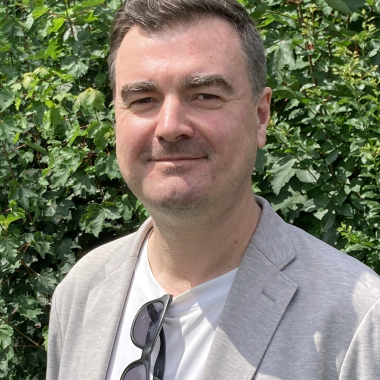
Our course will prepare you for a career working at the forefront of creative practice and with the latest emerging media technologies.
Dr Christopher Fry
Senior Lecturer
Specialising in interactive technologies, Chris teaches various subjects, including creative coding, physical computing, interactive installation, and new media theory. His diverse practice includes working with mobile devices, bots, 3D printing, and cross-stitch. He completed a practice-led PhD in 2008 titled "Perceiving Experience: Accounting for the Role of the Audience in the Construction of Pervasive and Locative Artworks." He is a researcher at the Centre for Research and Education in Arts and Media (CREAM). His current research interests include the role of drawing in understanding relationships with digital media and the emerging languages of Generative AI.
More about meSee full profile of Dr Christopher FryDr Peter Dukes
Principal Lecturer
Peter Dukes is a Principal Lecturer in Westminster School of Arts, University of Westminster, and a course leader for the Art and Design Foundation year. He studied Fine Art at Central St Martins and the Royal College of Art, and was Course Leader for BA Contemporary Media Practice from 2006 to 2016. He is a Senior Fellow of the Higher Education Academy and is currently School Senior Tutor for Westminster School of Arts.
His work engages with a variety of media and is interdisciplinary in nature, spanning visual arts and literature. He has shown nationally and internationally in a visual arts context, published work in literary magazines, as well as creating online moving image, textual and interactive media art.
More about meSee full profile of Dr Peter Dukes
Our Foundation programme challenges you to develop your creative skills across all of our disciplines, helping you gain the confidence and experience to succeed on your chosen degree.
Course Team
Why study this course?

Get career-ready
You'll develop creative media production skills across a range of disciplines, such as film, video, photography and interactive media.

Easy access to central London
Based just a 20-minute tube ride from the heart of the city, you'll be perfectly placed to access work experience and networking opportunities in London's media industries.

State-of-the-art facilities
Our Harrow Campus holds project and gallery spaces, film studios, creative labs, collaborative learning spaces, and our Creative Enterprise Centre.
Entry Requirements
- A Levels – DD (48 UCAS Tariff points)
- T levels – 48 UCAS Tariff points
- International Baccalaureate – 48 UCAS Tariff points from all components of the Diploma Programme. International Baccalaureate Career-related programme will be considered on a case-by case basis.
- BTEC Extended Diploma – PPP
- BTEC Diploma – MP
- Access – 48 UCAS Tariff points from the Access course
In addition to one of the above, you should have:
GCSE English Language grade 4/C – IB grade 4 can be achieved during first year. GCSE Maths Pass – IB Pass
If your first language is not English, you will need an IELTS of 6.0 overall, with 5.5 in each component.
We also welcome applications from students who are taking a combination of qualifications listed above. For further information, please contact Course Enquiries.
View more information about our entry requirements and the application process.
Direct (advanced) entry or transfer
Direct entry to Year 2 may be available for some of our programmes. You will need to have already successfully completed part of your undergraduate course elsewhere with the relevant number of credits of a comparable degree. Please note that admission to Year 3 is rarely granted. Applications for direct entry are made through UCAS, selecting the appropriate 'point of entry' whilst making your application e.g. for second year entry you would choose point of entry 2.
Portfolio guidance
Number of recommended portfolio pieces.
We are very interested in your potential as a student, and in support of your application we ask you to select a concise visual portfolio of 3 to 5 items of art, design or media work to reflect your course of interest.
What should I include in my portfolio submission?
- We accept a wide range of art, design and media work, including drawing and painting, graphic design and illustration, photography, printmaking and digital prints, sculpture and installations, moving image, 3D and product design.
- Film, video and animation files should be uploaded on YouTube or similar platforms and links should be provided as part of your Portfolio.
- If you include moving image, then there should be a maximum of 3 video files – and each file must be no longer than 3 minutes duration.
- Please ensure that all files are in common formats, e.g. JPEG, PDF, Word, etc.
How should I structure my portfolio?
Include your best work, the work of which you are most proud, or through which you learnt most. We want to see your passion and enthusiasm in your art, design and media work, more than specific skills.
For online interviews, please compile all items of your portfolio into a single file (again preferably in PDF format). Alternatively, you may wish to create a simple portfolio website. Please don’t use any platform that requires log-in, password, or an account to view – for example Tumblr, Instagram.
How will my portfolio be evaluated?
We actively seek to recruit a diverse group of students, some with more and some with less art, design or media experience. We are interested most of all in your potential and your enthusiasm for creative practical work.
In your portfolio we are looking for:
- Creativity and Originality: We are looking for work that reflects your individual style, ideas, or working methods.
- Passion and Potential for Growth: Show your passion, ambition, and potential for growth while on our Foundation and your chosen degree discipline.
What happens next?
After your interview or portfolio review, the programme team will make a decision about your application for the course and the Foundation programme. They will communicate this with the admissions team, who will let you know the result.
Top tip from our course team
We want to see work that you are proud of, and which demonstrates your creative potential and individual ideas. This is much more important than polished work that looks like something else you have seen. Don’t be afraid to be yourself and show us what you have strived to learn and create.
Please do not send in portfolios until requested to do so by the University's Admissions team. You will be notified by email about when to submit your portfolio.
International Baccalaureate
48 UCAS Tariff points from all components of the Diploma Programme. International Baccalaureate Career-related Programme will be considered on a case-by-case basis. You can refer to the UCAS calculator to determine your point score. Find out more about acceptance of the International and European Baccalaureate.
Other international qualifications
We accept a wide range of international high school level qualifications. Please see information on country-specific entry requirements.
International Foundation courses
We work in partnership with Kaplan International College London who provide the International Foundation Certificate at their College based in Liverpool Street. These courses are for students who don’t meet our direct entry requirements. Upon successful completion, you can progress to your chosen degree at the University of Westminster. Find out more about the different university preparation courses that are accepted for entry.
English language requirements
If your first language is not English, you will need an IELTS of 6.0 overall, with 5.5 in each component. Please note we accept a wide range of English language qualifications and assessments. Find out more at English language requirements.
If you don't meet the English language requirements yet, then we offer online and on campus pre-sessional English programmes to help develop your English language skills to the required level before you start your course. Find out more about our pre-sessional English programmes.
Direct (advanced) entry or transfer
We may be able to accept students into Year 2 or Year 3 if enough relevant credits from a comparable degree have been completed as part of an undergraduate course elsewhere. We will assess transcripts, module descriptions, and the number of credits completed to determine the appropriate entry level. We are unable to consider applications from international students who have failed any academic year in their current programme of study.
Applications for general direct entry are made through UCAS, selecting the appropriate 'point of entry', e.g. for second year entry, you would choose point of entry 2, for final year entry, you would choose point of entry 3.
Students who have completed an International Year One programme at a recognised partner institution can apply for year 2 entry for relevant programmes.
Study a University of Westminster degree overseas
We work in partnership with a number of academic institutions around the world that deliver a selection of our undergraduate programmes. Visit Transnational Education Partners for further information.
More information
Portfolio guidance
Number of recommended portfolio pieces.
We are very interested in your potential as a student, and in support of your application we ask you to select a concise visual portfolio of 3 to 5 items of art, design or media work to reflect your course of interest.
What should I include in my portfolio submission?
- We accept a wide range of art, design and media work, including drawing and painting, graphic design and illustration, photography, printmaking and digital prints, sculpture and installations, moving image, 3D and product design.
- Film, video and animation files should be uploaded on YouTube or similar platforms and links should be provided as part of your Portfolio.
- If you include moving image, then there should be a maximum of 3 video files – and each file must be no longer than 3 minutes duration.
- Please ensure that all files are in common formats, e.g. JPEG, PDF, Word, etc.
How should I structure my portfolio?
Include your best work, the work of which you are most proud, or through which you learnt most. We want to see your passion and enthusiasm in your art, design and media work, more than specific skills.
For online interviews, please compile all items of your portfolio into a single file (again preferably in PDF format). Alternatively, you may wish to create a simple portfolio website. Please don’t use any platform that requires log-in, password, or an account to view – for example Tumblr, Instagram.
How will my portfolio be evaluated?
We actively seek to recruit a diverse group of students, some with more and some with less art, design or media experience. We are interested most of all in your potential and your enthusiasm for creative practical work.
In your portfolio we are looking for:
- Creativity and Originality: We are looking for work that reflects your individual style, ideas, or working methods.
- Passion and Potential for Growth: Show your passion, ambition, and potential for growth while on our Foundation and your chosen degree discipline.
What happens next?
After your interview or portfolio review, the programme team will make a decision about your application for the course and the Foundation programme. They will communicate this with the admissions team, who will let you know the result.
Top tip from our course team
We want to see work that you are proud of, and which demonstrates your creative potential and individual ideas. This is much more important than polished work that looks like something else you have seen. Don’t be afraid to be yourself and show us what you have strived to learn and create.
Please do not send in portfolios until requested to do so by the University's Admissions team. You will be notified by email about when to submit your portfolio.
- A Levels – DD (48 UCAS Tariff points)
- T levels – 48 UCAS Tariff points
- International Baccalaureate – 48 UCAS Tariff points from all components of the Diploma Programme. International Baccalaureate Career-related programme will be considered on a case-by case basis.
- BTEC Extended Diploma – PPP
- BTEC Diploma – MP
- Access – 48 UCAS Tariff points from the Access course
In addition to one of the above, you should have:
GCSE English Language grade 4/C – IB grade 4 can be achieved during first year. GCSE Maths Pass – IB Pass
If your first language is not English, you will need an IELTS of 6.0 overall, with 5.5 in each component.
We also welcome applications from students who are taking a combination of qualifications listed above. For further information, please contact Course Enquiries.
View more information about our entry requirements and the application process.
Direct (advanced) entry or transfer
Direct entry to Year 2 may be available for some of our programmes. You will need to have already successfully completed part of your undergraduate course elsewhere with the relevant number of credits of a comparable degree. Please note that admission to Year 3 is rarely granted. Applications for direct entry are made through UCAS, selecting the appropriate 'point of entry' whilst making your application e.g. for second year entry you would choose point of entry 2.
Portfolio guidance
Number of recommended portfolio pieces.
We are very interested in your potential as a student, and in support of your application we ask you to select a concise visual portfolio of 3 to 5 items of art, design or media work to reflect your course of interest.
What should I include in my portfolio submission?
- We accept a wide range of art, design and media work, including drawing and painting, graphic design and illustration, photography, printmaking and digital prints, sculpture and installations, moving image, 3D and product design.
- Film, video and animation files should be uploaded on YouTube or similar platforms and links should be provided as part of your Portfolio.
- If you include moving image, then there should be a maximum of 3 video files – and each file must be no longer than 3 minutes duration.
- Please ensure that all files are in common formats, e.g. JPEG, PDF, Word, etc.
How should I structure my portfolio?
Include your best work, the work of which you are most proud, or through which you learnt most. We want to see your passion and enthusiasm in your art, design and media work, more than specific skills.
For online interviews, please compile all items of your portfolio into a single file (again preferably in PDF format). Alternatively, you may wish to create a simple portfolio website. Please don’t use any platform that requires log-in, password, or an account to view – for example Tumblr, Instagram.
How will my portfolio be evaluated?
We actively seek to recruit a diverse group of students, some with more and some with less art, design or media experience. We are interested most of all in your potential and your enthusiasm for creative practical work.
In your portfolio we are looking for:
- Creativity and Originality: We are looking for work that reflects your individual style, ideas, or working methods.
- Passion and Potential for Growth: Show your passion, ambition, and potential for growth while on our Foundation and your chosen degree discipline.
What happens next?
After your interview or portfolio review, the programme team will make a decision about your application for the course and the Foundation programme. They will communicate this with the admissions team, who will let you know the result.
Top tip from our course team
We want to see work that you are proud of, and which demonstrates your creative potential and individual ideas. This is much more important than polished work that looks like something else you have seen. Don’t be afraid to be yourself and show us what you have strived to learn and create.
Please do not send in portfolios until requested to do so by the University's Admissions team. You will be notified by email about when to submit your portfolio.
International Baccalaureate
48 UCAS Tariff points from all components of the Diploma Programme. International Baccalaureate Career-related Programme will be considered on a case-by-case basis. You can refer to the UCAS calculator to determine your point score. Find out more about acceptance of the International and European Baccalaureate.
Other international qualifications
We accept a wide range of international high school level qualifications. Please see information on country-specific entry requirements.
International Foundation courses
We work in partnership with Kaplan International College London who provide the International Foundation Certificate at their College based in Liverpool Street. These courses are for students who don’t meet our direct entry requirements. Upon successful completion, you can progress to your chosen degree at the University of Westminster. Find out more about the different university preparation courses that are accepted for entry.
English language requirements
If your first language is not English, you will need an IELTS of 6.0 overall, with 5.5 in each component. Please note we accept a wide range of English language qualifications and assessments. Find out more at English language requirements.
If you don't meet the English language requirements yet, then we offer online and on campus pre-sessional English programmes to help develop your English language skills to the required level before you start your course. Find out more about our pre-sessional English programmes.
Direct (advanced) entry or transfer
We may be able to accept students into Year 2 or Year 3 if enough relevant credits from a comparable degree have been completed as part of an undergraduate course elsewhere. We will assess transcripts, module descriptions, and the number of credits completed to determine the appropriate entry level. We are unable to consider applications from international students who have failed any academic year in their current programme of study.
Applications for general direct entry are made through UCAS, selecting the appropriate 'point of entry', e.g. for second year entry, you would choose point of entry 2, for final year entry, you would choose point of entry 3.
Students who have completed an International Year One programme at a recognised partner institution can apply for year 2 entry for relevant programmes.
Study a University of Westminster degree overseas
We work in partnership with a number of academic institutions around the world that deliver a selection of our undergraduate programmes. Visit Transnational Education Partners for further information.
More information
Portfolio guidance
Number of recommended portfolio pieces.
We are very interested in your potential as a student, and in support of your application we ask you to select a concise visual portfolio of 3 to 5 items of art, design or media work to reflect your course of interest.
What should I include in my portfolio submission?
- We accept a wide range of art, design and media work, including drawing and painting, graphic design and illustration, photography, printmaking and digital prints, sculpture and installations, moving image, 3D and product design.
- Film, video and animation files should be uploaded on YouTube or similar platforms and links should be provided as part of your Portfolio.
- If you include moving image, then there should be a maximum of 3 video files – and each file must be no longer than 3 minutes duration.
- Please ensure that all files are in common formats, e.g. JPEG, PDF, Word, etc.
How should I structure my portfolio?
Include your best work, the work of which you are most proud, or through which you learnt most. We want to see your passion and enthusiasm in your art, design and media work, more than specific skills.
For online interviews, please compile all items of your portfolio into a single file (again preferably in PDF format). Alternatively, you may wish to create a simple portfolio website. Please don’t use any platform that requires log-in, password, or an account to view – for example Tumblr, Instagram.
How will my portfolio be evaluated?
We actively seek to recruit a diverse group of students, some with more and some with less art, design or media experience. We are interested most of all in your potential and your enthusiasm for creative practical work.
In your portfolio we are looking for:
- Creativity and Originality: We are looking for work that reflects your individual style, ideas, or working methods.
- Passion and Potential for Growth: Show your passion, ambition, and potential for growth while on our Foundation and your chosen degree discipline.
What happens next?
After your interview or portfolio review, the programme team will make a decision about your application for the course and the Foundation programme. They will communicate this with the admissions team, who will let you know the result.
Top tip from our course team
We want to see work that you are proud of, and which demonstrates your creative potential and individual ideas. This is much more important than polished work that looks like something else you have seen. Don’t be afraid to be yourself and show us what you have strived to learn and create.
Please do not send in portfolios until requested to do so by the University's Admissions team. You will be notified by email about when to submit your portfolio.
Learn new skills

Learn a new language
From Arabic to Spanish, you can learn a new language alongside your degree with our Polylang programme.

Develop your entrepreneurial skills
Access industry networking events, workshops, one-to-one business advice and start-up support through our award-winning WeNetwork.

Gain extra qualifications
We provide access to free online courses in Adobe and Microsoft Office applications, as well as thousands of specialist courses on LinkedIn Learning.
What our students say
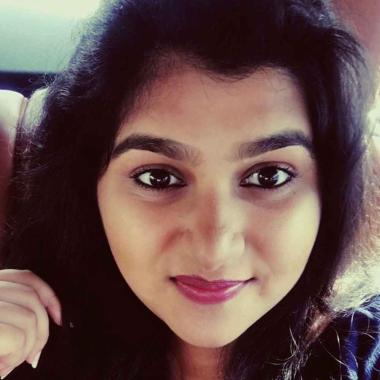
Tanya Bansal
Contemporary Media Practice BA (Now Creative Media Arts BA)
I love the practical and hands-on aspects of my course. We are introduced to a range of different mediums - film, photography, 360-degree videos, installation work, virtual reality and so on. We are given a diverse range of projects and I love experimenting with all these mediums. This course has allowed me to make documentary films and experimental video installations. Currently, I’m in the process of creating a website and an app. I’m also working on a VR project.
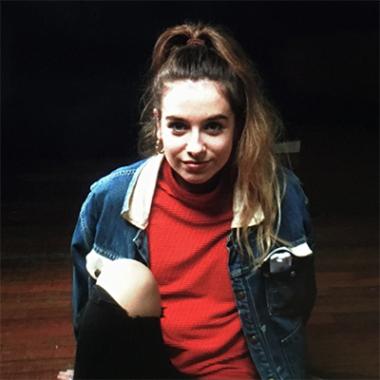
Bobbie Notcutt
Contemporary Media Practice BA (Now Creative Media Arts BA)
Contemporary Media Practice is so well suited to a student like myself because I don't find it restrictive. If anything, it's taught me how to be more open-minded and expressive with concepts and ideas. With freedom of expression being especially important in today's society, this course really makes this a priority and spurs us on to showcase our views on society, politics and art. Therefore, the level of work is not only thought-provoking and original, but a true representation of the students who have made it, which to me is key in trying to formulate myself as a creative.
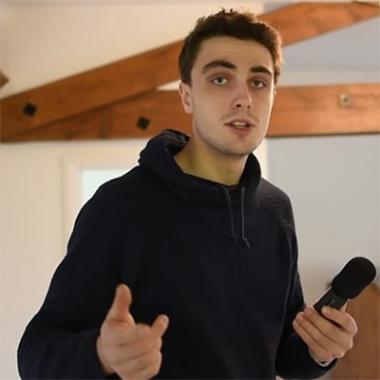
Ed Hands
Contemporary Media Practice BA (Now Creative Media Arts BA)
On the Contemporary Media Practice BA, I realised my interests were much broader than just photography, and the course has helped nurture that. I have learnt about the processes of photography, filmmaking, documentaries, coding and all the theory to go with it. As a consequence, I now feel ready to go into a professional creative practice and do whatever task might be asked of me. I have really enjoyed my time on CMP. The staff are amazing, and the facilities are awesome too!
What our students say
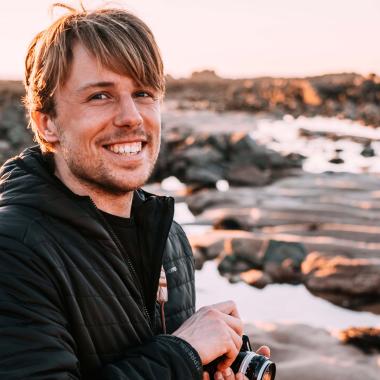
Robert Dark
Contemporary Media Practice BA (Now Creative Media Arts BA) - 2023
The film and photography studios and the darkroom facilities are brilliant. You are only limited by your own ideas, and your willingness to execute them.

Lea Baum
Creative Media Arts BA - 2025
This course is a space to explore a broad array of mediums, with strengths in film, photography, and emerging technologies such as AR and VR. We are fortunate to be led by passionate and engaging practitioners who are always willing to offer technical, creative, or motivational guidance.
Fees and Funding
UK tuition fee: £10,050 (Price per academic year)
Please note that if you defer your place, the first year’s tuition fees will be those of the academic year in which you enrol, which may be higher than the fee shown for this year.
Fees are subject to UK Government Parliamentary procedure.
Find out how we set our tuition fees.
Funding
As well as tuition fee loans, there is a range of funding available to help you fund your studies.
Find out about undergraduate student funding options.
Scholarships
The University is dedicated to supporting ambitious and outstanding students and we offer a variety of scholarships to eligible undergraduate students, which cover all or part of your tuition fees.
Find out if you qualify for one of our scholarships.
Additional costs
See what you may need to pay for and what your tuition fees cover.
International tuition fee: £19,000 (Price per academic year)
When you have enrolled with us, your annual tuition fees will remain the same throughout your studies with us. We do not increase International tuition fees.
Please note that if you defer your place, the first year’s tuition fees will be those of the academic year in which you enrol, which may be higher than the fee shown for this year.
Find out how we set our tuition fees.
EU Qualifications Welcome Award Scheme
If you are an international student accepted on an undergraduate programme starting in September at level 3 (Foundation) or level 4 (first year) on the basis of an eligible EU qualification only, you will be awarded a £4,500 tuition fee reduction off your first year of studies. For more information, see the EU Qualifications Welcome Award Scheme.
International student funding
Find out about funding for international students.
Additional costs
See what you may need to pay for and what your tuition fees cover.
UK tuition fee: £10,050 (Price per academic year)
Please note that if you defer your place, the first year’s tuition fees will be those of the academic year in which you enrol, which may be higher than the fee shown for this year.
Fees are subject to UK Government Parliamentary procedure.
Find out how we set our tuition fees.
Funding
As well as tuition fee loans, there is a range of funding available to help you fund your studies.
Find out about undergraduate student funding options.
Scholarships
The University is dedicated to supporting ambitious and outstanding students and we offer a variety of scholarships to eligible undergraduate students, which cover all or part of your tuition fees.
Find out if you qualify for one of our scholarships.
Additional costs
See what you may need to pay for and what your tuition fees cover.
International tuition fee: £19,000 (Price per academic year)
When you have enrolled with us, your annual tuition fees will remain the same throughout your studies with us. We do not increase International tuition fees.
Please note that if you defer your place, the first year’s tuition fees will be those of the academic year in which you enrol, which may be higher than the fee shown for this year.
Find out how we set our tuition fees.
EU Qualifications Welcome Award Scheme
If you are an international student accepted on an undergraduate programme starting in September at level 3 (Foundation) or level 4 (first year) on the basis of an eligible EU qualification only, you will be awarded a £4,500 tuition fee reduction off your first year of studies. For more information, see the EU Qualifications Welcome Award Scheme.
International student funding
Find out about funding for international students.
Additional costs
See what you may need to pay for and what your tuition fees cover.
Facilities
Westminster is ranked second in London for facilities in the Whatuni Student Choice Awards (WUSCAs) 2026, recognising the innovative and high-quality spaces available across our campuses in the heart of London and at Harrow.

3D Workshops

Darkrooms

Emerging Media and Computer Labs

Film and TV Studios

Photography Printing

Photography Studios

Virtual Production Facilities
Student work

Omery (2025), Aiting Tan and Shiqui Wang, three screen video installation (photo credit: Alex Brenner)

MACRO (2024), Jay-D, short film

Embrace the Echoes (2024), Yitong Chen and Zhuoyan Lyu, moving image installation

Revival (2023), Chloe Pui Hei Chan, Leo Mussatto, Hang Kin Titian Sze
Yuki Jiajia Yu, projection mapping interactive installation

Filling in the Spaces (2024), Nyah Sukhabut, Joud Farhoud and Stanley Sills, video game (production still)

Parallax Point (2023), Josef Griffiths, Antonia Lange and James Stevenson, video installation

Outside Looking In (2024), Tara Alkhas, short film and installation
Westminster Degree Shows
The Westminster Degree Shows are an annual collection that showcases the creativity, vibrancy and artistic talent of our undergraduate arts courses. You can see the latest online collection on Westminster Degree Shows.
Image: student work by Nathan Hunter – Illustration BA

Teaching and Assessment
Below you will find how learning time and assessment types are distributed on this course. The graphs below give an indication of what you can expect through approximate percentages, taken either from the experience of previous cohorts, or based on the standard module diet where historic course data is unavailable. Changes to the division of learning time and assessment may be made in response to feedback and in accordance with our terms and conditions.
How you'll be taught
Teaching methods across all our undergraduate courses focus on active student learning through lectures, seminars, workshops, problem-based and blended learning, and where appropriate practical application. Learning typically falls into three broad categories:
- Scheduled hours: examples include lectures, seminars, practical classes, workshops, supervised time in a studio
- Placement: placement hours normally include placement opportunities, but may also include live projects or virtual activity involving employers
- Independent study: non-scheduled time in which students are expected to study independently. This may include preparation for scheduled sessions, follow-up work, wider reading or practice, completion of assessment tasks, or revision
How you'll be assessed
Our undergraduate courses include a wide variety of assessments.
Assessments typically fall into two broad categories:
- Practical: examples include presentations, videos, podcasts, lab work, creating artefacts
- Coursework: examples include essays, reports, in-class tests, portfolios, dissertation
Data from the academic year 2025/26
Supporting you
We are ranked first in London for student support (Whatuni Student Choice Awards 2026).
Our Student Hub is where you’ll find out about the services and support we offer, helping you get the best out of your time with us.
- Study support – workshops, 1-2-1 support and online resources to help improve your academic and research skills
- Personal tutors – support you in fulfilling your academic and personal potential
- Student advice team – provide specialist advice on a range of issues including funding, benefits and visas
- Extra-curricular activities – volunteering opportunities, sports and fitness activities, student events and more

Course Location
Harrow is our creative and cultural hub, home to most of our arts, media and digital courses. It houses state-of-the-art facilities for every discipline, including project and gallery spaces, film studios, creative labs, collaborative learning spaces, and the Westminster Enterprise Network.
Harrow Campus is based in north-west London, just 20 minutes from the city centre by train.
For more details, visit our Harrow Campus page.
This course is based at our Harrow Campus, but to make the most of our teaching spaces and wider learning opportunities, some modules or activities may take place at our central London campuses. These may include guest lectures, degree shows or other teaching activities.


CHANGES TO OUR COURSES
All content on our course pages is accurate at time of publication.
Where significant or material changes have been made, applicants will be informed of these in line with Competition and Markets Authority guidance.
Contact us
Call our dedicated team on:
+44 (0)20 7911 5000 ext 65511
Opening hours (GMT): 10am–4pm Monday to Friday
Opening hours (GMT): 10am–4pm Monday to Friday
More information
Your Westminster
Book an open day. Order a prospectus. Sign up for newsletters.