Researchers, clinicians, policymakers and students came together at the University of Westminster for a major interdisciplinary event exploring the growing threat of antimicrobial resistance (AMR) and the global challenge of superbugs.
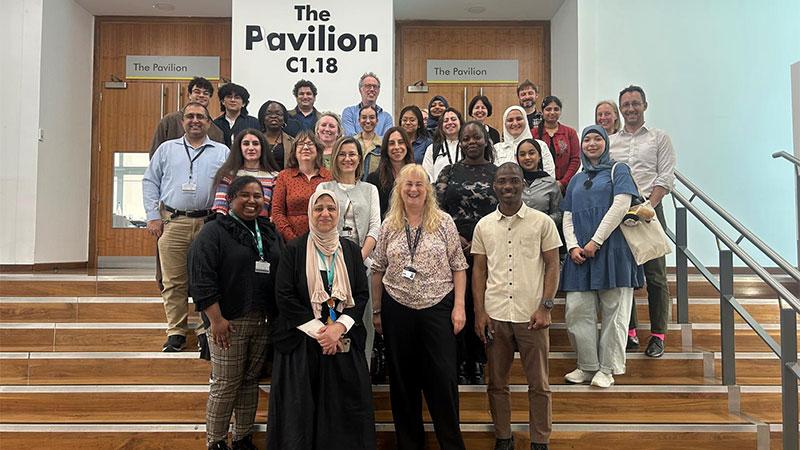
The event took place on 30 April at the University’s Cavendish Campus and was organised by Dr Manal Mohammed, Senior Lecturer in Medical Microbiology and Co-Course Leader of Westminster’s Medical Science BSc Honours course. The workshop examined the scientific, clinical and social dimensions of antibiotic resistance, from therapeutic innovation and genomics to public health inequalities and prevention strategies.
To kick off the workshop, Dr Mohammed delivered introductory remarks, highlighting the growing threat posed by superbugs and antimicrobial resistance, emphasising the importance of interdisciplinary collaboration to tackle superbugs in high-risk populations including refugees and asylum seekers.
The first session, From Clinical Care to Therapeutic Innovations, featured leading voices from healthcare, academia and research, including Dr Ron Daniels, Founder and Chief Medical Officer of UK Sepsis Trust and Vice-President of the Global Sepsis Alliance, who addressed the deadly intersection between sepsis and resistant infections.
The session also highlighted emerging research from University of Westminster students and scientists, including Dr Beth Sawyer who discussed tuberculosis, Dr Nadege Presneau, who presented advances in long-read genomics for resolving antibiotic resistance, and Dr Kalpana Surendranath, who examined CRISPR technologies aimed at rewriting resistance and restoring hope. They were joined by Vanshita Savani, a final year Medical Sciences BSc Honours student, and Dr Proma Khondkar, Lecturer in Pharmaceutical Analysis.

Dr Manal Mohammed
The second session, Superbugs and Health Inequalities: From Evidence to Action, then focused on how antimicrobial resistance disproportionately affects vulnerable populations and communities facing barriers to healthcare. Experts from the UK Health Security Agency, National Centre for Social Research, local government and the voluntary sector discussed inequalities in antimicrobial resistance, delayed access to care, refugee health risks and public engagement strategies.
Highlights included presentations from Professor Diane Ashiru-Oredope, from the UK Health Security Agency, who spoke on inequalities in antimicrobial resistance, Dr Diane Abdullah, Research Director of the National Centre for Social Research, who spoke about social inequalities and delayed access to care, and Claudia Jaksch, CEO of the cross-party think tank Policy Connect, who outlined how policy can support the drive to combat the risk of antimicrobial resistance.
They were also joined by Dr Donna Lecky, Head of the Primary Care and Interventions Unit at the UK Health Security Agency, Dr Daphne Economou and Dr Umair Khan from the School of Computer Science and Engineering, and Elizabeth Dunsford, Senior Public Health Strategist from Kensington and Chelsea Council and Westminster City Council.
The final session, Preventing Superbugs: From Policy to Everyday Action, gave space to explore how prevention strategies can be embedded across healthcare systems and communities. Topics included equality, diversity and inclusion (EDI) in AMR prevention, vaccine uptake, nutrition, exercise and public awareness. Speakers included Dr Caroline Smith, who spoke on the role of EDI in prevention, Dr Antony Black, who discussed vaccines as a critical weapon against resistance, Dr Bradley Elliott, who examined exercise and immunity, and Dr Jan Webb, who highlighted hand hygiene as the first line of defence against superbugs.
The event was closed with remarks from Dr Mohammed and a performance by doctoral researcher Success Ajay and Human, Animal and Cellular Physiologist Dr Daniel Brayson, who performed the song A Cure, A Crisis, A Comeback from the musical Lifeline that they recently took part in.
Dr Mohammed said: “Antimicrobial resistance is one of the greatest global public health threats of our time, yet its impact is often disproportionally felt by vulnerable and displaced communities including refugees and asylum seekers. It is estimated that antimicrobial resistance will cause ten million deaths by 2050 if no action is taken so it is crucial that we work together to tackle this global health crisis.
“The Superbug Fighters workshop highlighted the urgent need for the interdisciplinary and cross-sector collaborations to address antimicrobial resistance especially among high-risk populations. Bringing together experts from academia, public health, policy and research organisations created a practical, innovative and inclusive approaches to tackling this growing global health threat. We are grateful to all speakers and stakeholders who contributed to the success of this important event, as well as funding from Westminster Research Communities Interdisciplinary Innovative Fund.”
The workshop directly supports the United Nations Sustainable Development Goals (SDG) 3: Good Health and Wellbeing and 17: Partnership for the Goals. Since 2019, the University of Westminster has used the SDGs holistically to frame strategic decisions to help students and colleagues fulfil their potential and contribute to a more sustainable, equitable and healthier society.
Find out more about the School of Life Sciences at the University of Westminster.


