The University of Westminster recently hosted the Modern Masculinities conference, bringing together students, researchers, practitioners, creatives and policy-makers to explore the challenges, contradictions and possibilities shaping men’s lives today.
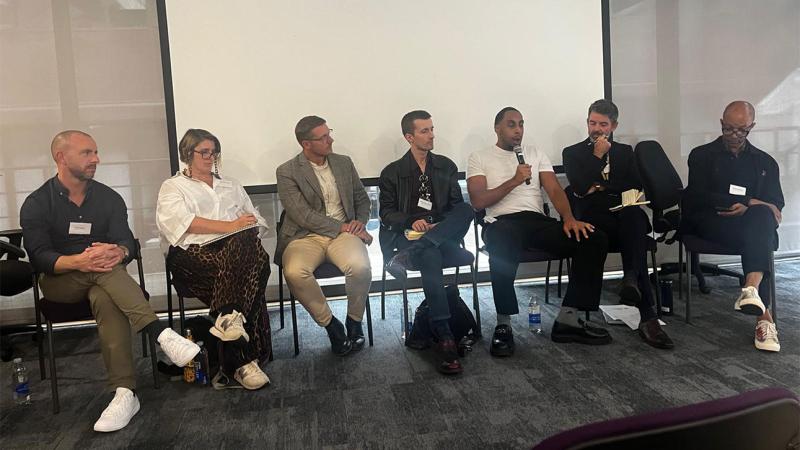
Opened by the Head of the School of Social Sciences Alan Porter, the Quintin Hogg Trust-funded conference was held on 1 September at the Cavendish Campus. Organised by colleagues Professor Damien Ridge, Dr Tina Cartwright, Dr Alison Fixsen, Dr Maria Flynn, Chantal Gautier, Dr Tom Nadarzynski and Dr James Kempley, the event demonstrated the breadth and vitality of work in the field, featuring projects at every stage of the academic journey, from student research to established professorial scholarship.
The conference featured a keynote address by Professor Brendan Gough from Leeds Beckett University, exploring how men enact vulnerability amid competing gender norms. Presenters from across the UK and internationally addressed a range of topics including midlife, sex, incels, complex trauma, masculinity in the cinema, fatherhood in prison, fitness and yoga.
Professor Paul Galdas, Chair of the Men’s Health Academic Network (MHAN), brought the new Men’s Health Strategy for England to life. The MHAN, of which Professor Damien Ridge is a member, are advising the Government on strategy implementation. Andrew Groves, Professor of Menswear Systems at the University, presented his exhibition, Visible Systems: How Menswear Governs, Frames and Performs Masculinity. British author Sam Conniff introduced his male social experiment, Hard As Nails, while Daniele Fiandaca, Co-founder of Hard as Nails, painted volunteers’ nails over lunch. The initiative encouraged male participants to challenge restrictive masculine norms and spark more connecting conversations. Senior lecturers Chantal Gautier and Dr Nikolaos Souvlakis also led a Q&A session on men and intimacy.
Westminster students played an active role in co-producing the conference, helping to drive its agenda, present research and engage in discussions rather than simply attend as members of the audience.
The closing panel examined several rapidly developing issues affecting men. These included Dr Nadarzynski discussing men’s growing use of artificial intelligence for emotional support despite limited evidence about its benefits and risks; alumnus Jerome Evans and student William Phypers-Ward reflecting on current issues facing young men and the emerging spaces in which they can express vulnerability; Professor Galdas explaining how the new Men’s Health Strategy for England is changing the policy and practice landscape; Head of Global Mobility and Study Abroad Eduardo Lees exploring the impacts LGBTQ+ people faced by Section 28, a 1988 law in the UK that banned local authorities and state schools from promoting homosexuality; and Bryan Bonaparte examining the ways in which Black masculinity is currently being stereotyped and weaponised.
Overall, the conference created an inclusive and interdisciplinary forum for exploring the complexities of contemporary masculinities and identifying important directions for future research, policy and practice.
About the conference, Professor Damien Ridge said: "Too often, public debate treats masculinity either as a problem to be solved or a tradition to be defended. But masculinity is created through its doing, continually (re)produced through social expectations, relationships and institutions. This conference created something hopeful: a space where research, practice and lived experience could meet to explore ways of being that allow men greater vulnerability, connection and freedom, while critically examining the gendered regimes that shape men."
The conference directly contributes to the United Nations Sustainable Development Goals (SDGs) 3: Good Health and Wellbeing, 5: Gender Equality and 10: Reduced Inequalities. Since 2019, the University of Westminster has used the SDGs holistically to frame strategic decisions to help students and colleagues fulfil their potential and contribute to a more sustainable, equitable and healthier society.
Learn more about the Counselling and Mental Health Service at the University of Westminster.
Find out more about studying Psychology and Counselling at the University of Westminster.


Related articles


