The University of Westminster’s award-winning Dragons Gene Editors of the Future programme celebrated the upcoming launch of its sixth iteration with an inspiring account of student achievement, scientific innovation, community and leadership in Fyvie Hall at the University’s Regent Street Campus.
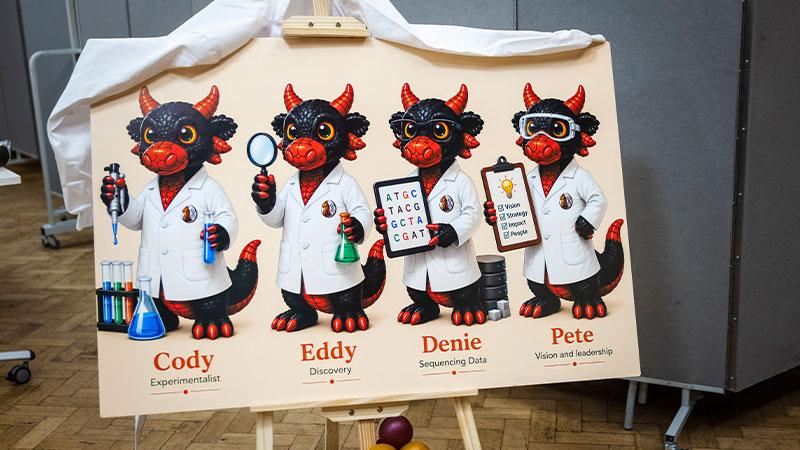
Bringing together students, academics, alumni, industry partners and supporters, the event celebrated the remarkable accomplishments of the world’s largest university-led extracurricular student development and training programme based on gene editing.
The evening opened with a welcome reception, followed by an inaugural address from the University’s former Vice-Chancellor and President Professor Peter Bonfield who has championed the programme since its inception. Celebrating the Advanced Gene Editors of the Future Iteration 5 was a highlight of the evening, with students receiving their certificates in recognition of their achievements in developing advanced research skills.
Munuse Savash, a veteran Gene Editor, delivered a talk titled A Legacy of Discovery: Inspiring the Next Generation of Gene Editors, and student leader Ribana Cristescu shared her experiences of the programme and its impact in a presentation titled Dragons Journey: From Learning to Discovery.
Looking to this next year, Dr Kalpana Surendranath, Founder and Director of the Westminster Centre for Gene Editors of the Future, presented the vision for Iteration 6, outlining its research and educational ambitions and the opportunities available to students.

Photo: Dr Surendranath presenting at Gene Editors of the Future launch event
Iteration 6, now delivered by the Westminster Centre for Gene Editors of the Future within the School of Life Sciences, will begin with basic training running from November 2026 to February 2027, followed by advanced gene editing, research and leadership training from March to July 2027. Students will also have opportunities to take part in external industry partnerships and collaborative projects. Two Rothblatt Priming Scholarships will support students in pursuing their research and industry ambitions, while three PETE Discovery projects from Iteration 5 and 6 will be showcased at the World Congress on Undergraduate Research. Inspired by Professor Bonfield and in recognition of his lasting influence, all Dragons Gene Editors activities and sessions will carry a PETE tag, while research projects will be given a PETE Discovery code.
Beyond the scientific celebrations, the evening held particular significance as the community came together with a series of moving tributes to honour Professor Bonfield for his visionary leadership in encouraging its growth from an ambitious educational initiative to an internationally connected community of excellence.
Dr Surendranath said: “Our ambition for Iteration 6 is to push boundaries of student-led scientific discovery, empowering more young minds to move beyond learning established knowledge to generating new knowledge in their own amazingly innovative ways, tackling real-world challenges and becoming leaders of the future. We are determined to carry forward the legacy of Professor Peter Bonfield through every iteration of Dragons Gene Editors of the Future.”

Photo from left to right: Dibyesh Anand, Kalpana Surendranath and Peter Bonfield
Professor Dibyesh Anand, Interim Vice-Chancellor and President of the University of Westminster, said: “Dragons Gene Editors of the Future shows Westminster at its best: excellence and inclusion built together, never traded off against each other. Our students are not just learning science; they are creating new knowledge and growing as researchers and leaders in the process. Congratulations to our Advanced Gene Editors, and my thanks to Dr Kalpana Surendranath and the whole Dragons community for building something so distinctive.”
The Westminster Centre for Gene Editors of the Future directly contributes to the United Nations Sustainable Development Goals (SDGs) 3: Good Health and Wellbeing, 4: Quality Education and 17: Partnerships for the Goals. Since 2019, the University of Westminster has used the SDGs holistically to frame strategic decisions to help students and colleagues fulfil their potential and contribute to a more sustainable, equitable and healthier society.
Learn more about the Gene Editors of the Future programme at the University of Westminster.

Photo: Alumna Sara Taha Ahmed

Photo: Ribana Cristecu


Photo: Professor Peter Bonfield

Photo: Umarah Ahmed and Rianna Dixon-Cadogan presenting their project


Photo: Dr Sandeep SundaraRajan from the Wellcome Sanger Institute
Related articles


