As part of the European Researcher’s Night and London’s annual Bloomsbury Festival, the University of Westminster organised PUB LAB, a public and community engagement event aimed to break traditional boundaries between researchers and audiences by bringing artists, communities and academics together to explore the theme of Living Well Together.
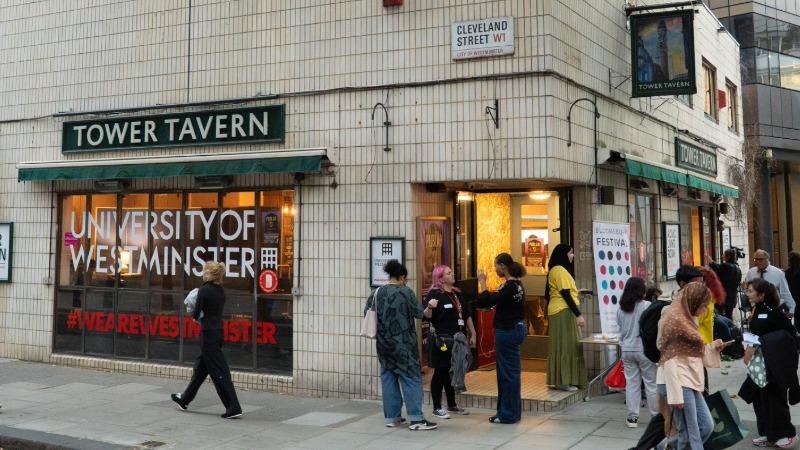
Facilitated by Bloomsbury Festival Artistic Associates Orit Azaz and Bill Gee, the University’s Public Laboratory (PUB LAB) explored new ways to engage the public with research and brought together a range of interdisciplinary perspectives and ideas. As a pilot, the event aimed to create opportunities for more engaging ways to share the University’s research and expertise with wider audiences.
The PUB LAB was developed through a creative process led by the Bloomsbury Festival Team working with Westminster academics Dr Alexander Bolotov, Co-Director of the Westminster AI Network, Professor Lewis Dartnell, Professor of Science Communication, Dr Monica Germana, Reader in Gothic and Contemporary Studies, Dr Bradley Elliott, Reader in Ageing Biology, Dr Kezia Rajappa, Clinical Biochemist, and Dr Sheeja Sivaprasad, Principal Lecturer in Finance. The event was supported by three local community organisations, including the Old Diorama Arts Centre, a hub where creative organisations, artists and communities come together, as well as three renowned artists.
PUB LAB consisted of four practical taster sessions led by the Westminster researchers. Activities included creating pottery to explore concepts about AI and its potential impacts on society, and meeting Ash, a 15-year-old puppet character leaving Earth, who invited participants to offer advice on what to take to a new planet and how to tackle the challenges he might face there.
The breakout sessions were followed by an AI-generated song that summarised the themes from the different research projects featured at the event, providing a creative conclusion to the day’s exploration of how we can live well together.
By bringing research into a creative, informal and collaborative setting, PUB LAB offered participants new ways to engage with academic ideas while giving researchers an opportunity to listen to perspectives from outside the University. The pilot also demonstrated how partnerships between universities, artists and local communities can create new spaces for dialogue and knowledge exchange.
One of the visitors said: “The interdisciplinary aspect of Pub Lab was great. Meeting Ash the puppet helped me think and articulate my thoughts in new ways. It was a scenario that challenged me to think differently about what makes us human and what's special about us, what's the best and the worst of humanity. It was unexpected.”
Another participant said: “Us academics are very fact-driven. We have a hard time expressing ourselves to the general public. We can express ourselves to a different academic but I think that's where artists come into the picture. They are all about expressing their art. I believe this collaboration worked really well in ways such that I could personally reach out to the public about my research in an ordinary way without using any medical jargons.”
The PUB LAB event directly contributed to the United Nations Sustainable Development Goals (SDG) 3: Good Health and Wellbeing, 4: Quality Education and 17: Partnerships for the Goals. Since 2019, the University of Westminster has used the SDGs holistically to frame strategic decisions to help students and colleagues fulfil their potential and contribute to a more sustainable, equitable and healthier society.
Find out more about public engagement at the University of Westminster.


Photo credits: Ashley Horsey
Related articles


