The University of Westminster's Destinations and Experiences Research Centre (DEX) hosted the fourth edition of the Slowing Down research symposium, bringing together tourism geographers and scholars in leisure and tourism studies across the world, including Australia, Canada and Brazil, to reflect on the inequalities and mounting challenges faced across these fields of studies.
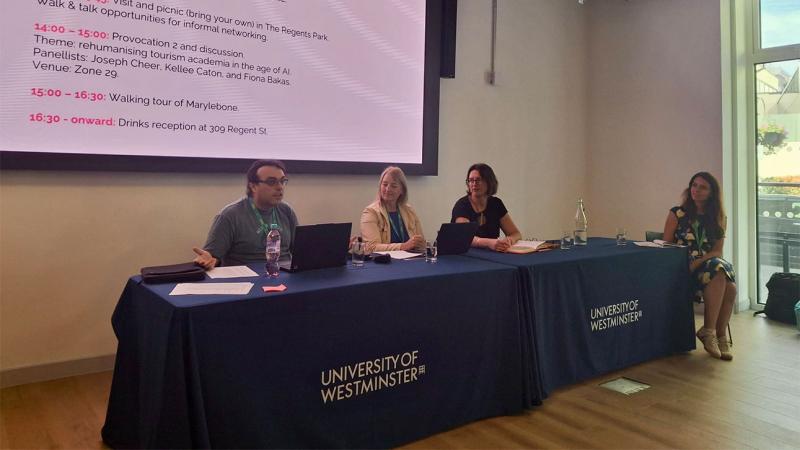
The symposium, titled Challenging Inequalities and Rehumanising the Leisure and Tourism Academy, held on 1 September, highlighted the urgent need to slow down the increasingly fast‑paced and metrics‑driven culture of modern universities.
The day-long event was held at Zone29, the University’s new home for careers and enterprise, and opened with a welcome from Andrew Smith, Professor of Urban Experiences. This was followed by two themed discussions chaired by Dr Ilaria Pappalepore, Reader in Tourism and Events, and a series of reflective activities designed to encourage connection and dialogue.
The first discussion, Navigating Inequalities in Tourism Academia, was led by Geographies of Leisure and Tourism Research Group members Alberto Amore, Jenny Hall and Tijana Rakić. The panel explored how structural inequalities shape exclusion, uncertainty and marginalisation within tourism and leisure research communities.
Following this, attendees took part in a walk‑and‑talk visit to Regent’s Park, embracing the event’s ethos of slowing down, connecting informally and resisting the pressures of productivity‑driven academic culture.
In the afternoon, the second discussion, Rehumanising Tourism Academia in the Age of Artificial Intelligence, brought together Joseph Cheer, Chair of the International Geographical Union (IGU) Tourism Commission, Kellee Caton from Critical Tourism Studies, and Fiona Bakas, Assistant Professor in Geography and Territorial Planning at the University of Lisbon. The session examined how emerging technologies intersect with wellbeing, care and solidarity in academic life, asking what it means to cultivate more humane, caring and supportive connections between colleagues within systems that often privilege metrics, productivity and competition over wellbeing.
The day concluded with a sustainable urbanism themed walking tour of Marylebone, led by Andrew Smith, and a drinks reception at the University's Regent Street Campus.
Professor Smith said: "We were delighted to host this day-long event which explored some key issues facing the academy, including inequalities and artificial intelligence. It was an ideal opportunity to showcase the Destinations and Experiences Research Centre and the facilities at Zone29 to external audiences. The 45 delegates included academics from across the world, and they really enjoyed visiting the fascinating sites that surround our central London campuses."
The symposium directly contributes to the United Nations Sustainable Development Goals (SDGs) 3: Good Health and Wellbeing, 4: Quality Education and 10: Reduced Inequalities. Since 2019, the University of Westminster has used the SDGs holistically to frame strategic decisions to help students and colleagues fulfil their potential and contribute to a more sustainable, equitable and healthier society.
Learn more about Tourism and Events Management courses at the University of Westminster.


Related articles


