Students from the Dragons Gene Editors of the Future programme at the University of Westminster were recently invited to present two posters in Parliament on their experience of working with cutting-edge gene editing technology alongside participants from 26 institutions across the UK.
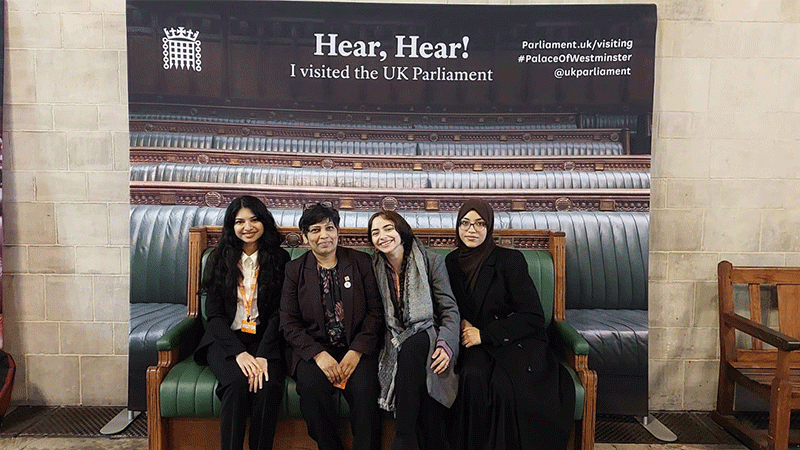
Posters in Parliament is an annual UK event where undergraduate students present their research posters inside the UK Parliament to Members of Parliament (MPs), policymakers and academic leaders. The event showcases high-quality undergraduate research from universities across the UK, providing students with a platform to discuss their work and demonstrate how academic research can inform public policy and societal challenges.
The event, held on 25 February, was organised by the British Conference of Undergraduate Research in partnership with MPs and was hosted at the Palace of Westminster. John Slinger MP, who hosted the visit, organised students a tour of Parliament where they had the chance to attend Prime Minister’s Questions, providing them with a unique opportunity to connect science, policy and public engagement.
The first Westminster poster, titled Gene Editors of the Future: An Inclusive, Socially Just, Transformative Model for Vertically Integrated Science Education, was created and presented by second-year Biomedical Science BSc Honours students. They presented data explaining why the programme represents a unique and nationally leading model within a post-1992 university context, highlighting its scale, interdisciplinary approach and growing international outreach.
The second Westminster poster, titled Westminster Centre for Gene Editors of the Future: A Flagship Hub for Student-Led Leadership in Research Excellence, Skills Development and Global Impact, was created by students, alumni and a Bolashak Research Fellow Dr Gulzhan Kerimbekova from the Bolashak Scholarship Programme. It also involved Little Drs research interns. Since 2025, undergraduate Gene Editors who successfully progress into the research internship phase and excel in their engagement are given the title Little Drs, recognising their enthusiasm, dedication and meaningful contribution to undergraduate research. They presented findings from the fourth iteration of the Gene Editors programme, exploring the impact of student-led research and participation in authentic scientific projects.
They also presented the results of their mixed-methods research approach, including student-led research questions such as why inclusive access to gene-editing research matters for healthcare and society, and how early research experience shapes students’ career aspirations.
Gene Editors of the Future is Westminster’s flagship extracurricular scientific initiative contributing to advancing academia by fostering innovation and skill development among young researchers. The programme gives students early access to emerging gene‑editing technologies and hands‑on research experience, preparing them to contribute to future breakthroughs in health and sustainability.
The Dragons Gene Editors programme received special recognition in the concluding address by John Slinger MP, who highlighted the programme’s inclusive CRISPR approach and the importance of gene editing for the future of science, healthcare and society.
Dr Kalpana Surendranath, Reader in Genome Engineering and Director of Westminster Centre for Gene Editors of the Future, said: “Witnessing our students present their work among peers from across the UK, engaging with policymakers and contributing to conversations that link science with the public good was deeply moving. Sincere thanks to the University for providing the space and purpose where students do not just learn science, but shape it, question it and connect it to society in powerful ways.”
Amal Tifow, second-year Biomedical Science BSc Honours student who attended the event, said: “The Posters in Parliament event was insightful, providing students from all over the UK to share their research and connect with each other, encouraging academic discussion and collaboration. The event was enriching as each poster was unique with various research topics, which allowed meaningful conversations, exchange of ideas and discussion of topics. This event has built my confidence and communication skills and made me step out of my comfort zone.
“I am grateful to have had such an opportunity and be able to share research that helps students within life sciences to further develop and grow.”
Donald Stavri, first-year Biomedical Science BSc Honours student, added: “Representing Dragons Gene Editors of the Future at Posters in Parliament was a proud and memorable experience. It was incredibly inspiring to share the impact of a programme that not only develops students’ scientific understanding, but also empowers us to grow in confidence, curiosity and ambition as future researchers. Being surrounded by so many other students presenting their work and passion for research was equally motivating and it was inspiring to see the breadth of ideas and talent on display. The experience highlighted the importance of programmes that open up research opportunities, champion inclusion and support students in seeing themselves as the next generation of scientists. I am especially grateful to Dr Surendranath for her guidance and for creating opportunities that enable students like me to be part of such meaningful experiences.”
Providing students with opportunities to present in Parliament and work with cutting-edge technology directly contributes to the United Nations Sustainable Development Goals (SDGs) 4: Quality Education, 9: Industry, Innovation and Infrastructure and 10: Reduced Inequalities. Since 2019, the University of Westminster has used the SDGs holistically to frame strategic decisions to help students and colleagues fulfil their potential and contribute to a more sustainable, equitable and healthier society.
Learn more about Biological and Biomedical Sciences courses at the University of Westminster.


Related articles


