The University of Westminster has recently launched the Emerging Young Film Critics programme, a mentoring project which aims to nurture young film critics from underrepresented communities studying at the University and offer them the opportunity to gain paid work experience. The project will tie in with the Regent Street Cinema’s (RSC) 130th anniversary next year.
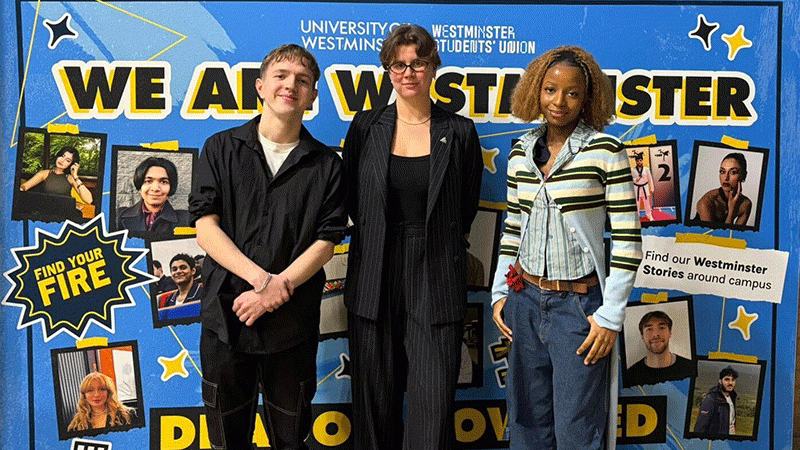
The Emerging Young Film Critics programme will offer professional mentorship, industry experience, networking opportunities and paid publication work. The initiative forms part of the University’s commitment to widening participation and supporting students from socio-economically disadvantaged backgrounds, who often face significant barriers when entering the film and media industries.
The project launched on 29 October when student film critics Logan Parker, Maria Matusevich and Takiyah Muhammad, met the RSC team, including Anna Paprocka, Head of Programming, Ellie Johnson, Marketing Manager, as well as Jules Attanayake from the University’s Fundraising and Development Team.
At the event, students were also introduced to their individual mentors. Each mentor is an experienced film journalist who will guide them through their critical writing development, industry understanding and multimedia review skills. Throughout the programme, students will receive professional editorial support, attend press and preview screenings and gain access to three film-critic-led workshops designed to strengthen their craft. Each student will also be supported to create a video essay, podcast or social media piece, helping build their skills in contemporary multimedia criticism, and will receive an annual pass allowing them to view unlimited films at the RSC for 12 months.
Students will be paid £150 per review, with the option to produce up to six pieces. They will also have the opportunity to network with film industry professionals, as well as attend the London Critics’ Circle Film Awards in February 2026. Their work will be published online, providing valuable professional credits to enhance their CVs in the film and media sectors.
The Emerging Critics programme is made possible by donations to the cinema and will run from November 2025 to May 2026, forming a key part of the RSC’s plans leading up to its historic anniversary year.
Zone29, the University’s home of careers and enterprise, will play a key role by supporting students in their paid work experience, offering access to specialist media spaces, equipment and guidance as they develop their written and multimedia pieces.
Helen O’Hara, Editor-at-large at Empire Magazine and mentor, added: “It’s really important to try and help the next generation of film journalists. I came up through a series of internships that no longer exist, and I'm not alone in that – there are a lot of people who had opportunities in the past that aren't available to young people nowadays. Something like this seems like a great way to give people a little bit of a launching pad and a start to get them interested in and equipped for the profession.”
Billy Watson, organiser of the programme, added: “Our cinema is a special space, and we are always looking at ways to play our part in involving students to contribute to that narrative. What better way than to organise a mentoring programme for emerging film critics and help with their future employability in our industry.”
The programme directly contributes to the United Nations Sustainable Development Goals (SDG) 4: Quality Education, 8: Decent Work and Economic Growth and 10: Reduced Inequalities. Since 2019, the University of Westminster has used the SDGs holistically to frame strategic decisions to help students and colleagues fulfil their potential and contribute to a more sustainable, equitable and healthier society.
Learn more about Film and Television courses at the University of Westminster.
To find out how you or your organisation can support the University, contact the Development Team.
Related articles


