Professor Catherine Loveday, Professor in Psychology at the University of Westminster, has spent the summer speaking at major UK festivals to champion Alzheimer’s awareness and deepen public understanding of memory, ageing and mental health. Across May to July, she appeared at 15 events across eight festivals, delivering talks, chairing panels and collaborating with broadcasters, musicians, writers and scientists.
At the Dulwich Festival on 9 May, she joined comedian, broadcaster, author and poet Robin Ince and author, speaker and activist Charli Clement for a conversation on how neurodivergent minds shapeart, science and culture. They explored both historical and contemporary examples, highlighting the unique perspectives and talents that neurodivergent people bring to every field. This conversation celebrated how difference brings challenges but can also be a source of insight, creativity and innovation.
She then attended the Fleet Street Festival to chair a panel titled Are We Hard‑wired To Disagree?, where she guided discussion alongside Professor Paul Dolan from the London School of Economics and Political Science, Dr Leor Zmigrod, writer and political neuroscientist, and Dr Marius Ostrowski, political and social theorist. Together, they examined the psychological and ideological forces that shape our beliefs and political divisions.
At the Hay Festival, she contributed to two events. Firstly, during a session on singing and health with vocal coach Juliet Russell and psychologist Dr Sian Williams, she examined the relationship between voice, breath and emotional regulation, looking into why humans are so deeply wired to respond to the human voice, especially when performing and listening live. The talk revealed why singing can be a powerful way to connect with people who have dementia. In a second event, Unspeakable, Professor Loveday led a conversation with forensic psychiatrist Gwen Adshea, who drew on decades of NHS work in prisons and secure hospitals to offer a powerful look at how people navigate trauma. Adshead shared therapeutic insights and patient stories that challenge common myths about trauma’s permanence, with Loveday guiding the discussion from a neuropsychological perspective.
Professor Loveday also chaired four different panels at the Cheltenham Science Festival, each tackling a different aspect of human behaviour and brain science. Her sessions explored risk aversion, the psychology of anxiety, our cultural obsession with true crime and the science behind repairing the ageing brain. Together, these talks formed part of the festival’s wider wellbeing and neuroscience strand, which examined how modern life shapes minds and how science can support healthier futures.
The University was also represented elsewhere at Cheltenham, with Westminster doctoral researcher Fabia Mone competing in the national FameLab Finals after winning the London FameLab competition earlier this year, further showcasing the strength of Westminster’s research community on the national stage.
Moving into July, Professor Loveday appeared at the Crossed Wires Festival in Sheffield to record Music and the Mind, a special episode for BBC Radio 3 Unwind with presenter, psychologist and Westminster alumna Dr Sian Williams. Together, they explored how listening to music affects wellbeing, particularly how different genres of music make people feel different ways. They shared practical tips to keep people positive and productive and revealed the benefits of being open-minded and getting out into nature.
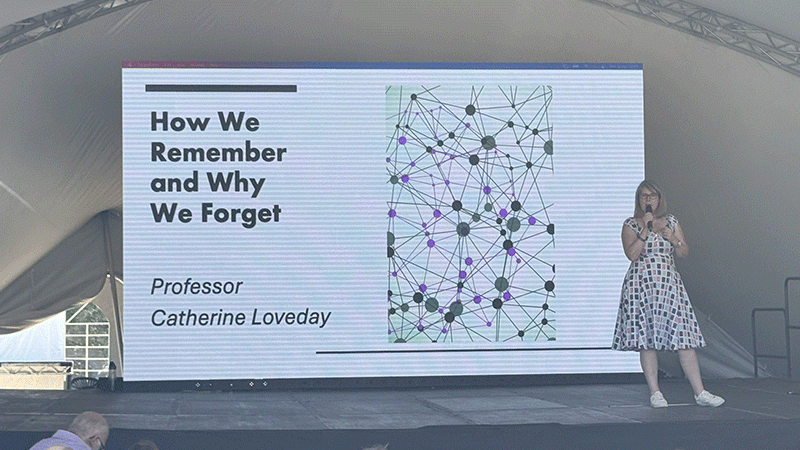
At the Also Festival, Professor Loveday delivered four sessions. These were a discussion on the psychology behind The Traitors with Claudia Hammond, a solo talk on memory, a conversation on feeling overwhelmed and a panel exploring artificial intelligence and music with Jason Bavanandan and Philip Loveday.
She concluded the summer as a panellist at two discussions at the Latitude Festival, which was held between 24-26 July. She spoke at a panel titled Mental Health in an Unhealthy World with Robin Ince and Professor of Psychiatry and suicide prevention researcher Nav Kapur, which delved into how data can help us better understand and prevent suicide. The following day, she took part in a live recording of the New Scientist: The World, the Universe and Us podcast, where she contributed neuropsychological insight to a wide‑ranging discussion about how people understand the world through memory, emotion and science.
Professor Loveday said: “As well as being a very valuable way to share my own work and create research-driven impact, it is also great to connect with others and learn new things. In some ways there are very clear parallels with academic conferences, not least the quality of researchers who I have been lucky enough to share the stage and green room with.
“I feel privileged and grateful to have so many opportunities to share science with the wider community. I'm passionate about upholding the Westminster commitment to democratising knowledge and making education available beyond the walls of our institution. It has definitely been exhausting at times but so very rewarding.”
Professor Loveday’s work directly contributes to the United Nations Sustainable Development Goal 3: Good Health and Wellbeing. Since 2019, the University of Westminster has used the SDGs holistically to frame strategic decisions to help students and colleagues fulfil their potential and contribute to a more sustainable, equitable and healthier society.
Learn more about Psychology courses at the University of Westminster.


