- Community Health Resilience and Wellbeing
- Centre for Resilience
About me
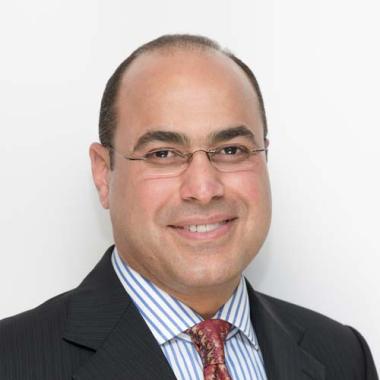
Dr Ihab Tewfik is a distinguished Reader in Sustainable Nutrition Intervention and a Registered Nutritionist (UK), renowned for his global expertise in designing, implementing, and rigorously evaluating sustainable nutrition intervention programmes at a population level.
With an illustrious 30-year career, Dr. Tewfik has excelled in diverse leadership roles, including serving as Programme Leader for the BSc Human Nutrition degree at the University of Westminster for 12 years; Lead Research Scientist on two Food Standards Agency (FSA)-UK funded projects; Director of International and Collaborations in the Faculty of Science and Technology, UoW; Technical International Consultant to UNICEF-UN, guiding knowledge exchange to launch a pioneering school nutrition programme in Georgia; and Head of the COHERE Research group-UoW (COmmunity HEalth, REsilience and Wellbeing), delivering exceptional impact across every position. Dr Tewfik's academic credentials are exemplary: a PhD from London South Bank University, complemented by a DrPH and MPH from the University of Alexandria's Nutrition Department, where he advanced to Associate Professor in 2008. Dr Ihab Tewfik has carved an independent research trajectory that underscores the transformative power of clinical nutrition in tackling malnutrition, encompassing both undernourishment and the obesity epidemic, among vulnerable populations worldwide.
His meticulously tailored, sustainable nutrition intervention programmes have delivered measurable clinical improvements for malnourished communities while ensuring long-term optimal nutrition. Key initiatives include:
1) Digital Nutrition Education Package for schoolchildren in Georgia, pioneering digital tools to combat malnourishment and foster healthy eating habits in Georgia;
Impact of Digital Nutrition Education Package [DNEP] on School Children in Georgia [Supervising Rusudan Gvamichava PhD 2021-2025]:
The pioneering Digital Nutrition Education Package (DNEP), delivered via a customised 10-week online programme in Tbilisi, empowered 328 families to transform children's dietary behaviours, boosting daily breakfast consumption and achieving a remarkable 50% surge in vegetable intake. Parents reported sustained healthy eating habits, heightened child confidence, and academic gains, underscoring the home environment's pivotal role amid challenges like school meals and time constraints. These evidence-based outcomes are potentially shaping Georgia's national child nutrition guidelines, aligning with UN Sustainable Development Goals (SDGs) for healthier growth and obesity prevention.
2) Precision Nutrition via Nutrigenetics to sustain weight management among overweight/obese adolescents in Saudi Arabia, leveraging genetic inisghts for personalised outcomes;
Impact of Personalised Nutrigenetics on young adults (adolescents) in Saudi Arabia [Supervising Saba Aljasir PhD 2023-2027]:
This innovative study harnesses nutrigenetics for 232 overweight/obese Saudi females (aged 18-24), genotyping key markers (FTO, MC4R, CLOCK, LPL, TCF7L2, PPARG) to craft bespoke diets and lifestyle plans - pilot (n=31) scaled to full cohort (n=201). Preliminary data reveal statistically robust weight loss (p=0.008) and elevated adiponectin (p<0.001), signalling metabolic resilience against obesity risks. By merging genetics with nutrition, it pioneers sustainable interventions for LMICs, curbing NCDs and fostering lifelong wellness.
The Transformative Reach of Tailored Functional Recipes Across Contexts
Dr. Ihab Tewfik's TFR platform - innovative food-on-food fortification using local produce - delivers versatile, low-cost nutrition, proven in Ghana, India, and Nigeria as a community-co-created knowledge exchange (KE) tool.
3) Targeted interventions for malnourished schoolchildren, addressing chronic nutritional deficits in Ghana;
Impact in Ghana: S-Cool Meals Revolutionise School Feeding [Supervising Jolene Nyako PhD 2013-2017]:
Collaborating with Noguchi Memorial Institute, University of Ghana, and Dr. Jolene Nyako (PhD, UoW), three flavoured S-Cool meals enhanced micronutrient bioavailability for 330 stunted children (5-8 years), meeting 40% RNI at lower costs/child/day, below current national programmes. Outcomes: Uplifted nutrition status, palatability, and food security, embedding sustainable school interventions.
4) Specialised support for cancer cachexia patients, mitigating severe weight loss and enhancing quality of life in India;
Impact in India: iATTA Meals Stabilises Cancer Patients [Supervising Neha Kapoor PhD 2012-2016]:
Partnered with AIIMS Delhi's Dr. Neha Kapoor (PhD, UoW) and palliative care experts, iATTA (100g/day, £0.20) elevated quality of life and preserved body fat in 150 cachexic females undergoing chemo/radiotherapy, far below £1.75-£2.30/100g oral nutrient supplements. I led Knowledge Exchange Community Workshops that empowered patients, carers, and professionals for enduring adoption of the iATTA meal as part of the sustainability plan of this intervention.
5) Nutrition strategies for people living with HIV (PLHIV), strategically delaying HIV progression to AIDS through fortified diets in Nigeria.
Impact in TFR: Amtewa Meals Delays HIV Progression to AIDS [Supervising Abraham Amlogu PhD 2010-2014]:
With Dr. Abraham Amlogu (PhD, UoW) and State House Medical Centre Abuja, Amtewa (100g, 355 kcal, £0.10/day) sustained anthropometrics/boosting immune cells in 400 PLHIV on ART over 6 months, impeding AIDS onset, versus £20/week govt meds. Hands-on workshops taught sourcing, prep, and storage, ensuring community ownership. I reported that protracted consumption of Amtewa meal along with uninterrupted access to ART [antiretroviral therapy] was efficient in sustaining anthropometric and biochemical indices of PLHIV and effectively delaying the progression of HIV to AIDS.
At the core of these programmes lie innovative Tailored Food Recipes (TFRs), expertly designed not merely to eradicate malnutrition but to revolutionise dietary engineering. These TFRs enhance micronutrient bioavailability, amplify biological functions, and promote enduring health by transcending disease prevention.
Grounded in robust evidence linking diet to disease epidemiology, the TFRs integrate ethnobotanical wisdom with population-specific needs, optimising model meals that attenuate malnutrition, bolster resilience, and advance global public health equity.
Global Impact and Pioneering Legacy
This holistic approach exemplifies Dr Tewfik's leadership at the University of Westminster in nutrition science, public health interventions, and digital health innovation.
TFR's adaptability as a Knowledge Exchange catalyst - co-designed with communities - drives enduring practice shifts, transcending project lifespans while endorsing Eat-Lancet principles and SDGs 1,2,3,6,8,11,12 and17. At University of Westminster's School of Life Sciences, Dr. Tewfik pioneers fortification efficacy across Ghana/India/Nigeria, bolstering Harvard University (T.H.Chan School of Public Health, Boston) ties and UN agency alignments (WHO/WFP/FAO/UNICEF) for LMIC malnutrition.
Recognised with WASD's medal/certificate for global public health nutrition, his portfolio spans 12+ UNICEF projects, FSA biomaker/food safety work, AUB PCOS interventions (weight loss/reproductive gains), and 100+ publications. As FRSPH Fellow and ex-Associate Professor (Alexandria), Dr. Tewfik advances NCD prevention in obesogenic transitions, training LMIC workforces via workshops/CPD.
Ihab as Editor-in-Chief:
1. Editor-in-Chief of the BNRC Springer Nature, UK [Since November 2022]
2. Editor-in-Chief of the International Journal for Food, Nutrition and Public Health, WASD UK [Since 2008]
- Ihab as Guest Editor 2023: Special issue on: ‘Global Excellence in Children and Health’ – Frontiers in Public Health https://doi.org/10.3389/fpubh.2023.1286481 [Journal Impact factor: 5.2].
- Ihab as Guest Editor 2022: Special issue on: ‘The Role of Vitamin D in Gut Health and Disease in Children’ – Frontiers in Public Health https://doi.org/10.3389/fpubh.2022.912773 [Journal Impact factor: 5.2].
Research grants
A)External Income through Research Supervision:
£47,000 – from the Saudi Arabia Cultural Bureau [SACB] in London [2023 - 2027]
£24,000 - from Surrey University [2004-2008]
B)External Income through Research projects:
£9,000 – From UKRI the Global Challenges Research Fund [2019]
£20,500 – From UKRI the Global Challenges Research Fund [2019]
£60,630 – From the Social Science Research Unit of the FSA (FS615017) [2014-2015]
£4,500 - From the Ministry of Health, the United Arab Emirates [2013-2015]
£1,520 - From the Wellcome Trust [2011]
£20,000 - From the National Cancer Research Institute – UK (2006-2008)
£52,000 - FSA project (Project code: A05005) [1999-2003]
£62,000 – FSA project (Project code: A01027) [2001 - 2003]
C)External Income through Short Training Courses:
£28,700 – Tailored Short Training courses [Feb 2003 to Sep 2004].
Teaching
Module Leader for:
- Principles of Human Nutrition – Level 4 (First year)
- Applied Public Health Nutrition – Level 6 (Final year)
- Nutrition in Clinical Practice– Level 6 (Final year)
Teaching on several modules on the MSc Global Public Health Nutrition – Level 7 (MSc)
Course participation
I lecture undergraduate and postgraduate programmes (BSc, MSc, and PhD) in global public health nutrition sciences.
Other University Responsibilities
Head of the 'COmmunity HEalth, REesilience and Well-Being' - Research Group [a.k.a. COHERE Research Group].
Research
PhD supervision/examination
Dr. Ihab Tewfik has successfully supervised 17 PhD candidates to successful completion, with 10 under his directorship as lead supervisor (2001–2025). He currently oversees five active PhD projects, driving cutting-edge research in nutrition and public health intervention. Additionally, Dr. Tewfik has served as External Examiner for 15 PhD viva voce examinations, upholding rigorous academic standards.
Dr Ihab Tewfik welcomes applications from new PhD candidates eager to advance sustainable health interventions among malnourished vulnerable populations.
Publications
For details of all my research outputs, visit my WestminsterResearch profile.