- Pathobiology and Extracellular Vesicle Research Group
- Centre for Resilience
- Westminster Space Health Hub
About me
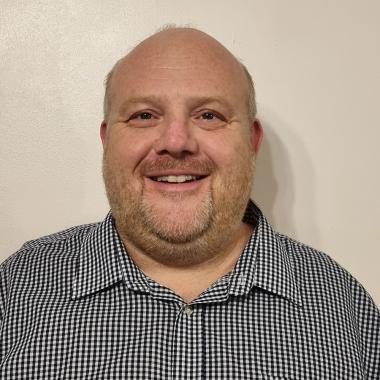
Dr Stephen J. Getting is Principal Lecturer in Pharmacology at the University of Westminster and Co-Course leader BSc Pharmacology and Physiology. Dr Getting has over 25 years’ experience in unraveling the anti-inflammatory effects of novel endogenous peptides in a model of arthritis, cardiovascular disease, asthma and neuroinflammation. Graduating from The School of Pharmacy, UCL and completing a PhD in Immunopharmacology at Bart’s and Royal London Medical Schools. He has worked in Industry (Wellcome Research Laboratories), WHRI Contract Research, and Universities including Monash Medical School, Australia, Kings College London, Imperial College London and University of Naples, Italy, where he held a fellowship. This has allowed for a multi-discipline research career with over 150 articles published (including 60 full publications), being awarded the Gordon Van Arman Award for Excellence in Inflammation Research from the Inflammation Research Association and Derek Willoughby Young Investigator Award, World Congress on Inflammation. He has acted as a PhD supervisor to 12 students and undertaken PhD/Chaired Examinations at QMUL, University of Copenhagen and University of Westminster. He has served on the Schools Research Committee and was the research lead for Cell Communication Research Cluster and returned for RAE/REF since 2008.
Specialties: Dr Getting is an experienced researcher and educator, with a strong track record in delivering research outcomes, supervision and educating students in pharmacological research. He has strong leadership ensuring goals are met and people reach their full potential, with publications in Nature Medicine, J. Ex. Med, British Journal of Pharmacology, Journal of Immunology, Arthritis and Rheumatism, TIPS and FEBS Letters, FASEB J.
Teaching
I am a Principal Lecturer in Pharmacology and co-course leader for BSc Pharmacology and Physiology and Fellow of the British Pharmacological Society. Previous roles have included divisional coordinator for Biochemistry, Pharmacology and Applied Biology from 2016 to Jan 2019 and PhD admissions tutor from 2014-2018. I hold a postgraduate certificate in education and fellowship of the Higher Education Academy. He has acted as an External Advisor for re validation of the Pharmacology Degree at University of East London and External Examiner at University of East London, Imperial College and Anglia Ruskin University.
I deliver pharmacology, physiology, toxicology, drug discovery teaching and project supervision at undergraduate and postgraduate level.
Currently I am the module leader for the second year pharmacology module Experimental Pharmacology and Therapeutics and two final year modules, Drug Discovery: Bench to Bedside and UG project module. Within these modules we aim to allow students to become autonomous learners and develop their research skills, through critically evaluating research articles, researching novel techniques and identifying new lines of research to enhance these studies and identifying the skills required for the workplace. Utilization of research and technology within my teaching allows the students to develop core translatable skills designed to enhance their learning and future employability.
In addition to these module leaderships I provide teaching, practical and project supervision across all levels within the College including supervision of PhD students.
Research
Current research
I am a pharmacologist interested in unraveling the biological effects of endogenous modulators and natural products on the host inflammatory response and cell protection and have supervised 12 students to completion of their PhD. My main interest is understanding the role played by the melanocortin peptides and natural products. The aim of this research is to understand their mechanism of action of these compounds and identification of the target receptors for pharmacological manipulation and subsequent disease treatment. Understanding how these naturally occurring anti-inflammatory agents exhibit a dual mechanism of action i.e. an early phase inhibition of cytokine release and a late induction of pro-resolving pathways is an exciting development. This research will hopefully lead to development of novel therapeutics to treat some of the biggest debilitating diseases that we face including arthritis and cerebral ischaemia. At present my main research areas involve looking at the biological effects of these peptides and natural products in human osteoarthritic cell-lines and in models of neuroinflammation and neuroprotection.
Research group
Pathobiology Exosome Research Group
Research students
Laima Tokhi, Sanika Ghayal, Vera Bowerman
Research projects
Investigation into the role that melanocortin and other endogenous anti-inflammatory peptides play in rheumatoid and osteoarthritis determining their chondroprotective and anti-inflammatory role. In addition projects are looking at the role of these endogenous peptides in cerebral ischaemia and neuroprotection.
Transferable skills include
Experimental design and implementation, statistical analysis, cell culture, biochemical assays, PCR and western blotting.
Projects areas include
Rheumatoid and osteoarthritis (chondroprotection) and cerebral ischaemia (neuroprotection)
Membership of professional bodies
- Fellow British Pharmacological Society
- Fellow of the Higher Education Academy
Selected Publications
Yerramalli S, Getting SJ, Kyazze G, Keshavarz T. (2025) The Role of Quorum Sensing in Enhancing Lovastatin and Pigment Production in Monascus purpureus C322. Fermentation 11(8): 461 https://doi.org/10.3390/fermentation11080461
Yerramalli S, Getting SJ, Kyazze G, Keshavarz T. (2025) Elicitation-induced Enhancement of Lovastatin and Pigment Production in Monascus purpureus C322. Fermentation 11(8): 422 https://doi.org/10.3390/fermentation11080422
Edward S Wickstead, Bradley T Elliott, Sarah Pokorny, Christopher Biggs, Stephen J Getting, Simon McArthur(2023). Stimulation of the Pro-Resolving Receptor Fpr2 Reverses Inflammatory Microglial Activity by Suppressing NFκB Activity. Int J Mol Sci. 24(21):15996. doi: 10.3390/ijms242115996.
Nazyrova N., Chahed S., Dwek M., Getting S.J., Chaussalet T. (2023) Discovering Drug-Drug Interactions Using Association Rule Mining from Electronic Health Records. INISTA Conference Proceedings.
Ghazal Hatami Fard, Zeynab Moinipoor, Salzita Anastasova-Ivanova, Hafiz Iqbal, Miriam V. Dwek, Stephen J. Getting, Tajalli Keshavarz (2022). Development of chitosan, pullulan, and alginate based drug-loaded nano-emulsions as a potential malignant melanoma delivery platform. Carbohydrate Polymer Technologies and Applications 4: 100250.
Edward S Wickstead, Murray A Irving, Stephen J Getting, Simon McArthur (2022). Exploiting formyl peptide receptor 2 to promote microglial resolution: a new approach to Alzheimer's disease treatment. FEBS J. 2022 Apr;289(7):1801-1822. doi: 10.1111/febs.15861.
Publications
For details of all my research outputs, visit my WestminsterResearch profile.