Four Multimedia Journalism MA students at the University of Westminster recently visited the Regent Street Cinema (RSC) to meet members of the venue’s Monday Classic Matinee community during a special screening of the 1952 psychological drama Don’t Bother To Knock.
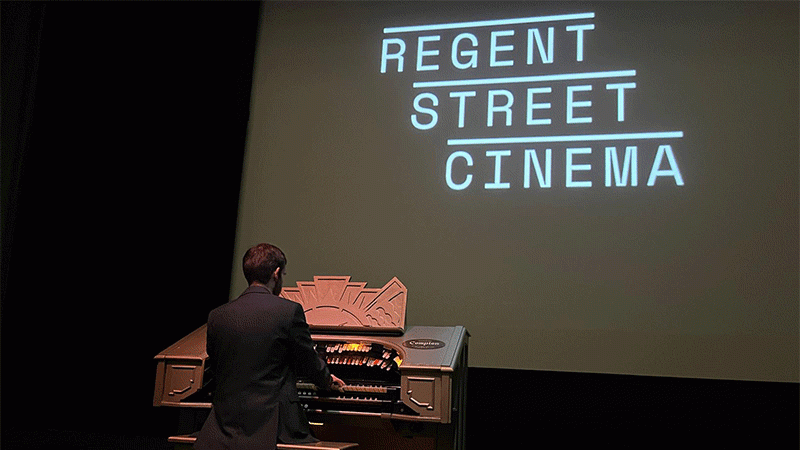
On 1 June, the students - Akanksha Marepalli, Beck Phillips, Eliska Janska and Antonia Johlen - attended the cinema’s weekly Classic Matinee event - a programme held every Monday designed for audiences aged 55+. Alongside the screening, attendees were treated to a rare live organ performance, which takes place on the first Monday of each month and is a tradition that has become a hallmark of the cinema’s heritage programming.
The live organ performance is with the University’s original 1936 Compton Organ - one of the last few working organs of its kind in the country. Each month, a different organist performs and this month’s performer was Declan Paul, the American Theater Organs Society’s Young Organist of the Year.
The visit offered students the opportunity to speak directly with community members about their experiences, their connection to the cinema and the value of intergenerational cultural spaces in central London. Attendees described the Monday Classic Matinee as a cherished and consistent part of their routine, highlighting the role of the RSC in fostering community through film.
The visit formed part of the students’ work placement with the University’s Students as Co‑Creators (SCC) programme, through a project titled Bridging the Divide: Uniting Multimedia Journalism through Community Reporting. The initiative is designed to bring together the two pathways of the Multimedia Journalism MA course – Broadcast and Print & Online - by focusing on community reporting and aiming to develop a shared assessment where students produce multimedia journalism around the same local story.
Working with the RSC’s Monday Classic Matinee group - the project’s first community partner - students produced articles, radio content and podcasts for the University’s newly launched community radio station, Westminster Waves, while also helping to review and refine future assessment design. Their contributions will inform curriculum changes planned for the next academic year.
The SCC programme provides opportunities and resources for students and colleagues to work together on research projects and enhance learning and teaching at Westminster.
One of the attendees, Sue Cochran, said: “For many of us, this started as a way to combat loneliness and isolation and it has grown into a real community. We have collected a whole little gang over the years. Some people here are filmmakers or reviewers, others just love watching films — but we all share the experience together.”
She added: “There’s something magical about this cinema. The seats are comfortable, the sound system is the best I have ever heard and when the cinemascope screen comes down, I still get a little chill. It makes me feel like a kid again.”
About the organ performance, David Warner, Trustee of the Cinema Organ Society, said: “There’s a very loyal audience here. We sponsor the organ concerts on the first Monday of each month and people really do appreciate this kind of art. Most attendees are 40 or 50+, and we always get a few younger people too. It’s lovely to see new faces discovering it.”
The visit directly contributes to the United Nations Sustainable Development Goals (SDG) 4: Quality Education, 10: Reduced Inequalities and 11: Sustainable Cities and Communities. Since 2019, the University of Westminster has used the SDGs holistically to frame strategic decisions to help students and colleagues fulfil their potential and contribute to a more sustainable, equitable and healthier society.
Find out more about Media and Communication courses at the University of Westminster.
Read more about the students’ community reporting on the Westminster Waves website.


Related articles


