Students at the University of Westminster’s Cavendish Living Lab collaborated with The Fitzrovia Partnership to help promote sustainable business practices in the local area with the Pack It Green Fitzrovia project. The initiative culminated with the premiere of a documentary showcasing the research process, which featured discussions with local businessowners about the transition to a greener economy.
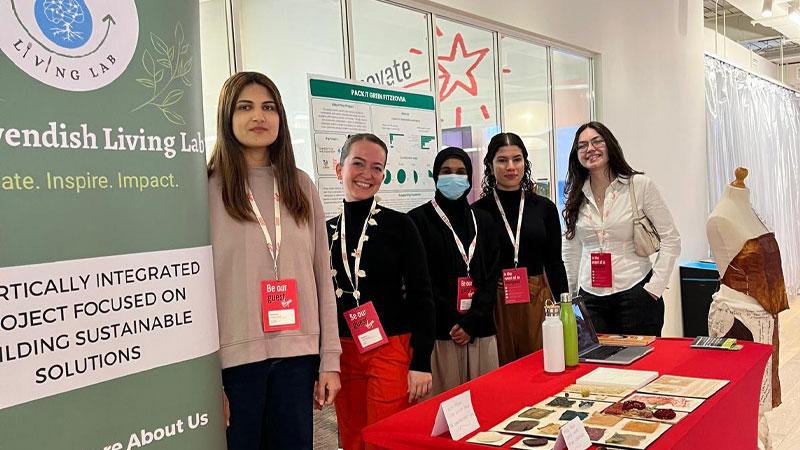
The Pack It Green Fitzrovia project aimed to explore the significance of sustainable packaging in the food and drink sector, with a particular focus on identifying barriers to implementation and investigating practical, eco-friendly alternatives through direct engagement with business owners in Fitzrovia.
To do so, an interdisciplinary team of students at the Cavendish Living Lab collaborated with The Fitzrovia Partnership, a Business Improvement District (BID) representing over 420 businesses across Fitzrovia, to arrange interviews and questionnaires with local businessowners.
Their research found that while 44.4% of businesses cite cost as the biggest barrier to switching to sustainable packaging, 43% of businesses that fully switched to sustainable packaging reported no financial impact at all. This finding challenges assumptions about sustainable packaging being unaffordable and will help encourage other businesses to make the switch.
The team also found that some respondents had never heard the term sustainability before, highlighting the importance of awareness-building initiatives such as the Fitzrovia Sustainability Summit, where the team engaged with stakeholders, displayed sustainable packaging samples and presented their research poster alongside representatives from the University of Westminster.

Students presented their findings at the University of Westminster’s Third Annual Sustainable Development Goals (SDGs) Workshop, sharing data and insights with a wider audience of academics, students and sustainability practitioners.
The team were also selected to present at the London Student Sustainability Conference 2026 (LSSC26), where they shared the project's findings on sustainable packaging practices with a wider academic audience and built cross-institutional dialogue on urban sustainability and circular economy practices.
The project concluded with the premiere of a documentary film made up of recordings from throughout the research process, including behind-the-scenes footage of interviews with business owners in their establishments.

Going forward, the Cavendish Living Lab continues to collaborate with local food and beverage vendors to collect food waste and repurpose it into sustainable materials and fabrics. The lab is seeking donations of items such as sea food waste such as shells, eggshells, coffee waste and various peelings. These materials are being used to develop fast fashion prototypes and other environmentally friendly initiatives, supporting innovation in circular and sustainable design.
Project Leader and final-year Biomedical Science BSc Honours student Julia Pinheiro Bassani said: "Pack It Green began as a research question and grew into something much bigger, a genuine partnership between students, local businesses and the Fitzrovia community. What struck me most was discovering that while cost is seen as the greatest barrier to sustainable packaging, many businesses that made the switch found it had no financial impact at all. That gap between perception and reality is exactly where projects like ours can make a difference. Showcasing our findings and documentary at LSSC26 was a proud moment for the whole team, and a reminder that student-led research can spark real conversations that lead to real change."
One of the programme’s academic leads Dr Pooja Basnett said: “As academic leads, it has been incredibly rewarding to see students engage directly with local businesses to investigate the real-world challenges surrounding sustainable packaging. Partnerships like this allow universities to play a meaningful role in supporting local communities as they transition towards more sustainable and circular economies.”
This project directly contributes to several of the United Nations Sustainable Development Goals (SDGs) including 11: Sustainable Cities and Communities, 12: Responsible Consumption and Production and 17: Partnerships for the Goals. Since 2019, the University of Westminster has used the SDGs holistically to frame strategic decisions to help students and colleagues fulfil their potential and contribute to a more sustainable, equitable and healthier society.
Find out more about the Cavendish Living Lab at the University of Westminster.
To find out how to support the Cavendish Living Lab, please email the Development team.

SDG Workshop presentation

Fitzrovia business owner

Dr Linda Percy and Dr Pooja Basnett

Pack It Green team

Food waste recycling
Related articles


