A group of Interior Architecture MA students from the University of Westminster have partnered with Mosaic Factory, an industry‑leading bespoke tile manufacturer, on a live semester-long project supporting the redevelopment of the Tower Tavern. The real-life project reflects the ethos of Zone29, the University’s new home for careers and enterprise.
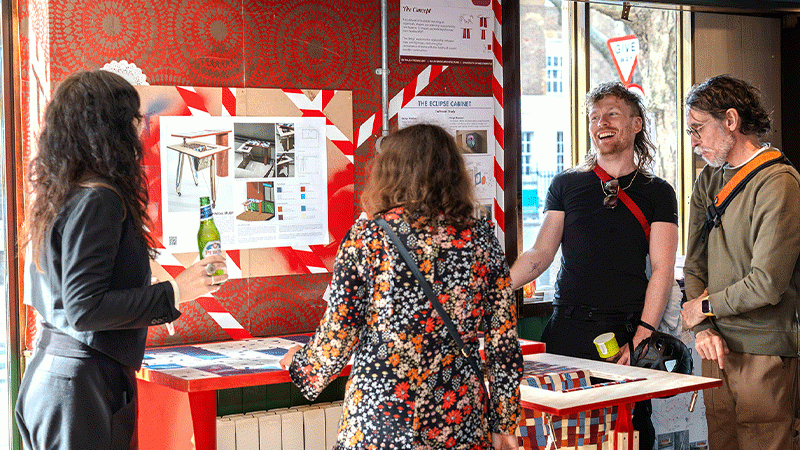
The collaboration is supported by Lecturer and Second-Year Lead for Interior Architecture Conor Clarke and Senior Employer Engagement Officer at the College of Creative Arts and Technologies Maria Benedetto Mozo. Students designed bespoke pieces that were produced and incorporated into the redevelopment. They used Spradling® fabrics in their interventions, which the University has a partnership with, combining the ceramics, synthetic coated fabrics and other materials. Students crafted a variety of bespoke interior elements, including lighting designs, acoustic designs, furniture and storage pieces.
The project forms a core component of the Technical Study module led by Conor Clarke and gives students hands‑on experience of taking a design from concept through to fabrication in partnership with an external client.
Throughout the module, students developed technical drawings, prototypes and material tests, while gaining insight into the manufacturing process and the practical considerations involved in delivering work for a real site. Mosaic Factory manufactured selected student designs, offering participants a rare opportunity to see their work realised at a professional standard.
The exhibition was on at the Tower Tavern on Clipstone Street, Fitzrovia, until 19 June.
About the project, Conor Clarke said: “It was a pleasure to lead the collaboration with Spradling Ltd. and Mosaic Factory this year. The generosity of our two sponsors and CPD with Zentia Acoustics and The Lighting Design Studio, ensured that our Interior Architecture MA students could benefit from a platinum‑level authentic learning experience. Working on the adaptive reuse of a recently reopened former pub, students were able to work directly with manufacturers’ materials, processes and technical teams, turning specialist knowledge, CPD sessions and tutorials into robust, buildable proposals that honour the existing fabric while testing contemporary approaches to interior architecture. This live project has deepened our partnerships with industry, underlined our commitment to technically ambitious, research‑driven design education and showcased the confidence and professionalism our students will take forward into practice.”
Jacob Nguyen, one of the students who participated, added: “Technical Study was one of the most valuable experiences of my studies, connecting academic learning with professional practice. Working with industry partners such as Mosaic Factory and Spradling, alongside site visits, presentations and workshops, provided first-hand insight into how design is developed and delivered in the real world. Seeing our full-scale prototype progress from concept to fabrication and exhibition demonstrated the importance of collaboration, material experimentation and making as part of the design process.”
Louisa Alice, Creative Director of Mosaic Factory, added: “Working with students from the University of Westminster was a really rewarding experience. We were struck by how much enthusiasm there was for materiality - understanding how a product is actually made, where it comes from and how to implement it in a space. That hands-on knowledge is something we feel is increasingly rare among emerging architects and designers and it's exactly what we wanted to bring to the table. Mosaic Factory works with materials that have centuries of craft behind them and being able to share that directly with the next generation of designers felt genuinely meaningful.”
Westminster’s collaboration with Mosaic Factory directly contributes to the United Nations Sustainable Development Goals (SDG) 4: Quality Education, 8: Decent Work and Economic Growth and 17: Partnerships for the Goals. Since 2019, the University of Westminster has used the SDGs holistically to frame strategic decisions to help students and colleagues fulfil their potential and contribute to a more sustainable, equitable and healthier society.
Learn more about Architecture, Interiors and Planning courses at the University of Westminster.


Related articles


