Westminster alumna and former doctoral researcher at the University’s Communication and Media Research Institute (CAMRI) Dr Manisha Ganguly was a finalist for the prestigious 2026 Orwell Prize for Journalism. The honour reflects Manisha’s outstanding reporting in the field of investigative journalism, war reporting and political writing.
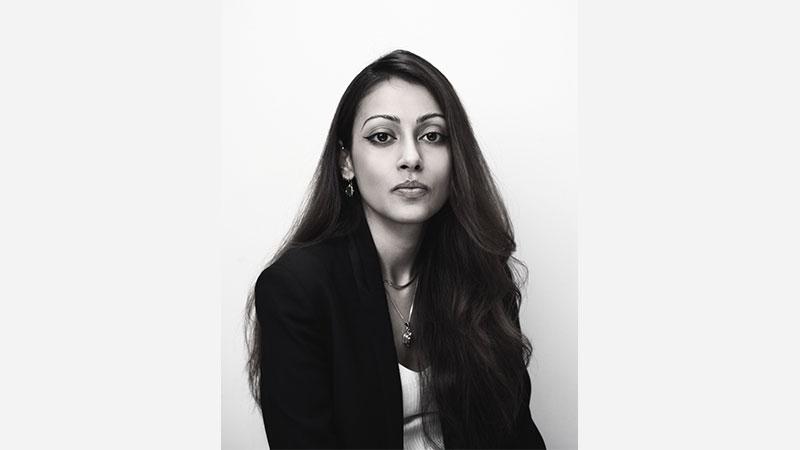
Dr Ganguly is an investigative journalist and filmmaker covering the intersection of conflict, technology and human rights. She is currently an Investigations Correspondent and Visual Forensics Lead at The Guardian, where she led four investigations into war crimes in Gaza and Ukraine, which were shortlisted for the 2026 Orwell Prize.
As a pioneer in using open-source investigations to expose war crimes, Dr Ganguly was awarded the first PhD in open-source investigations from the University of Westminster. Her thesis, titled The Future of Investigative Journalism in the Age of Automation, Open-Source Intelligence (OSINT) and Artificial Intelligence (AI), has been cited in a UNESCO manual for investigative journalism called Story Based Inquiry, that she also contributed to. The manual has been critically acclaimed as the “Bible” for reporting.
Since graduating from Westminster, Dr Ganguly has received several awards and nominations for her work investigating war crimes, including the European Press Prize and two Amnesty Media Awards.
The Orwell Prize is the UK’s most prestigious prize for political writing and awards prizes each year to the books and journalism which best meet George Orwell’s ambition to “make political writing into an art".
About the nomination Dr Ganguly said: "I have, while working on the four shortlisted investigations from the past year, thought a lot about how Orwell would have chronicled these times. My favourite Orwell quote of all time, inscribed at the entrance of the BBC which I walked past while working there was: 'If liberty means anything at all, it means the right to tell people what they do not want to hear'. I tried in this work to focus on difficult truths which most people, governments and politicians would rather not hear - torture, illegal detention, unlawful killings, mass displacement of civilians, especially women and children, in Ukraine and Gaza. I thank the Orwell Prize judges for recognising my work, which has been the most challenging of my career, especially in a world that is increasingly volatile and polarised. I thank my editors for believing in my vision, and my alma mater, the University of Westminster, for giving me the education to not shy away from dangerous truths."
About her work Sayeeda Warsi, a judge for The Orwell Prize for Journalism 2026, said: “Ganguly writes in a highly readable investigative style. Her human centred storytelling is evidence driven rather than rhetorical and exemplifies the qualities the Orwell Prize seeks to honour: reporting with clear political purpose, intellectual courage and rigorous critical thought. Through meticulous forensic analysis, eyewitness testimony and accessible prose, she documented how aid distribution was weaponized to cause harm. The work combines moral seriousness with evidential precision, embodying Orwell’s ideal of journalism that exposes injustice while making complex political realities understandable to a wide audience.”
Greg Williams, Chair of Judges 2026, added: “The 2026 Orwell Prize shortlist represents journalism at its most necessary and vital: brave, lucid and resistant to easy consolations. The judges were struck by work that enters dangerous and obscure environments to return with reporting of rare depth and discipline. These finalists do more than record events: they interrogate power, resist received narratives and give form to truths that others have tried to suppress through the painstaking collection of facts and original sources. Across the shortlist, the judges found the qualities at the heart of Orwell’s legacy: independence of mind, precision of language, moral courage and the transformation of political writing into art.”
Dr Manisha Ganguly’s work directly contributes to the United Nations Sustainable Development Goals (SDGs) 10: Reduced Inequalities and 16: Peace, Justice and Strong Institutions. Since 2019, the University of Westminster has used the SDGs holistically to frame strategic decisions to help students and colleagues fulfil their potential and contribute to a more sustainable, equitable and healthier society.
Learn more about Media and Communication courses at the University of Westminster.
Related articles


