University of Westminster’s Reader in Accounting and Finance Dr Tantawy Moussa and Professor of Finance Professor Abdelhafid Benamraoui have contributed written evidence to the House of Commons Treasury Committee’s latest report, Financial Inclusion Strategy.
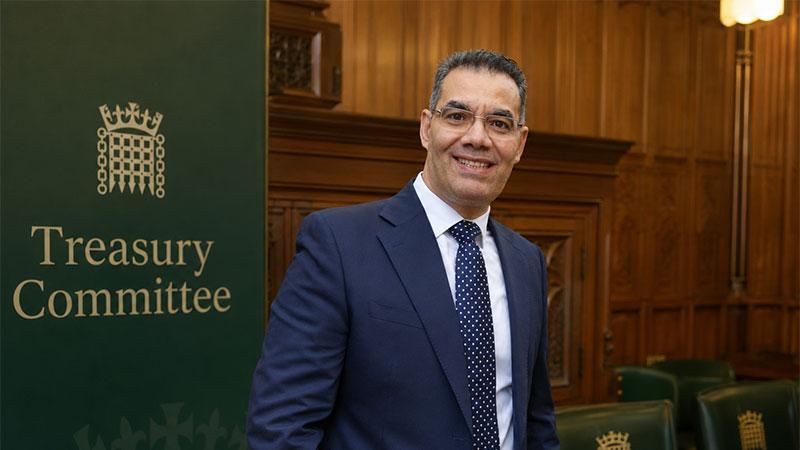
Working with Dr Amira Hawas from the University of Sussex and Professor Alaa Zalata from the University of Southampton, the evidence was published as part of the inquiry and cited in the Committee’s final report on the Government’s Strategy.
The report examines whether the Government’s Financial Inclusion Strategy provides an effective and deliverable plan for reducing financial exclusion across the UK. Published in July 2026, it describes the Strategy as a welcome first step but concludes that clearer targets, stronger evidence and more robust accountability arrangements are needed to demonstrate meaningful progress.
The researchers’ written evidence assessed whether the Strategy was likely to deliver measurable improvements rather than mainly reporting activities and initiatives. Drawing on national surveys, government statistics, policy publications, international reports and academic research, the evidence examined the main causes of financial exclusion and the strength of the Strategy’s delivery, governance, monitoring and whether organisations were being held accountable for its progress.
The evidence identified affordability and income insecurity, administrative barriers, limited financial resilience, risk-based pricing, digital exclusion and reduced access to physical banking services as interconnected causes of financial exclusion. While recognising that the Strategy addressed banking access, savings, affordable credit, insurance, debt advice and financial education, the researchers highlighted weaknesses in translating these initiatives into measurable outcomes.
They recommended setting clear, measurable goals with deadlines, supported by baselines, interim milestones and named organisations responsible for delivery. The evidence also called for annual public reports that clearly show what resources have been invested, what actions have been taken and what results have been achieved. It also recommended collecting more detailed information to show where people face difficulties when opening bank accounts, accessing affordable credit, getting debt advice or taking out insurance.
These issues were reflected prominently in the Committee’s final report. The Committee recommended that HM Treasury publish a clear plan setting out what the Strategy aims to achieve, who is responsible for delivering it and how progress will be measured. It also highlighted that the plan should include starting points, clear targets, regular progress updates and annual reports to Parliament, as well as better data to understand how many people are affected by financial exclusion, why it happens and who is most impacted.
This work highlights the University’s Being Westminster strategic vision of making the world a more sustainable, healthier and better place.
About the report, Dr Moussa said: “I am very pleased to see that our evidence was carefully considered in the Treasury Committee’s report. The Committee’s recommendations directly address the issues we raised concerning measurable outcomes, clear responsibilities, regular monitoring and accountability. We hope this evidence-based framework will strengthen parliamentary scrutiny and contribute to a more robust and deliverable Financial Inclusion Strategy.”
Dr Moussa’s research directly supports the United Nations Sustainable Development Goals (SDGs) 1: No Poverty, 8: Decent Work and Economic Growth and 10: Reduced Inequalities. Since 2019, the University of Westminster has used the SDGs holistically to frame strategic decisions, helping students and colleagues fulfil their potential and contribute to a more sustainable, equitable and healthier society.
Read the House of Commons Treasury Committee’s full Financial Inclusion Strategy report.
Learn more about Accounting and Finance courses at the University of Westminster.
Related articles


