The University of Westminster has marked a key milestone in its Artificial Intelligence for Quantity Surveying (AI4QS) initiative with the launch of a new report co-led by researcher Dr Abdullahi Saka. The report explores the growing role of AI within quantity surveying and the built environment and highlights the skills and competencies needed to support responsible adoption across the profession.
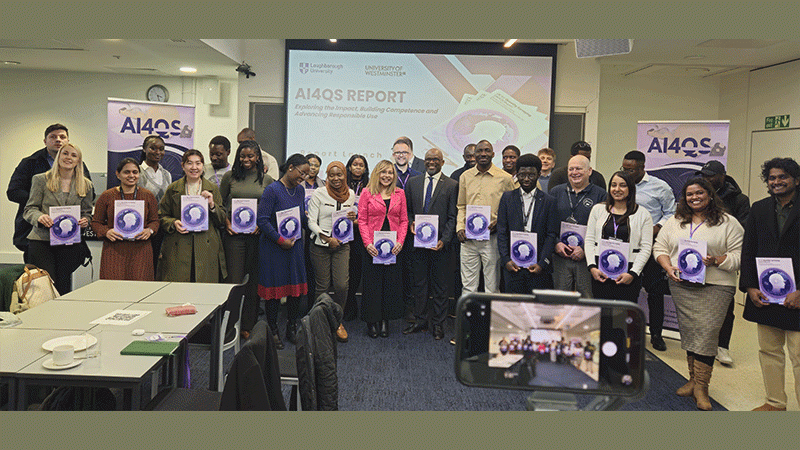
To mark its release the University hosted a launch event on 21 January that brought together colleagues and sector partners to present the latest findings, which forms part of the first phase of the wider AI4QS project. The event provided an opportunity to share progress on the project’s ongoing work and to engage attendees in discussions about the future of AI‑enabled practice.
Dr Saka introduced the development of the first phase of the Built Environment Responsible AI Competence Framework (BRIEF), which offers a practical way of translating principles into capability for experts, educators and organisations. The next phase will see engagement in further consultation, research and collaboration to refine the framework, translating research into practice through training, competence development and a Responsible AI Digital Hub. The new hub will be an open-access platform which is set to bring together research outputs, guidance, tools and learning resources to support organisations, professionals and educators in building AI competence and responsible adoption across the built environment sector.
The AI4QS initiative reflects Westminster’s broader commitment to research and innovation in the built environment, digital transformation and professional practice. It follows the launch of the University’s new research group the AI Network that was established in 2025.
Dr Saka said: “As AI becomes increasingly embedded in the built environment, this initiative is about ensuring that innovation is matched with competence, ethical judgment and professional responsibility. Through AI4QS and the newly developed BRIEF framework presented in the report, we are laying the foundations to support practitioners, educators and organisations in adopting AI in ways that strengthen, rather than replace, professional values.”
Dr Olayinka Omoboye, Senior Lecturer in Applied Management, added: “AI4QS acknowledges the University of Westminster for providing institutional support and partial funding, specifically from the Higher Education Innovation Funding from Westminster Business School, for the first phase of this project and Loughborough University for its academic collaboration through members of the project team.”
The initiative directly contributes to the United Nations Sustainable Development Goals (SDGs) 4: Quality Education, 9: Industry, Innovation and Infrastructure and 11: Sustainable Cities and Communities. Since 2019, the University of Westminster has used the SDGs holistically to frame strategic decisions to help students and colleagues fulfil their potential and contribute to a more sustainable, equitable and healthier society.
Learn more about Construction, Surveying and Real Estate courses at the University of Westminster.


Related articles


