Following its recent launch, the University of Westminster’s creative technology hub SPARKX Lab hosted a series of hands-on workshops and industry-led sessions throughout March, bringing students into direct contact with some of the most innovative tools and voices in contemporary audio.
SPARKX Lab is a new hands-on creative technology hub dedicated to studio production, applied research and knowledge exchange at Westminster. Led by Grammy Award-winning Audio Innovation Technologist Natalia Milanesi, the lab serves as a platform where educators, students and industry professionals can come together to explore emerging audio and creative technologies in meaningful and practical ways.
The series opened with a session led by Milanesi, which was centred on creative performance-driven approaches to music technology. Using the Teenage Engineering OP-XY, a compact, design-led instrument that challenges conventional workflows, students sampled everyday objects, such as chairs, plastic bottles and metal trays, and they used the device’s features to create rhythmic compositions. The session encouraged experimentation, with one student building a bassline entirely within the instrument. Another student performed guitar through the Eventide H90, a professional effects processing unit renowned for its distinctive and characterful tone, adding a rich textural layer to the performance. The workshop resulted in a fully collaborative live performance combining sampled textures, synthesis and vocals, demonstrating how spontaneous, hardware-driven workflows can lead to complete pieces of music in a single session.
A guest workshop with Hannes Andersson, CEO and Co-founder of Oeksound, shifted focus to mixing and plugin development. Andersson explored modern mixing tools and the realities of building a career in the audio industry. He explained his path from practicing audio engineering to plugin development, offering students a perspective on alternative routes through the profession.
Building on the conversations around plugin design and workflow, Milanesi then led a session exploring mixing techniques, drawing on tools provided by a range of SPARKX Lab's industry partners. Students were exposed to a wide range of industry software from multiple developers, including Softube, Eventide, Devious Machines, Melda Production, United Plugins, WA Production, Baby Audio and Sonible. Through focusing on more than one tool, the session emphasised adaptability, giving students the skills to assess an unfamiliar tool quickly, understand its purpose and integrate it into a working mix context.
By working across multiple manufacturers and design philosophies, students gained a wider perspective on how the industry approaches problem-solving in the mix and developed a more critical framework for evaluating the tools they will encounter in professional settings.
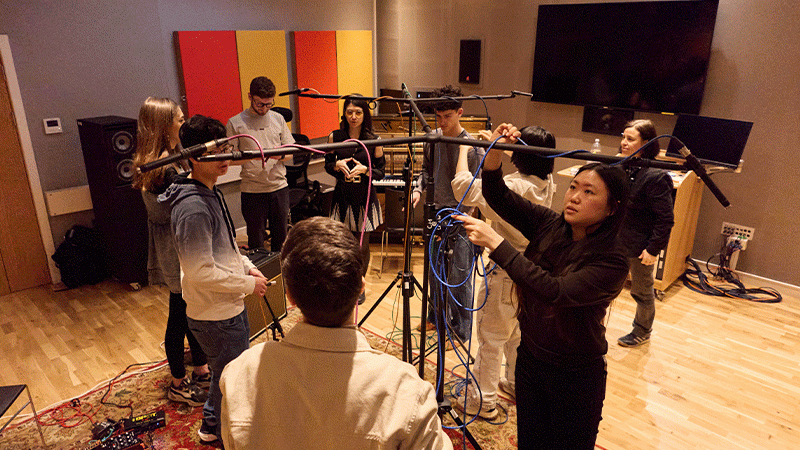
The final workshop brought together theory and hands-on practice in immersive audio recording. Co-delivered by Milanesi and Fred Bailey, DPA Microphones specialist, students were introduced to multichannel formats alongside object-based audio concepts. The session traced the history of spatial recording from traditional techniques to modern immersive recording methods.
The initiative reflects the University of Westminster’s commitment to supporting students and graduates through employability, entrepreneurship and industry engagement opportunities. Programmes such as SPARKX Lab demonstrate the growing emphasis on the University's practical collaboration with industry as it prepares to open Zone29, Westminster’s new home for careers and enterprise.
Milanesi said: “March brought together everything SPARKX Lab is designed to do: hands-on experimentation, direct access to industry practitioners and exposure to the tools and conversations that shape professional practice. Having Hannes Andersson speak about his own career path and the development of the technology behind Oeksound and Fred Bailey bring DPA's expertise directly into the studio gave students access to perspectives that go well beyond what a formal curriculum can provide. The practical experience of performing with the OP-XY and the H90 was also invaluable in getting students engaged with the latest technologies.”
Lizbeth Sanchez, Music Business Management MA student, said: “The Mixing Tools Workshop with Natalia Milanesi was really insightful, along with the plugins she introduced us to. I will definitely use all of these skills in my next mixes and would absolutely love to have more workshops like this.”
Chi Hang Jason Mak, Audio Production MA student, added: “It was particularly useful to gain insights about real-world applications and difficulties of recording immersive audio from an experienced industry practitioner. The opportunity to apply theories using high-quality microphones from DPA to record a band specifically designated for 5.1 playback was very precious. This workshop not only deepened my knowledge of microphones but also further sparked my interest in increasingly popular immersive recording configurations. I would highly recommend that future students take advantage of such an opportunity and be more open-minded about the possibilities of recording beyond standard techniques.”
SPARKX Lab directly contributes to the United Nations Sustainable Development Goals (SDGs) 4: Quality Education and 8: Decent Work and Economic Growth. Since 2019, the University of Westminster has used the SDGs holistically to frame strategic decisions to help students and colleagues fulfil their potential and contribute to a more sustainable, equitable and healthier society.
Find out more about Music courses at the University of Westminster.


Related articles


