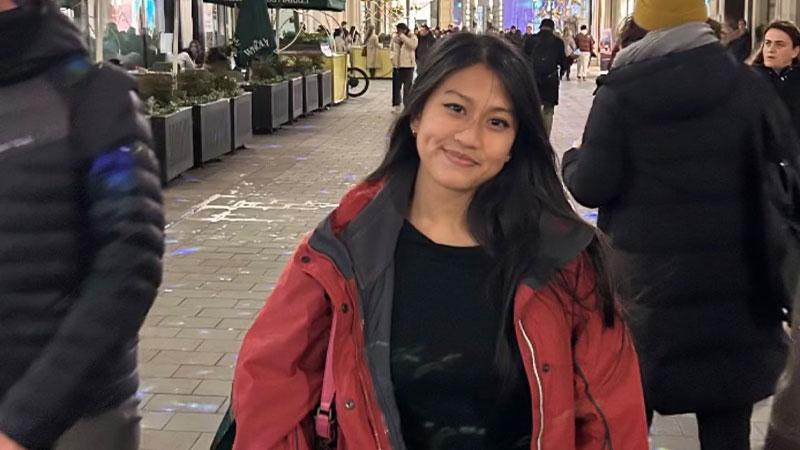
Milly Mah, a first-year Economics and Management BA Honours student at the University of Westminster, has taken part in the Co-creating Rwanda’s Future project as part of the University’s pioneering Vertically Integrated Project (VIP) module where she worked with fellow students and the wider community to tell the stories of the Rwandan fashion industry.
What made you choose this module?
My lecturer Darrell Kofkin for my Marketing in Practice module in semester one really influenced my decision because I realised how fun and engaging it is to take on practical work. For this module, coursework was very real, as we weren’t just writing essays, we were creating marketing plans for actual clients and presenting directly to them. So, when he mentioned the VIP module, I was so excited to give it a try as it sounded like a chance to keep developing those real-world skills.
Looking around at other universities I also realised that modules like this are actually quite rare - there are only a few programmes like this in the UK - so I felt really lucky to be at Westminster. I loved the idea of working in teams, adapting to changes and producing something meaningful. It was really challenging, but it made me feel more confident about going into the world of work.
How did it compare to traditional coursework?
It felt completely different. With essays, you submit them and move on. But here, you’re creating something tangible.
It was amazing to work in a team like we were in a proper job, discussing ideas and then going out to bring the podcast together. Now listening to the full finished product, it is such a rewarding feeling because you can really see something you contributed to exist in the real world.
Can you tell me more about your project?
Our project was called Co-creating Rwanda’s Future, and it was linked to the University’s Rwanda Fashion Entrepreneurs Programme and its upcoming Rwanda Fashion Exhibition taking place in June. The idea was to create a podcast exploring the event and encourage people to engage with it.
My role was focused on conducting interviews, so I went out and spoke to students across different campuses, asking about their perceptions of Rwanda and their interest in fashion.
It was so interesting hearing what everyone had to say as when I asked people what they knew, many had very limited or negative associations, often linked to politics or historical events. Through the podcast, we introduced new perspectives, including Rwanda’s growing fashion scene and cultural developments. By the end of the conversations, many interviewees had shifted their views, which was really rewarding to see.
What challenges did you face?
At the start making a podcast was completely new to us, but with the support from Eleanor Roseblade, we really got into the swing of things. She introduced us to useful equipment and software like Adobe Audition which was crucial and really improved our podcasting knowledge.
It was also quite an intense turnaround, as we didn’t have long to bring everything together. We had to learn how to make a podcast, find interviewees and interview them, and then edit the audio into its final version, so it did feel stressful at times but I am so proud about what we brought together.
What did you enjoy most about the experience?
The creativity. Instead of writing a report, we used sound, music and storytelling to communicate ideas which was so eye-opening and fun. It was also incredibly satisfying to listen back to the final podcast. Seeing it uploaded online, with artwork and our voices on it, made it feel like a real product.
How did it feel presenting your work?
We didn’t expect such a large audience, which was a bit overwhelming at first. But people were genuinely interested and asked thoughtful questions and even scanned our QR code to listen to the podcast. That’s when it really hit me that we were so lucky to get to be part of a project like this!
What skills did you gain?
Teamwork was a big one! As it is an interdisciplinary module, I had the chance to work with people from completely different courses like Tourism, Human Resources and even Quantity Surveying. We all brought different perspectives which was amazing and gave me such a good insight into how to work in a group.
It also helped build my confidence, especially in communication and adaptability. The module constantly evolved, which made it feel like a real working environment.
What advice would you give to students considering giving a VIP a try?
I would advise anyone to get involved with a VIP as they will push you out of your comfort zone and will give you something that you can share with future employers. In your first year it is so easy to focus on just passing your modules but I think it is amazing to do something scary straight away because the lessons you learn are invaluable.
What did you take away from the experience?
It made me realise I’m capable of more than I thought. I went from knowing nothing about podcasting to producing something I’m so proud of!
VIPs are central to the University of Westminster’s new home for careers and enterprise, Zone29, which provides students and graduates with access to work-related programmes, opportunities and experiences.
Listen to the full podcast.
Find out more about Vertically Integrated Projects at the University of Westminster.
Related articles


