When University of Westminster Software Engineering BEng Honours alumnus Anshul Yadav began developing CarbonQuest, he was not just building an app, he was building a way to make climate action personal, measurable and engaging. Supported by the University’s Ignite Fund, the project has already won multiple competitions and is now being developed into a research-grade application with ambitions to reach thousands of users. Since its creation in 2016, the Ignite Fund has supported more than 1,000 Westminster students, offering grants between £150 and £1,500, and is a key part of Zone29, the University’s new home for careers and enterprise. Here Anshul speaks about the inspiration behind CarbonQuest, the challenges of building it and how the Ignite Fund helped turn his idea into reality.
What is CarbonQuest?
CarbonQuest is an app and website designed to help people track their weekly carbon emissions, from transport and food consumption to everyday spending. Most emissions data is measured at a corporate or industrial level but a huge amount of emissions are driven by individuals. The problem is, people don’t really have insight into what their personal impact is, or how to improve it.
CarbonQuest calculates a user’s emissions and then provides actionable insights to help them reduce their footprint using gaming elements like leaderboards and challenges. With the app you can compete with others, track your progress and actually see the difference you're making!
Where did the idea come from?
My parents have always been very into doing good for the environment. My dad even bought a farmhouse and got me helping out there, but I realised not everyone has the time or resources to do things like that. If you work nine to five, you might want to help the planet, but you can’t plant a tree every day. So, I thought it would be a great to have an app that helps people reduce their emissions in realistic ways while also making it fun and engaging.
How did the Ignite Fund help bring CarbonQuest to life?
The Ignite Fund really helped in the development of CarbonQuest. The funding allowed me to run the platform and gather real feedback. It also helped me find competitions and events where I could showcase my project and get insights into founders and companies which allowed me to keep on expanding. Thanks to this I came first in the Netcompany Computer Science and Engineering Final Year Project (FYP) Showcase and was named the winner of the Sustainable Development Goal (SDG) Prize!

How did you build the app?
CarbonQuest started as my final-year dissertation project and the first challenge was building an accurate emissions calculator using reliable research data. I wanted it to be as accurate as possible and focus on things people can actually change. There’s no point telling someone about emissions they have no control over. So, I had to find out all of the nitty gritty stuff you do in a day, which actually has a lot of impact.
Once I had worked this out the next part was to make it engaging, so I decided to make a task recommendation system powered by an algorithm called Q-learning, which recommends a task for you to do, like change your light bulb to a LED, or take two minutes less in your shower, or maybe something substantially harder, like planting a tree this weekend.
I then set it so that each task is rated by difficulty and impact, and users provide emoji-based feedback. The algorithm learns from these responses to recommend the easiest, highest-impact actions for each person. So, it makes it very fun and engaging and just like with social media it keeps your dopamine rushing so you want to go back for more.
What challenges have you faced?
First of all, there was the learning curve as I just started my final year of university and there were a lot of concepts that I hadn't really come across before. That's where my professors really came in handy and they gave me so much great advice, guiding me really well through the process. Then there were some issues regarding things like hosting or using online tools, so that's when I applied for the Ignite Fund and that support turned out to be invaluable.
What are your next steps for CarbonQuest?
Right now I've taken it out of production as I want to make it into a research grade application, so I'm running a pilot test with around 20-30 people for a month or two and will be attending the London Student Sustainability Conference thanks to help from Westminster. With this extra information I am hoping to publish a paper and gather more and more data so that I can make the app the best it can be. Once I’m at this point, I will try to roll it out again with the hope of getting around 10,000-20,000 users in the first or second year.
What advice would you give to students thinking about applying for the Ignite Fund?
I would firstly say if you have an idea or you have something you want to do or learn, you should go for the Ignite Fund. There’s always that lingering feeling that your idea isn’t good enough. I felt like no one would use it or that it didn’t provide real value. But unless you try, you’ll never know.
Then when it comes to applying for the funding, make a plan. Think about what you want to learn, where you want to showcase it and how you’ll use the opportunity to its full potential. It’s incredibly useful.
Looking back, how was your time at Westminster?
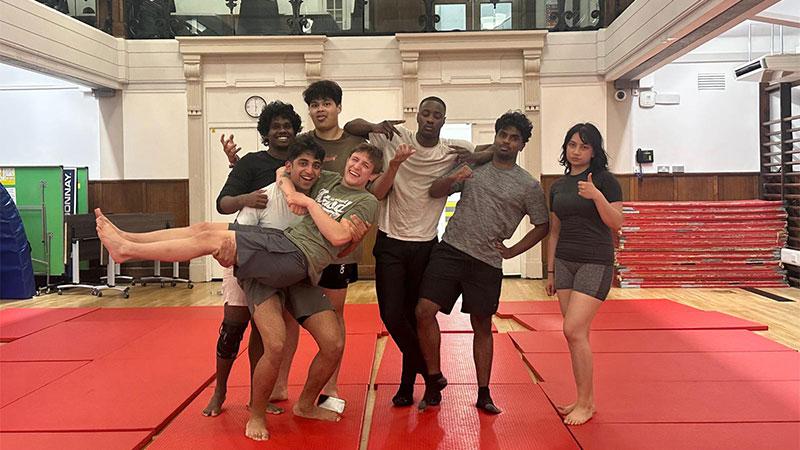
My experience at Westminster was great honestly. I made so many friends, participated in a lot of events and was in a lot of societies and clubs like football, basketball, climbing, jujitsu and gaming which was so fun. There’s so much exposure and so many ways to bring your ideas or passions to life. If something doesn’t exist, you can create it. It gives you the freedom to go all out, but with guidance and support when you need it.
Find out more about and donate to the Ignite Fund.
Apply for the Ignite Fund via the online form before the deadline on 8 March 2026.


Related articles


