The University of Westminster’s School of Architecture + Cities (SAC) has showcased innovative student projects exploring the future of cities and communities at its MORE 2026 degree show. The exhibition brought together final-year work from postgraduate students across the School’s Architecture, Urban Design, International Sustainable Planning, Interior Architecture, Sustainable Transport and Sustainable Heritage courses, alongside PhD research and professional practice projects from students completing the Architecture Postgraduate Diploma Professional Practice (RIBA Part III) qualification.
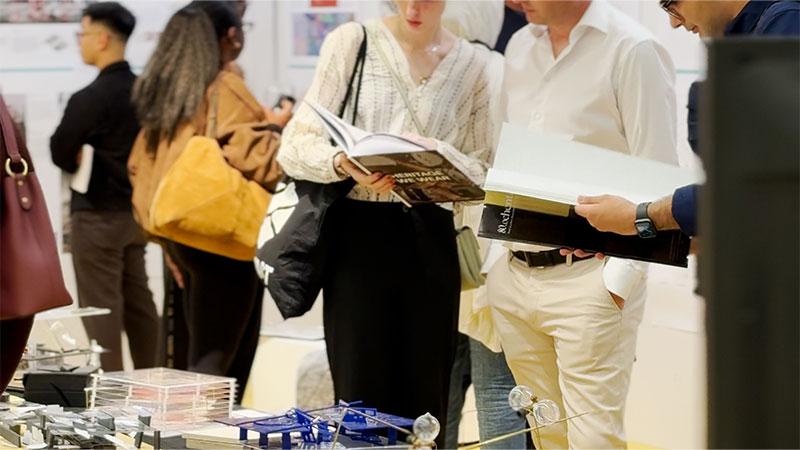
MORE 2026 explored creative ways to address this year’s theme of the social, cultural and environmental challenges facing cities and communities. Bringing together work from different disciplines highlighted the range of approaches taken by students, many of whom are international, and their shared commitment to creating more sustainable and inclusive places.
The exhibition welcomed members of the public, industry professionals and the friends and families of graduating students. It was officially opened by prominent architect Sunand Prasad OBE, former president of the Royal Institute of British Architects (RIBA) and a founder of the Commission for Architecture and the Built Environment (CABE).
Among the projects on display was Synthetic Memory by Laura Nica, whose doctoral research was developed in collaboration with the Zaha Hadid Foundation and funded by the Techne Arts and Humanities Research Council (AHRC) Doctoral Training Partnership.
The project examines how digital archives can change the way architectural history is preserved, accessed and understood. Rather than treating archived material as a fixed record of the past, the research explores how digital technology can offer new ways to interpret architectural designs and documents, revealing different perspectives and meanings.

Laura Nica
Another featured project was Re-Calibrating Identity by Architecture MA student Medhi Ur Rehman, which won the Weston Williamson + Partners Inclusive City Award. The project explores the difference between how cities are planned and represented and how people experience them in everyday life. Focusing on Lahore in Pakistan, it combined digital technology with architectural and urban design methods to create drawings and three-dimensional tools that capture the city beyond its formal structures. The work highlights how everyday experiences can reveal alternative ways of understanding a city’s identity.
Dr Nasser Golzari, Reader in Architecture at the University of Westminster, said: “The exhibition celebrated the diversity of approaches within the School, the courses and the students, while highlighting shared commitments to addressing the social, cultural, spatial and ecological challenges facing our cities and communities, as reflected in students’ projects and the academic colleague’s interests.”
The exhibition supports the United Nations Sustainable Development Goals (SDGs) 4: Quality Education, 11: Sustainable Cities and Communities and 13: Climate Action. Since 2019, the University of Westminster has used the SDGs to guide its strategic decisions and help students and colleagues contribute to a more sustainable, equitable and healthier society.
Find out more about Architecture, Interiors and Planning courses at the University of Westminster.

Dr Nasser Golzari speaking at the exhibition

Medhi Ur Rehman working on his project


Related articles


