Westminster Professor Nitasha Kaul’s foundational work on misogyny and democracy was cited by Hillary Rodham Clinton in the March/April 2026 issue of Foreign Affairs magazine. The article and Professor Kaul’s work has subsequently been referred to in several policy discussions about the authoritarian backlash to gender equality.
Foreign Affairs is an American magazine published by the Council on Foreign Relations, focusing on international relations and United States foreign policy. It is considered one of the US’ most influential foreign policy magazines.
Clinton’s article for its March/April issue titled Women’s Rights Are Democratic Rights: The Global Authoritarian Backlash to Gender Equality examines how the persecution of women is at the heart of the current authoritarian wave seen in many countries across the world. In the article, the former US Secretary of State and Democratic Party presidential nominee argues that defending women’s rights and combating authoritarianism is the same fight, and that autocrats such as Putin should fear strong women.
Discussing the damage of coercive policies regarding women’s reproductive rights, Clinton cites a 2021 article by Professor Kaul from the International Studies Review titled The Misogyny of Authoritarians in Contemporary Democracies. Professor Kaul observed that such strategies are part of “anxious and insecure nationalisms” that vilify feminists under the guise of “family values” to consolidate power and suppress challenges to authority.
Professor Kaul's article has an Altmetric Attention Score of 498, placing it in the 99th percentile and the top 5% of all research outputs ever tracked by Altmetric. It is ranked #1 of 791 outputs from the International Studies Review and was also cited by Harvard Kennedy School colleagues Professor Erica Chenoweth and Dr Zoe Marks in a 2022 issue of Foreign Affairs.
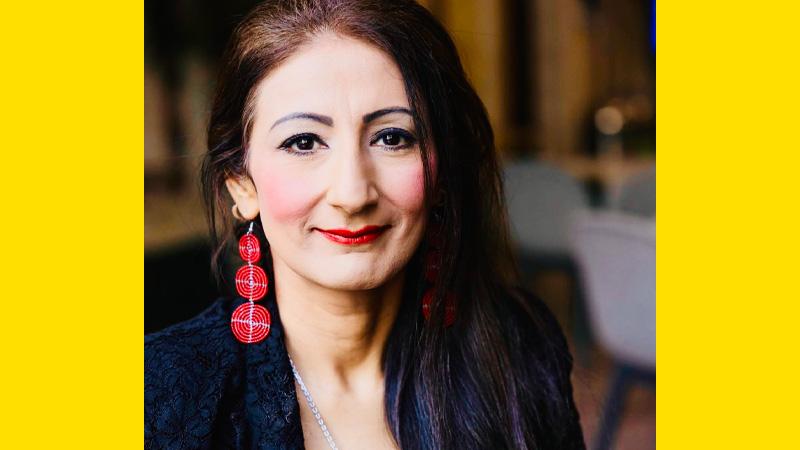
Professor Kaul is a Professor of Politics, International Relations and Critical Interdisciplinary Studies at Westminster and is Director of the University’s Centre for the Study of Democracy (CSD). She began writing on misogyny and democracy the night of Clinton’s loss to President Donald Trump in 2016 and has since published widely and contributed to several significant policy discussions on these themes.
Professor Kaul said: “I began writing on the relationship between misogyny and democratic erosion the night Hillary Clinton lost the 2016 presidential election to Donald Trump. That a woman so eminently qualified could be defeated by a campaign that weaponised gender told me something fundamental about the vulnerability of democracies to authoritarian masculinism. Nearly a decade later, the patterns I identified — the use of 'family values' rhetoric to suppress women's autonomy, the targeting of feminists as enemies of the nation, the alignment of strongman politics with patriarchal control — have only intensified across the world. To have this work recognised by Secretary Clinton herself, in the pages of Foreign Affairs, is a profound affirmation that scholarship can speak to power and about power at the same time.”
Professor Kaul’s work directly contributes to the United Nations Sustainable Development Goals (SDGs) 5: Gender Equality, 10: Reduced Inequalities and 16: Peace, Justice and Strong Institutions. Since 2019, the University of Westminster has used the SDGs holistically to frame strategic decisions to help students and colleagues fulfil their potential and contribute to a more sustainable, equitable and healthier society.
Find out more about studying Politics and International Relations at the University of Westminster.
Related articles


