Westminster’s School of Architecture + Cities has hosted the event OBSERVISTA in London. As part of the European research network Observatory of Innovative Strategies for Repurposing Terrain Vague (OBSERVISTA), the event brought together researchers, practitioners, policymakers and community organisations from over 25 countries to investigate how underused urban spaces can be reimagined as catalysts for social inclusion, ecological regeneration and sustainable urban transformation.
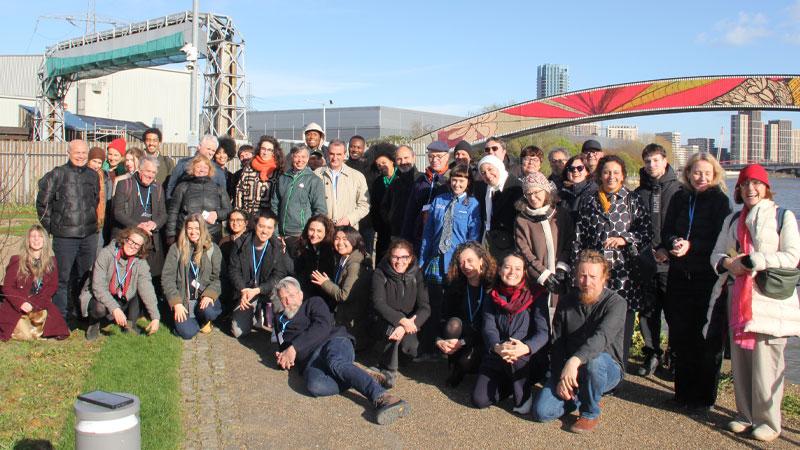
OBSERVISTA is a four-year European research network funded under the European Cooperation in Science and Technology (COST) framework, which aims to rethink how unused urban spaces, commonly known as terrain vague, are understood and reused. To carry out this mission they created the Europe-wide hub OBSERVISTA to bring key voices from academic and professional practice together to share innovative ideas and address key challenges such as climate resilience, biodiversity loss and social inequity. In an era of rapid urbanisation and environmental challenges, these overlooked spaces present unique opportunities to help tackle these pressing urban issues.
The three-day event hosted at the University’s Marylebone Campus brought together international experts, local stakeholders and Westminster colleagues and students to connect research, policy and community practice. It was held in collaboration with Cody Dock, a community-led regeneration project on the banks of the Lower Lea River in East London, where Westminster colleagues and students built The Floating Hide bird-watching pavilion in 2024 and the Growing Space in 2023.
The programme included a stakeholder event and guided case study visit to Cody Dock; a Geographic Information System (GIS) training workshop and Working Group sessions; a community organising workshop in collaboration with Citizens UK; a visit to John Little’s Barking Riverside site; and Management Committee and research exchange meetings. Each session aimed to encourage best practice exchange and further spinoff research collaborations and development projects, as well as to identify key challenges and knowledge gaps on terrain vague that arise in practice.

Presentation at Cody Dock
Speakers covered a range of topics, including a talk from Westminster Senior Lecturer Dr Eric Guibert, who discussed feral landscapes and new approaches to researching unused spaces, including developing terminology and techniques for identifying what is valuable in these areas, while cautioning that repurposing spaces can risk sacrificing biodiversity.
By hosting the event, the University of Westminster strengthens its role as a key partner within the OBSERVISTA network and reinforces its commitment to innovative urban research and civic engagement. This reflects the University’s Being Westminster strategic vision of students and colleagues who stand out as significant contributors to their communities, through their innovation, enterprise and problem-solving, and seek to make the world a more sustainable, healthier and better place.

Citizens UK presentation at Westminster
About the event Dr Krystallia Kamvasinou, OBSERVISTA Action Chair and Reader in Planning, Urban Design and Architecture at the University of Westminster, said: “Hosting OBSERVISTA in London offered a unique opportunity to connect international research expertise with local urban challenges and community knowledge. At Cody Dock, international researchers could see first-hand how a forgotten waterside site has been transformed through community energy, and that kind of exchange between research and practice is what this network exists for.”
Dr Luz Navarro, Lecturer and Knowledge Exchange Lead at the School of Architecture + Cities, added: “At the School of Architecture + Cities, we are working to make Knowledge Exchange more visible, strategic and deeply embedded in research-led teaching and truly collaborative practice. Events like this remind us of the civic role universities can play as places that connect people, ideas and sectors and that help generate new partnerships and more collective responses to complex urban issues.”
Simon Myers, CEO of Gasworks Dock Partnership, said: “It was a great pleasure to play host and contribute to the London OBSERVISTA COST Action event, and we look forward to seeing how the research project develops over the coming years.”
This event and the OBSERVISTA research project directly contributes to the United Nations Sustainable Development Goals (SDGs) 9: Industry, Innovation and Infrastructure, 11: Sustainable Cities and Communities and 17: Partnerships for the Goals. Since 2019, the University of Westminster has used the SDGs holistically to frame strategic decisions to help students and colleagues fulfil their potential and contribute to a more sustainable, equitable and healthier society.
Learn more about Architecture, Interiors and Planning courses at the University of Westminster.

OBSERVISTA Action Chair Dr Krystallia Kamvasinou and key speakers at Cody Dock

OBSERVISTA Core Team at Marylebone Campus

Workshop at Westminster
Related articles


