A Westminster alumnus has donated a collection of original posters and flyers from gigs that took place at the University’s predecessor institution, the Regent Street Polytechnic, during the late 1960s. The new additions will help preserve and celebrate a vibrant chapter in the institution’s musical history.
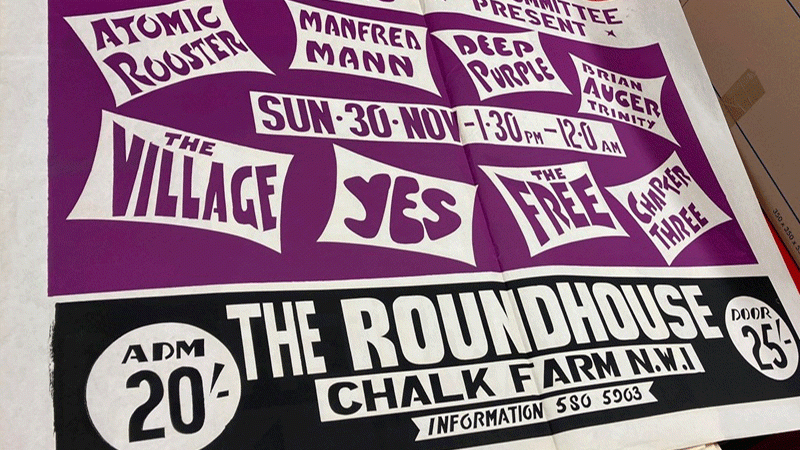
In the late 1960s, the Regent Street Polytechnic was a popular venue for live music, not only attended by students, but also by London’s wider gig-attending masses. The Portland Hall and Gymnasium at the University’s Little Titchfield Street site staged early performances by several musicians who went on to global success, such as Fleetwood Mac, Pink Floyd and Cream, as well as American acts like Freddie King and Howlin Wolf.
The University Archives already holds a smaller collection of design posters promoting these gigs, but this latest donation from Nigel Molden, who graduated in 1970 from the Sociology BA Honours course, provides the University with 63 posters never seen before and fills gaps in its historical record of this period.
In addition to the posters, which feature the artwork of students and external designers, the collection also includes 27 fly posters, which would have been pasted up around London. It is only due to Molden’s thought of retaining an example of each poster before they were distributed that any still exist today. These extremely rare examples of London’s cultural history make a vital and exciting addition to the University’s archive collections.
Alongside these posters, Molden’s donation also contains papers relating to his time as Chairman of the University of Westminster Students’ Union’s (UWSU) Entertainment Committee, as well as Social Vice-President and Sociology Course Representative. These include newsletters, minutes, reports and correspondence. These records not only showcase the entertainment available at the Polytechnic, but the wider UWSU activities and general student life.
Of particular interest are the papers relating to the organisation of the first Poly Arts Festival in 1969. The festival involved several different events across two weeks, including a 12-hour concert at the Roundhouse in Chalk Farm, featuring Manfred Mann, Deep Purple and others, as well as folk evenings, poetry sessions and a production of William Saroyan’s The Cave Dwellers performed by the Student Players. Posters of these events were also included in Molden’s donation. A detailed report created after the hugely ambitious festival showed it to be a mixed success, but the Poly Arts Festival returned in 1970 and 1971.
The donated papers will be listed on the University’s online archives catalogue, available for students, colleagues, alumni and the general public to view in the University’s Reading Room at its Little Titchfield Street site.
Lorna Bannister, Senior Archivist at the University of Westminster, said: “We are very lucky here at the University Archives to hear from so many past students and colleagues with continuing pride and affection for their student days. Documents and artefacts that illustrate their achievements and experiences can help inform everyone who comes to work or study here at Westminster. These posters from the 1960s are fantastic examples of design and illustration, as well as a record of London’s social and cultural history. This collection is a rich resource for all disciplines, but in particular for our Schools of Arts, Media and Humanities.”
The donation of the gig posters directly contributes to the United Nations Sustainable Development Goal (SDGs) 4: Quality Education. Since 2019, the University of Westminster has used the SDGs holistically to frame strategic decisions to help students and colleagues fulfil their potential and contribute to a more sustainable, equitable and healthier society.
Find out more about the University of Westminster’s Records and Archives.

Related articles


