In a new collaboration, University of Westminster and London Transport Museum Doctoral Researcher Zoe Few is uncovering the overlooked journeys of LGBTQ+ passengers and transport workers who lived, travelled and worked across London in the 1970 and 80s. The project also coincides with the Museum receiving an original Never Going Underground poster - an iconic 1988 protest piece against Section 28 - highlighting the importance of preserving LGBTQ+ transport histories.
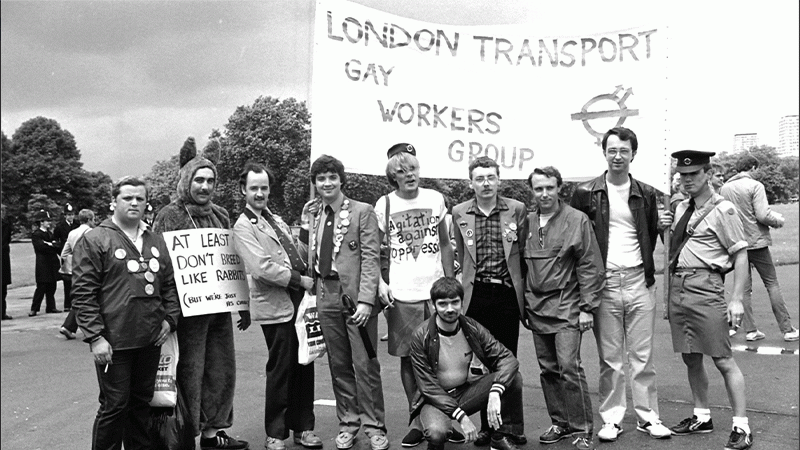
The project, Pride, Passengers and Personnel, explores the forgotten or neglected histories of the LGBTQ+ community in relation to London transport and aims to contribute to current debates around collecting historically important items, also known as museum contemporary collecting, as a tool for empowering communities.
The 1970s and 80s marked a significant period of change for the community in London, with the partial decriminalisation of male homosexuality in 1967, the advent of Pride and the Gay Liberation Front in the 1970s and the AIDS pandemic in the 1980s. The 80s also saw the passage of Section 28 of the Local Government Act 1988, which stated that local authorities in England, Scotland and Wales “shall not intentionally promote homosexuality or publish material with the intention of promoting homosexuality” or “promote the teaching in any maintained school of the acceptability of homosexuality as a pretended family relationship”.
London’s public transport system occupies a significant place in the practical, social and cultural lives of Londoners, yet there has been little scholarly work to bring these two histories together. This project seeks to address this issue.
The research team is actively seeking participants who lived, travelled or worked on London’s transport network during the 1970s and 1980s and who identify as LGBTQ+ to share their stories. These personal accounts will help ensure that previously marginalised experiences are represented within the historical record and preserved for future generations.
The team is also looking to collect new items into the museum collection that represent LGBTQ+ transport histories. For example, Zoe had collaborated with Ian Wilmott, anti-Section 28 veteran, activist and leader of the S28PLUS40 project, to co-produce an event on 6 February 2026 that marked a significant moment in LGBTQ+ history. Ian has donated an original 1988 Never Going Underground poster to London Transport Museum, with Manchester City Council and the Greater London Assembly represented at the event. The poster features the iconic London Transport roundel and was used powerfully during the 1988 Manchester Campaign against Section 28. The Never Going Underground campaign culminated in the largest LGBTQ+ demonstration in UK history at the time and helped catalyse a lasting framework of LGBTQ+ rights. This movement contributed directly to the eventual repeal of Section 28 and the development of equality legislation that continues to protect communities today.

Photo: One of the original Never Going Underground posters used in the Manchester 1988 campaign against Section 28. Credit: Jasmine Sandhu, Khadijia Saye Photography Fellow 2025
Ian Wilmott said: “I am delighted that, having used (without their permission) the London Transport iconic logo for a historic campaign, we now have the opportunity to thank them personally by gifting one of the last remaining original posters. It is in mint condition and will be lovingly preserved within the Museum’s poster archive, allowing future generations to see how London’s transport logo and a grassroots equality campaign in Manchester found such a powerful and enduring connection.
“It’s a privilege to be working alongside the University of Westminster, whose research explores queer communities’ experiences of London’s transport system, alongside the staff and stakeholders at the Museum. This collaboration reflects genuine community participation and echoes London’s diversity and energy.”
Zoe Few said: “LGBTQ+ research projects such as Pride, Passengers and Personnel are essential and urgent. It is critical to redress the imbalance in the material record whilst simultaneously advocating for LGBTQ+ rights.”
Dr Alison Hess, Lecturer in Museum and Gallery Studies and lead supervisor on Zoe’s PhD project, added: “Collaborations such as Zoe's project between the University of Westminster and London Transport Museum are key to uncovering the forgotten, neglected or erased stories of the LGBTQ+ people in London's history. We hope Zoe's work will create opportunities to reflect together on how diverse experiences of transport can build more equitable societies.”
Dr Ellie Miles, Zoe’s lead supervisor from London Transport Museum, added: “By exploring LGBTQ+ experiences in the 1970s and 80s among colleagues and passengers, Zoe's research brings vital social context to the Museum's existing collections. Sharing stories from this time will deepen the history that London Transport Museum looks after and the research is helping to find new objects for the Museum's collection.”
The Pride, Passengers and Personnel project is made possible due to the funding and support of the UK Research and Innovation’s (UKRI) Arts and Humanities Research Council’s Technē scholarship.
London Transport Museum’s purpose is to ignite curiosity to shape the future as well as being an award-winning day out. The Museum explores the powerful link between transport and the growth of modern London, culture and society since 1800. Historic vehicles, world-famous posters and objects from the Museum’s collection are brought together to tell the story of London’s development and the role transport played in defining the city’s identity.
The project directly contributes to the United Nations Sustainable Development Goals (SDG) 10: Reduced Inequalities and 17: Partnerships for the Goals. Since 2019, the University of Westminster has used the SDGs holistically to frame strategic decisions to help students and colleagues fulfil their potential and contribute to a more sustainable, equitable and healthier society.
Learn more about the Technē scholarship at the University of Westminster.
To see how you or your company can sponsor PhD students, contact the Development Team.
To contribute to the project, contact Zoe Few through the Pride, Passengers and Personnel webpage.
With enquiries relating to S28PLUS40, please contact Ian Wilmott.

Julian Hows at the Earl’s Court protest, 1978 Image courtesy of Robert Workman Archive, Bishopsgate Institute.

One of the original Never Going Underground posters used in the Manchester 1988 campaign against Section 28. Credit: Jasmine Sandhu, Khadijia Saye Photography Fellow 2025
Related articles


