The University of Westminster has hosted the annual Leveson Lecture, welcoming Kerry Katona, Lisa Moorish, Jacqui Hames and Patrick Spence for a wide-ranging discussion on press regulation and reform. With Sir Brian Leveson in attendance, the event explored how the UK can better guard against the kinds of press abuse and misconduct brought to light during the Leveson Inquiry following the News International phone-hacking scandal.
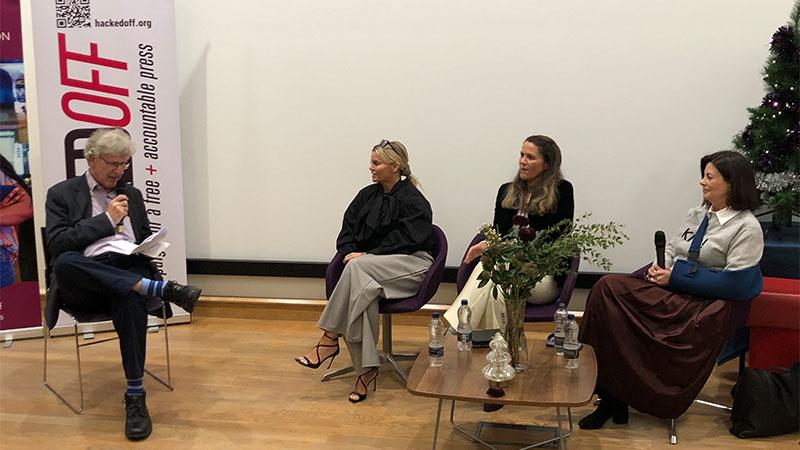
Taking place at Westminster’s Little Titchfield Street site in Central London, this year’s lecture was opened by University of Westminster Vice-Chancellor Professor Peter Bonfield and was hosted by Professor Steven Barnett, Professor of Communications at the University. The event reflected on ITV’s drama The Hack, which explores the News International phone-hacking scandal through the work of journalist Nick Davies, played by David Tennant, who uncovered key evidence in the case, as well as the investigation into the murder of private investigator Daniel Morgan. Attendees included Westminster students and colleagues, politicians, academics, campaigners and journalists.
Professor Barnett was first joined by Patrick Spence, a producer on The Hack, who explained the importance of dramatising this story and the need to share stories about those who abuse power. Spence also shared insights into the production process, including the decision to weave together the two different strands of phone hacking and the Daniel Morgan murder.
A passionate panel discussion followed, in which Kerry Katona, Lisa Moorish and Jacqui Hames shared their personal stories of privacy invasion by the press.

Katona, a TV personality and founding member of the band Atomic Kitten, highlighted the numerous cases of sexism and class-based bias she has experienced with the media. She outlined the devastating impact media attention can have on those in the public eye and how easy it is for the tabloids to spread lies across their front pages.
Lisa Moorish also spoke about her experience with press intrusion and the huge impact phone hacking had on her life. The English singer-songwriter is now a Trustee on the board of the Press Justice Project, which provides assistance to those who have been targeted by press abuse.
Jacqui Hames, former Crimewatch presenter and police officer - and now a director of Hacked Off which campaigns for a free and accountable press - described how she joined the campaign. She gave evidence to the Leveson Inquiry and explained how she discovered that her phone had been hacked and her details found in the notebook of a News of the World journalist who was later jailed for phone hacking. She also talked about the frustration of dealing with politicians who have consistently failed to keep their promises about reforming press regulation.
The floor then opened up to questions from the audience, giving students the opportunity to hear advice from the panel about pursuing a career in journalism and how they can best use their skills to produce ethical and trustworthy journalism.
Speaking about the event, Professor Barnett said: “This was a great opportunity to hear directly from those affected by the traumatising impact of press intrusion, and the panel did not disappoint. Kerry Katona and Lisa Moorish told deeply moving stories about how they – and their families – were targeted by certain elements of the press, and Jacqui Hames explained how Conservative and Labour governments have been too afraid of the press to act. Patrick Spence gave us a fascinating insight into the creative process of turning a complicated historical story into a gripping television drama.
“Like the Post Office and infected blood scandals, the story of press abuse and corrupt relationships between newspaper editors and the police provoke questions that still need answering. The speakers and the discussion that followed gave more impetus to the case for instituting the second part of the Leveson enquiry that was cancelled by the Conservative government in 2018."
Attendee Wanji Hartig, Film BA Honours student, added: “The event was really informative, especially for someone like me who isn’t from the UK, and both panels complimented each other very well. Getting information about the production of the show and afterwards some real-life accounts supporting its story was really great.”
This event directly contributes to the United Nations Sustainable Development Goals (SDG) 4: Quality Education and 16: Peace, Justice and Strong Institutions. Since 2019, the University of Westminster has used the SDGs holistically to frame strategic decisions to help students and colleagues fulfil their potential and contribute to a more sustainable, equitable and healthier society.
Find out more about Media and Communication courses at the University of Westminster.


