A new Westminster research project led by Gerda Wielander, Professor of Chinese Studies, has been awarded a Major Research Fellowship from the Leverhulme Trust to examine the rich visual landscapes of Chinese cities, enabling an in-depth investigation into an overlooked aspect of contemporary urban life in China—the visual culture in public spaces.
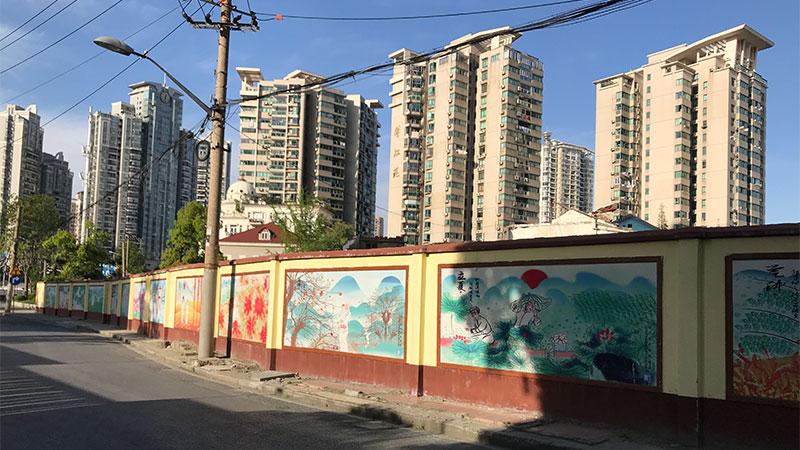
The fellowship scheme is one of the most prestigious in the UK, with only 28 awarded across the country in this round. The two-year project will explore how despite China’s status as one of the world’s most highly digitised societies, its cities remain saturated with physical, eye-level imagery. Walls, fences, hoardings around building sites and underpasses are covered with a striking array of visuals, from amateur murals and graffiti to propaganda posters, illustrated governance notices, decorative patterns, community artworks and professional art installations. Taken together, these elements form what the project describes as vast “open-air galleries” embedded in everyday urban experience.
The newly funded research will be the first to systematically examine this phenomenon as a distinct cultural formation. By focusing on the political and aesthetic dimensions of urban visuals, the project aims to understand what these analogue displays reveal about contemporary Chinese culture and society and why they continue to flourish in an era dominated by digital screens.
The project will explore key questions such as: What roles do these visuals play in everyday urban life? How do they shape citizens’ everyday interactions with the city? And what does their persistence tell us about the relationship between digital modernity and analogue expression in China?
The funding will support fieldwork, visual documentation and analysis across multiple urban contexts, contributing to international debates on urban culture, governance and visual communication.
Professor Wielander said: “I am delighted that my work has been recognised by the Leverhulme Trust through this prestigious fellowship and look forward to dedicating focused research time to this unique cultural phenomenon.”
This research directly contributes to the United Nations Sustainable Development Goals (SDG) 9: Industry, Innovation and Infrastructure and 11: Sustainable Cities and Communities. Since 2019, the University of Westminster has used the SDGs holistically to frame strategic decisions to help students and colleagues fulfil their potential and contribute to a more sustainable, equitable and healthier society.
Find out about the Contemporary China Centre at the University of Westminster.
Related articles


