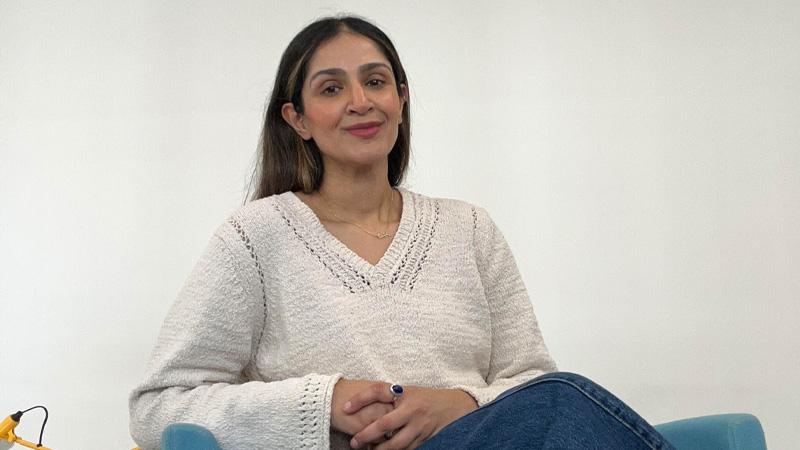
Shehr Kazmi, a Postgraduate Diploma in Counselling and Psychotherapy student at the University of Westminster, is currently on placement with the University of Westminster Community Counselling Service (WCCS). In this interview, she reflects on how the experience working with real clients across London has shaped her development as a counsellor and deepened her understanding of what it means to help people access counselling.
Can you tell us a bit about WCCS?
WCCS is a valuable community-based service and offers counselling to people in the wider community, while also giving trainee counsellors the opportunity to begin working with clients in a real practice setting. For me, it has been the place where learning starts to come alive and where what I have studied in theory is lived out in real therapeutic relationships.
What has your experience been like as a trainee counsellor?
My experience at WCCS has been one of the most important parts of my development as a trainee counsellor. It is where I have moved beyond ideas and began discovering what it means to sit with someone in distress or pain. Working with people from different backgrounds has stretched me and helped me listen more deeply and think more carefully.
I have come to understand that counselling is not about saying the perfect thing or having the right answer. It is about being able to stay with someone long enough for something real to emerge. WCCS has played a huge part in helping me grow into that way of working and into the kind of practitioner I hope to become.
What do you think are the key benefits of WCCS for the wider community?
WCCS opens up access to counselling for people who might otherwise struggle to reach it. For many, private therapy is simply too expensive and other services can involve long waiting times or feel difficult to access. A service like this can make a real difference because it means support becomes more possible. The service reflects the diversity of the community it serves, especially in a city like London! People come with different histories, identities and beliefs and it is important that support feels respectful of that.
Why is it important that people have access to these benefits?
When emotional distress is left unsupported, it does not just disappear; it becomes heavier and more confusing. People may find themselves stuck in patterns they do not understand, struggling in relationships or carrying pain alone.
That is why it is so important that counselling is accessible. Support should not depend only on whether someone can afford private therapy or manage long waiting lists. If counselling is only available to those with enough money, time or confidence to navigate complicated systems, then many people who need it most may never get through the door. Community-based services help to make support more realistic and sustainable.
On a wider level, when people have spaces where they can reflect and feel heard, it does not just support individuals, it strengthens communities as well.
What skills have you gained from delivering sessions at the WCCS?
Working at WCCS has helped me develop the capacity to stay present with whatever a client brings into the room, no matter how painful it may be. It has also deepened my sensitivity to the therapeutic relationship and to the quieter ways people communicate. I have become more aware of the meanings carried in tone, hesitations and what remains unsaid. There is just as much in those moments as in the words themselves.
Alongside this, I have strengthened my ability to hold boundaries with warmth and reflect honestly on my own responses within the work.
What has been the most rewarding part of participating in the WCCS?
The most rewarding part has been witnessing the subtle but real ways that change happens over time. It is not dramatic and may not look like a big breakthrough from the outside, but it can be seen in moments where a client begins to speak more freely, notices a pattern or allows themselves to feel something they have kept at a distance.
There is something moving about being trusted with another person’s inner world. That trust is not given all at once; it is built slowly and being part of that process feels like a real privilege.
It has also been rewarding to recognise my own growth and confidence. I have learnt how to stay steady when things feel difficult and I feel much more confident in my role now than when I started. What feels most meaningful to me is that the space I offer may help someone find their own way forward.
How has the professional supervision from Westminster academics helped?
Supervision has been one of the most important parts of my development, as it gives me a space to step back and reflect. My supervisors have helped me stay anchored in ethical practice while also encouraging me to be open about what I may not yet understand.
At times supervision has been reassuring and at other times it has challenged me to think differently or look more honestly at what I might be bringing. Both have been equally valuable. The guidance from Westminster academics has supported not only my learning, but also my confidence as a developing practitioner.
What encouraged you to study the Counselling Postgraduate Diploma at Westminster?
I chose Westminster because I was looking for a course that treated counselling as a human practice rather than a set of techniques to be memorised. I wanted an environment that valued personal development as much as academic study, recognising that the therapist’s own growth is a vital part of the training.
I was especially drawn to the way the course seemed to honour the whole process of becoming a counsellor. It was not just about learning theory, but about how theory, practice and reflection are brought together.
The University’s diversity was also a significant part of what drew me to it. I wanted to learn in an environment that reflects the real world, where different perspectives and backgrounds are present. For me that matters because counselling always takes place within the context of a person’s lived experience. We need to be open to difference and willing to keep learning and Westminster felt like a place where that could happen.
What’s next for your career?
My next step is to continue deepening my practice through further clinical experience, ongoing professional development and learning from clients. I hope to establish a private practice where I can offer a thoughtful, ethical and compassionate space for clients to speak openly and explore their experiences.
My hope is to build a career that holds both of those worlds in a balanced and sustainable way. I would like to keep growing as a therapist while also staying connected to community-based work and the values that brought me to this work in the first place.
Find out more about the Westminster Community Counselling Service.
Discover Psychology courses at the University of Westminster.
Related articles


