Dr Karen Chandler, Head of Nursing and Health Partnerships at the University of Westminster and Deputy Chair for the Council of Deans Regulatory Group, was invited to the Council of Deans of Health parliamentary reception at the House of Lords. As an A&E Nurse, she offered her insight into healthcare education and showcased how the University of Westminster is driving compassionate and practical teaching with its new Clinical Simulation Suites and Nursing programmes.
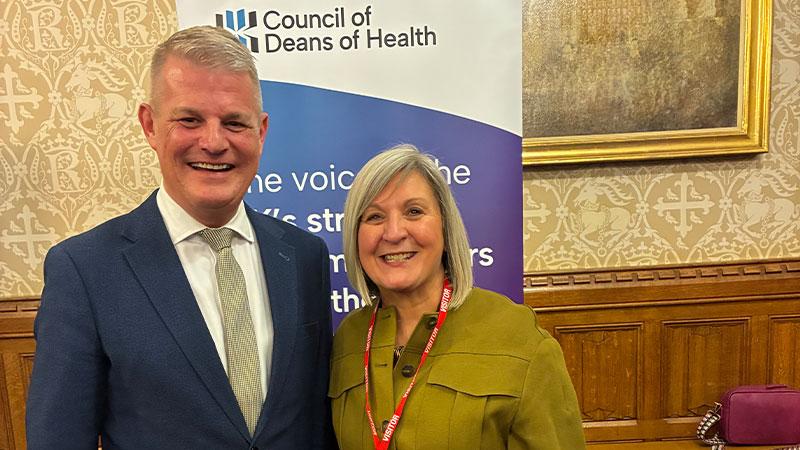
The event was hosted by Baroness Kate Hoey and offered talks from Parliamentary Private Secretary to the Department of Health and Social Care Steve Race MP, and Shadow Health Secretary Rt Hon. Stuart Andrew MP.
Dr Chandler has an extensive career as a nurse educator and practitioner, holding various senior positions in university and clinical practice. She is passionate about designing and supporting nursing and allied health programmes and has a particular focus on working with healthcare providers to ensure education produces competent, compassionate and skilled practitioners to meet current and future workforce needs.
She is now set to teach on the University’s two new health programmes, the Nursing Associate Foundation Degree FdSc and the Nursing Associate Apprenticeship, which are both designed to support the delivery of healthcare across the NHS, social and primary care.
Each course has been co-designed with a range of stakeholders and intends to address growing concerns around nurse wellbeing and burnout. By prioritising practical preparation, teamwork and emotional resilience, the courses aim to better equip future healthcare professionals for the realities of modern clinical practice. Both programmes have been approved by the Nursing and Midwifery Council (NMC), becoming the Council’s 100th accredited course.
To support this teaching the University has opened new cutting edge Clinical Simulation Suites to provide students with a highly realistic, hands-on learning environment that mirrors real healthcare settings. Through simulated clinical scenarios, students can safely practice essential skills such as the monitoring and delivery of care, as well as communicative and collaborative working. This immersive approach helps bridge the gap between theory and practice, building student confidence, competence and professional readiness before entering clinical placements, a key factor in reducing stress and burnout once graduates enter the workforce.
Dr Chandler said: “It was a real privilege to be invited to such a prestigious event, sharing the room with so many experienced educators from across the UK. It was incredibly exciting to be part of the conversation and a valuable opportunity to speak directly with politicians, sharing our knowledge to help inform the implementation of the ten-year plan and future workforce needs.”
Dr Chandler’s work within healthcare education directly contributes to the United Nations Sustainable Development Goals (SDGs) 3: Good Health and Wellbeing and 4: Quality Education. Since 2019, the University of Westminster has used the SDGs holistically to frame strategic decisions to help students and colleagues fulfil their potential and contribute to a more sustainable, equitable and healthier society.
Find out more about Health courses at the University of Westminster.


