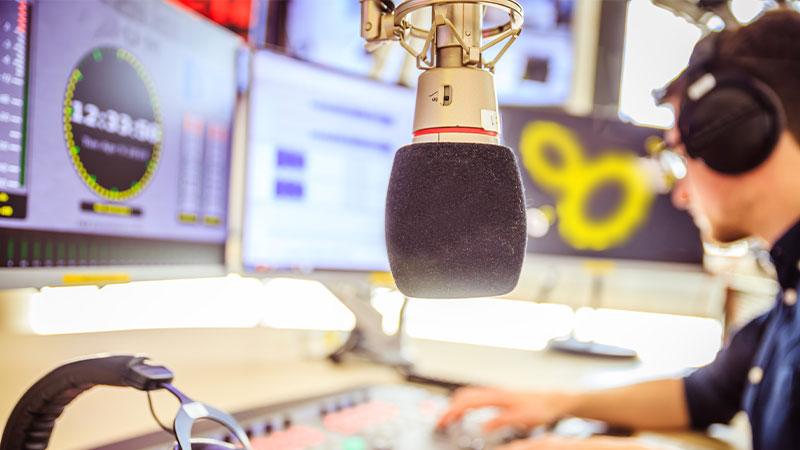
New Arts and Humanities Research Council (AHRC)-funded research led by Dr Paul Rekret at the University of Westminster is exploring the cultural significance of DIY online radio as an alternative media form, showing how it sustains curation, experimentation and community in contrast to algorithm-driven music platforms.
The project is conducted in partnership with the British Library, the National Library of Scotland and the University of Glasgow and has been featured in The Wire’s December 2025–January 2026 issue.
Drawing on interviews and collaborative research with station founders, volunteers and contributors, the project maps how DIY radio operates across a range of settings, from bedroom studios and shared workspaces to neighbourhood cafes. The findings highlight the extensive care, unpaid labour and long-term commitment involved in sustaining these stations, as well as the economic and technical pressures they face when relying on commercial digital platforms that are often ill-suited to community-led cultural activity. It positions DIY radio as a vital cultural practice that prioritises human judgement, personality and collective labour over automation and scale.
The study explores the ways in which DIY radio stations embed themselves in everyday cultural life, acting as informal institutions that support local scenes, promoting artists and experimental sound practices while fostering strong social ties among participants.
The project is set to cumulate into a publicly available handbook for DIY Radio, which will offer a guide on how to set up and grow these radio stations.
The research informs teaching at the University, with themes aligning closely to Westminster’s Digital Media and Communications BA Honours module Creative Industries and Professional Life, where industry partners work directly with students by setting live assessment briefs and contributing to lectures. Using case studies from across the creative and media industries, the module encourages students to engage with questions of labour, sustainability, collaboration and cultural value that sit at the heart of the DIY radio project.
The publication coincides with a period of international engagement linked to the wider research project. In November 2025, Dr Rekret and Dr Toby Bennett, Senior Lecturer in Media, Culture and Organisation at the University of Westminster, delivered a series of public lectures at the School of Economics and Management at the Communication University of China (CUC) in Beijing. The visit formed part of a long-standing partnership between the two institutions, supporting collaborative teaching and research in media and creative industry studies.
During the lectures, Dr Rekret shared insights from his AHRC-funded research into volunteer-led and community-run cultural projects, focusing on how they operate through shared effort rather than profit. Dr Bennett explored how creative businesses in the UK and Europe work across national borders, while demonstrating the continued importance of local places and communities within globally connected creative industries.
Reflecting on the project Dr Rekret said: “Many forms of local cultural infrastructure are under real and growing pressure as they become increasingly dependent on commercial platforms that were never designed to support long-term public or community value. This project addresses an urgent question about how small-scale cultural organisations, such as DIY radio stations, can remain sustainable without losing their social purpose. By working in close partnership with these communities, the research aims to identify practical models of stewardship, collective responsibility and care that can help sustain cultural life beyond platform-driven economies.”
This research directly contributes to the United Nations Sustainable Development Goals (SDG) 11: Sustainable Cities and Communities,12: Responsible Consumption and Production and 17: Partnerships for the Goals. Since 2019, the University of Westminster has used the SDGs holistically to frame strategic decisions to help students and colleagues fulfil their potential and contribute to a more sustainable, equitable and healthier society.
Find out more about the School of Media and Communication at the University of Westminster.
Related articles


