Dr Doug Specht, Head of the School of Media and Communication at the University of Westminster, recently participated in three significant education sector events, advocating for digital creativity education at a pivotal moment for UK curriculum reform. The events brought together educators, policymakers and games industry leaders to discuss the future of computing education following the UK Government's Autumn 2025 Curriculum and Assessment Review.
On 20 January, Dr Specht attended the Ukie Education & Industry Mixer event at London City Hall, organised in partnership with Digital Schoolhouse, a non-for-profit and key university partner that works to transform computing education through play. This networking event marked the return of the annual mixer that connects games industry figures, policymakers and educators. The event provided a forum for meaningful cross-sector dialogue, collaboration and mutual understanding on the future of digital creativity in UK education.
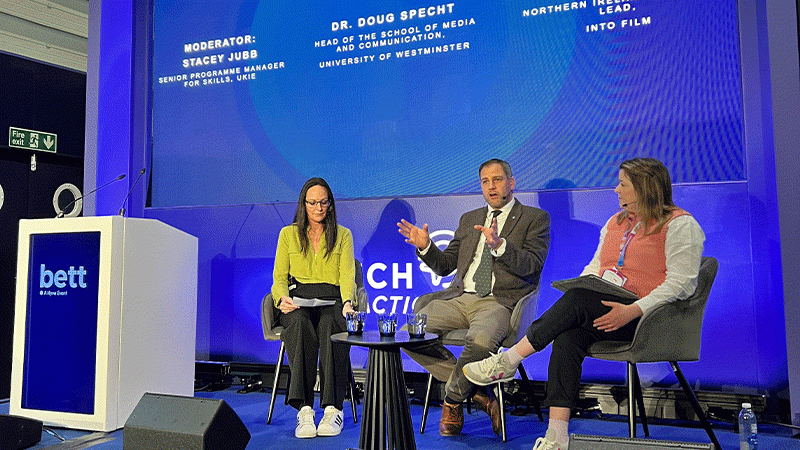
The next day, Dr Specht participated as a panelist at BETT 2026, the world's leading EdTech forum, which attracted over 35,000 education professionals and featured over 600 exhibitors. The panel, titled Digital Creativity: Now More Than Ever, explored digital creativity's importance in education and its role in bridging classroom learning with real-world skills. The event's overarching theme, Learning Without Limits, reflected the growing recognition that traditional computing education must evolve to meet contemporary workforce demands.
To conclude the week, Dr Specht provided a keynote talk on digital creativity for teachers across the UK at Digital Schoolhouse’s monthly Playful Classroom session, which showcases its philosophy that fun, games, laughter and playfulness are at the cornerstone of effective teacher training.
These engagements contributed to the School of Media and Communication’s advocacy work for a new GCSE in Digital Creativity. The new qualification would not only address the existing skill and gender gaps but would prevent that gap growing wider in the face of the biggest technological revolution powered by AI. By merging creative and STEM skills, the new GCSE would give students the opportunity to strive toward a career in the creative technology space where these subjects come together, from computer game development to animation, Dr Specht argues.
These events were particularly significant as they coincided with the recently published UK Curriculum and Assessment Review, which was released in November 2025 and proposed major changes to computing education. Key proposals affecting digital creativity education included replacing the Computer Science GCSE with broader Computing GCSEs that balance computer science content with essential digital literacy skills, with the new curriculum teaching students how computers can be trained using data and develop essential digital skills such as AI literacy.
Dr Specht said: “This week has underscored what a pivotal moment we're at for digital creativity education in the UK. Digital creativity isn't just about gaming or coding; it's about empowering students to be active creators rather than passive consumers of technology. Through partnerships like Digital Schoolhouse, we've seen how play-based, joyful approaches to learning can transform both teacher confidence and student engagement. When education is dynamic, relevant and genuinely exciting, we unlock potential that traditional methods often miss.”
The talks directly reflect the United Nations Sustainable Development Goals (SDGs) 4: Quality Education and 10: Reduced Inequalities. Since 2019, the University of Westminster has used the SDGs holistically to frame strategic decisions to help students and colleagues fulfil their potential and contribute to a more sustainable, equitable and healthier society.
Learn about Media and Communication courses at the University of Westminster.


Related articles


