This in-person event is organised by the Contemporary China Centre, University of Westminster.

Location
Room UG04, University of Westminster, 309 Regent Street, London W1B 2HW
Synopsis
This book offers a compelling look at how television censorship in China works not just as top-down control but as interactions between state, industry, and viewers.
As a historical study of the discourse on Chinese television censorship, it analyses debates around the censorship of popular television dramas in China and explores the controversies surrounding the televisual representation of history, violence, delinquency, and vulgarisation. Focusing on the idea of “worrying about the audience”, the book shows how concerns about young people’s morality, social responsibility, and cultural standards shape what (dis)appears on screen. Covering the early reform period to the 2010s, case studies include but are not limited to foreign action series (Garrison’s Gorillas), domestic melodramas (Yearnings), controversial historical dramas (Towards the Republic), Gangtai pop idol dramas (Meteor Garden), and playful wuxia comedies (My Own Swordsman). Each case reveals how censors, producers, and critics invoke imagined audiences—whether impressionable youth or patriotic citizens—to justify cutting or promoting content. By treating audiences as constructed categories rather than immutable groups, the book moves beyond seeing censorship as repression. Instead, it demonstrates how a refreshing take on censorship can shed light on the generation of new content, revive overlooked titles, and frame broader debates about culture, anxieties, and geopolitics. Drawing on regulatory documents, press reports, interviews, audience letters, and parents’ complaints, the book compares both popular hits and hidden gems, demonstrating how the discourse on melodrama, history, and martial arts genres reflects moral and commercial pressures in postsocialist China.
In contributing to the burgeoning field of censorship studies which rethinks censorship as productive, rather than reductive, The Chinese Censorship Discourse on Television Dramas will be of huge interest to scholars and students of television studies, popular culture, censorship studies, Chinese studies, media studies, cultural studies, memory studies, social history, and politics.
Critics' reviews
“This is a brilliant contribution to scholarship on censorship and mass media, impeccably attentive to the breadth and complexity of the topic. Its rich insights rest on a foundation of deep knowledge of and long-term engagement with Chinese media. It will be essential reading for scholars of contemporary Chinese culture and politics.”
Julia Lovell, Birkbeck, University of London, UK
- “In this highly original and meticulously researched study, Dr How Wee Ng dissects the public debates about television censorship in post-Mao China, showing that censorship does not make things disappear but rather makes visible the anxieties about the impact of TV drama on its viewers in a rapidly changing society.”
Michel Hockx, University of Notre Dame, USA
- “The Chinese Censorship Discourse on Television Dramas is not only the first history of Chinese television censorship in English but also rethinks Chinese censorship as an active and dialogic process of shaping and forming production and reception. The result is an exciting breakthrough in Chinese media studies.”
Chris Berry, King’s College London, UK
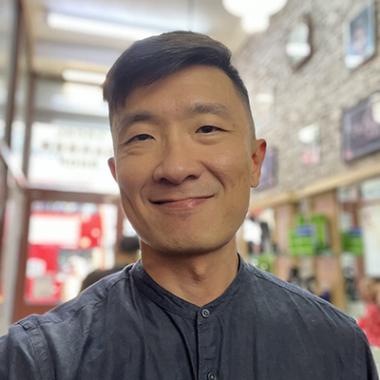
Author: Dr How Wee Ng
Dr How Wee Ng is Senior Lecturer in Chinese Studies at School of Humanities, University of Westminster, specialising in cultural production in the Sinosphere and co-founding director of the Association for Curators and Programmers of Asian Cinemas (ACPAC).
Selected publications include monographs The Chinese Censorship Discourse on Television Dramas: Worrying about the Audience in Postsocialist China (2026), and Drama Box and the Social Theatre of Singapore: Cultural Intervention and Artistic Autonomy 1990-2006 (2024); and essays Decolonising China: Decolonising China on screen: curating cinemas of the Sinosphere for the university classroom (2025), Working-class Masculinity in Postsocialist China: Condoning Inequalities in Locality, Gender and Class on Television-Garrulous Zhang Damin's Happy Life (2024) and Taipei Golden Horse film awards and Singapore cinema: Prestige, privilege and disarticulation (2020).
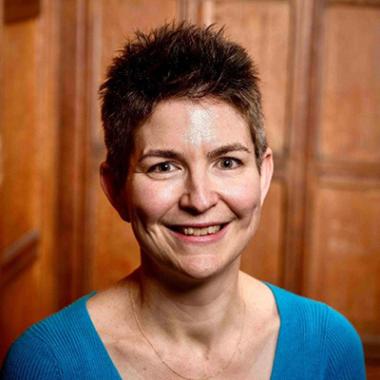
Discussant: Dr Heather Inwood
Dr Heather Inwood is a Fellow of Trinity Hall, Cambridge, Staff Fellow and Director of Studies in Asian and Middle Eastern Studies (Chinese), and Associate Professor of Modern and Contemporary Chinese Literature and Culture. She researches intersections of media, culture, and literature in contemporary China, focusing on poetry, genre fiction, and digital media. Her scholarship often addresses how internet and digital media practices shape the production, circulation, and reception of literature in contemporary China. Her monograph Verse Going Viral: China’s New Media Scenes (2014), examines how contemporary Chinese poetry interacts with digital media, businesses, and the public, highlighting the social and cultural dynamics of China’s poetry scenes. Her second book, Netfic: China’s Other Worlds, focuses on Chinese genre fiction and online popular media, continuing her exploration of digital culture and literature.

